1-855-QUOTEMR

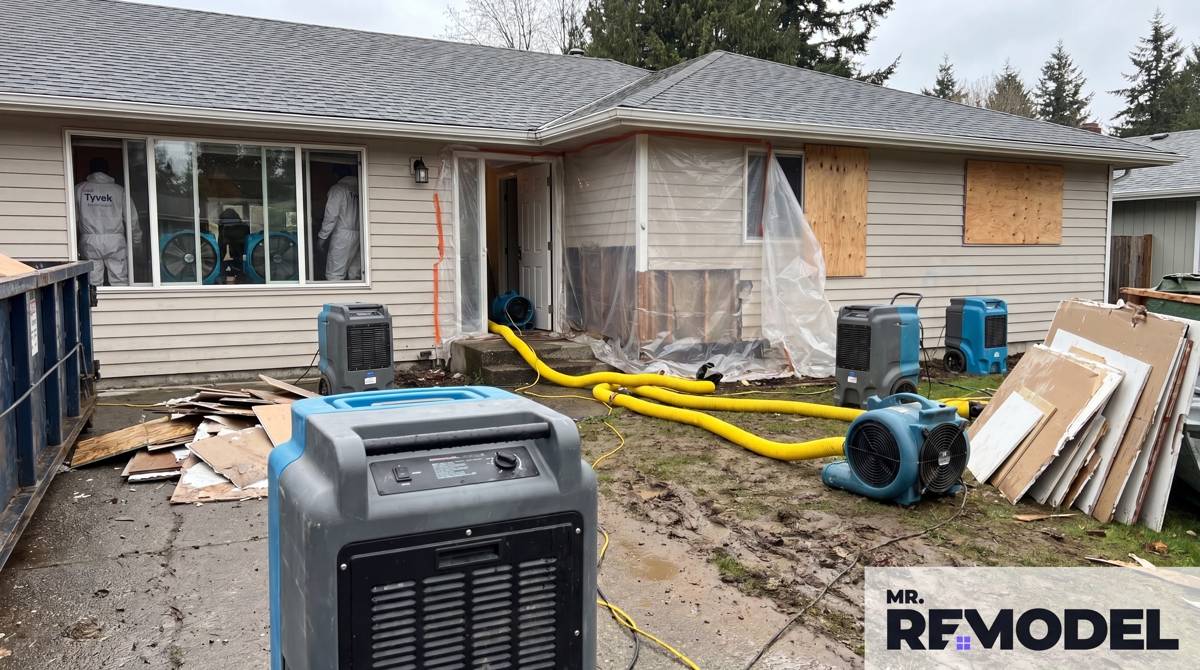
Table of Contents [hide]
Who This Is For
This guide is explicitly designed for property owners experiencing an active water intrusion crisis. It provides immediate, step-by-step triage actions, professional safety protocols, and transparent structural drying timelines to help protect investments and restore home safety.
Key Takeaways
- Emergency Water Extraction: The physical removal of standing surface water requires 24 to 48 hours.
- Structural Thermal Drying: Thoroughly drying framing timber, drywall cores, and subfloors requires 3 to 7 days.
- The Fungal Window: Active mold colonization begins on damp organic building elements within 24 to 48 hours.
- Urgent Phone Communication: Local emergency metrics indicate that 100% of homeowners prioritize calling over submitting online forms.
- Final Reconstruction Phase: Rebuilding structural walls and floor assemblies ranges from one week to several months.
Understanding the breakdown of the restoration process helps property owners manage expectations during a home emergency. True mitigation follows a highly structured timeline that cannot be rushed without risking major structural failure.
Phase 1: Immediate Extraction and Triage
The physical removal of bulk water occurs within the first 24 to 48 hours. Technicians deploy commercial truck-mounted extraction units to pull standing surface water from carpets and subfloors. Fast extraction stops moisture from migrating deeper into structural assemblies.
Phase 2: Industrial Structural Drying
Once standing water is removed, the structural drying phase requires 3 to 7 days. This phase targets hidden moisture locked inside dense timber framing and interior drywall cores. Technicians utilize heavy low-grain refrigerant dehumidifiers alongside high-velocity air movers to manage air vapor pressure.
Phase 3: Sanitization and Cleaning
Clearing biological hazards and residual contaminants requires an additional 1 to 3 days. Techs apply professional-grade antimicrobial treatments to prevent microbial proliferation. Saturated porous items are removed, while non-porous surfaces undergo deep sanitation to guarantee environmental safety.
Phase 4: Structural Reconstruction
The final phase involves repairing structural elements and ranges from one week to several months. Minor drywall patches and baseboard replacements conclude quickly. Extensive flooding requiring joist replacement, new subflooring, or layout rebuilds demands prolonged architectural work.
See Related: Emergency Water Damage Cleanup Guide
The 48-Hour Fungal Threshold: Why Speed Saves Homes
When dealing with residential water infiltration, time is your absolute enemy. Delaying professional mitigation by even a single day can lead to irreversible property degradation.
The Microscopic Clock
Fungal spores do not wait for an insurance adjuster to arrive before they begin germinating. According to the Federal Emergency Management Agency (FEMA), mold colonies initiate growth on damp surfaces within a tight 24 to 48-hour window. Delaying extraction guarantees expensive secondary remediation costs.
Irreversible Structural Saturation
Unmanaged moisture alters the physical integrity of common building substrates. The United States Environmental Protection Agency (EPA) states that the first 48 hours are critical for drying hard surface flooring, carpets, and structural framing. Crossing this boundary often results in permanent material warping.
The Air Quality Risk
As damp building substrates remain unmitigated, indoor air quality drops rapidly. Moisture control remains the single most critical factor in active home mitigation, according to further guidelines from the EPA. Professional intervention stops airborne contaminants from spreading through HVAC pathways.
Localized Climate Factors and Regional Timeline Adjustments
A generic nationwide restoration timeline is often inaccurate because regional weather conditions heavily influence evaporation rates. Local climate profiles alter structural drying expectations significantly.
High-Humid Footprints
In saturated coastal environments, structural drying demands aggressive equipment profiles. For example, rapid water extraction prevents rapid subfloor warping in humid Florida climates, which represents 8.6% of emergency inquiries. High ambient humidity slows down natural evaporation.
Dense Urban Frameworks
Older historical communities present unique structural drying challenges for emergency technicians. Specific, highly targeted drying techniques are required for dense urban property builds found throughout New York, which accounts for 8.6% of emergency cases. Thick masonry walls trap moisture inside deep cavities.
Cold Climate Burst Risks
Freezing winter weather transitions create intense localized structural failures that require immediate attention. Urban regions like Illinois, which drives 6.7% of total emergency case volume, experience sudden sub-zero plumbing bursts. These bursts flood structural properties rapidly.
City Hotspot Vulnerabilities
Specific municipalities face high seasonal water hazards due to localized infrastructure age and weather patterns. Cities like Chicago, IL, Bakersfield, CA, Stevens Point, WI, Bremerton, WA, and Winston-Salem, NC require rapid mitigation dispatch. Local crews adjust drying formulas to match regional environmental baselines.
See Related: Bathroom Water Damage: What to Do and How to Save Your Home
Seasonal Surge Alerts: The October Threat
Emergency water restoration volume follows predictable annual trends. Homeowners must understand these seasonal spikes to protect their properties.
The Autumn Surge
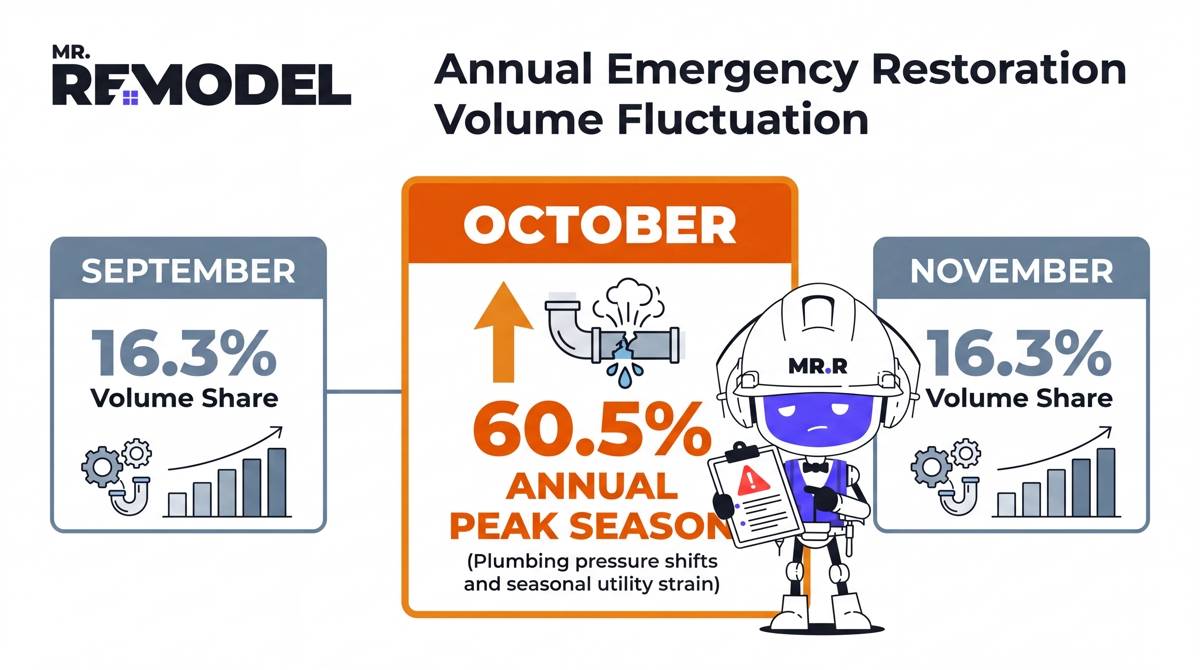
Proprietary industry tracking data reveals an extreme concentration of emergency restoration cases during the autumn season. Historical metrics from Mr. Remodel show that October is the peak month for water damage disasters. This single month captures 60.5% of total annual emergency volume.
The Shoulder Months
The transition periods flanking peak season carry steady seasonal risks for property owners. September and November each account for 16.3% of annual emergency restoration volume. Shifting fall temperatures alter residential plumbing pressure and stress aging utility lines.
Securing Emergency Logistics
Because autumn weather transitions cause massive local volume spikes, local mitigation fleets book up quickly. Homeowners should secure emergency dispatch services immediately during seasonal surges. Fast professional action ensures your structural drying timeline does not get delayed.
See Related: 7 Signs You Need New Gutters Before Major Damage Happens
Restoration Timelines: Real Behavioral Action
When a main plumbing line bursts inside a home, behavior patterns shift instantly. Traditional online search behaviors disappear as structural emergencies develop.
Immediate Voice Dispatch
Homeowners dealing with active indoor flooding do not browse websites or fill out digital estimate forms. Proprietary data sets tracking 104 emergency leads show a 100% phone call conversion rate. Crises require instant verbal confirmation from emergency dispatchers.
Eliminating Digital Friction
Because property owners face high anxiety during a flood, clear communication is essential. Reading long descriptions is unhelpful when water is rising around baseboards. Access to immediate phone support allows homeowners to start triage protocols while emergency crews travel to the site.
Strategic Variable Management: Material and Category Impact
The exact number of days your restoration project requires depends heavily on the type of water involved. Materials react differently depending on the fluid contamination level.
Clean Water vs. Black Sewage
Category one clean water projects dry quickly because they require minimal material demolition. However, category three black water backups involve biological hazards that change the timeline. Saturated porous materials must be removed entirely, extending the restoration process.
Porous Material Absorption
Standard building components absorb water at vastly different rates. Drywall cores and traditional insulation pull moisture vertically through capillary action. These assemblies require fast removal or prolonged drying times compared to non-porous concrete slabs or steel framing studs.
See Related: Best Flooring Options for Bathrooms: Maximizing Your Complete Remodel Investment
Frequently Asked Questions About Restoration Timelines
How long does a water damage restoration project take?
The complete process typically spans from 3 to 7 days for extraction and structural drying. If structural reconstruction or extensive material replacement is required, the project timeline can extend from one week to several months.
See Related: Water Damage Restoration Cost Guide
Will waiting to call a professional team increase the drying time?
Yes, waiting significantly extends structural drying times and increases total repair costs. Mold colonization starts within 24 to 48 hours of initial exposure. Delays allow water to saturate deep framing timbers.
See Related: Mold Remediation Cost After Water Damage
Can I handle a large structural drying project on my own?
Minor surface spills are manageable independently, but extensive flooding requires professional-grade equipment. Industrial low-grain refrigerant dehumidifiers manage vapor pressures in ways retail fans cannot. Certified support ensures hidden wall cavities dry completely.
See Related: Insurance Coverage for Water Damage
Do regional weather patterns affect how fast my home dries out?
Local humidity and temperature profiles directly impact the overall structural drying timeline. Saturated, high-humidity coastal zones slow down natural surface evaporation. Professional crews use extra air movers to compensate for regional climate factors.
See Related: Water Damage Repair vs Full Replacement
How do professional networks speed up residential property recovery?
Services like Mr. Remodel help by matching you with vetted contractors who understand emergency protocols. This ensures your project meets safety requirements while streamlining communication with your insurance provider.
See Related: Ventilation and Moisture Control for Efficiency: Protecting Your Home Investment
Secure Professional Assistance for Your Home Recovery
Managing a sudden water crisis can feel overwhelming, but taking immediate action protects your long-term investment. Prompt structural drying prevents secondary mold growth, guards framing integrity, and reduces total reconstruction costs. Relying on professional extraction equipment ensures your home returns to a safe, dry baseline quickly.
Platforms like Mr. Remodel simplify this recovery process by connecting you directly with vetted, local contractors. Do not wait for structural timbers to warp or for biological hazards to multiply. Reach out right away to get a free, no-obligation quote from professional water damage restoration experts.