1-855-QUOTEMR

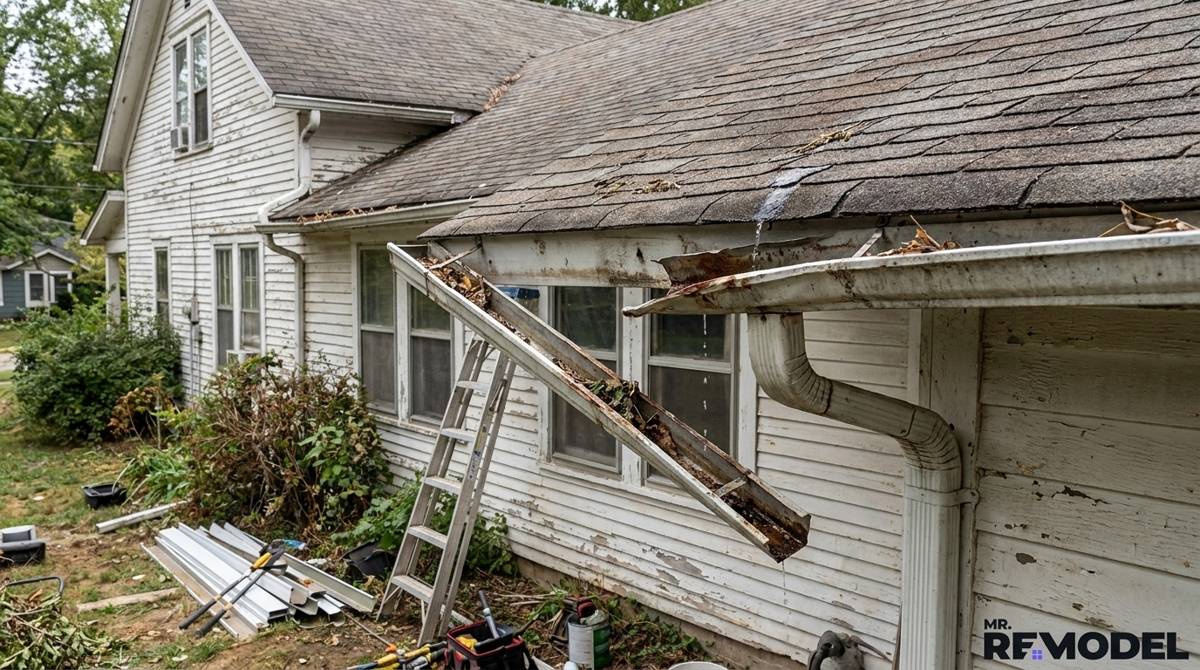
Table of Contents [hide]
Who This Is For
This guide is written for homeowners who have noticed minor leaks, sagging, or exterior staining and want to avoid the high cost of foundation repair. If you are trying to decide whether to patch a small hole or invest in a new system, this data-backed analysis helps you identify when your home exterior is at immediate risk.
Key Takeaways
- Urgency Matters. Over 20% of users wait until active flooding occurs.
- Replacement Priority. Nearly 80% of homeowners choose full system replacements.
- Structural Safety. Clogged or sagging channels lead to foundation erosion.
- Regional Risk. Coastal storms and mountain ice accelerate gutter failure.
- Equity Protection. New gutters prevent rot and increase property resale value.
Ignoring a small drip today can lead to a flooded basement and a cracked foundation tomorrow. If you are noticing water stains or bowed channels, you are likely among the many people researching the 7 signs you need new gutters to save your home.
Planning an exterior renovation is simpler when you have a professional partner to help you filter through the noise. Mr. Remodel is a referral service that connects property owners with pre-screened, local contractors. We help you find a reliable expert to ensure your home stays dry.
The High Cost of Waiting for a Gutter Failure
Spotting early warning signs is your only defense against structural rot and expensive mold remediation. Our proprietary data shows that 76.82% of homeowners utilize a 30-day planning window when they first notice issues. Act now before a minor seam leak becomes a major interior flood.
Delaying maintenance pushes you into the panic category of home repair. Over 20% of homeowners wait until active basement flooding occurs before they seek professional help. Stopping the damage before it escalates to emergency levels saves you thousands in restoration costs and prevents permanent property damage.
See Related: Gutter Replacement Cost Guide
Sagging and Pulling Fasteners
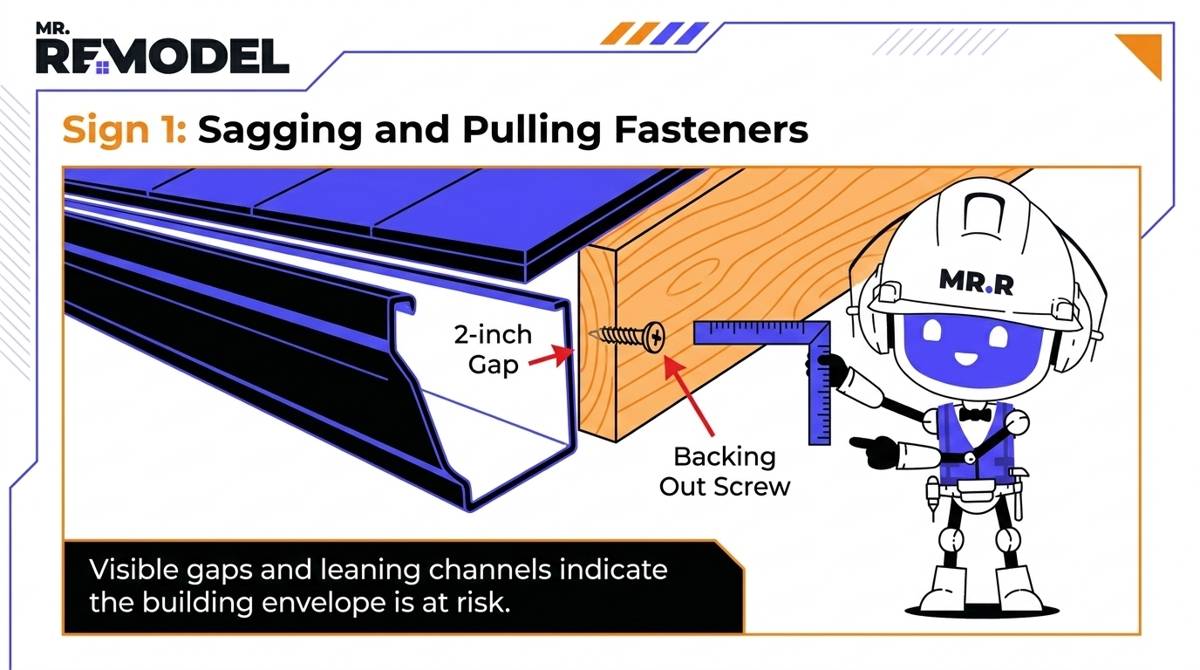
Gutters should never pull away from the roofline or appear to lean forward. When fasteners loosen, your fascia board is likely rotting from repeated moisture exposure. This severely compromises the entire building envelope and leaves your roof edges vulnerable to wind damage.
In Pennsylvania, severe ice damming often pulls gutters off the house. According to the U.S. Department of Housing and Urban Development structural guidelines, compromised rooflines invite rapid moisture intrusion and interior decay.
The following list identifies the specific signs of loose fasteners you should look for:
- Visible Gaps. Space between the gutter back and the wood fascia.
- Leaning Channels. Gutters that look like they are tilting toward the ground.
- Exposed Screws. Nails or screws that are visibly backing out of the wood.
- Bowing Metal. Sections that look warped from carrying heavy water or ice.
- Sagging Troughs. Low spots where water pools instead of flowing to the downspout.
Understanding the Fascia Rot Threat
When your fasteners fail, it is rarely a simple matter of tightening a screw. Usually, the wood behind the metal has become soft from years of overflow. If you do not address the root cause, a heavy rainstorm could pull the entire system down, causing secondary damage to your siding or landscaping.
Peeling Paint and Water Stains
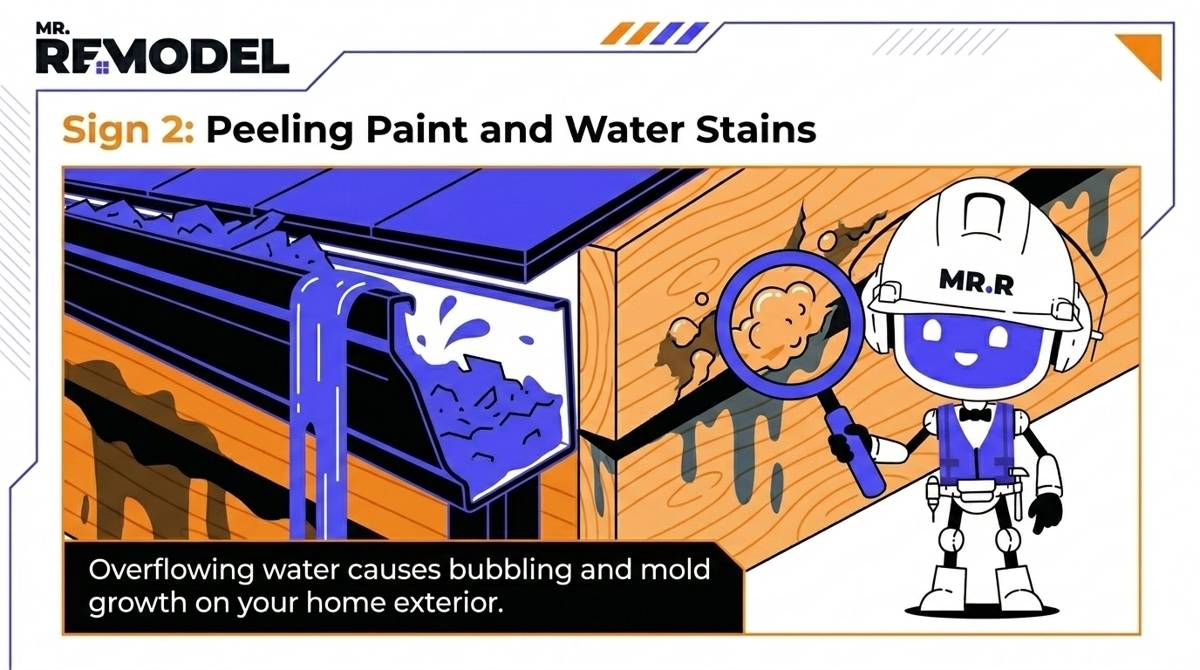
Peeling paint on your exterior walls is a massive red flag that your drainage is failing. It proves water is constantly overflowing the gutter channel and running directly down your delicate siding. This persistent moisture leads to bubbling, staining, and the eventual failure of your home exterior protection.
Consistent overflow destroys structural integrity over time. The Environmental Protection Agency explains that unmanaged stormwater runoff directly causes severe foundation erosion and toxic mold growth. If you see streaks of dirt or mildew on your siding, your gutters are likely too small or severely clogged.
Stop the damage before it reaches your foundation by contacting expert gutter installation contractors at Mr. Remodel for a professional evaluation.
See Related: How Bad Gutters Cause Foundation Damage and What It Costs to Fix
Split Seams and Separated Joints
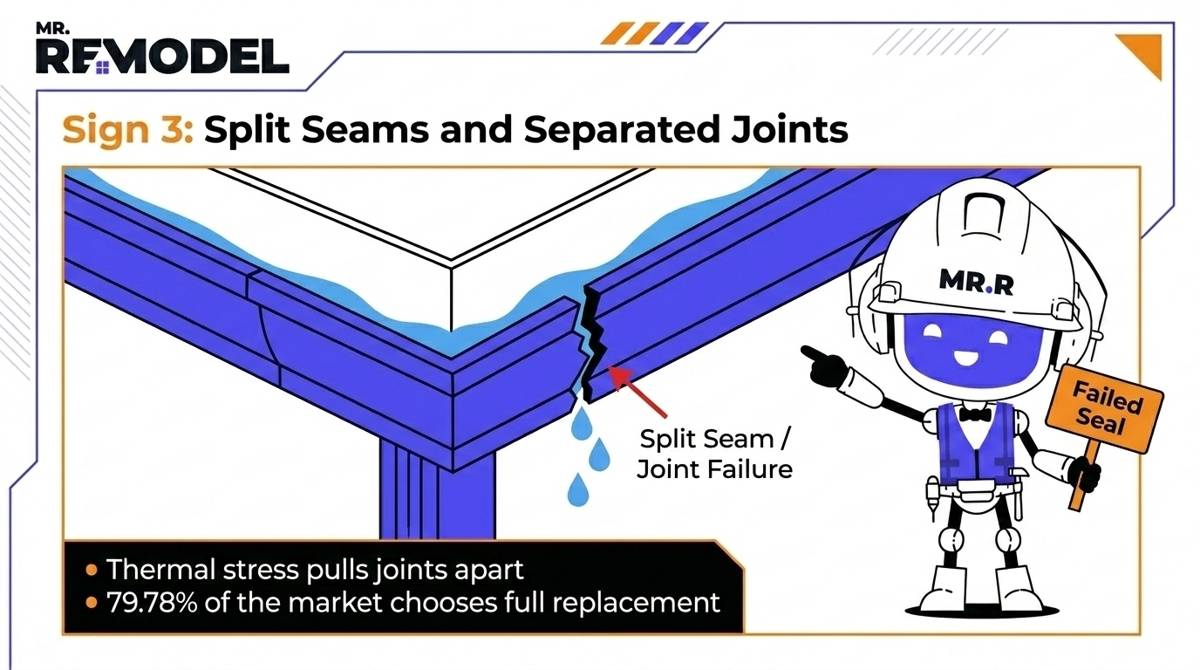
Split seams are unfixable under heavy water volume and act as a gateway for moisture intrusion. In hurricane-prone states like Florida, the Federal Emergency Management Agency notes that compromised joints will catastrophically fail during storm surges. You cannot rely on old caulking to hold back thousands of gallons of runoff.
Do not attempt a risky DIY patch on an aged system. Our data proves 79.78% of the market wisely chooses full system replacements when they see separated joints. Trying to caulk aged aluminum is a complete waste of capital.
Why Regular Joints Are A Primary Liability
- Sealant Failure. Old caulking dries out and cracks under the hot sun.
- Thermal Stress. Expansion and contraction pull sectional joints apart over time.
- Debris Snags. Leaves often get caught on the internal lip of a joint.
- Weight Strain. Heavy water volume puts intense pressure on the weakest points.
- Corrosion Risk. Rust often starts at the holes where sections are joined together.
Cracks and Visible Rust Spots
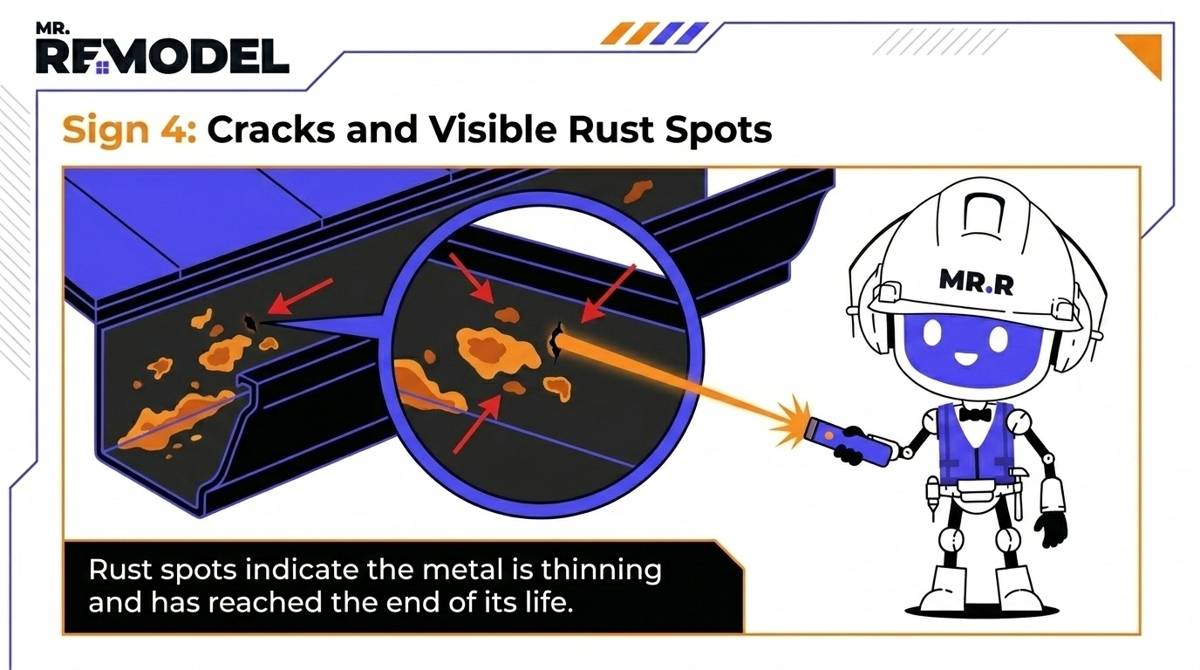
Even small cracks in your gutters can cause significant damage during a heavy storm. If you see orange or brown rust spots on aluminum or steel, the metal has begun to thin and weaken. Rust is a clear indicator that the material has reached the end of its functional lifespan.
While some homeowners try to paint over rust, this is a temporary aesthetic fix. Once oxidation starts, it will continue to eat away at the metal until a hole forms. This is especially common in states like North Carolina, where high humidity and salt air accelerate the corrosion of low-quality materials.
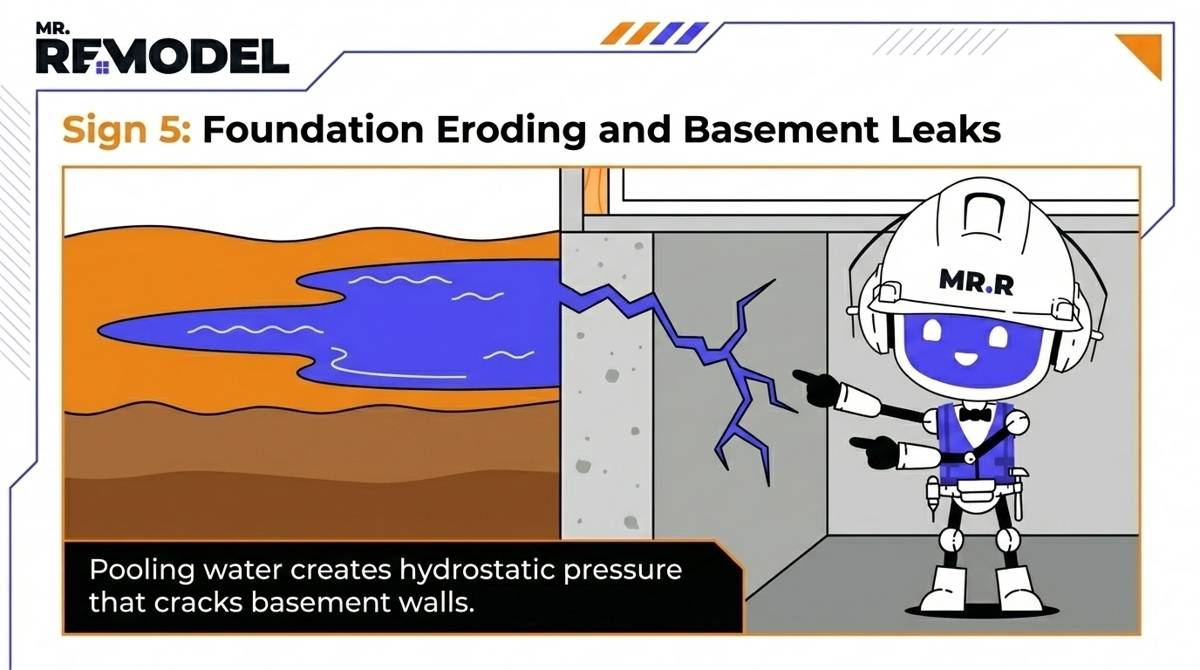
Foundation Eroding and Basement Leaks
The most dangerous sign of gutter failure is often found at the ground level. If you see pools of water near your foundation or cracks in your basement walls, your gutters are not moving water far enough away. Over 20% of homeowners only realize they have a problem when they find standing water in their basement.
Overflowing water creates hydrostatic pressure against your basement walls. This pressure eventually causes the concrete to crack, leading to expensive structural repairs. Properly functioning gutters and downspouts are your first line of defense against a flooded home and a compromised foundation.
See Related: Leaking Gutters: Repair Costs vs Full Replacement
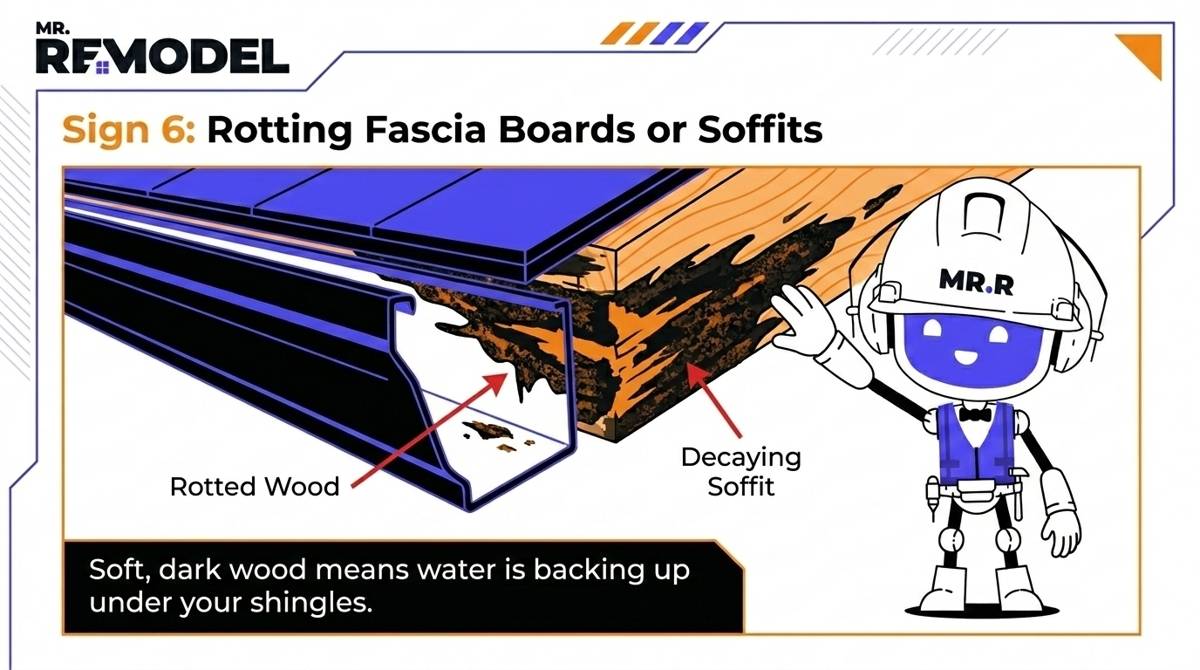
Rotting Fascia Boards or Soffits
If the wood under your roofline looks dark, soft, or crumbly, your gutters are failing. Rotting fascia boards are caused by water backing up under the shingles or spilling over the back of the gutter. This is a sign of a poor pitch or of a system completely blocked by debris.
When the fascia rots, it can no longer support the weight of the gutters. This creates a dangerous cycle where the sagging gutter allows even more water to reach the wood. Replacing the wood and the gutters at the same time is the only way to ensure a permanent, high-performance fix.
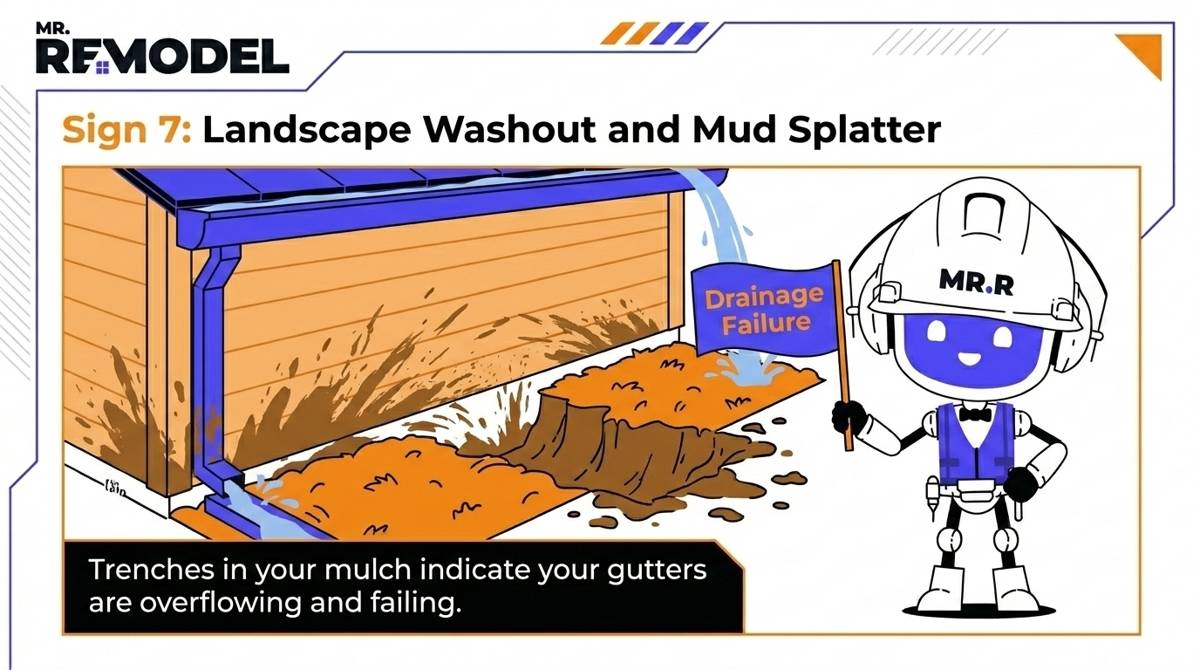
Landscape Washout and Mud Splatter
If your beautiful landscaping is being washed away or your siding is covered in mud, your gutters are overflowing. A properly installed system should collect every drop of rain and move it through the downspouts. If you see trenches forming in your mulch or soil, the water is falling directly from the roofline.
This mud splatter also introduces moisture and bacteria to your home siding. This can lead to the growth of green algae or black mold on your exterior walls. High-capacity gutters are required in states like Florida to handle intense rainfall volumes without overwhelming the landscape.
Research Methodology
This 2026 guide is based on a detailed analysis of 4,614 consumer inquiries captured in our internal database. We have combined these behavioral markers with structural data from federal agencies. This ensures our signs of failure are based on actual property risk metrics and regional climate threats across the United States.
Frequently Asked Questions
Can I repair my sagging gutters?
If the fascia wood is still healthy, you may be able to replace the hangers. However, sagging is often a sign of long-term water damage to the wood. Nearly 80% of homeowners choose full replacement because it ensures the entire system is securely anchored to fresh wood.
How do I know if my gutters are too small?
If your gutters overflow during a normal rainstorm, even when they are clean, they are likely undersized. Many older homes were built with 5-inch gutters that cannot handle the high-intensity storm patterns we see in 2026. Upgrading to 6-inch seamless systems is a common solution.
What happens if I ignore peeling paint?
Ignoring peeling paint allows water to penetrate the structural siding and framing of your home. This can lead to wood rot, pest infestations, and interior wall damage. It is a sign that water is escaping the gutter and causing active damage to your property.
Act Now to Protect Your Foundation
Mr. Remodel seamlessly connects homeowners with elite, vetted professionals who understand regional climate threats. Our referral network ensures you quickly find the right local expert. Our goal is to make your home renovation as stress-free as possible.
Secure your property and stop the damage before it escalates. Connect with expert gutter installation contractors to halt moisture damage and permanently protect your home foundation today.