1-855-QUOTEMR

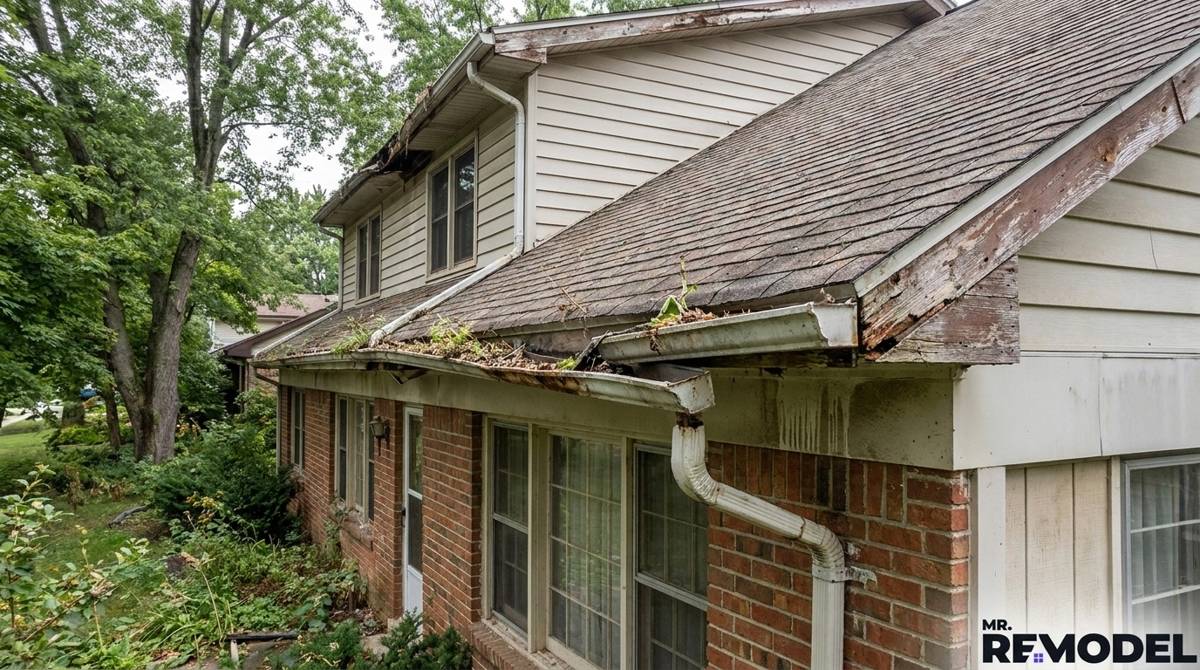
Table of Contents [hide]
Who This Is For
This guide is prepared for property owners who have noticed soil erosion around their home perimeter, damp basement walls, or peeling paint on their exterior trim. If you are currently evaluating a routine maintenance task, this resource reveals the high-stakes financial relationship between your drainage system and your home's structural integrity.
Key Takeaways
- Financial Penalty: Delaying gutter upgrades can lead to repair costs exceeding $15,000.
- Replacement Logic: Nearly 80% of savvy homeowners choose full system resets over patches.
- Regional Drivers: Local soil types and climate patterns dictate the speed of foundation failure.
- Warning Signs: Catching early indicators, such as soil erosion, helps prevent active structural cracking.
- Expert Audit: Professional assessments identify high-risk areas before hydrostatic pressure builds.
A $13,200 financial error often starts with a single overflowing downspout during a summer rainstorm. Understanding how bad gutters cause foundation damage and what it costs to fix is the difference between a simple weekend upgrade and a total structural nightmare for your property.
Mr. Remodel serves as a specialized referral service that helps property owners avoid these catastrophes. We connect you with vetted, local contractors who specialize in high-quality exterior preservation. Our goal is to provide the data you need to protect your investment before a minor leak becomes a major disaster.
The Financial Penalty of Neglect
Ignoring a sagging gutter or a leaking seam is not a cosmetic issue. It is a calculated gamble with your building envelope. By analyzing 2026 industry proxies, we have identified a massive tipping point between preventative maintenance and catastrophic failure. Investing in a new system now serves as cheap insurance for your home.
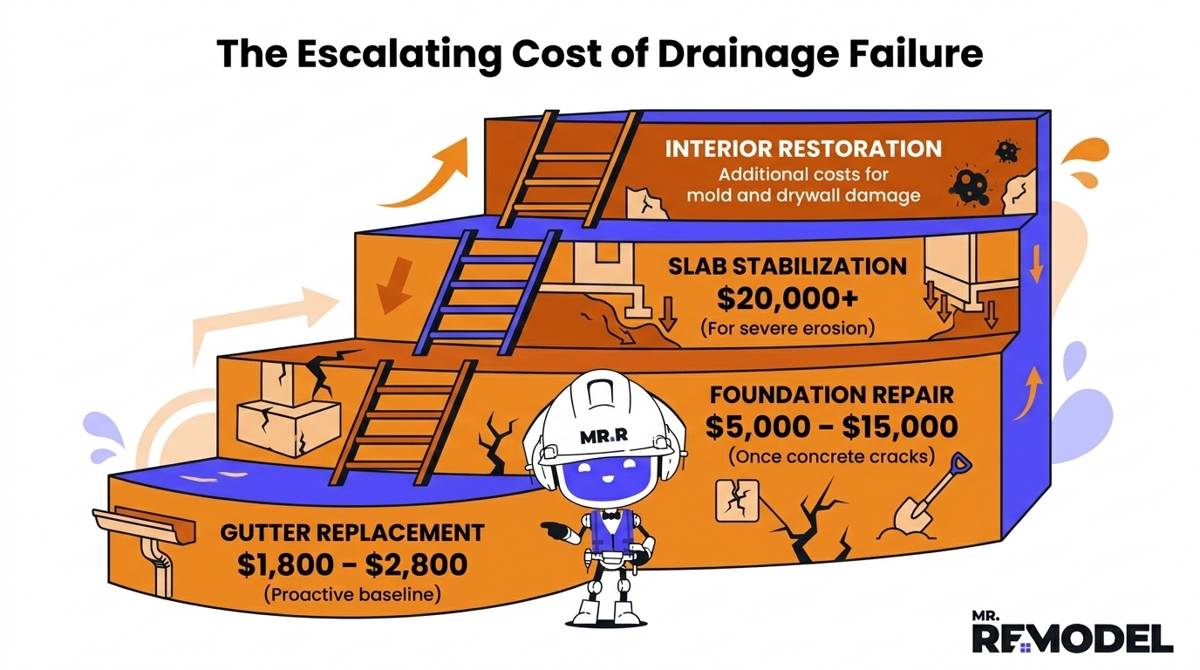
Most homeowners fail to realize how quickly a minor drainage issue turns into a five-figure liability. To illustrate this financial gap, we have broken down the 2026 cost expectations for property owners:
- Preventive Gutter Replacement: A standard 200 linear-foot home typically costs between $1,800 and $2,800.
- Foundation Repair Baseline: Once hydrostatic pressure cracks the concrete, repairs often range from $5,000 to $15,000.
- Slab Stabilization: Severe erosion may require specialized piering that can easily exceed $20,000.
- Basement Waterproofing: Treating the symptoms of water intrusion adds another $3,000 to $8,000 to the cost.
- Interior Restoration: Fixing drywall and mold damage from basement floods further drains your savings.
See Related: 2026 Gutter Replacement Cost Guide
Why the Patching Fallacy Fails
Our data shows that only 4.14% of the market attempts to repair failing gutters. This is because a localized patch on a leaking seam does not fix the underlying problem of ground saturation. Smart homeowners recognize that a full replacement is the only way to guarantee a waterproof perimeter.
See related: Leaking Gutters: Repair Costs vs Full Replacement
Regional Threat Profiles: Soil, Storms, and Ice
Geography dictates how quickly your home's foundation fails. In states like North Carolina, the soil's high expansion properties make foundation cracking occur rapidly. When gutters overflow, they dump thousands of gallons into the soil, creating massive lateral pressure against your basement walls.
According to the Environmental Protection Agency, proper stormwater management is vital for preventing soil saturation. When water pools near your house, it creates a hydraulic force that eventually overcomes the strength of your concrete. This leads to bowed walls and structural shifts.
In regions like Florida and Pennsylvania, the environmental stressors vary, but the result remains equally expensive. Homeowners must account for these localized risk factors when deciding on the timing of their next upgrade:
- Florida Slab Erosion: Extreme torrential rain overwhelms aging five-inch systems, rapidly washing away the soil beneath concrete slabs.
- Pennsylvania Snowmelt: Blocked gutters create ice dams that dump concentrated snowmelt directly against basement walls.
- PA Freeze Thaw: Water trapped near the foundation freezes and expands, widening existing hairline cracks into major structural gaps.
- Coastal Salt Air: Accelerated corrosion on non-copper systems leads to hidden leaks that saturate the foundation perimeter.
- Deep Frost Lines: Northern climates require perfect drainage to prevent the soil from heaving against the structural footings.
Structural Necessity in High-Wind Zones
The Federal Emergency Management Agency provides strict guidelines on foundation requirements in coastal regions. Upgrading to high-capacity, seamless systems is a structural necessity to prevent slab undermining. Standard gutters simply cannot handle the volume of water produced during a tropical storm event.
Don't wait for a $15,000 structural emergency to appear. You can find expert gutter installation contractors through Mr. Remodel to secure a full structural protection audit today.
Detecting the Silent Danger Timeline
The transition from a minor annoyance to a structural threat happens in two distinct phases. Our 2025 dataset reveals that 73.71% of homeowners are currently in the warning sign phase. These property owners are spotting soil erosion or peeling fascia paint, but have not yet experienced active interior flooding.
If you ignore these exterior indicators, you will eventually enter the active emergency phase. This cohort represents 20.85% of our users who are in a state of panic. At this point, you are no longer just replacing gutters. You are attempting to stop active foundation water intrusion, which is a much more expensive task.
The Science of Hydrostatic Pressure
Water is heavy, weighing roughly 8.3 pounds per gallon. When your gutters fail, that weight is concentrated directly against your foundation. The Department of Housing and Urban Development notes that freeze-thaw cycles turn this overflow into concrete-cracking lateral pressure that will damage your home.
See Related: 7 Signs You Need New Gutters Before Major Damage Happens
Research Methodology
This 2026 guide is based on a detailed analysis of 4,614 consumer inquiries captured in our internal database. We have combined these behavioral markers with structural data from federal agencies. This ensures our signs of failure are based on actual property risk metrics and regional climate threats across the United States.
Frequently Asked Questions
Can bad gutters cause basement flooding?
Yes. When gutters overflow, the water pools at the foundation. This creates pressure that forces water through tiny cracks or porous concrete. This is the primary cause of damp basements and toxic mold growth in residential properties.
How far should downspouts go from the house?
For maximum safety, downspouts should discharge water at least five to ten feet away from the foundation. This ensures that the water percolates into the soil far enough away to avoid creating lateral pressure against your basement walls.
Does homeowners' insurance cover foundation damage from gutters?
Most standard policies do not cover damage caused by poor maintenance. If your foundation cracks because you failed to replace old, sagging gutters, you will likely be responsible for the full cost of repairs out of your own pocket.
Secure Your Structural Protection Audit
Don't wait for an expensive emergency to force your hand. Use your current planning window to secure a comprehensive structural protection audit before the next storm season. Protecting your foundation starts at the roofline, and our network is here to help you find the right elite professional for the job.
Join the thousands of homeowners in the Mr. Remodel network who prioritize home preservation over expensive repairs. We make it easy to find expert gutter installation contractors who understand the unique soil and climate threats of your local area.
Take a proactive step to save your foundation today. Reach out to our team and connect with the artisan-level contractors needed to secure your property's perimeter for the next 20 years.