1-855-QUOTEMR

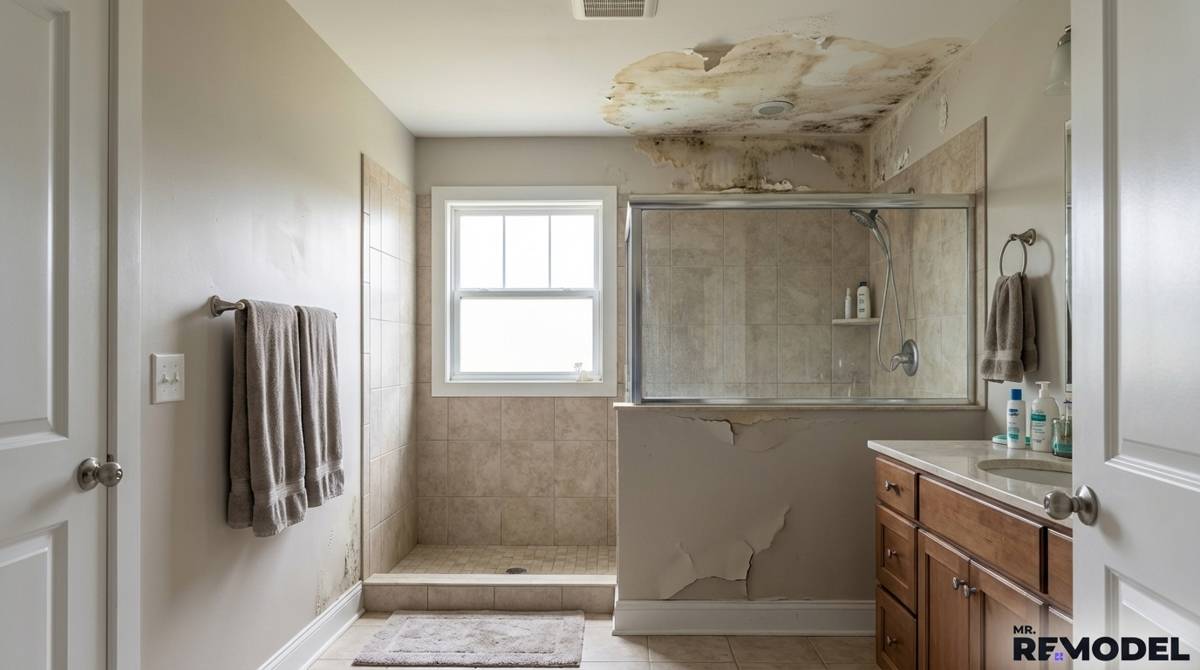
Table of Contents [hide]
Who This Is For
This guide is for homeowners currently standing in a puddle and dealing with a plumbing crisis. If you are in the middle of a high-urgency disaster, you need a step-by-step triage plan. We provide the exact checklist for your first 60 minutes, help you calculate the financial impact, and show you how to strategically use your insurance payout to upgrade your home rather than just repairing the rot.
Key Takeaways
- The First 60 Minutes: Shut off the main water valve and cut the electricity to the room immediately to prevent severe structural damage and electrical hazards.
- Identify the Threat: Knowing whether you are dealing with clean, gray, or black water determines whether you can clean it yourself or need a hazardous materials crew.
- The 24-Hour Mold Window: Toxic mold begins growing within 24 to 48 hours of a water event. Immediate professional drying is mandatory to save your subfloor.
- The Insurance Arbitrage Strategy: Do not just put cheap materials back into a damaged room. Use your insurance mitigation check to fund a premium tub-to-shower conversion.
- Geographic Risk: Homeowners in California, New York, and Florida face the highest density of plumbing failures and require rapid 24-hour assessments.
If you are frantically searching for what to do about bathroom water damage, you are likely in the middle of a stressful plumbing crisis. A burst pipe or an overflowing toilet is one of the most destructive events a homeowner can experience. When water breaches your drywall and sinks into your subfloor, every single minute counts.
According to proprietary data from Mr. Remodel, over 10% of the entire bathroom remodeling market consists of homeowners who need to start a project immediately due to a water failure. You are not alone in this crisis. By following strict triage protocols, you can stop the active leak, safely dry the room, and completely pivot this disaster into a highly profitable remodeling opportunity.
The First 60 Minutes: Your Triage Checklist
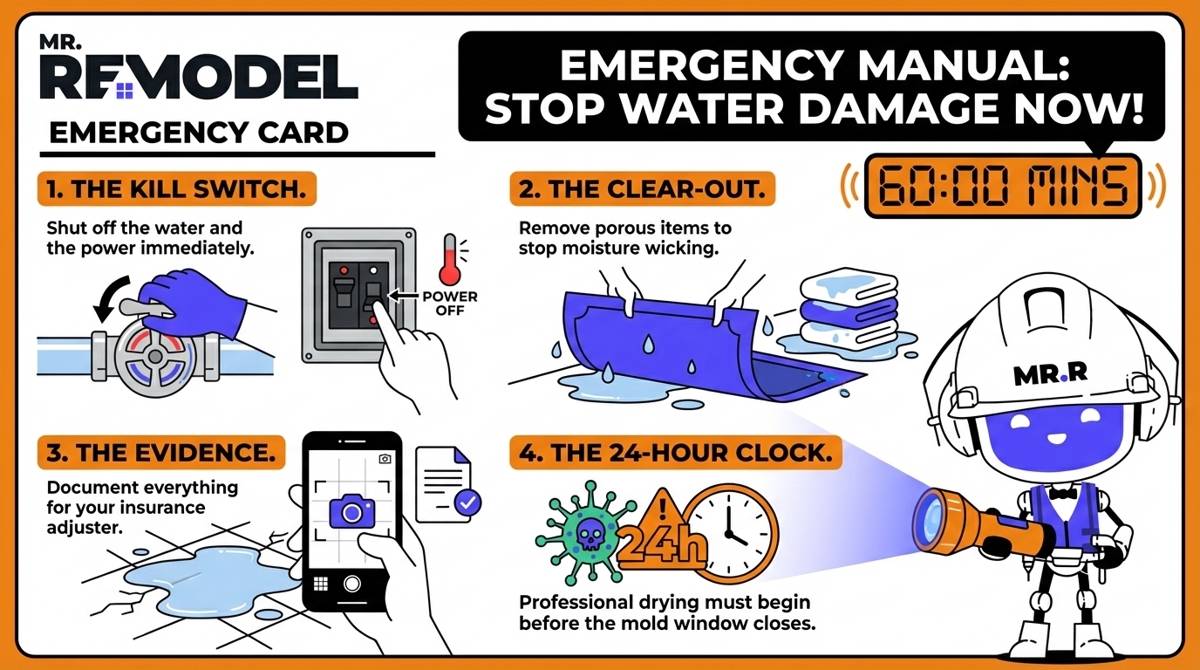
When faced with a sudden flood, panic often leads to expensive mistakes. You must act methodically to protect your property and your family. Follow this exact checklist during the first hour of a water event.
- Shut Off the Water Source: If a toilet or sink is overflowing, turn the small silver isolation valve located on the wall directly behind the fixture clockwise. If a pipe bursts inside the wall, you must shut off the main water valve for the entire house. This is usually located in the basement, garage, or front yard utility box.
- Cut the Power: Water and electricity are a deadly combination. Go to your main breaker panel and flip the switch that controls the bathroom lighting and outlets. Do not plug in any fans or wet vacuums inside the flooded room.
- Remove Movable Items: Quickly remove any rugs, towels, toilet paper, and wooden furniture from the floor. These porous items absorb contaminated water rapidly and will trap moisture against your baseboards.
- Document the Damage: Before you begin wiping up the floor, take dozens of well-lit photos and videos of the standing water, the broken fixture, and the damaged drywall. Your insurance adjuster will require this exact evidence to process your claim.
See Related: Bathroom Problems and Solutions
Identify Your Water Category
Not all water damage is created equal. The Institute of Inspection, Cleaning and Restoration Certification (IICRC) publishes the S500 standard, which is the global authority on professional water damage restoration. You must identify your water category to understand the associated health risks.
Category 1: Clean Water
This is water from a sanitary source, such as a broken water supply line or a clean overflowing sink. You can usually wipe this up yourself without major health risks. However, the Centers for Disease Control and Prevention (CDC) warns that clean water will still cause toxic mold growth within 24 to 48 hours if the drywall and subfloor are not professionally dried.
Category 2: Gray Water
Gray water contains significant chemical or biological contamination. This includes water overflowing from a washing machine or a toilet bowl containing urine but no feces. Handling this requires extreme caution and protective gear.
Category 3: Black Water
Black water is grossly contaminated and highly toxic. This includes raw sewage backups from a toilet or severe groundwater flooding. The University of Minnesota Extension provides strict academic guidance on disinfecting after a flood, noting that Category 3 events require mandatory professional extraction. You must never attempt to clean black water yourself.
See Related: Signs You Need a Bathroom Remodel
The Insurance Arbitrage Strategy
Once the water is stopped, you must contact your insurance company. The National Association of Insurance Commissioners (NAIC) explains that standard homeowners insurance typically covers sudden and accidental water damage, though it usually denies coverage for gradual, long-term leaks.
If your claim is approved, you will face a critical financial decision. Most homeowners take their $4,500 insurance payout and simply pay a contractor to put the same cheap drywall and basic bathtub back into the room. We call this a wasted opportunity.
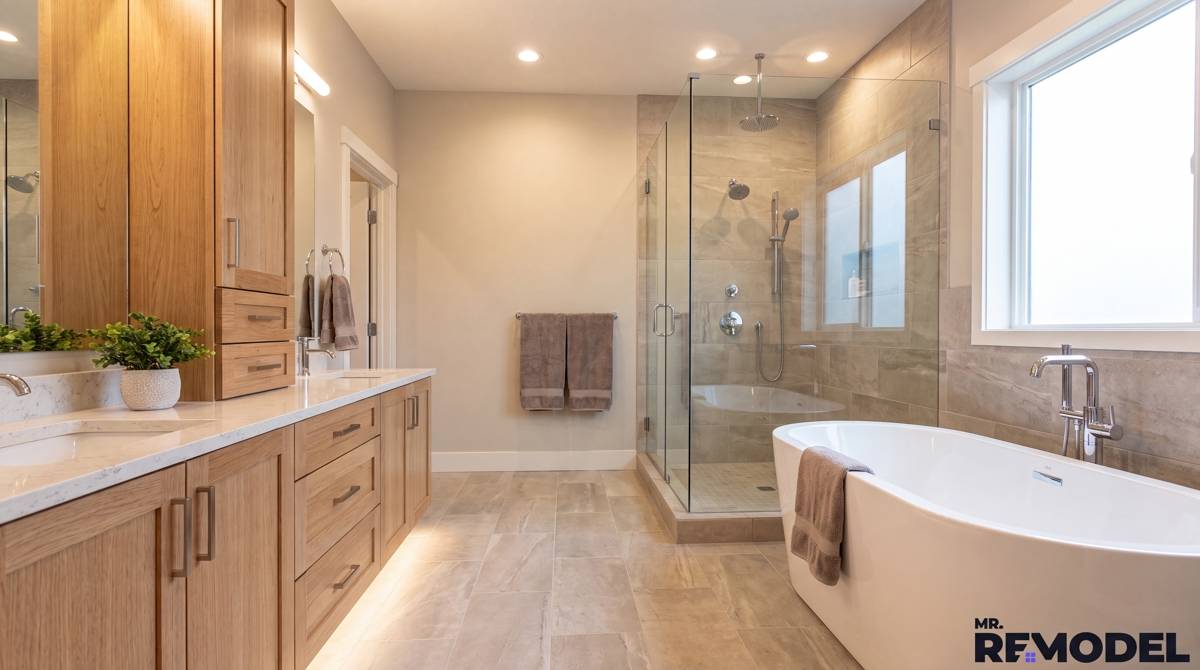
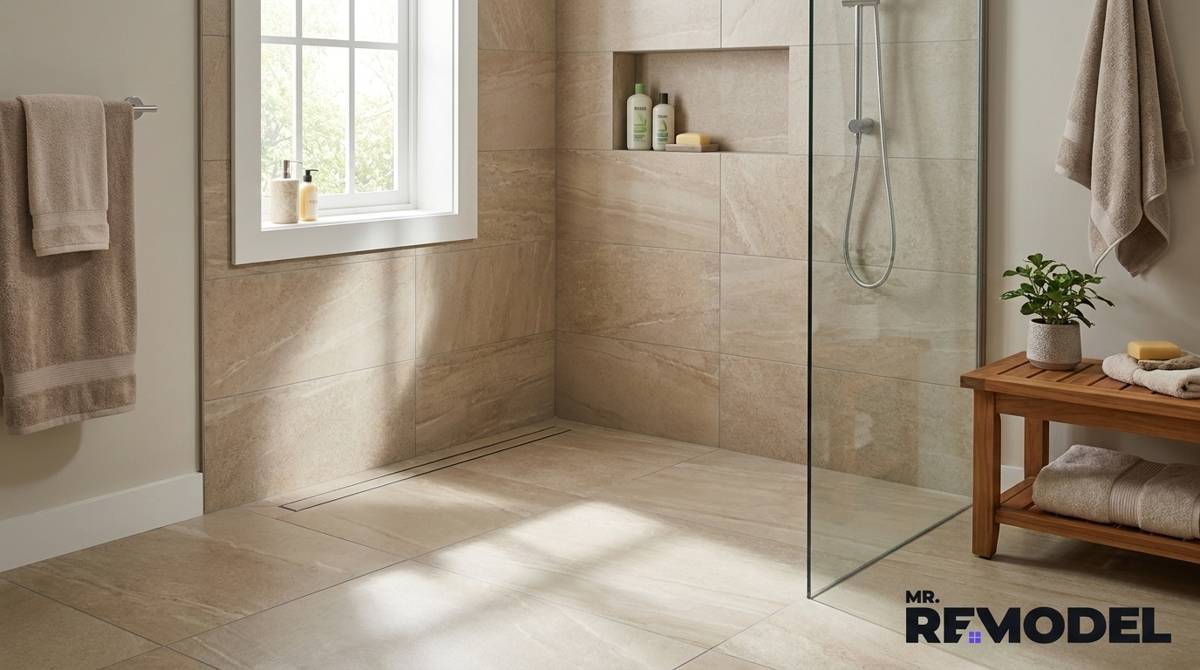
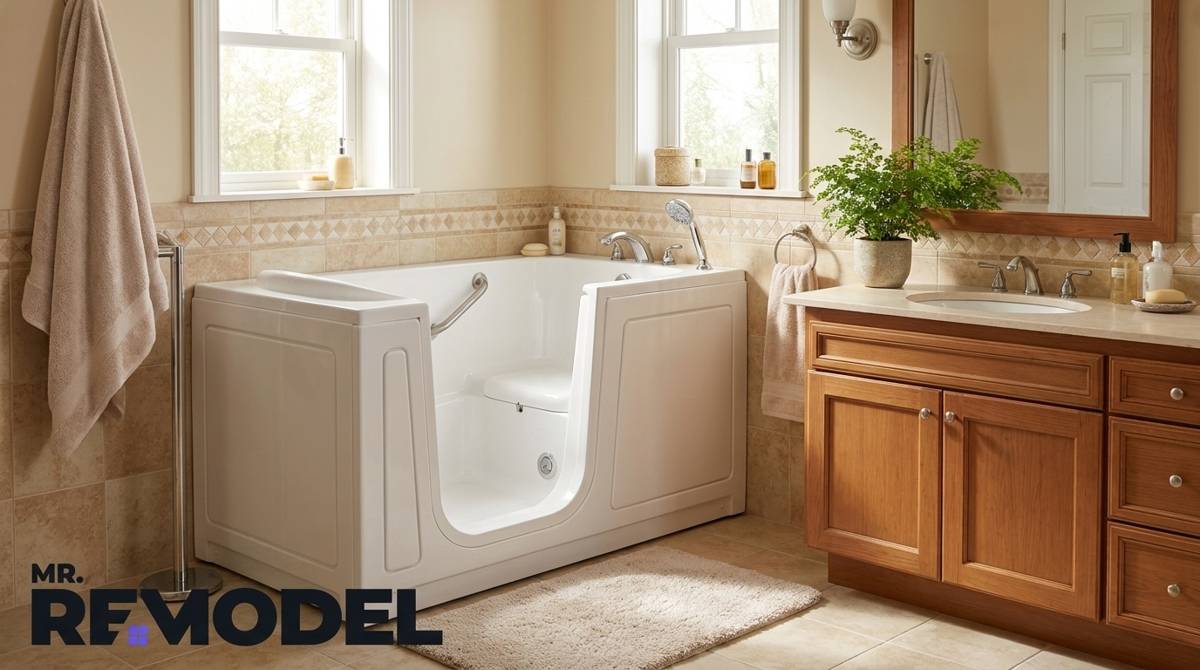
Instead, you should utilize an insurance arbitrage strategy. You can use that $4,500 mitigation check to fund a complete, modern structural upgrade. By adding your own funds to the insurance payout, you can turn a disaster into a $15,794 premium shower upgrade or an $18,310 luxury tub-to-shower conversion. You get a brand new, highly engineered space rather than just repairing a broken, outdated room.
You can instantly pivot from a stressful mitigation phase to a luxury upgrade by securing a professional 24-hour assessment. Get a free quote for your bathroom remodel from Mr. Remodel to connect with local experts who can dry out the rot and rebuild your space safely.
See Related: When Bathroom Repairs Are No Longer Worth It
2026 Restoration and Upgrade Cost Guide
To plan your next steps, you need to understand the exact costs of both drying the room and rebuilding it. Use this verified 2026 pricing guide to transition from a repair mindset to a remodel mindset.
|
|
Geographic Hotspots and Floodproofing
Our data highlights severe regional vulnerability. Homeowners in California, New York, and Florida face the highest density of rapid plumbing failures. If you live in these states, our data shows a 10.1% surge in urgency, proving you must have a trusted contractor on speed dial.
When you rebuild, you must focus on prevention. The Federal Emergency Management Agency (FEMA) publishes strict guidelines for residential floodproofing. A high-quality contractor will rebuild your bathroom using advanced moisture-resistant cement board, waterproof membranes, and non-porous solid-surface materials to ensure that a broken pipe never destroys your subfloor again.
See Related: Cracked Tiles and Failing Grout Causes
Frequently Asked Questions
Will my homeowners' insurance cover a new bathroom?
Insurance covers the cost of restoring the bathroom to its condition before the sudden water event. It will not entirely fund a brand-new luxury remodel. However, you can use the cash payout from the claim and combine it with your own renovation budget to fund a massive upgrade rather than just replacing old materials.
How long does it take for mold to grow after a leak?
Toxic mold begins to grow rapidly within 24 to 48 hours after a water event. Even if the surface of your tile looks dry, water trapped in your wall cavities and under your subfloor can breed mold if it is not professionally extracted using industrial dehumidifiers.
Can I clean up the toilet overflow water myself?
If the toilet overflowed with clean water from the tank, you can clean it up using heavy towels and disinfectant. If the toilet overflowed with dirty bowl water or raw sewage, it is considered Category 3 black water. You must evacuate the room and call a hazardous materials mitigation team to safely extract the waste.
Why is my bathroom floor spongy after a leak?
A spongy or soft floor means the water has bypassed your tile and completely soaked into the wooden subfloor beneath it. The wood is actively rotting and losing its structural integrity. You must have a professional tear out the flooring and replace the rotting wood before the toilet or bathtub falls through the floor joists.
Turn a Disaster Into an Opportunity
Experiencing a major plumbing leak is terrifying, but it does not have to ruin your home. By acting decisively in the first 60 minutes to shut off the water and electricity, you protect your family from immediate harm.
Mr. Remodel provides the urgent, professional response you need right now. We connect you with top-rated local contractors who specialize in rapid assessments, structural tear-outs, and premium, waterproof rebuilding.
Stop the damage and start your premium upgrade today.