1-855-QUOTEMR

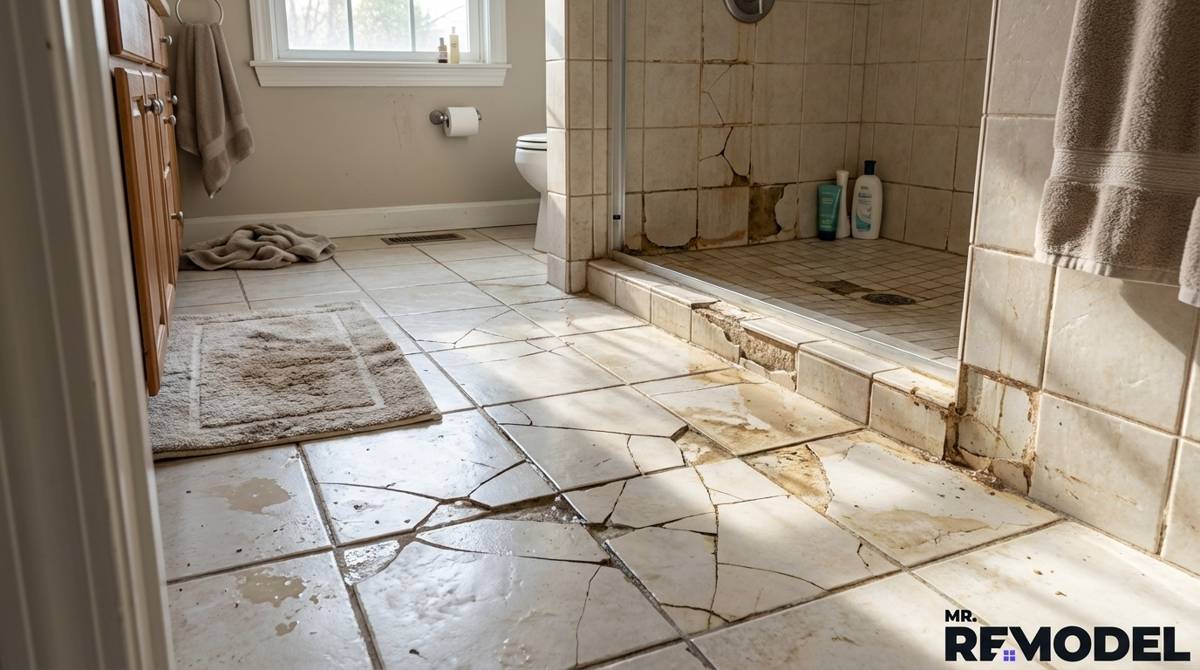
Table of Contents [hide]
Who This Is For
This guide is for homeowners tired of seeing hairline cracks in their shower walls or sweeping up crumbling grout on the floor. If you're researching DIY repair kits and grout pens, stop right there. We provide quick, evidence-based answers by explaining the structural causes behind these issues. We'll help you understand why applying a surface patch is often a waste of money and how to permanently protect your home from hidden water damage.
Key Takeaways
- The Core Problem: Tiles do not crack on their own. The primary cause of failure is a shifting, bending, or improperly leveled wood subfloor beneath the surface.
- The Grout-to-Rot Pipeline: A tiny crack in your shower grout is a direct portal for water. Ignoring it often results in an average structural water damage claim of $3,867.
- The Repair Fallacy: Market data shows that 91.4% of homeowners with failing tile choose full replacement over repair because surface patches simply do not last.
- The Zero-Grout Cure: Upgrading to a modern, seamless acrylic or solid porcelain panel system eliminates grout lines and provides permanent waterproofing.
- Cost of Inaction: Investing in a $15,794 shower upgrade is a protective financial strategy that prevents catastrophic ceiling collapses and the need for toxic mold remediation.
When you start noticing hairline fractures in your shower or crumbling lines on your bathroom floor, understanding the causes of cracked tiles and failing grout is your first step toward preventing a major structural disaster. Most homeowners assume that a cracked tile is just a cosmetic annoyance caused by dropping a heavy object. They head to the hardware store for a cheap tube of sealant, hoping for a quick DIY fix.
According to proprietary data from Mr. Remodel, this DIY approach is a massive financial trap. Tile is a rigid material. When it cracks, it is usually a symptom of a much deeper structural failure happening out of sight. By learning the actual mechanics of why your flooring system is breaking down, you can stop wasting money on temporary band-aid fixes and invest in a permanent, watertight solution that protects your home equity.
The Top Causes of Tile and Grout Failure
If you clicked on this article, you want to know exactly why your floor or shower is falling apart. Here are the three primary structural causes behind your failing bathroom surfaces.
Subfloor Deflection and Movement
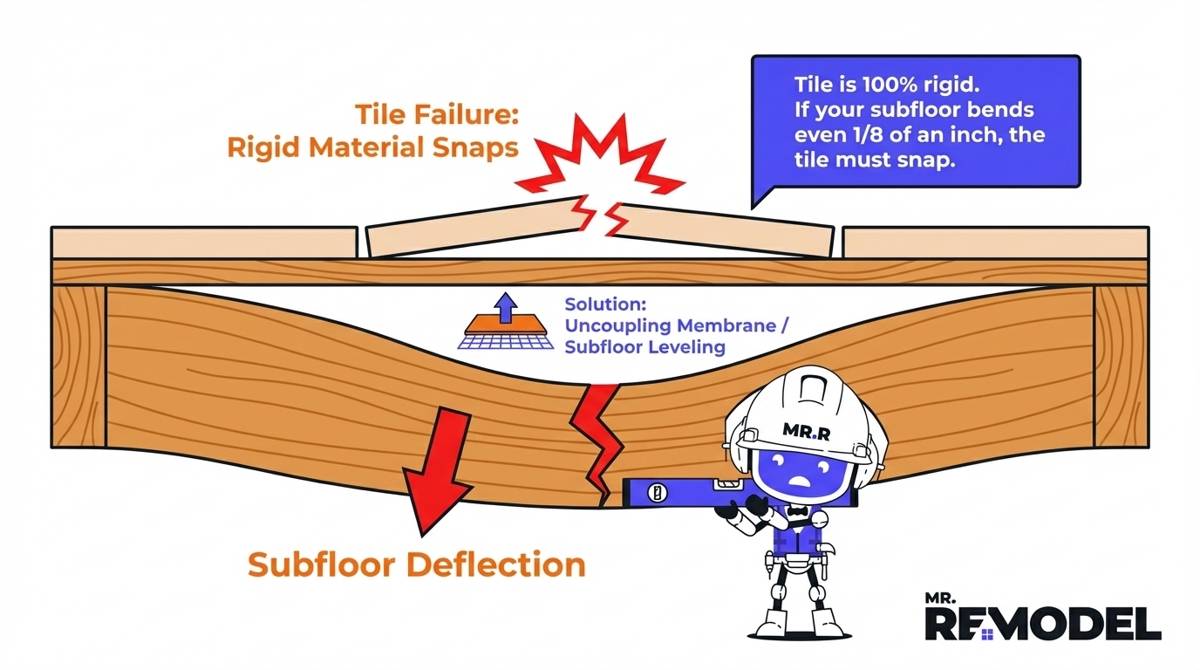
The number one cause of cracked tile is a bending subfloor. The Tile Council of North America (TCNA) is the global authority on tile installation standards. They explain that tile and dried grout are completely rigid.
If the wooden floor joists beneath your bathroom flex or bounce even a fraction of an inch when you walk, the rigid tile above it will snap under the tension. With the massive popularity of large-format tiles in 2026, the margin for error in subfloor flatness is zero.
Vapor Drive and Moisture Expansion
Bathrooms experience extreme fluctuations in temperature and humidity. The University of Minnesota Extension provides academic data showing that seasonal humidity changes cause wooden subfloors to expand and contract rapidly.
Furthermore, experts at the Building Science Corporation highlight that vapor drive pushes shower steam into the walls, causing the thin-set adhesive holding your tiles to degrade and fail over time.
Improper Installation and Lack of Expansion Joints
Many failing showers result from poor initial craftsmanship. The U.S. Department of Housing and Urban Development (HUD) instructs inspectors to look for cracked tiles as a primary indicator of structural failures in the floor system.
If a contractor failed to install a proper waterproof uncoupling membrane or neglected to leave silicone expansion joints in the corners of the room, the normal settling of your house will crush the grout lines.
See Related: Bathroom Water Damage: What to Do
The Grout to Rot Pipeline
A crumbling grout line is not just an eyesore. It is an active threat to your home. We call this the grout-to-rot pipeline.
When grout cracks in a wet area like a shower, it creates a direct portal for water to bypass the tile. Every time you turn on the shower, water is funneled behind the wall and down into your wooden subfloor.
The Institute of Inspection, Cleaning and Restoration Certification (IICRC) notes that moisture migration through failing grout quickly results in Category 2 graywater damage as it mixes with building materials and bacteria.
What starts as a $10 tube of replacement grout quickly escalates into a catastrophic failure. Our data shows that ignoring these leaks leads directly to structural rot, resulting in an average $3,867 emergency water mitigation claim just to dry out the house and prevent the ceiling below from collapsing.
See Related: Mold and Moisture Problems in Bathrooms
Repair vs Replace: What the Market Data Says
When homeowners realize their tile is failing, they face a choice between patching the crack or tearing out the installation. Our 2026 market data clearly shows that tile repair is a failed strategy.
2026 Flooring Failure and Intent Data
The 91% Replacement Mandate
As the data shows, 91.4% of homeowners with tile issues choose full replacement. Why? Because consumers have learned that tile is not a repairable surface. If the subfloor is moving and causing the crack, putting new grout over the old crack will just result in a new fracture a few weeks later.
You can bypass the frustration of endless repairs by upgrading your failing space immediately. Connecting with verified local professionals lets you assess your subfloor safely and get a free quote for your bathroom remodel before hidden water damage spreads.
The Zero-Grout Solution: Seamless Panels
If your shower grout is failing, the smartest financial move is to eliminate grout. With 36% of our bathroom leads actively seeking shower upgrades, the modern buyer is shifting away from traditional tile.
The Rise of Non-Porous Surfaces
Instead of worrying about sealing grout lines every year, homeowners are investing in seamless acrylic or large-format solid porcelain panels. These advanced systems are completely non-porous. They feature zero grout lines, meaning there is nowhere for water to penetrate and nowhere for mold to hide.
Economic Urgency
A premium seamless shower upgrade averages $15,794. While this is a significant investment, it is a protective financial strategy. By replacing your failing, cracked tile with a guaranteed watertight system today, you permanently insulate yourself against the $3,867 average cost of emergency water mitigation and the devastating health impacts of toxic mold. It is the last shower floor you will ever need to buy.
See Related: Signs You Need a Bathroom Remodel
Frequently Asked Questions
Can I just put new grout over my cracked grout?
No. Applying new grout over failing, cracked grout is a temporary band-aid fix. The new grout will not bond properly to the dirty, crumbling edges of the old grout. More importantly, if the underlying subfloor is bending and causing the movement, the new grout will simply crack again in the same spot.
Why do my large-format tiles keep cracking?
Large-format tiles require a perfectly flat and rigid subfloor. Because they cover a larger surface area, they have zero flexibility. If your wooden floor joists have any bounce or deflection, the tension will immediately snap a large tile right down the middle.
How do I know if water is getting behind my shower tiles?
Look for secondary signs of moisture failure. If the grout is missing or crumbling, water is already getting behind the tile. Other major red flags include a persistent musty smell, caulking that constantly peels away from the tub, or bubbling, soft drywall right next to the shower enclosure.
Are seamless acrylic showers better than tile?
For homeowners prioritizing low maintenance and absolute waterproofing, seamless acrylic or solid surface showers are highly superior. They eliminate porous grout lines that require constant scrubbing and resealing, offering a hygienic, medical-grade solution for bathroom moisture control.
Stop Patching and Start Upgrading
A cracked tile or a missing chunk of grout is your bathroom sending you a very clear warning signal. The structural system beneath your feet is moving, and water is actively seeping into your walls.
The data show that repairing a rigid tile system is a waste of time and money. By understanding the mechanics of subfloor deflection and vapor drive, you can avoid the costly grout-to-rot pipeline.
Mr. Remodel makes it easy to secure a permanent, watertight solution. We connect you with top-rated local contractors who understand advanced subfloor leveling and seamless panel installations. They will tear out the failing materials, fix the underlying movement, and build a shower that lasts a lifetime.
Protect your home and upgrade your shower today.