1-855-QUOTEMR

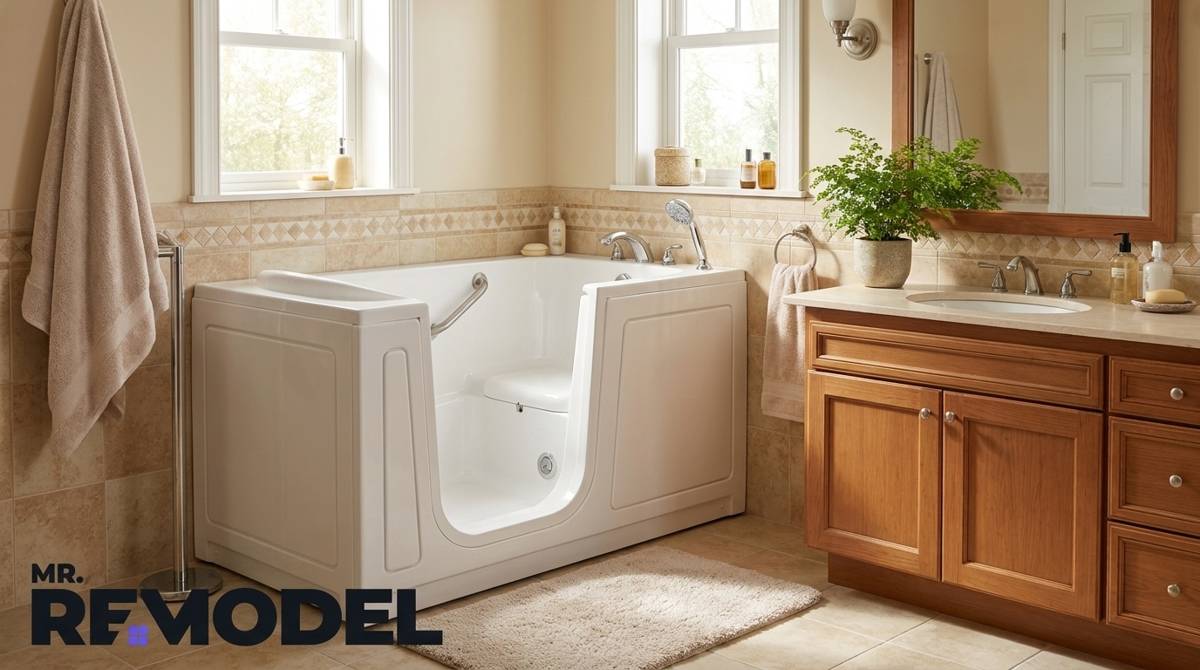
Table of Contents [hide]
Who This Is For
This is for seniors planning to age in place, adult children helping aging parents, homeowners with mobility concerns, and families evaluating bathroom safety upgrades for safer, more comfortable daily bathing.
Key Takeaways:
- Safer Bathing: Walk-in tubs are designed to improve bathroom access and reduce climbing over a high tub wall.
- Cost Varies: Features, plumbing, electrical work, and layout changes can affect the final price.
- Professional Installation Matters: Plumbing, waterproofing, and electrical requirements need careful handling.
- Not for Everyone: Walk-in tubs and walk-in showers serve different needs.
- Long-Term Planning: Many seniors choose walk-in tubs as part of a broader aging-in-place plan.
A traditional bathtub can become one of the hardest fixtures to use safely as mobility changes. Walk-in tub installation for seniors gives homeowners a lower-entry bathing option with built-in safety features, but the project should be planned carefully before buying.
The right walk-in tub can improve comfort and independence. The wrong setup can feel too cramped, drain too slowly, or require more plumbing and electrical work than expected.
Why More Seniors Are Installing Walk-In Tubs
Many older homeowners want to stay in their homes as long as possible. The National Institute on Aging explains that aging in place often requires planning for safety, daily routines, and home changes.
Bathrooms are a common place to start because wet surfaces, high tub walls, and limited support can make bathing harder. Walk-in tubs include a door, a built-in seat, handrails, and a lower step-in threshold.
Mr. Remodel bathroom inquiry data shows strong demand for bathtub-related remodeling. Bathtub upgrade generated 2,597 inquiries, while bathtub-to-shower conversion generated 4,586 inquiries. Combined bathtub-related activity totaled 7,183 inquiries.
This broader demand shows that many homeowners are rethinking how their bathtub space should work, especially when safety, comfort, and long-term usability are part of the decision.
What Is Included in a Walk-In Tub Installation?
Walk-in tub installation is more involved than placing a new tub in the room. The contractor may need to remove the old fixture, adjust plumbing, check electrical needs, and finish the surrounding area.
Removal of Existing Tub
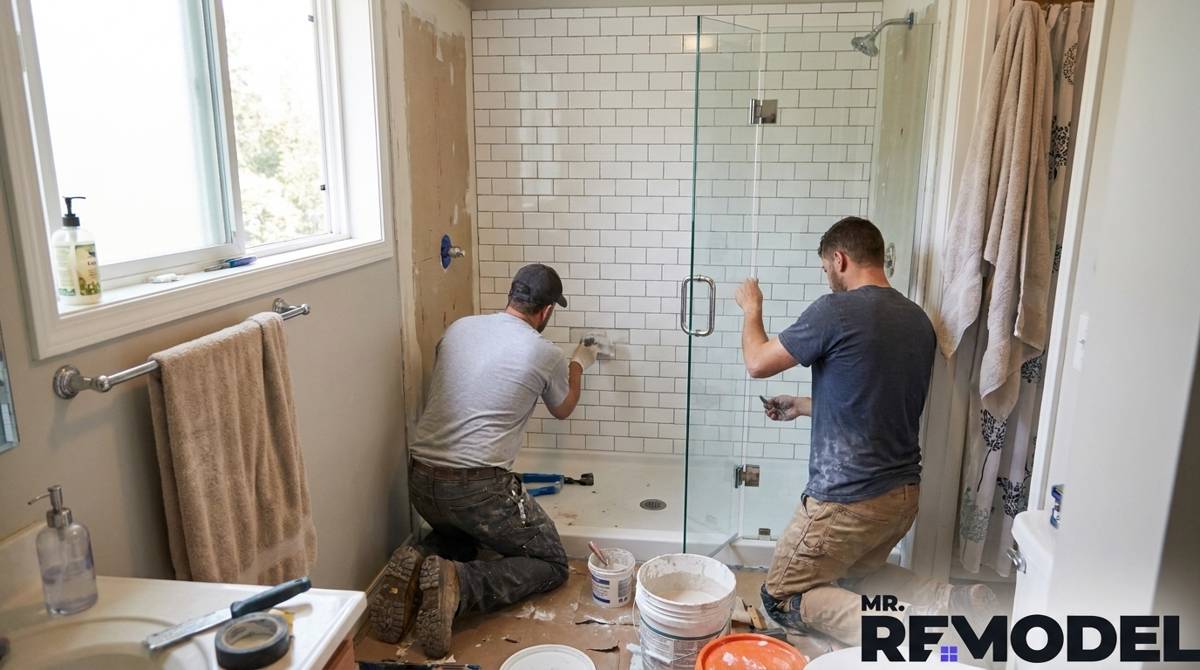
Most projects begin with removing the existing bathtub or shower-tub combination. This can reveal hidden problems such as water damage, soft flooring, outdated plumbing, or wall damage.
If repairs are needed, they can increase both cost and timeline.
Plumbing Modifications
Walk-in tubs may need plumbing adjustments for the drain, supply lines, faucet, and handheld shower. Some models need faster drain systems, which may require extra plumbing work.
A contractor should inspect the existing layout before promising a final price.
Electrical Requirements
Some walk-in tubs include heated seating, whirlpool jets, air jets, or other therapeutic features. These may require electrical upgrades.
Electrical work should be handled by a qualified professional when required by local rules.
Accessibility Features
Common features include built-in seating, grab bars, textured flooring, handheld showerheads, low thresholds, and easy-to-reach controls.
The Americans with Disabilities Act (ADA) National Network offers accessibility resources that can help homeowners understand broader mobility and access concepts, even though private home projects may not need to follow the same rules as public spaces.
Waterproofing and Finishing
The contractor may need to finish surrounding walls, seal edges, repair flooring, and protect the area from moisture. This step is important because walk-in tubs still handle a large amount of water.
Average Walk-In Tub Installation Cost
Walk-in tub installation costs vary based on the model, features, plumbing needs, electrical work, and bathroom layout.
Industry-standard planning ranges include:
Costs depend on tub model, hydrotherapy features, heated seating, door type, plumbing changes, electrical upgrades, drain relocation, and bathroom layout changes.
See Related: Bathroom Remodeling Costs and Value: The Definitive Guide to Maximizing ROI
Walk-In Tub vs Tub-to-Shower Conversion
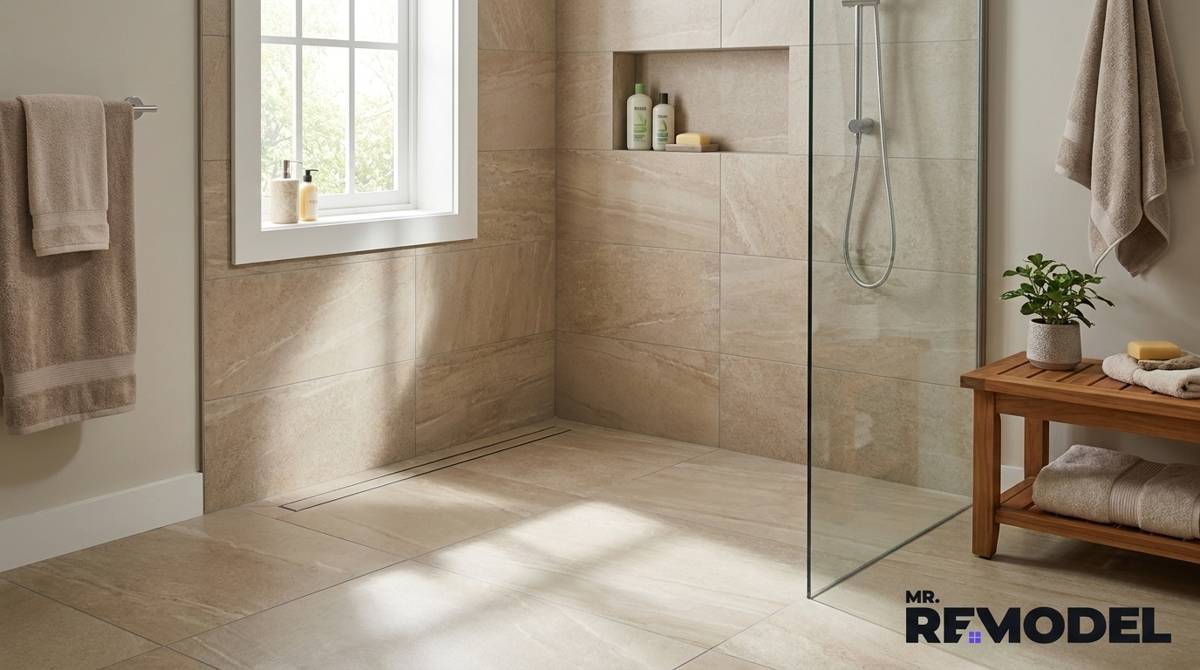
Walk-in tubs and tub-to-shower conversions both support accessibility, but they solve different problems. A walk-in tub keeps the option to bathe while reducing the need to climb over a high tub wall. A walk-in shower removes the bathtub and creates a more open bathing area.
Mr. Remodel data shows 4,586 bathtub-to-shower conversion inquiries and 2,597 bathtub upgrade inquiries. That suggests many homeowners are comparing bathtub safety, shower access, and long-term bathroom use.
See Related: Tub-to-Shower Conversion Options: 2026 Design and Cost Guide
Looking for accessibility-focused bathroom remodeling professionals? Get a free quote from fully vetted local contractors.
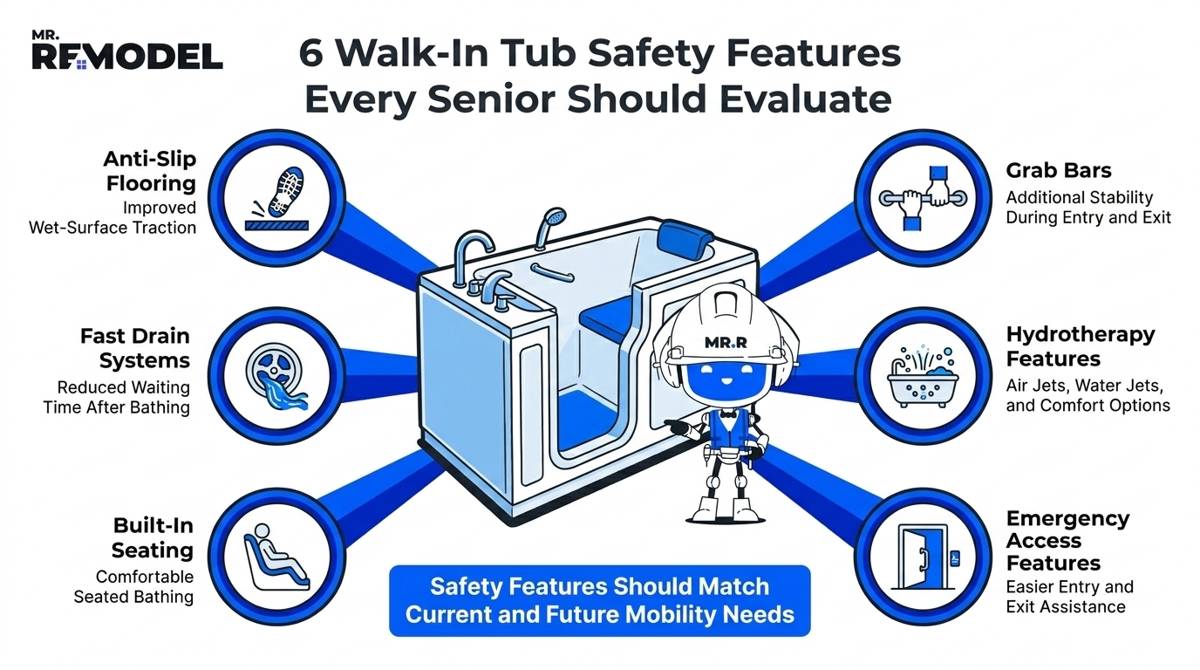
Safety Features Seniors Should Consider
Walk-in tubs can include many safety and comfort features. The best choice depends on mobility, balance, bathroom size, and personal bathing preferences.
Grab Bars
Grab bars help users steady themselves while entering, sitting, standing, or exiting the tub. Placement matters, so ask the contractor where bars should be installed.
Anti-Slip Flooring
Textured flooring can help reduce slipping on wet surfaces. This is important because the Centers for Disease Control and Prevention (CDC) notes that falls among older adults are a major safety concern.
Fast Drain Systems
Walk-in tub users usually enter before filling the tub and wait inside while it drains. Faster drain systems can make the experience more comfortable.
Built-In Seating
Built-in seats allow users to bathe while seated. Seat height, width, and comfort should be considered before choosing a model.
Hydrotherapy Features
Some tubs include air jets, water jets, heated surfaces, or massage settings. These features can add comfort, but they also increase cost and may require electrical work.
Emergency Access Features
Some models include outward-swinging doors, wider entry points, or easier latch systems. Ask whether the design fits your mobility needs and bathroom layout.
Questions to Ask a Walk-In Tub Contractor
Before hiring, ask clear questions about the product, installation, and final scope.
Use this checklist:
- Have you installed walk-in tubs before?
- Is the removal of the old tub included?
- Will plumbing relocation be needed?
- Will electrical upgrades be needed?
- Is waterproofing included?
- Are grab bars included?
- What accessibility features do you recommend?
- Are permits required?
- How long will installation take?
- What warranty covers the tub?
- What warranty covers labor?
- What happens if hidden damage is found?
See Related: How to Find the Right Bathroom Remodel Contractor
Common Mistakes Homeowners Make
The biggest mistake is buying based only on price. A lower-cost tub may not include the safety features, drain speed, comfort, or installation support the homeowner needs.
Another mistake is ignoring the bathroom layout. Door swing, toilet placement, vanity location, and walking space can all affect whether a walk-in tub fits well.
Homeowners should also think about future mobility needs. The United States Department of Housing and Urban Development (HUD) provides housing and aging-related research resources that can help families think more broadly about housing, accessibility, and long-term home use.
See Related: 5 Common Mistakes to Avoid in Bathroom Remodeling
How Long Does Installation Take?
A simple walk-in tub replacement may take a few days. A more complex accessibility remodel can take longer if plumbing, electrical, flooring, or wall changes are needed.
Timeline depends on demolition, plumbing, electrical work, inspections, waterproofing, wall repair, and finish details.
Is a Walk-In Tub Worth It?
A walk-in tub can be worth it for seniors who want safer bathing, seated comfort, and the ability to soak without climbing over a high tub wall. It can also help adult children plan a safer bathroom for aging parents.
It may not be the best choice for everyone. Some homeowners prefer a walk-in shower because it offers a lower threshold, more open space, and faster daily use.
Medicare coverage should not be assumed. Medicare explains that Part B may cover certain durable medical equipment (DME) when medically necessary and prescribed for home use, but homeowners should contact Medicare, their Medicare Advantage plan, or another insurer before expecting coverage for bathroom upgrades.
Frequently Asked Questions
How much does a walk-in tub installation cost?
Walk-in tub installation often costs about $4,000 to $8,000 for a basic project, $8,000 to $15,000 for a mid-range installation, and $15,000 to $25,000+ for premium therapeutic models. Final pricing depends on tub features, plumbing changes, electrical work, bathroom layout, and any hidden repairs.
Does Medicare pay for walk-in tubs?
Original Medicare does not generally cover home remodeling upgrades simply because they improve convenience or safety, and coverage should never be assumed. Because Medicare coverage depends on the item, medical necessity, plan type, and documentation, homeowners should contact Medicare, their Medicare Advantage plan, Medicaid office, or insurer before buying a walk-in tub.
How long does it take to install a walk-in tub?
A simple walk-in tub replacement may take 1 to 3 days, while a moderate installation can take 3 to 7 days. More complex accessibility remodels involving plumbing, electrical work, inspections, floor repairs, or wall changes may take 1 to 3 weeks.
Is a walk-in tub better than a walk-in shower?
A walk-in tub may be better for seniors who want seated bathing, soaking, or hydrotherapy features, while a walk-in shower may be better for users who want the lowest possible threshold and faster daily bathing. The better choice depends on mobility, bathroom layout, caregiver needs, and personal preference.
Do walk-in tubs increase home value?
Walk-in tubs may improve appeal for buyers who want aging-in-place features, but they may not add equal value in every market. Homeowners should choose a walk-in tub mainly for safety, comfort, independence, and daily usability rather than relying on a guaranteed resale return.
Walk-In Tub Installation for Seniors: Final Takeaway
Walk-in tub installation for seniors can make bathing safer, more comfortable, and more manageable for homeowners who want to age in place. The right tub can support independence, but the project must be planned around mobility needs, bathroom layout, plumbing, electrical work, and long-term use.
Before choosing a model, compare features, installation requirements, contractor experience, and total cost. To start planning your bathroom safety upgrade, connect with fully-vetted local bathroom contractors.