1-855-QUOTEMR

Table of Contents [hide]
Who This Is For
This comprehensive guide is designed for homeowners experiencing an active water intrusion crisis, structural flooding, or secondary mold growth. It provides immediate, data-backed cost transparency to help you navigate emergency extraction, negotiate with insurance adjusters, and choose the right restoration path.
Key Takeaways
- Immediate Extraction Saves Money: Delaying water removal by even 24 hours causes costs to spike up to 400% as porous structural materials degrade.
- Category Determines Remediation Expense: Clean water extraction costs significantly less ($500 to $1,500) than highly contaminated Category 3 sewage or storm surge black water ($1,500 to $3,500+).
- Climate Dictates Regional Triggers: Property damage profiles shift radically by geography, ranging from frozen, burst plumbing pipes in the Northeast to major hurricane storm surges across the South.
- Insurance Demands Immediate Mitigation: Most standard property insurance policies cover sudden and accidental pipe bursts, but will strictly deny coverage for gradual leaks or owner neglect.
- Rebuild Budgets Are Separate: Structural drying stabilizes the property, but completely replacing drywall, flooring, and finish carpentry requires a distinct aesthetic reconstruction budget.
- Professional Verification Isolates Mold: Failing to extract moisture completely within 48 hours guarantees mold growth, which requires specialized chemical remediation protocols.
Water damage is a destructive force that ruins home equity. According to proprietary project data from Mr. Remodel, 100% of emergency water mitigation requests are initiated via urgent phone calls rather than online form submissions. This underscores the immense panic and critical timing associated with active residential flooding.
When water breaches your home envelope, material degradation begins on a cellular level within minutes. Structural timber warps, drywall sags, and insulation loses its R-value completely. Understanding the baseline financials of the restoration industry is your first step toward reclaiming your property.
Homeowners must separate the immediate mitigation phase from long-term reconstruction. Mitigation removes the water and dries the structure. Reconstruction replaces the ruined materials. Both phases carry distinct price tags that depend heavily on the volume of water present.
The total financial investment required to restore a property depends on water depth, contamination level, and duration of exposure. The following table outlines the foundational pricing tiers for modern property restoration.
Table 1: Baseline Restoration Costs by Project Phase
Classifying Water Contamination: Categories 1, 2, and 3
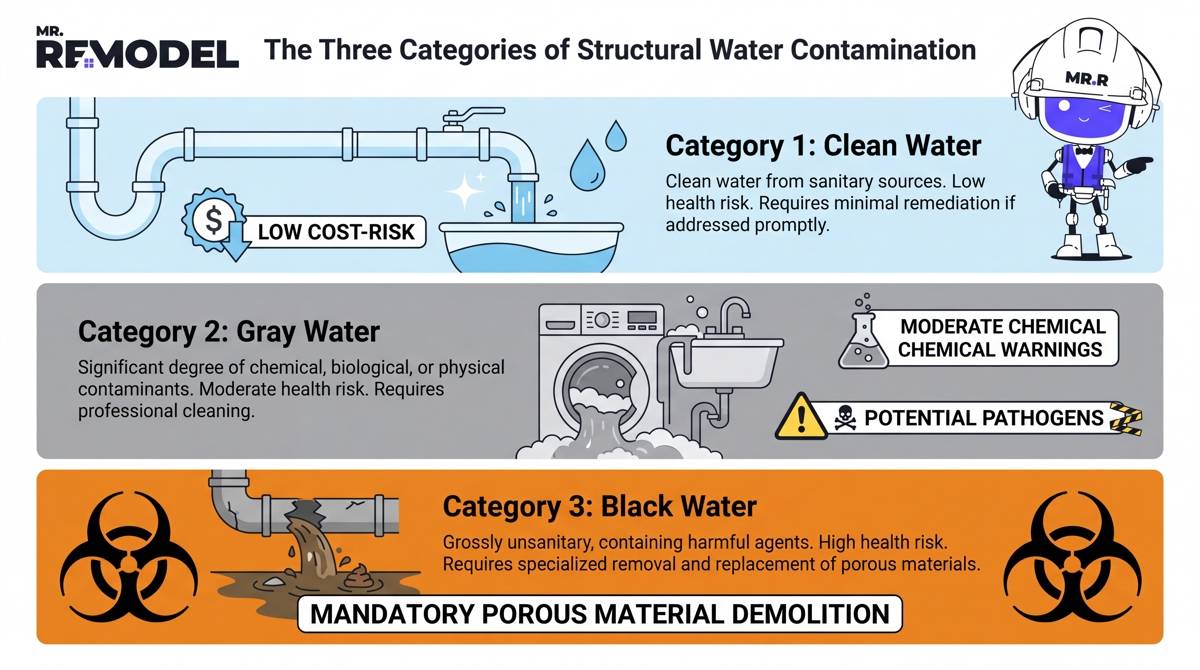
The cost to mitigate water damage is fundamentally tied to the cleanliness of the water source. The restoration industry categorizes water into three distinct tiers based on potential biohazard risks to human health.
Category 1: Clean Water
Category 1 water originates from a sanitary source, such as a broken water supply line, a malfunctioning faucet, or clean melting snow. While it poses minimal health risks initially, it can quickly degrade if left unmanaged.
Mitigation for clean water focuses purely on rapid extraction and structural drying. Because the water lacks pathogens, many structural elements can be dried in place without requiring demolition. This keeps your overall water damage restoration cost guide manageable and predictable.
Category 2: Gray Water
Category 2 water contains significant chemical or biological contamination and can cause discomfort or sickness if consumed. Common sources include washing machine overflows, dishwasher discharge, or punctured aquarium tanks.
Restoration specialists must use specialized chemical agents to sanitize affected zones. Porous materials like carpet padding are typically discarded to eliminate deep-seated microbial threats.
Category 3: Black Water
Category 3 water is highly unsanitary and contains pathogenic agents from sewage, seawater, or rising river water. According to guidelines from the Environmental Protection Agency (EPA), absorbent or porous materials must be discarded if heavily contaminated.
This tier requires intensive biohazard protocols, personal protective equipment, and controlled demolition. The complexity of these safety measures causes Category 3 remediation costs to spike significantly.
See Related: Water Damage Categories Explained (Category 1, 2, 3)
Table 2: Cost Comparison by Water Category and Square Footage
Regional Climate Impacts on Water Damage Claims
Water damage is not an equalizer; it is deeply influenced by regional climates and local infrastructure age. Mr. Remodel's internal metrics track specific environmental triggers across various states, highlighting how weather patterns dictate localized restoration costs.
The Southern Coast: Hurricane and Storm Surges
In coastal states like Florida and North Carolina, water damage is frequently tied to tropical storms. These events cause massive storm surges that introduce Category 3 saltwater directly into home foundations.
Restoration in these zones requires extensive mud-out operations, structural drying, and aggressive corrosion control. Homeowners here face higher baseline costs due to the severe contamination of outdoor floodwaters.
The Northeast and Midwest: Deep Freeze Cycles
States such as New York, Pennsylvania, and Illinois experience extreme winter freeze-and-thaw cycles. These sub-zero temperatures cause uninsulated plumbing lines to freeze, expand, and rupture inside residential walls.
A single burst pipe can release hundreds of gallons of clean water per hour behind finished surfaces. This necessitates precise thermal imaging to locate hidden water pockets before mold establishes a footprint.
See Related: 2026 Gutter Replacement Cost Guide
Table 3: Regional Water Damage Triggers and Cost Profiles
The Science of Structural Drying: Equipment and Protocols
Proper water mitigation relies on strict scientific principles rather than simply running standard household fans. Certified technicians use balanced drying systems that track relative humidity, ambient temperature, and specific moisture content.
Industrial Water Extraction
The priority is removing standing liquid using truck-mounted extraction pumps. Eliminating bulk water via liquid extraction is vastly faster and more energy-efficient than attempting to evaporate it.
Specialists use heavy-duty weighted extraction tools on carpeted surfaces to squeeze moisture out of the underlying padding. This initial step prevents water from migrating deeper into subfloors.
Psychrometrics and Dehumidification
Once standing water is removed, technicians deploy industrial low-grain refrigerant dehumidifiers. These machines pull moisture from the air, lowering the relative humidity to accelerate evaporation from wet structural timbers.
High-velocity air movers are then placed at strategic angles along walls. This creates a continuous airflow that breaks up the stagnant, humid boundary layer directly against wet materials.
Structural Monitoring
Technicians use non-invasive moisture meters and infrared cameras to monitor drying progress daily. Materials are not considered dry until they match the predetermined dry standard of unaffected zones within the property.
According to safety guidelines from the Centers for Disease Control and Prevention (CDC), thoroughly evaluating the integrity of electrical and HVAC networks after sudden flooding is vital to prevent fire hazards.
See Related: Emergency Water Damage Cleanup Guide
|
Pro Tip: Never attempt to dry out a basement or crawlspace without industrial dehumidification. Trapping humid air inside a warm room creates an ideal incubator for airborne mold spores. |
Navigating Homeowners Insurance and Water Damage Coverage
Securing insurance coverage can mean the difference between a minor deductible payment and thousands of dollars in out-of-pocket costs. However, insurance policy language regarding water damage is notoriously strict.
See Related: Insurance Coverage for Water Damage
Sudden vs. Gradual Damage
As outlined by the Office of the Insurance Commissioner, standard policies cover sudden and accidental water releases. This includes events like a water heater bursting or a washing machine supply line snapping.
Conversely, gradual leaks that occur over months due to poor maintenance are rarely covered. If an adjuster finds evidence of long-term wood rot or unmitigated leaks, the claim will likely be denied.
The Duty to Mitigate
Every homeowner policy contains a duty to mitigate clause. This mandates that the property owner must take immediate action to prevent further damage once a leak is discovered.
Hiring a professional team to perform emergency extraction satisfies this requirement. Documenting the entire process with photos, moisture logs, and professional invoices ensures a smoother claims process.
See Related: Roof Replacement Cost Guide
Structural Rebuild: Transitioning from Drying to Remodeling
Once a property is certified dry, the remediation phase ends and the reconstruction phase begins. This is where homeowners can evaluate water damage repair vs full replacement options for damaged finishes.
Wall and Insulation Replacement
Drywall that has been submerged in water loses its structural integrity and must be cut away. Technicians typically perform a flood cut, removing drywall 12 to 24 inches above the high-water mark.
Fiberglass batts and cellulose insulation act like sponges, holding water indefinitely while losing their insulating properties. These materials must be stripped out and replaced to prevent hidden mold growth behind new walls.
Flooring Rehabilitation
Hardwood flooring exposed to moisture can experience cupping or crowning. In some clean water scenarios, specialized drying mats can rescue the wood, but severe warping requires complete replacement.
See Related: Water Damage Repair vs Full Replacement
Vinyl plank and ceramic tile are highly resilient but can trap moisture underneath their surfaces. If water breaches the subfloor, these non-porous floor coverings must be lifted to dry the plywood substrate.
See Related: How Long Does Water Damage Restoration Take?
Comprehensive FAQ Section
How is water damage restoration cost calculated?
Restoration costs are calculated based on the square footage of the affected area, the category of water contamination, and the volume of structural materials that require demolition or drying. Specialized equipment rental, labor hours, and antimicrobial treatments also factor into the final price.
Does homeowners insurance cover all types of water damage?
No, standard policies only cover sudden, accidental water discharges, such as a burst pipe. They typically exclude gradual leaks, sewer backups unless an additional rider is purchased, and regional flood events, which require separate flood insurance.
How long does the structural drying process take?
The typical structural drying process takes between 3 and 5 days. This timeline can vary depending on the density of the wet materials, the volume of water, and how quickly professional drying equipment was deployed.
Can I handle water damage cleanup on my own?
You can manage minor cleanups involving small areas of standing clean water with shop vacs. However, large-scale flooding, gray water leaks, and any Category 3 sewage backups require certified professional intervention to ensure proper sanitation and safety.
What is the difference between water mitigation and water restoration?
Water mitigation focuses on the immediate containment and stabilization of a property, including water extraction and structural drying. Water restoration involves rebuilding, repairing, and refinishing the structural elements to return the home to its pre-loss condition.
How much does mold remediation cost after water damage?
If a property is not dried completely within 24 to 48 hours, secondary mold growth will likely occur. The average mold remediation cost after water damage ranges from $1,500 to $5,000+, depending on how far the mold spores have spread through the wall cavities.
See Related: Mold Remediation Cost After Water Damage
How does Mr. Remodel handle emergency water damage extraction?
Mr. Remodel operates a rapid-response network that connects panicked homeowners directly with certified local extraction specialists. Our structural teams deploy commercial pumping units and industrial dehumidifiers immediately to stabilize your home and minimize long-term structural costs.
Secure Your Home with Expert Restoration Solutions
Dealing with residential water damage can be overwhelming, but you do not have to handle the crisis alone. Immediate intervention is the most effective way to protect your property's structural integrity and avoid costly mold problems down the road.
Whether you need urgent emergency extraction, professional biohazard cleanup, or a complete post-flood structural rebuild, taking fast action will save you time and money.
Do not let water damage ruin your home's equity. Get your free, no-obligation quote with Mr. Remodel and connect with top-rated local restoration experts to start restoring your property.