1-855-QUOTEMR

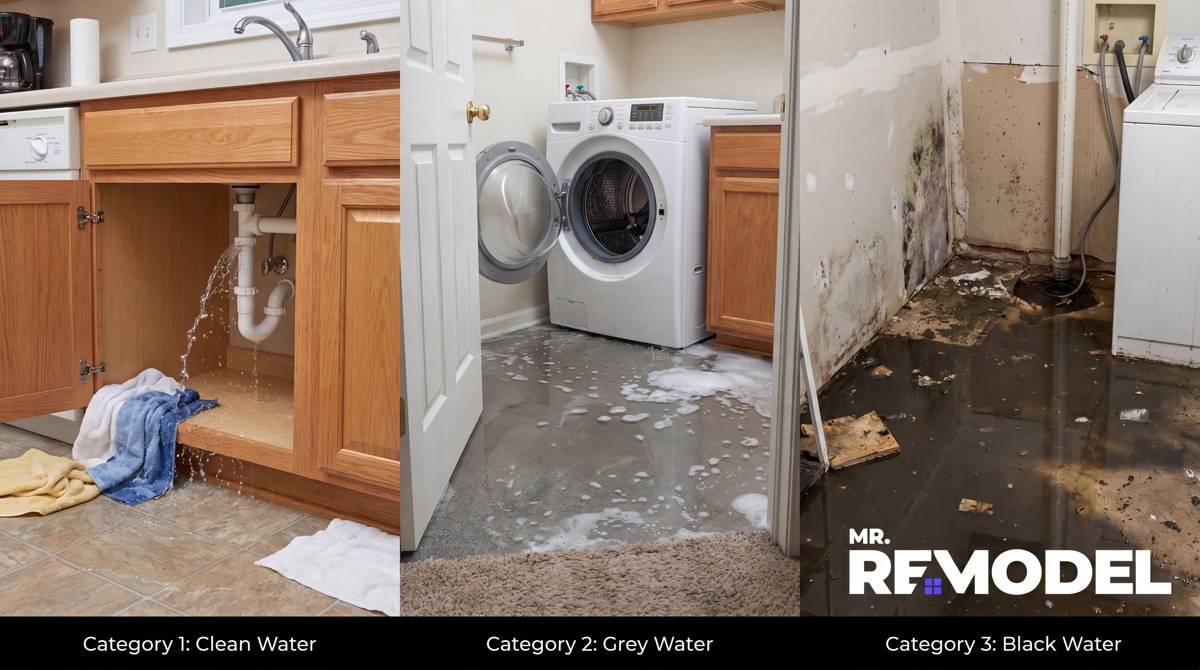
Table of Contents [hide]
Who This Is For
This guide is designed for homeowners currently facing an active water intrusion event. It provides real-time diagnostic protocols to help you identify the hazard level of the water currently saturating your home, ensuring you can communicate effectively with emergency contractors to protect your structural and biological health.
Key Takeaways
- Severity Tiers: Water damage is categorized into three tiers (Category 1, 2, and 3) based on the level of contamination and health risk to occupants.
- The 48-Hour Transition: Neglecting Category 1 water (clean) for more than 48 hours allows it to absorb contaminants and transition into a hazardous Category 2 or 3 event.
- Conversion Urgency: Proprietary internal data shows that 100% of homeowners in an emergency bypass web forms to prioritize direct phone dispatch to mitigation teams.
- Q4 Seasonal Surge: October represents the highest-risk timeframe for property failures, with 60.58% of annual emergency requests occurring during this window.
- Geographic Sensitivity: Regional infrastructure risks, such as Florida storm surges or Illinois basement backups, dictate the likelihood of encountering Category 3 biohazards.
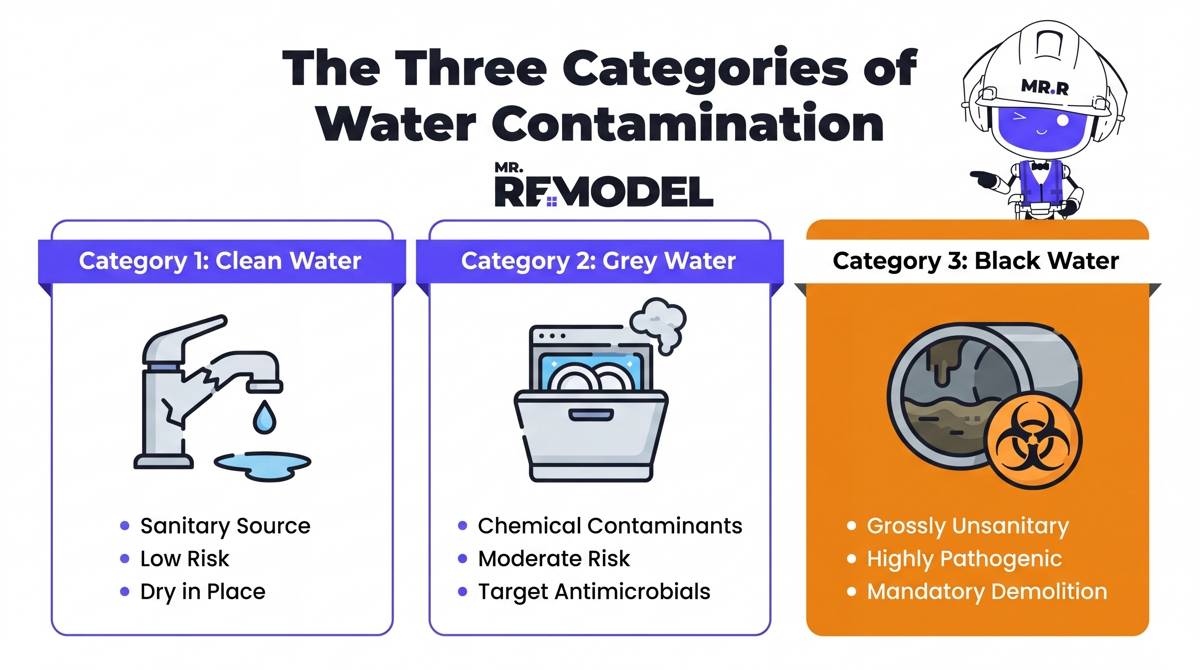
When water leaks into your home, you are not just dealing with physical wetness; you are navigating a potential biological crisis. Restoration professionals classify water intrusion into three distinct categories based on the contamination level of the liquid.
Understanding these categories is the most important step in protecting your family and your home’s structural framing. Identifying your damage category quickly is your best tool for reclaiming control.
Defining the Three Categories of Water Damage
The speed at which your home can be safely restored depends entirely on which of the three categories has impacted your building assemblies.
Category 1: Clean Water (Sanitary)
Category 1 water originates from a clean, sanitary source. Examples include a broken supply line to a sink or an overflowing bathtub faucet.
- Risk Level: Low.
- Action: Immediate structural drying can often salvage building materials.
- Warning: If left stagnant for more than 48 hours, clean water absorbs dirt and dust, effectively degrading into Category 2 water.
Category 2: Grey Water (Contaminated)
Category 2 water contains significant chemical or biological contaminants that cause discomfort or sickness if consumed. Common examples include discharge from a dishwasher, a washing machine overflow, or a sump pump failure.
- Risk Level: Moderate.
- Action: Requires professional extraction and antimicrobial treatment of all porous materials.
Category 3: Black Water (Highly Hazardous)
Category 3 water is grossly unsanitary. It contains pathogenic, toxigenic, or other harmful agents. Examples include raw sewage backups, river flooding, and standing surface water entering from the outdoors.
- Risk Level: Extreme.
- Action: Mandates immediate evacuation of the area and specialized remediation. All porous materials (drywall, carpet, padding) must be removed and disposed of as biohazard waste.
See Related: Water Damage Classes Explained (Class 1, 2, 3, 4)
The Timeline of Toxicity: Why Speed Saves Homes
Neglecting a "clean" water leak is a guaranteed path to a biohazard emergency. Scientific guidelines from the University of Vermont explain that moisture intrusion creates the perfect breeding ground for viruses, bacteria, and pathogens.
If you ignore a Category 1 leak, the time and temperature aggravate the contaminants. Within 48 hours, the water becomes infested with bacteria, effectively turning a simple drying project into a dangerous Category 3 biohazard event. Once this threshold is crossed, you face the structural damage from bathroom leaks and other failures that necessitate expensive teardowns.
Localized Risk Profiles and Seasonal Spikes
The probability of encountering specific water categories is heavily influenced by your regional infrastructure and the time of year.
- Florida (8.65% Demand) & North Carolina (7.69% Demand): These coastal zones are prone to storm surges that force Category 3 water into living spaces. The high humidity in these states means that even clean leaks transition to mold outbreaks in under 24 hours.
- California (12.50% Demand): Older tracts here face hidden slab leaks. While these start as clean water (Category 1), the moisture trapped under foundation slabs can fix toxic mold and moisture problems if not professionally injected and dried.
- New York (8.65% Demand) & Illinois (6.73% Demand): Urban infrastructure here is prone to sewer backups and pipe bursts. These often present as Category 3 (sewage) intrusions immediately, requiring specialized biohazard mitigation.
The October Danger Zone: Seasonal Readiness
Our proprietary data reveals a massive 60.58% spike in emergency mitigation records during October. This surge is likely driven by the first "Fall Transition," where homes shift from summer cooling to autumn heating. This change in internal temperature can cause long-dormant leaking gutter damage or pipe stress to manifest as full-scale structural failure.
Financial and Insurance Considerations
Insurance carriers evaluate your claim based on how you responded to the intrusion. If you fail to mitigate a Category 1 leak, the carrier may argue that you were negligent, which can result in a claim denial for the eventual mold remediation.
Always document the event immediately. Before starting any work, consult with emergency water damage restoration professionals to ensure your triage steps are documented to insurance standards.
See Related: Water Damage Restoration Cost Guide
Frequently Asked Questions
What constitutes Category 3 water?
Category 3 or "black water" is any liquid containing sewage, waste, or dangerous pathogens. It often results from toilet overflows or outdoor floodwater entering the home.
Can I clean up Category 2 water myself?
No. Category 2 water requires professional antimicrobial agents and industrial-grade extraction. Attempting to clean it without professional PPE and equipment risks spreading pathogens throughout your home.
Why do insurance companies care about water categories?
Categories determine the safety of the restoration process. A Category 3 event requires different, more expensive protocols than a Category 1 event; adjusters need this classification to verify your invoice.
How does geography change my water damage risk?
In humid climates like North Carolina, home foundation damage is a common side effect of unmanaged water, while urban centers like New York face more frequent plumbing failures.
Why contact Mr. Remodel immediately?
Mr. Remodel protects your home investment by connecting you directly with vetted contractors. We have the data and the network to ensure your property is classified correctly and restored safely.
Restore Your Home Safety With Trusted Experts
Do not gamble with your home's structural integrity or your family's health. The difference between a minor drying project and a massive demolition job is the speed at which you identify and mitigate the contamination.
If you suspect you are dealing with a Category 2 or 3 water intrusion, stop all DIY attempts and contact the professionals. Reach out to Mr. Remodel to get a free, no-obligation quote and find a vetted contractor who can perform a professional assessment and stop the biological spread.