1-855-QUOTEMR

Table of Contents [hide]
Who This Is For
This guide is written for property owners who are facing a major renovation and need reliable, modern financial data to set their expectations. It is specifically designed for those who want to avoid outdated estimates and understand the true market value of high-quality exterior work in the current year.
Key Takeaways
- Investment Average: According to our data, the average homeowner should expect to invest approximately $25,307 for a professional roof replacement this year.
- Material Trends: High-performance architectural shingles have become the most popular choice for residents looking for long-term durability and aesthetic appeal.
- Regional Scaling: Total project costs vary significantly with local labor availability and the specific weather conditions of your geographic market.
- ROI Potential: Installing a new roof provides a substantial boost to home appraisal values and remains a top-tier investment for protecting property equity.
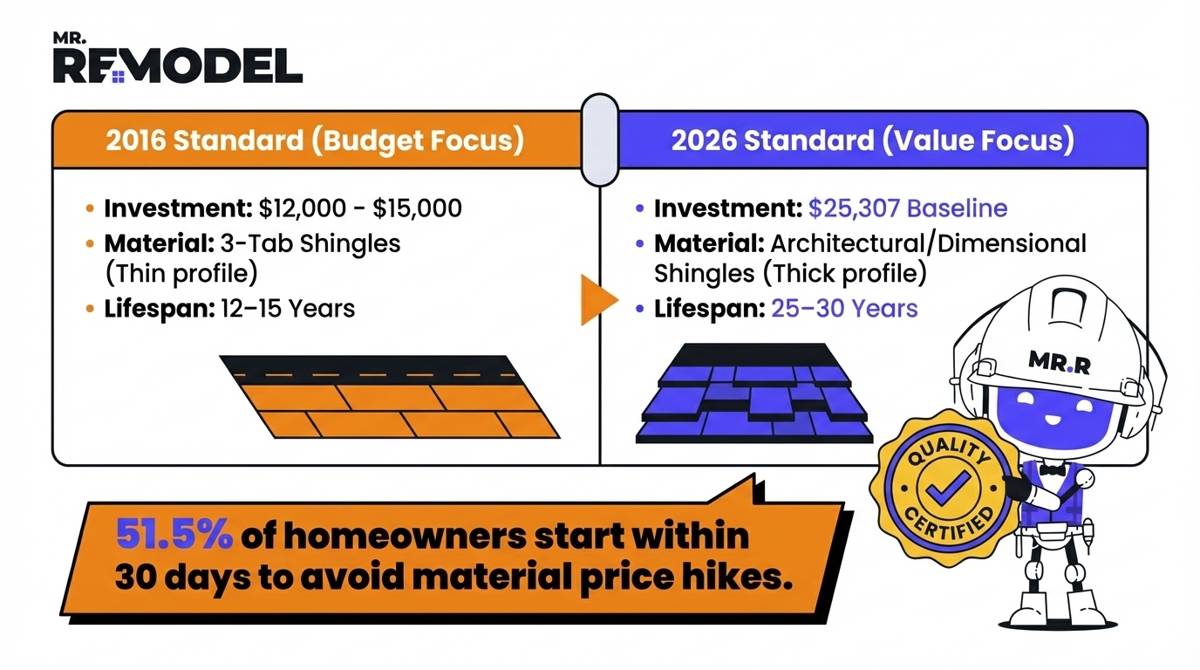
- Urgency Factors: Our internal statistics reveal that 51.5% of homeowners finalize their contractor selection and start their project within a 30-day window.
Your home is likely your most valuable asset, and the roof serves as the first line of defense against the unpredictable forces of nature. Understanding the current market for a roof replacement cost is essential for any homeowner who wants to ensure their family remains safe while maximizing their financial investment.
Navigating the complexities of high-end home improvement can be difficult without the right professional guidance. Mr. Remodel is a premier referral service that connects you with local, pre-screened contractors with proven track records. Our goal is to ensure you find a reliable builder who respects your budget.
The 2026 Pricing Reality and the $25,307 Baseline
According to our data, the current national average for a professional roof installation has reached $25,307.08. This figure represents a notable shift toward high-quality, long-term materials that offer better protection than the budget options often seen in previous decades. Modern homeowners are prioritizing lasting value over the lowest possible bid.
Our research indicates that residents are increasingly choosing premium materials to avoid the headache of frequent repairs. This change in consumer mindset is likely why nearly 52% of users now choose to start their projects within a 30-day window. Acting quickly helps you avoid the rising costs of raw materials and the impact of seasonal labor spikes.
See Related: Roof Replacement Cost by Size (1,500, 2,000, 3,000+ Sq Ft)
Why Project Urgency Impacts Your Final Quote
When a leak is discovered, the timeline for a repair or replacement accelerates rapidly to prevent further damage. Most property owners move quickly because a failing roof can lead to expensive interior mold or structural wood rot. This high level of urgency can sometimes limit your scheduling options if the best local crews are already booked.
Labor rates are a major factor in the total price of your installation in the 2026 market. Skilled tradespeople are in high demand across the country, especially in regions that face heavy snow or severe wind. Finding the right balance between a competitive price and a highly-skilled team is the most important step for a successful project.
A Detailed Breakdown of Common Roofing Materials
Choosing the right material is the most important decision you will make for your total project budget. Each material offers a unique combination of aesthetic style, expected lifespan, and environmental resistance. A professional contractor can help you compare these options based on the specific architecture of your home.
Our data shows a clear preference for materials that balance the initial cost with long-term performance. To help you understand the current market, we have listed the most common choices below. These materials are selected by homeowners for their ability to withstand varied weather patterns and maintain a beautiful appearance over time.
- Architectural Asphalt: These shingles average $25,389.92 and have become the most common choice for modern residential properties.
- Standard Metal: Known for incredible longevity, metal roofing systems currently average $23,733.00 for a standard residential installation.
- Natural Slate: This premium material represents about 8.2% of our recent project data due to its timeless look and durability.
- Flat Roofing: Often used for contemporary additions or garages, this material makes up roughly 1.7% of all new installations.
- Composite Materials: These synthetic options provide a high-end look without the heavy maintenance requirements of natural wood or stone.
See Related: Roof Replacement Cost by Material (Asphalt, Metal, Tile, Slate)
Architectural Asphalt Shingle Trends
Dimensional or architectural shingles have largely replaced traditional flat shingles as the preferred industry standard. They offer a thicker profile that creates a more attractive, textured look for your home. This extra thickness also provides superior wind resistance, which is vital for long-term protection in storm-prone regions.
The Rising Popularity of Metal Roofing Systems
Metal is no longer just for commercial buildings or rural homes. Modern residential metal roofing is available in styles that look like traditional shingles or even clay tiles. Many homeowners appreciate that metal is fire-resistant and sheds heavy snow much faster than other types of traditional materials.
Specialty Materials for Custom Architecture
For historic properties or high-end custom homes, specialty materials like slate or cedar are often the only way to maintain the correct architectural look. These materials require a very high level of specialized skill to install correctly. The labor cost for these projects is higher because very few crews have the right training.
Before you make a final choice, it is helpful to compare roofing costs and services in your specific area. Getting several quotes ensures that you pay a fair price for the expert craftsmanship your property requires. Our network makes it easy to compare the best professionals in your neighborhood.
Take the stress out of your renovation by requesting a free quote from a top-rated local contractor today.
Regional Pricing Variance and Climate Considerations
Where you live has a massive impact on the final price of your roofing project. Local building codes, weather risks, and regional labor availability all play a role in how a contractor builds your quote. Some states have much higher average costs because the homes are larger or the weather is much more extreme.
High Revenue Markets in the North and Mountains
Our data show that states like Utah and Pennsylvania have much larger average project scales than other parts of the country. In Utah, the average net sale for a roofing project is approximately $115,000, while in Pennsylvania averages around $99,000. These figures are often due to the larger size of the homes and complex designs.
Using all-weather roofing is a requirement in these colder regions to ensure home safety. Materials must be able to withstand heavy snow loads and the constant cycle of freezing and thawing. This specialized construction ensures the roof remains waterproof through the toughest winters on record.
See Related: Roof Replacement Cost by Climate (Hot, Cold, Coastal Regions)
Volume Leaders in the Sunbelt and Coastal Areas
Florida, California, and Ohio are some of the busiest markets for roof replacements today. In these states, the main goal for homeowners is often heat resistance or wind mitigation. Builders must follow very specific rules to ensure that every roof can stay attached during high-wind events or tropical storms.
Impact of Local Building Safety Codes
FEMA provides objective safety codes that all reputable contractors must follow during the construction process. These codes are designed to ensure that roofs meet strict wind-resistance requirements in high-risk zones. While following these safety standards might add to the initial cost, it protects your home from catastrophic failure.
You can also find technical standards for material durability through the National Institute of Building Sciences. Understanding these standards helps you talk to your project manager with confidence. It ensures that your new roof is built to the highest possible technical specifications.
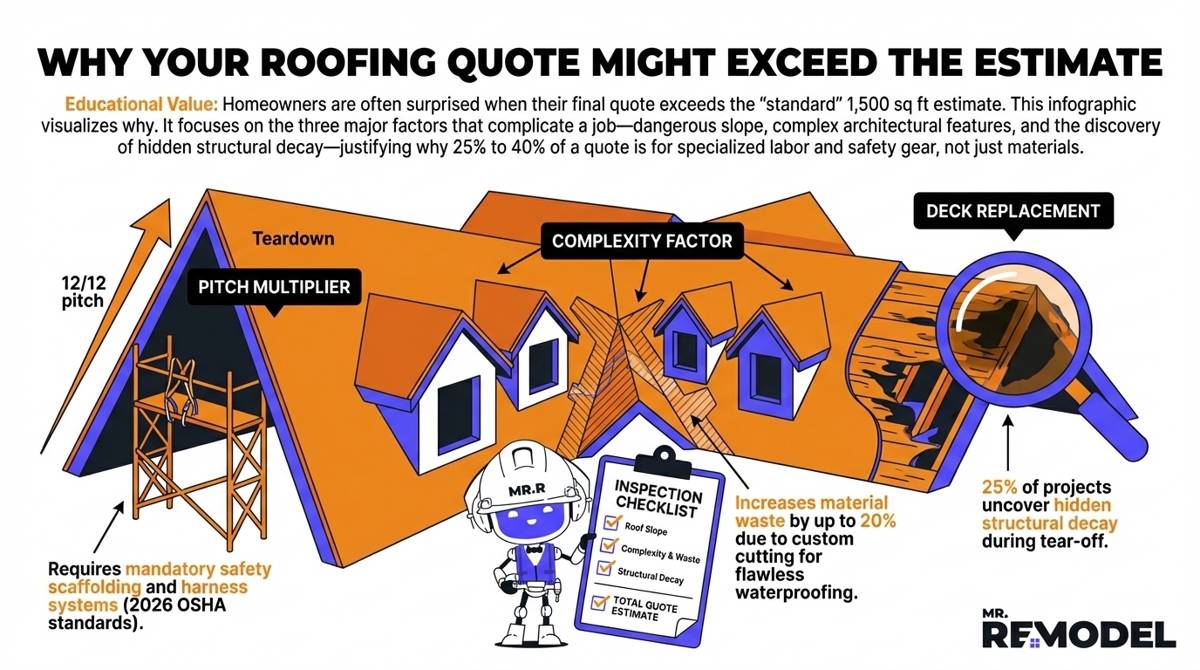
Understanding Project Specifics and Hidden Expenses
The total surface area of your roof is the primary driver of cost, but it is certainly not the only factor. Professionals measure roofs in squares, where one square is equal to one hundred square feet. However, the complexity of your roofline can add many labor hours to the final bill you receive.
To help you prepare your budget, consider these factors that often change a basic estimate into a final contract price. Each of these items requires specialized labor or additional materials that can impact your bottom line. A good contractor will explain these variables to you before the work begins.
- Roof Pitch: Steeper roofs are more dangerous for crews and require expensive safety gear and scaffolding.
- Complex Geometry: Homes with many gables, valleys, or dormers require more flashing and detailed waterproofing work.
- Waste Factor: Cutting shingles to fit around valleys and peaks naturally leads to more discarded material that you must pay for.
- Decking Issues: If the wood under your shingles is rotten or damaged, it must be replaced to provide a solid base for the new roof.
- Permit Requirements: Most local governments require a building permit for a full replacement, which usually comes with a flat fee.
See Related: Roof Replacement Cost Per Square Foot (Real Pricing Guide)
Full Tear-Off vs. Simple Overlay
A full tear-off involves removing all old layers of roofing before starting the new installation. While this costs more than a simple overlay, it is the only way to inspect the underlying structure for damage. Most experts recommend a full tear-off to ensure your new manufacturer's warranty remains valid for its full term.
See Related: Roof Tear-Off vs. Overlay Cost Comparison
Disposal and Clean-Up Logistics
Removing an old roof creates a massive amount of heavy waste that must be hauled away to a local landfill. Fees for dumpster rentals and disposal are standard parts of a professional roofing quote. Local contractors manage these logistics so that your driveway and yard remain clean and safe throughout the process.
ROI and Long-Term Value Upgrades
Investing in a new roof provides an immediate boost to your curb appeal and overall home value. In a market with high interest rates, keeping your home in top condition is essential for protecting your equity. Buyers are very hesitant to purchase a home if they know a new roof will be needed soon after closing.
Energy Efficiency and Cool Roof Technology
Modern materials can significantly lower your utility bills by keeping your attic cooler during the hottest months. The US Department of Energy points out that cool roofs reflect more sunlight than old-fashioned dark shingles. This reduces the workload on your air conditioning system and saves you money.
Enhancing Your Property Appraisal
A new roof is a major selling point that can justify a higher asking price when you decide to sell. It gives potential buyers confidence that the home has been well-maintained by the current owner. This peace of mind is often the deciding factor that helps a home sell faster in a competitive real estate market.
You might also consider looking at roofing and siding as a combined project for your property. Doing both at once can save money on labor and ensure your home has a perfectly matched exterior look. It is one of the most effective ways to completely transform your home.
See Related: Roof Replacement ROI: Home Value, Insurance & Energy Savings
Frequently Asked Questions
How long does it take to replace a roof?
Most residential projects can be completed in 1 to 3 days if the weather is clear. Larger homes or those with very steep roofs might take closer to a full week to complete the work safely and correctly.
Will a new roof lower my insurance?
Many insurance companies offer discounts for roofs made with high-quality, impact-resistant materials. You should check with your insurance agent to see if your new roof qualifies for a lower monthly or annual premium.
Can a roof be replaced in the winter?
Yes, professional crews can work in the winter as long as there is no ice or heavy snow on the deck. Modern materials are designed to be installed across a wide temperature range without losing their effectiveness.
What is the average lifespan of a new roof?
A standard asphalt roof should last between 20 and 30 years with the right amount of care and maintenance. Metal or slate roofs can last significantly longer, often reaching 50 years or even more with proper care.
How do I find a reliable contractor?
Using a referral service is the best way to find pre-screened professionals in your local area. This ensures you are working with someone who has a proven track record of success and positive customer reviews.
Finalize Your 2026 Roofing Strategy
Deciding to replace your roof is a major step in maintaining the long-term health of your home. By understanding the current market costs and material options, you can move forward with total confidence. A high-quality roof is more than just a repair; it is an investment in your safety.
Remember that the right contractor is the most important part of the entire renovation equation. Finding a professional who uses high-quality materials and complies with all safety codes will ensure your project is a success. Don't wait until a small leak becomes a major problem for your family and your wallet.
Ready to take the next step for your home? Contact us today to get your free quote from a local, pre-screened roofing contractor who can help you get started on your project.