1-855-QUOTEMR

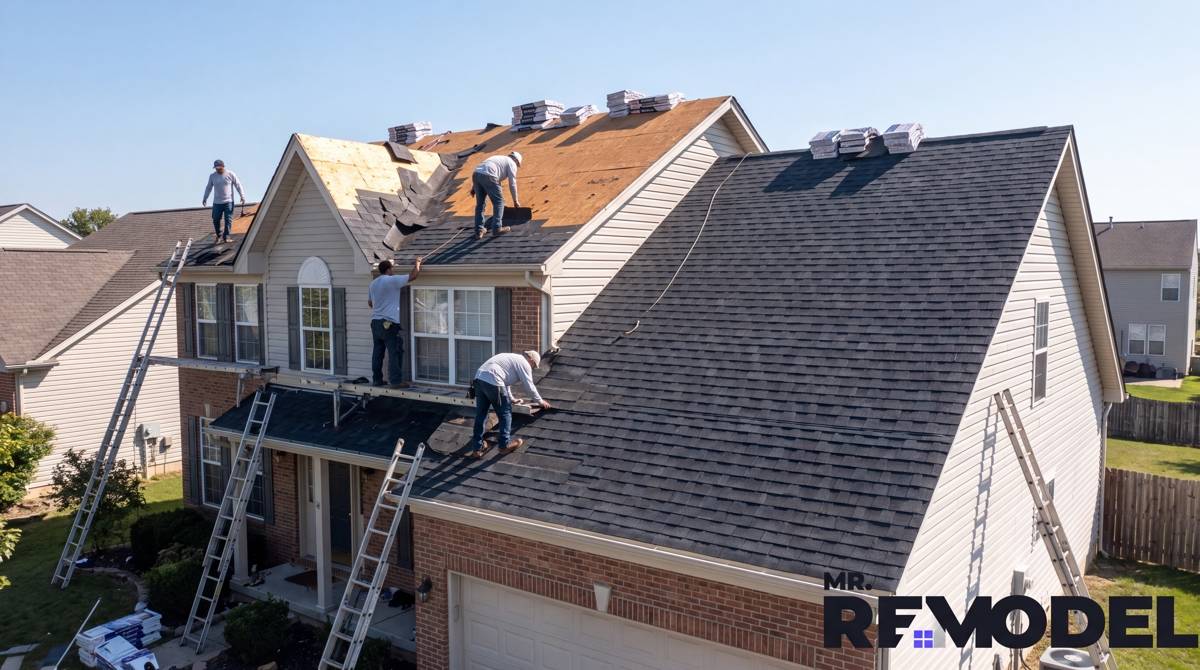
Table of Contents [hide]
Who This Is For
This guide is designed for homeowners evaluating a complete roof overhaul, seeking transparent 2026 project costs, climate-specific material comparisons, and a clear framework for vetting licensed roofing contractors.
Key Takeaways
- Financial Baselines: National market data establishes an average replacement baseline of $25,307.08, while severe structural or architectural overhauls reach up to $57,146.10.
- The 99% Replacement Reality: Network records reveal 16,023 homeowners requested full roof replacements compared to only 156 patch repairs, proving total tear-offs are standard for lasting structural defense.
- Material Dynamics: Asphalt shingles remain the dominant budget-friendly choice with 11,546 projects, while 3,068 homeowners upgraded to high-durability metal roofing systems.
- Planning vs Emergency Timelines: Over 51.5% of homeowners take up to 30 days to research contractors, whereas 2,150 high-urgency leads require 24-hour emergency response following weather events.
A whole home roof replacement is one of the most critical structural investments you can make for your property. An aging roof envelope exposes your interior framing, insulation, and ceiling drywall to expensive water damage.
Recognizing when your building envelope requires full replacement protects your home equity and prevents compounding structural decay.
Understanding localized project costs, material lifespans, and contractor vetting steps helps you make confident decisions during a major roof overhaul.
Understanding the Financial Realities of Roof Replacement
Homeowners researching roof replacements frequently encounter broad price estimates online that omit essential labor and disposal expenses. Generic cost calculators usually ignore crucial line items such as plywood deck repairs, synthetic underlayment, and dumpster fees.
Internal project records from Mr. Remodel establish that the national average finalized sale amount for a new roof installation sits at $25,307.08.
However, complex roof lines, steep pitches, or structural repairs can push project investments up to $57,146.10.
Reviewing a comprehensive breakdown of how much a roof replacement costs prepares you for realistic budgeting before soliciting contractor bids.
The 99% Reality: Why Repair Patches Fail
A common dilemma for homeowners is deciding whether to patch localized damage or invest in a total roof overhaul.
Data from 16,179 customer inquiries shows that 16,023 homeowners (99%) proceeded with a full roof replacement rather than a temporary surface patch.
Spot repairs fail to fix underlying underlayment degradation. When surface shingles age, moisture seeps through micro-cracks into the wooden decking below.
Patching a small section leaves old, brittle felt underlayment intact across the remaining roof planes.
Financial research published by Homeowner Funding demonstrates that continuous temporary patching accumulates higher cumulative costs over time than executing a complete roof replacement.
Evaluating key home indicators helps you decide between a roof repair or replacement before minor leaks cause widespread structural damage.
Recognizing early warning signs, such as curled shingle edges and granule accumulation in gutters, highlights signs that point to needing a new roof before catastrophic failures occur.
Comparing Roofing Material Tiers and Performance
Selecting the right material determines your home's building envelope durability, aesthetic appeal, and long-term maintenance needs.
Architectural Asphalt Shingle Performance
Asphalt shingles represent the primary choice for residential homes, accounting for 11,546 projects across national network records.
Durability data from the Colorado Roofing Association confirms that asphalt shingles deliver reliable weather protection lasting between 15 and 30 years depending on environmental conditions.
Homeowners evaluating standard budget options should consider the average lifespan of asphalt shingles when calculating long-term value.
Standing Seam Metal System Upgrades
Metal roofing represents a growing high-performance upgrade segment, generating 3,068 project inquiries.
Metal systems withstand severe wind gusts exceeding 140 MPH and reflect solar heat, lowering cooling bills in warm climates.
Investigating the durability of a metal roof upgrade helps homeowners weigh higher initial material costs against multi-decade performance.
Comparing detailed pricing for different roofing materials allows you to select products that match your household financial plan.
To explore all options, review the best roofing materials available before finalizing your project scope.
Hyper-Local Climate Demands and Code Compliance
Geographic location dictates specific installation mechanics and building code compliance mandates for whole home roof replacements.
High-volume markets like Texas and Florida require heavy-duty hurricane clips and self-adhering underlayment to resist extreme wind uplift forces.
In northern states like Ohio and Pennsylvania, ice dam protection along eaves prevents melted snow from backing up under shingles.
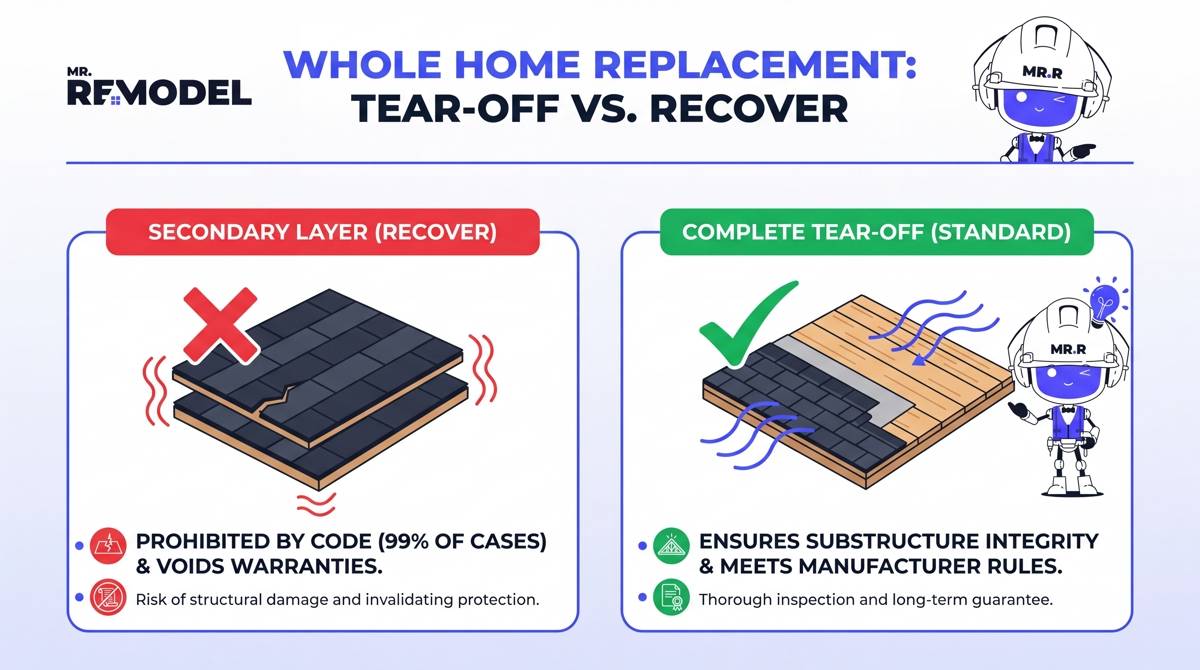
Technical guidelines from the Asphalt Roofing Manufacturers Association emphasize that local building codes often prohibit adding secondary shingle layers over existing roofs, making complete tear-offs legally required.
Connect with pre-screened, licensed local contractors through Mr. Remodel. Get transparent pricing, expert material consultations, and a free quote tailored to your property today.
Step-by-Step Roof Replacement Workflow
Understanding the installation process helps homeowners monitor job site safety and quality standards during construction.
Understanding standard roof installation steps helps property owners manage daily household routines while installation crews work.
How to Vet a Whole Home Roof Replacement Service
Selecting a certified contractor protects you from poor installation quality, invalid warranties, and unexpected cost overruns.
Evaluate Decision Timelines
Data shows that 51.5% of homeowners take up to 30 days to review contractor bids, verify licenses, and secure financing.
Taking time to compare itemized estimates ensures you select a qualified partner rather than rushing into an unvetted contract.
However, if severe weather breaches your building envelope, fast access to a local contractor network ensures rapid emergency dispatch to prevent interior water damage.
Verify Credentials and Proposal Scope
Ensure your installer holds active state licensing, general liability coverage, and full workers compensation insurance.
Confirm that the proposal details underlayment specifications, flashing materials, ventilation upgrades, and debris disposal fees.
Hiring the best roof replacement service ensures your project adheres to local building codes and manufacturer warranty rules.
Frequently Asked Questions
What is the average cost of a whole home roof replacement in 2026?
National market data shows that the baseline cost for a whole home roof replacement averages $25,307.08. Complex architectural roofs or severe structural repairs can push total costs up to $57,146.10.
How long does it take to replace a full residential roof?
Most standard residential roof replacements take between 1 and 3 days to complete. Timeline length depends on home square footage, roof pitch, weather conditions, and structural decking repairs.
Why do contractors recommend full replacement instead of patching?
Network data reveals that 99% of project inquiries require full replacement because patching fails to fix subterranean underlayment rot. Complete tear-offs ensure the entire decking and waterproof underlayment are sound.
How do services like Mr. Remodel help homeowners find roofing contractors?
Services like Mr. Remodel help homeowners by matching them with pre-screened, licensed local roofing contractors who provide free project estimates, transparent pricing, and expert material advice.
Will insurance cover my whole home roof replacement?
Insurance typically covers full roof replacement if damage is caused by sudden covered weather events, such as hail or windstorms. Standard wear and tear from age is generally not covered by homeowners policies.
Protect Your Property Value with Vetted Roofing Specialists
Replacing your roof is an essential investment that secures your home structure, improves curb appeal, and enhances energy efficiency. Partnering with certified installers ensures your new roof provides decades of reliable weather defense.
Do not leave your home vulnerable to structural water rot or improper installation practices. Connect with top-rated local specialists through Mr. Remodel to get free, no-obligation quotes and schedule your professional roof replacement evaluation.