1-855-QUOTEMR

Table of Contents [hide]
Who This Is For
This guide is designed for homeowners facing active leaks, storm damage, or aging roofing systems. It provides the data necessary to decide if a localized repair is a smart fix or a wasted investment compared to a total replacement.
Key Takeaways
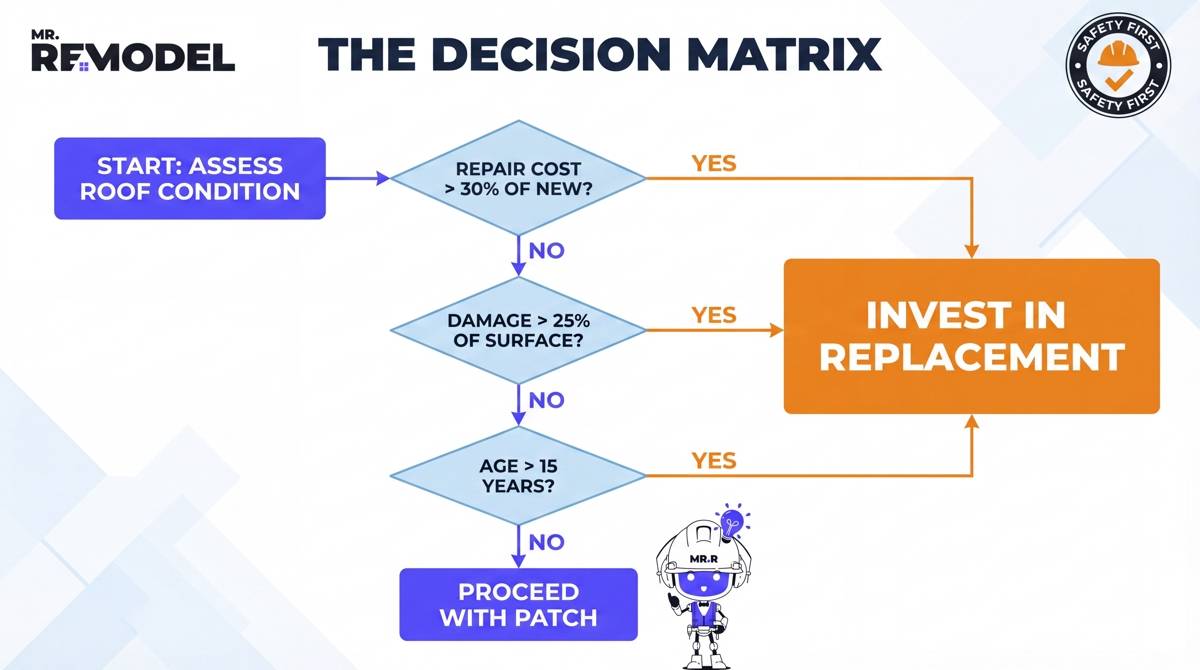
- The 30% Cost Rule: If a repair costs more than 30% of a new roof, replacement is the better financial move.
- The 25% Damage Rule: Many local building codes require a full replacement if more than 25% of the roof is damaged.
- Age Matters: Asphalt roofs older than 15 to 20 years often cannot be effectively patched due to material brittleness.
- ROI Impact: A new roof provides significant energy savings and home value increases that simple repairs cannot match.
- Regional Variance: Project costs vary by state, with average investments ranging from $51,000 to over $115,000 for premium systems.
- Safety First: Structural issues like sagging or widespread rot mandate an immediate full replacement for safety.
A failing roof is more than a nuisance. It is a ticking financial time bomb. According to Mr. Remodel's data, a single unaddressed leak can lead to secondary damage costing three times the price of the original repair within just two years.
This guide utilizes proprietary transaction data to give you the most accurate pricing and strategy available today. We focus on transparency and long-term protection for your property.
The Financial Threshold: When Does Repair Stop Making Sense?
Choosing between a patch and a replacement is often a math problem. Many homeowners attempt to save money by choosing the lowest immediate cost. However, frequent small repairs often mask a systemic failure that eventually costs more in the long run.
The 30% rule is our gold standard. If an isolated repair estimate exceeds 30% of the cost of a full replacement, the ROI of the repair is negligible. You are essentially paying for a temporary bandage on a permanent problem.
See Related: Roof Leak Repair vs Full Replacement Cost
Repair costs generally range from $300 to $1,500. This typically covers localized patching or flashing fixes. A full replacement averages between $9,000 and $15,000 for standard asphalt. Premium materials like metal or slate will push these figures significantly higher.
The 25% Rule and Local Building Codes
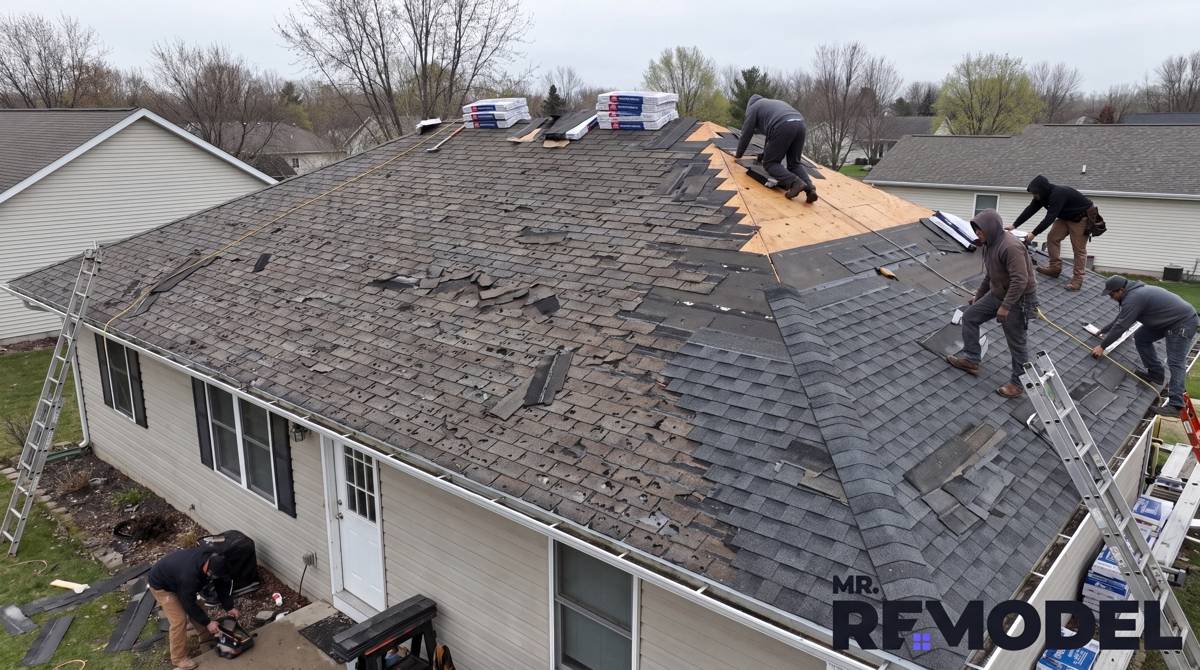
Safety and legality are just as important as cost. In many jurisdictions, building codes dictate your decision for you. If a storm or age-related wear affects more than 25% of the total roof surface, a full replacement is often mandatory.
Insurance companies also look at this threshold. They may refuse to cover partial repairs if the structural integrity is compromised over a large area. Attempting to bypass these codes can result in failed home inspections during a future sale.
See Related: Signs You Need a New Roof (vs Repair)
Inspectors look for the density of the damage. If you have ten small leaks spread across different sections, the roof is considered a total loss. Patching multiple areas creates a patchwork of materials that expands and contracts at different rates.
Material Longevity Standards and Aging Factors
Every material has a natural expiration date. Understanding where your roof sits on its chronological timeline is vital. An asphalt roof that is 18 years old is at the end of its functional life.
New shingles will not seal correctly against old, brittle ones. This creates a weak point where wind and water can penetrate. In these cases, even a perfectly executed repair is likely to fail during the next major weather event.
The Tile Roofing Industry Alliance confirms that premium materials like clay can last over a century. If your home currently has a short-lived material, upgrading to a longer-lasting option during replacement can drastically increase your home value.
Average Lifespans by Material
- Asphalt and Composite: 20 to 30 Years.
- Flat and Membrane: 20 to 35 Years.
- Metal: 40 to 70 plus Years.
- Clay and Concrete: 50 to 100 Years.
- Slate: 75 to 150 plus Years.
Proprietary Investment Data: Project Averages
Location plays a massive role in roofing costs. Labor rates, disposal fees, and local material availability create wide price swings across the United States. Mr. Remodel has tracked thousands of projects to identify where homeowners are investing the most.
In Utah, for example, the average investment for a full replacement is over $115,000. This often reflects the use of premium, heavy-duty materials capable of handling extreme snow loads and temperature fluctuations.
National Roofing Data and Cost Matrix
See Related: How Long Do Roofs Last? Lifespan by Material & Climate
Environmental Impacts and Energy Efficiency
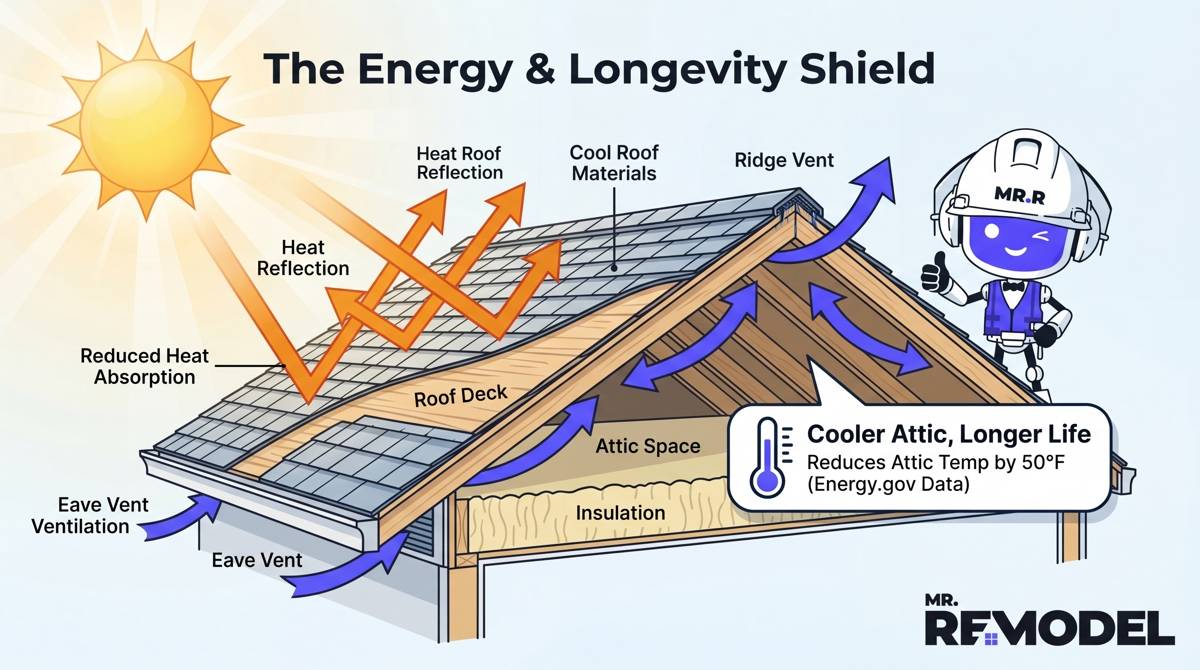
A new roof is an opportunity to lower your monthly utility bills. Older roofing systems often lack proper ventilation and reflective properties. This causes your attic to trap heat, forcing your HVAC system to work harder.
The U.S. Department of Energy highlights that cool roofs can stay up to 50 degrees cooler than traditional materials. This transition is only possible during a full replacement. Repairs do not address the systemic energy loss of an old roof.
Furthermore, the U.S. Environmental Protection Agency notes that specialized roofing solutions reduce the heat island effect in urban areas. Investing in a modern, efficient system is a responsible choice for both your wallet and the environment.
Is your roof wasting energy? Connect with a Mr. Remodel and get in touch with roofing experts for a free, no-obligation quote.
Identifying Critical Signs of Roof Failure
How do you know if you are in the repair or replacement category? Look for specific physical indicators. Some issues are cosmetic, while others signal a complete loss of protection.
1. Granule Loss in Gutters
If you see piles of sand-like granules in your downspouts, your shingles are losing their UV protection. This is a sign of systemic age. Repairs cannot replace these lost granules.
2. Curling or Buckling Shingles
Shingles should lie flat. If they are curling upward or looking distorted, the internal matting is failing. This usually happens when the roof has reached its age limit.
3. Daylight in the Attic
If you can see light coming through the roof boards in your attic, you have a major problem. This indicates structural gaps that water will eventually find.
See Related: Storm Damage: Repair or Replace Decision Guide
Insurance Claims vs. Out-of-Pocket Expenses
The source of the damage often dictates your financial strategy. If a sudden storm caused the damage, your homeowners' insurance might cover the full cost of replacement. However, insurance rarely covers damage caused by neglect or old age.
It is vital to document everything immediately after a storm. Do not wait for a leak to appear. Early detection by a professional can be the difference between a covered claim and a massive out-of-pocket bill.
Mr. Remodel data shows that homeowners who act within 30 days of a storm have a much higher success rate with claims. Delaying the inspection allows the insurance company to argue that the damage was pre-existing.
See Related: Insurance Claims vs Out-of-Pocket Roof Replacement
The Role of Attic Ventilation in Roof Longevity
A roof is more than just shingles. It is a system that includes the deck, the underlayment, and the ventilation. If your attic is not breathing, your roof will cook from the inside out.
Many repair contractors ignore ventilation. They simply patch the hole and leave. A full replacement allows a professional team to audit your entire ventilation system. This ensures your new investment lasts as long as possible.
Proper airflow prevents ice dams in the winter and mold growth in the summer. If you have recurring leaks in different spots, poor ventilation might be the hidden culprit. Replacing the roof is the only way to fix these underlying structural flaws.
The Hidden Costs of Layering Shingles
Some homeowners attempt to save money by layering new shingles over old ones. This is known as a roof over. While it saves on disposal fees, it is a poor long-term strategy.
Layering adds immense weight to your home structure. It also traps heat between the two layers, causing the new shingles to degrade twice as fast. Most reputable contractors, including those in the Mr. Remodel network, recommend a full tear-off.
A tear-off allows the contractor to inspect the wooden decking. If there is rot or mold in the wood, a roof over it will simply hide the problem until it becomes a structural catastrophe.
Regional Climate Challenges and Material Selection
Your geography should dictate your roofing choice. In the Sun Belt, UV resistance is the priority. In the Rust Belt and Northeast, snow load and ice damming are the primary threats.
Homeowners in coastal areas must prioritize wind lift ratings. Standard shingles may peel off in a hurricane, while specialized metal systems are rated for winds exceeding 140 miles per hour. These regional nuances are why national cost averages can be misleading.
How to Choose a Roofing Contractor
Not all contractors are equal. A proper roof replacement requires specialized equipment and a large crew. A handyman might be able to patch a leak, but a full replacement needs a licensed professional.
Always check for manufacturer certifications. Companies that are certified by the shingle manufacturers can offer extended warranties that the average contractor cannot. This provides an extra layer of protection for your investment.
Red Flags to Avoid
- Contractors who demand the full payment up front.
- Lack of local references or a physical office.
- No proof of workers' compensation insurance.
- Pressure to sign a contract before the insurance adjuster arrives.
Comprehensive FAQ for Homeowners
Will a new roof increase my home value?
Yes. A new roof is one of the highest ROI home improvements. It provides peace of mind to buyers and improves the overall curb appeal of the property.
How long does a roof replacement take?
Most residential roof replacements are completed in one to three days. This depends on the size of the home and the complexity of the material.
Can I layer new shingles over old ones?
While some codes allow it, we do not recommend it. Layering traps heat and makes it impossible to inspect the underlying roof deck for rot.
What is the best roofing material for energy efficiency?
Metal roofing and cool asphalt shingles are top choices. These materials reflect solar energy into the atmosphere rather than absorbing it into your home.
Are there financing options for roof replacement?
Mr. Remodel connects its users with expert contractors that provides them with free, no-obligation quotes. This allows homeowners to protect their home now and pay for the investment over time.
Protecting Your Home Asset
Your roof is the first line of defense for your largest investment. While a repair may seem like a quick fix, it often delays the inevitable. By following the 30% cost rule and checking your local 25% damage codes, you can make a decision backed by logic rather than fear.
Don't wait for a small leak to become a major disaster. Use the tools and data provided by Mr. Remodel to take control of your home health. Whether you need a simple fix or a complete system overhaul, the right decision starts with an expert evaluation.
Ready to secure your home for the next 30 years? Get a free roofing quote and connect with the best contractors in your area.