1-855-QUOTEMR

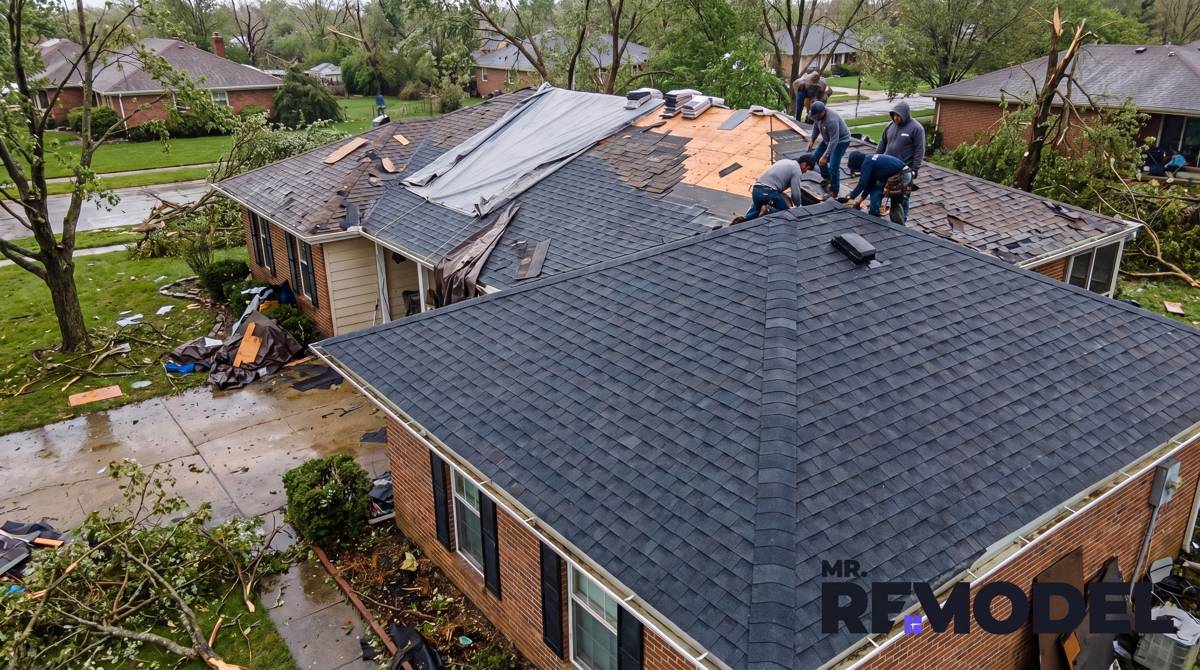
Table of Contents [hide]
Who This Is For
This guide is designed for homeowners who have recently experienced severe weather. If you are struggling to decide between a localized patch and a full roof replacement, this data-backed analysis provides the financial and structural thresholds you need.
Key Takeaways
- The 30% Rule: If repair costs exceed 30% of the price of a full replacement, a new roof is mathematically the better investment.
- 2026 Pricing: Expect to pay between $379 and $1,755 for storm repairs, while full replacements generally range from $7,000 to over $19,800.
- Aging Factor: Roofs that have reached 80% of their expected lifespan should almost always be replaced following significant storm damage.
- Regional Trends: Homeowners in high-impact states like Utah and Pennsylvania are investing more in full replacements to ensure long-term resilience.
Severe weather events are becoming more frequent and intense across the United States. According to the National Oceanic and Atmospheric Administration (NOAA), the U.S. experienced 28 separate billion-dollar weather and climate disasters in 2023 alone.
When a storm hits your home, the immediate aftermath is often overwhelming. You are faced with a critical choice: do you fix the visible damage or replace the entire system? This decision has long-term implications for your home's value and your financial security.
The Financial Threshold: Understanding the 30% Rule
Mr. Remodel's data shows that the smartest fiscal choice that homeowners can make is following the 30% Financial Threshold. This rule states that if a repair estimate exceeds 30% of the total cost of a new roof, replacement is the superior option.
Patching a roof may seem cheaper today, but it often leads to higher cumulative costs. Repeated repairs on an aging or compromised structure rarely provide the same protection as a fresh installation. This is especially true if the storm has compromised the underlying decking.
See Related: Roof Leak Repair vs Full Replacement Cost
Cost Comparison: Repairs vs. Replacement
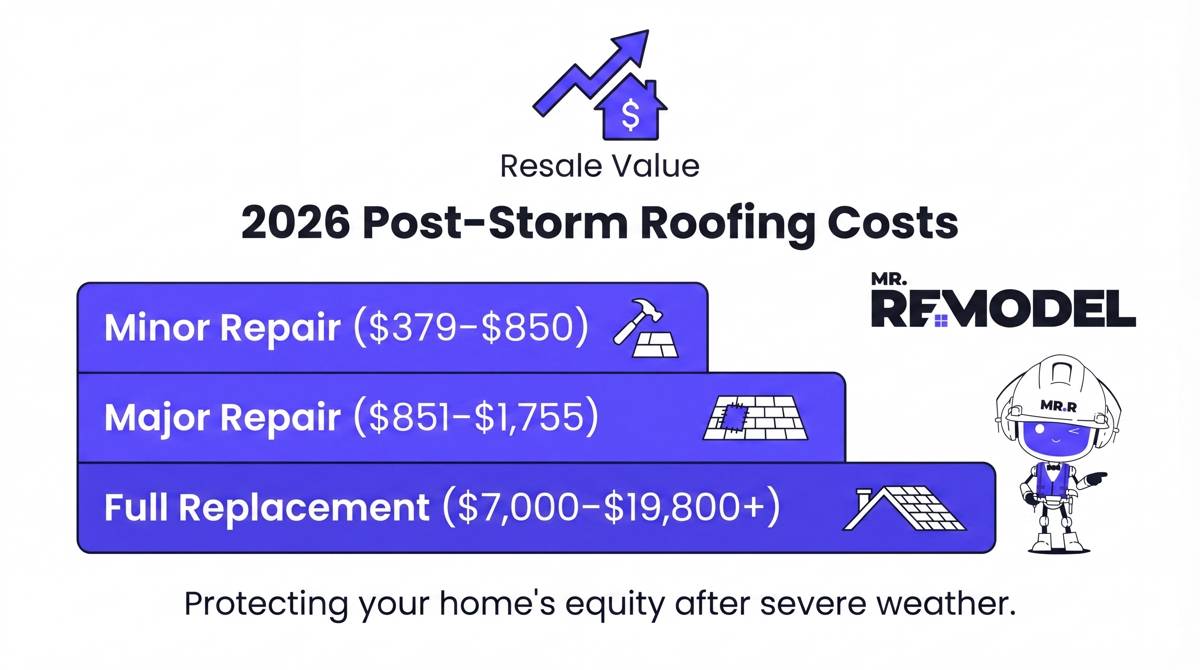
Navigating the costs of roofing in 2026 requires looking at current market data. Based on Mr. Remodel's internal data, isolated storm repairs average between $379 and $1,755. These repairs typically involve replacing individual shingles or fixing minor flashing issues.
In contrast, a full roof replacement costs between $7,000 and $19,800 for most standard homes. While the upfront cost is higher, a replacement resets your warranty and protection. It also prevents the "mismatched shingle" look that often occurs with localized patches.
Material Cost Dynamics and Long-Term Value
The material you choose significantly impacts both the initial cost and the long-term durability of your home. In 2026, there is a shift in how homeowners invest their capital. Many are moving away from basic materials toward high-performance options that withstand severe weather.
Standard asphalt shingles remain the most common choice, costing between $4.50 and $8.50 per square foot. However, they are more susceptible to wind uplift. For those seeking better resilience, metal roofing is a premium upgrade ranging from $8.50 to $18.00 per square foot.
High-end materials like slate or tile offer the most protection but require a larger investment. These materials typically range from $15 to over $30 per square foot. These options are often chosen in regions prone to extreme hail or fire risks.
Structural Signs You Need a Full Replacement
Not all storm damage is visible from the ground. While a few missing shingles are obvious, structural compromise is often hidden. FEMA provides guidelines for rebuilding after storms, emphasizing that the integrity of the roof deck is paramount.
If a storm has caused widespread granule loss, the shingles can no longer protect against UV rays. This leads to rapid deterioration. Furthermore, if high winds have caused "creased" shingles, the internal fiberglass mat is broken, and a leak is inevitable.
Wind Impact and Shingle Integrity
The Insurance Institute for Business & Home Safety (IBHS) sets standards for "FORTIFIED" roofs. These standards show that wind speeds as low as 60 mph can compromise standard shingle seals. If more than 25% of your roof has lost its seal, a repair is no longer viable.
The Lifespan Factor: When Age Dictates the Move
The age of your roof is perhaps the most important variable in the repair vs. replace equation. A roof that is at 80% of its expected lifespan is a prime candidate for replacement after a storm. For standard asphalt, this is usually between 16 and 20 years.
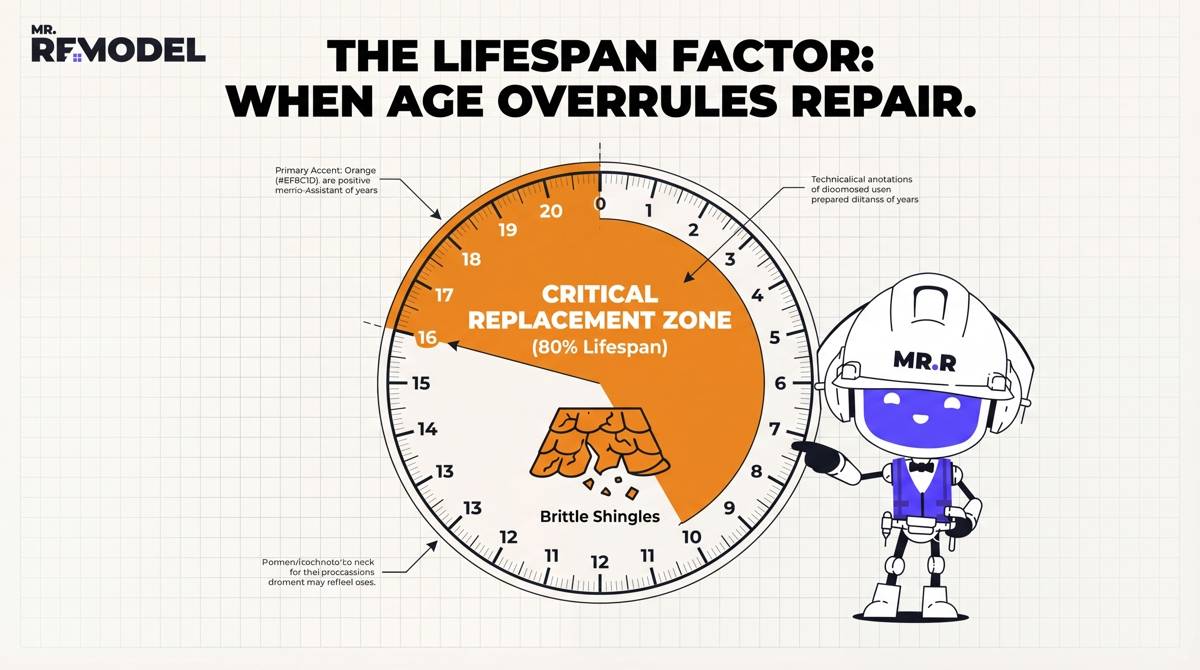
Investing in a repair for a 20-year-old roof is often a waste of money. The surrounding shingles are likely too brittle to handle the repair process. This often leads to a cycle of constant maintenance that far exceeds the cost of a new installation.
See Related: How Long Do Roofs Last? Lifespan by Material & Climate
Regional Post-Storm Investment Trends
Mr. Remodel data shows that homeowners in specific states are increasingly opting for full replacements over patches. This trend suggests a growing understanding of home equity and long-term protection. In many cases, these homeowners are investing significant capital to ensure their homes remain safe.
In Utah, the average post-storm replacement investment has reached $115,123. Pennsylvania follows closely at $99,160. Other high-investment states include Colorado ($63,248), Washington ($54,950), and New Hampshire ($51,120). These figures reflect a move toward high-durability materials and full-system upgrades.
See Related: Signs You Need a New Roof (vs Repair)
Insurance Claims vs. Out-of-Pocket Decisions
Dealing with insurance is a major part of the storm recovery process. Many homeowners feel pressured to accept the lowest possible settlement. However, it is vital to ensure that the payout covers the actual cost of a quality replacement if the damage is extensive.
If your insurance only covers a partial repair, but your roof is 20 years old, you may want to pay the difference for a full replacement. This "out-of-pocket" upgrade can save you thousands in future repairs and lower your insurance premiums. Mr. Remodel can help you navigate these choices.
See Related: Insurance Claims vs Out-of-Pocket Roof Replacement
Before you sign any contracts, get a free quote for roofing replacement from Mr. Remodel. Comparing multiple bids ensures you are receiving a fair market price for your specific region and material needs.
Strategic Decision-Making Checklist
When evaluating your roof after a storm, follow this checklist to determine your next steps:
- Check for more than 3 to 5 missing shingles per slope.
- Look for large areas of "bald" shingles where granules have washed away.
- Inspect the attic for light peeking through or water staining on the rafters.
- Determine if your roof is older than 15 years.
- Get a professional estimate to see if repair costs exceed the 30% threshold.
Frequently Asked Questions
1. Is it better to repair or replace a roof after hail?
If the hail was large enough to bruise the shingles or cause widespread granule loss, replacement is usually better. Small repairs do not address the systemic weakening of the roof's water-shedding capabilities.
2. How does the 30% rule work?
The 30% rule is a financial guideline. If your repair estimate is more than 30% of the cost of a new roof, you should replace it. This prevents you from "throwing good money after bad" on a failing structure.
3. Does insurance cover a full roof replacement?
Insurance typically covers a full replacement if the damage is widespread and caused by a "covered peril" like wind or hail. However, the age of the roof and your specific policy type (ACV vs. RCV) will affect the payout.
4. How can Mr. Remodel help after a storm?
Services like Mr. Remodel help by matching you with vetted, local contractors who specialize in storm restoration. This ensures you receive accurate estimates and high-quality workmanship during a stressful time.
5. What are the signs of structural storm damage?
Structural damage includes cracked rafters, sagging rooflines, or significant moisture in the attic. These issues require immediate attention and almost always necessitate a full roof replacement to ensure the home remains safe.
Making the Smartest Choice for Your Home
Choosing between a repair and a replacement after a storm is a significant financial decision. By following the 30% rule and considering the age of your roofing system, you can protect your home's value and your family's safety. Remember that 2026 data shows a clear trend toward replacement for long-term savings.
Don't let storm damage compromise your peace of mind or your home's integrity. For a clear understanding of your options, get a free quote from a trusted professional.
Mr. Remodel connects homeowners with vetted local contractors who provide expert assessments and transparent pricing. Get Your Free Roofing Quote Today