1-855-QUOTEMR

Table of Contents [hide]
Who This Is For:
This guide is designed for homeowners and property managers currently facing roofing issues. If you are debating between a localized patch and a full system replacement, this article provides the financial frameworks and technical indicators necessary to make an informed decision.
Key Takeaways
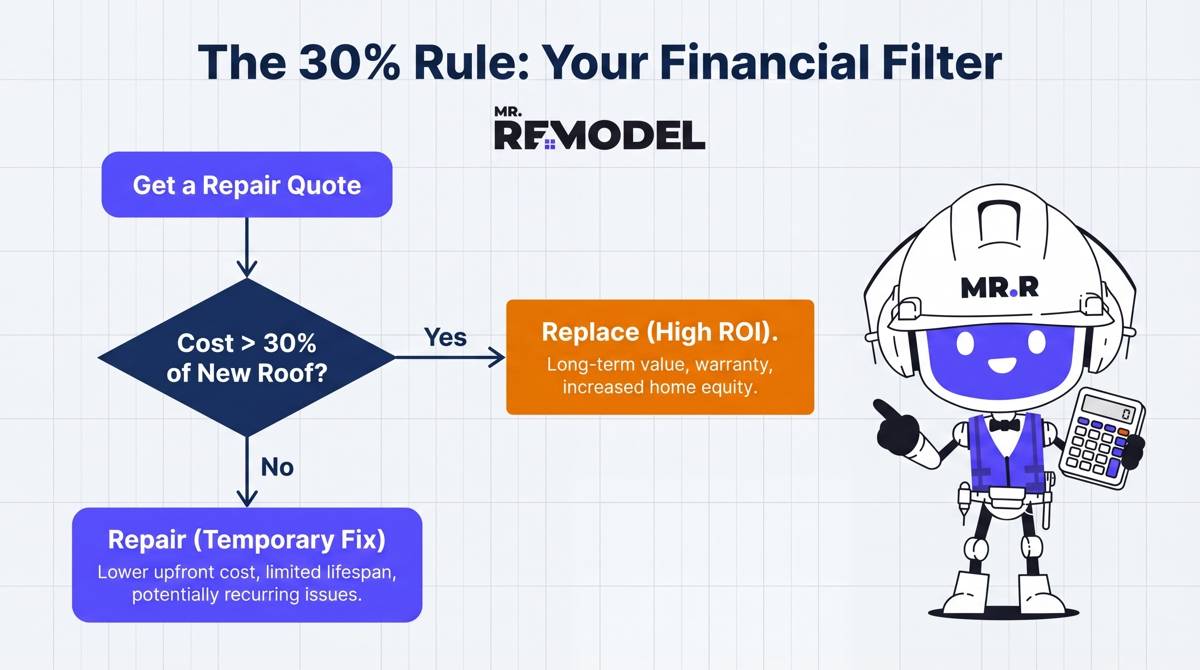
- The 30% Rule: If repair costs exceed 30% of the cost of a full replacement, investing in a new roof is the smarter long-term financial move.
- Age Matters: Asphalt shingles typically reach their limit at 15 to 20 years. Beyond this point, repairs often act as temporary bandages on a failing system.
- Hidden Dangers: Structural sagging and compromised decking are often hidden under old layers. A full replacement is the only way to ensure the home's structural integrity.
- Localized Costs: 2026 data shows high investment levels in markets like Utah and Pennsylvania, where homeowners are prioritizing full installations over minor fixes.
Deciding whether to patch a leak or replace your entire roof is one of the most significant financial choices a homeowner can make. In 2026, the trend has shifted heavily toward full replacements. Data from Mr. Remodel indicates that in Pennsylvania alone, over 1,000 homeowners opted for full installations recently.
The average investment in these projects reached nearly $100,000 in high-volume markets. This shift suggests that many are moving away from temporary repairs in favor of long-term security. Understanding the physical and financial triggers for this decision is essential to protecting your home and your bank account.
Identifying the Physical Signs of Roof Failure
The first step in your decision process is a thorough physical inspection. You do not always need to climb a ladder to see the signs. Often, the most telling indicators are visible from the ground or inside your attic.
Age and the 15-Year Threshold
Most residential roofs use asphalt shingles. While many manufacturers claim a 30-year lifespan, the Colorado Roofing Association notes that environmental factors often reduce this. If your roof is over 15 years old, the protective oils in the shingles have likely evaporated.
At this stage, shingles become brittle. They can no longer expand and contract with temperature changes. Once the material reaches this point of "thermal shock," a simple repair is rarely effective. The surrounding shingles are often too fragile to withstand the manipulation required for a patch.
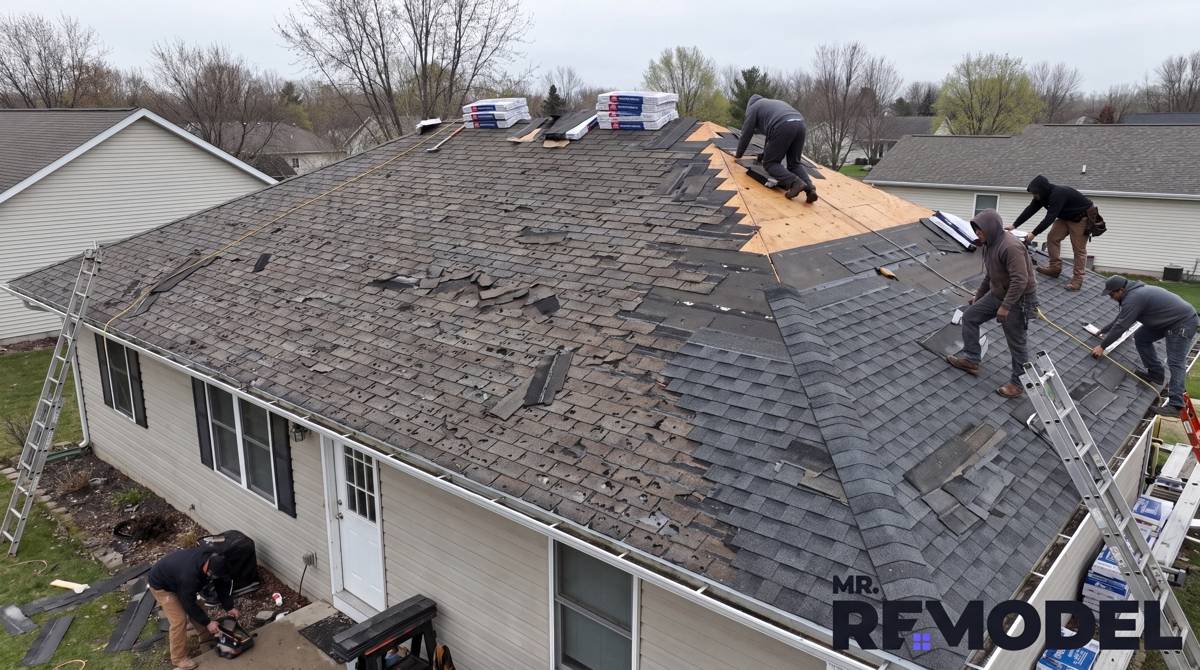
Widespread Shingle Damage
Look for shingles that are degrading, like:
- Curling
- Cupping
- Clawing
This happens when the underside of the shingle shrinks. It is a definitive sign of advanced aging. You should also look for depreciation indicators like bald spots where granules have washed away.
See Related: How Long Do Roofs Last? Lifespan by Material & Climate
Gutter Debris and Granule Loss
Your gutters act as a diagnostic tool. If you find piles of sand-like granules in your downspouts, your roof is losing its UV protection. These granules protect the asphalt from the sun. Without them, the roof will deteriorate rapidly, leading to cracks and leaks.
Recognizing Structural Sagging
A sagging roofline is a critical warning sign. It often indicates that the underlying decking is rotted or that the rafters are failing. This is common in older homes where moisture has bypassed the shingles and soaked into the wood.
If you notice a wavy appearance to your roof, a repair is likely impossible. You will need to remove the existing materials to address the structural issues underneath.
This process is often governed by strict building codes, such as WAC 51-11R-20218, which define how reroofing and decking repairs must be handled.
Repair vs. Replacement: The 30% Financial Rule
How do you know when a repair is a waste of money? Industry experts use the 30% rule. If the cost of a professional repair exceeds 30% of the cost of a full replacement, you should replace the entire system.
Calculating Long-Term ROI
A repair might cost $2,000, while a new roof costs $10,000. While $2,000 seems cheaper, it only buys you a small amount of time. If the rest of the roof is 20 years old, another leak will likely appear within months.
Investing in a full system provides a new warranty and increases home value. It also allows for the installation of modern roofing costs and materials that offer better energy efficiency. Over time, the lower maintenance costs of a new roof outweigh the savings of multiple small repairs.
The Hidden Costs of Reroofing
Some homeowners try to save money by reroofing. This involves placing a second layer of shingles over the old ones. While this saves on labor and disposal, it is often a poor investment.
The Colorado Roofing Association explains that double-layering traps heat. This causes the new shingles to degrade faster. Furthermore, you cannot inspect the decking for rot if you do not remove the old layer. Most modern contractors recommend a full tear-off to ensure a clean, stable surface.
Localized Customer Cost Insights
Market data from Mr. Remodel shows significant variations in what homeowners are spending on roofing. These numbers reflect localized labor rates, material availability, and regional climate requirements.
Why Some Markets Cost More
The high cost in Utah ($115,123) is often attributed to the use of premium materials. Homeowners in these regions frequently choose high-end roofing and siding combinations. These upgrades are designed to withstand extreme temperature fluctuations and heavy snow loads.
In contrast, markets like Florida ($31,882) and Indiana ($23,733) see lower average costs. This is typically due to the prevalence of standard asphalt shingles and simpler roof designs. Regardless of the market, the data shows that homeowners are investing in complete systems rather than minor patches.
Need an Expert Opinion? If you are unsure if your damage warrants a full replacement, Mr. Remodel can help. Get a free quote from a vetted professional to understand your options.
Analyzing Different Roofing Materials
Your choice of material impacts both the cost and the "repair vs. replace" timeline. In 2026, there is a diverse mix of installations across the country.
- Asphalt Shingles: The most common choice. They are affordable but have the shortest lifespan. If these are failing across more than one slope, a replacement is usually necessary.
- Metal Roofing: A high-growth category. While more expensive upfront, they rarely require replacement within a typical 50-year timeframe.
- Slate and Tile: These are heavy, premium options. Repairs for these materials are specialized. If the underlayment fails, even "perfect" tiles must be removed and reinstalled.
You can learn more about how these materials protect your structure in our guide to roofing and exteriors. Choosing the right material during a replacement can prevent the need for future repairs for decades.
3 Vital Building Code Rules for Your Roof
Building codes are legal mandates that ensure your home remains safe and insurable. Ignoring these requirements can lead to project delays or insurance denials.
- The Two-Layer Maximum: Most codes prohibit having more than two layers of shingles. If you already have two, a full tear-off is mandatory. Adding a third layer is illegal and risks structural failure.
- Insurance Compliance: Codes ensure your roof withstands regional weather. Non-compliant roofs often result in rejected insurance claims. Following these laws protects your financial investment and keeps your property covered.
- Mandatory Component Upgrades: Modern codes require specific underlayment and flashing. These parts prevent leaks in high-risk areas. A full replacement ensures your entire system meets 2026 safety standards.
Professionals ensure every installation meets these strict local requirements for your peace of mind.
Expert Management of Your Roofing Project
Effective project management requires balancing immediate needs with long-term financial goals. Setting a realistic budget is the first step in this process. You must understand the specific value differences between a temporary fix and a permanent solution.
See Related: Roof Leak Repair vs Full Replacement Cost
To manage your project professionally, follow these three steps:
- Prioritize Long-Term ROI: Analyze if a patch provides enough protection for the current cost.
- Schedule Proactively: Book your installation before storm seasons to avoid emergency pricing.
- Review Warranties: Ensure your new system includes protection for both labor and materials.
Timing is a critical factor in roofing and exterior maintenance. If you wait for a major leak, you risk structural rot. Acting while signs of failure are visible saves money on both labor and interior repairs.
Finally, investigate how you will fund the project. Insurance often covers storm-related issues, while out-of-pocket financing is standard for aging systems. Understanding these options provides a clear framework for your discussions with an adjuster.
See Related: Insurance Claims vs Out-of-Pocket Roof Replacement
Final Checklist for Homeowners
Before signing a contract, verify the following:
- Is the contractor licensed and insured in your state?
- Does the quote include a full tear-off and disposal?
- Will they install new drip edges and flashing?
- What is the specific warranty for both labor and materials?
For those dealing with recent weather events, researching local climate can be helpful. This ensures you are not overlooking hidden wind or hail damage that could lead to future failure.
See Related: Storm Damage: Repair or Replace Decision Guide
Frequently Asked Questions
How do I know if I can just repair a small leak?
If the leak is caused by a specific, isolated issue, like a loose piece of flashing or a single damaged shingle, a repair is appropriate. However, if the leak is one of several, it usually indicates that the entire system has reached its end of life.
What is the average cost of a new roof in 2026?
According to Mr. Remodel's data, costs vary by region. Pennsylvania averages around $99,160 for high-quality installations, while Washington averages closer to $54,950. Your specific cost will depend on the square footage and material choice.
Can I layer new shingles over old ones?
While some codes allow it, it is generally discouraged. Layering prevents you from inspecting the roof deck for rot. It also adds significant weight to your home’s structure and can void some manufacturer warranties.
How long does a typical roof replacement take?
Most residential roof replacements take between one and three days. Larger homes or complex designs using materials like slate may take longer.
Does Mr. Remodel provide quotes for both repair and replacement?
Services like Mr. Remodel help by matching you with vetted contractors who provide comprehensive evaluations. They can offer a free quote that compares the cost of a long-term repair versus a full, warranted replacement.
Making the Right Choice for Your Home
Choosing between a repair and a replacement requires a balance of physical evidence and financial logic. While a repair is a lower immediate cost, it often leads to a cycle of repeated expenses. By following the 30% rule and monitoring the age of your materials, you can avoid throwing money away on a failing system.
The data from Mr. Remodel shows that modern homeowners are choosing the security of new installations. With the average investment in states like Utah and Pennsylvania reflecting a commitment to quality, a new roof remains one of the best ways to protect your property value.
If you are ready to stop patching and start protecting, let Mr. Remodel connect you with the best pros in your area. Get free, no-obligation quotes and find local contractors who specialize in high-quality, long-lasting roofing systems.