1-855-QUOTEMR

Table of Contents [hide]
Who This Is For:
This guide is for homeowners in the research phase of a roof replacement. It is designed to help you evaluate the long-term ROI of different materials based on your specific regional climate and local installation costs.
Key Takeaways
- Material Matters: Asphalt shingles last 15 to 30 years, while premium slate can last over 150 years.
- Climate Impact: High UV exposure and freeze-thaw cycles can reduce a roof’s theoretical lifespan by up to 50%.
- Localized Investment: Mr. Remodel data shows homeowners in mountain climates, like Utah, invest significantly more in durable roofing systems.
- Thermal Stress: Utilizing "cool roof" materials can slow material degradation by reducing heat absorption.
- Professional Matching: Working with vetted contractors ensures installation quality, which is the top factor in reaching a roof's maximum age.
Your roof is the primary defense system for your home’s structural integrity. According to recent life cycle assessments, a roof's service life is not just a number on a package. It is a reflection of material science, installation precision, and environmental endurance.
Recent data from Mr. Remodel suggests that homeowners are prioritizing longevity more than ever. With rising material costs, many are moving away from temporary fixes. Instead, they are choosing materials that offer a 40-year to 50-year return on investment.
Mr. Remodel has tracked thousands of installations across various climates. This data reveals that a "standard" lifespan is often shortened by local weather patterns. Understanding these variables is essential before signing a contract.
Average Roof Lifespan by Material Type
The material you choose is the single largest determinant of how long your roof will last. Modern manufacturing has improved the durability of even basic materials. However, high-end options still dominate the longevity charts.
Asphalt and Composite Shingles
Asphalt shingles remain the most popular choice due to their affordability. A standard 3-tab shingle typically lasts between 15 and 20 years. These are susceptible to wind uplift and granular loss over time.
Premium architectural shingles offer a more robust profile. These can last 25 to 30 years or more. They feature multiple layers of material, providing better resistance to impact and weather-related wear.
The Durability of Metal Roofing
Metal roofing has seen a surge in popularity for 2026. Standard steel or aluminum panels usually last 40 to 50 years. This material reflects solar heat, which prevents the structure from absorbing excess thermal energy.
Premium options like copper or standing seam metal can exceed 70 years. These systems are highly durable and require very little maintenance. They are often the last roof a homeowner ever needs to install.
Natural Materials: Wood, Clay, and Slate
Wood shakes provide a rustic aesthetic and last 20 to 40 years. However, they require rigorous maintenance to prevent rot and mold. In wet climates, they must be treated regularly to ensure they reach their full potential.
Clay and concrete tiles are fireproof and rot-resistant. These materials often last between 50 and 100 years. Their heavyweight requires a reinforced roof structure, but their durability is unmatched in hot, arid regions.
Slate is the gold standard of roofing. A well-installed slate roof can last 75 to 150 years. It is a generational investment that adds significant value and historical accuracy to a property.
See Related: Roof Leak Repair vs Full Replacement Cost
Flat Roof and Membrane Systems
Flat roofs often use PVC or TPO membranes. These materials generally last 15 to 30 years. Because flat surfaces are prone to water pooling, they require more frequent inspections to ensure the seams remain watertight.
How Climate and Weather Affect Your Roof
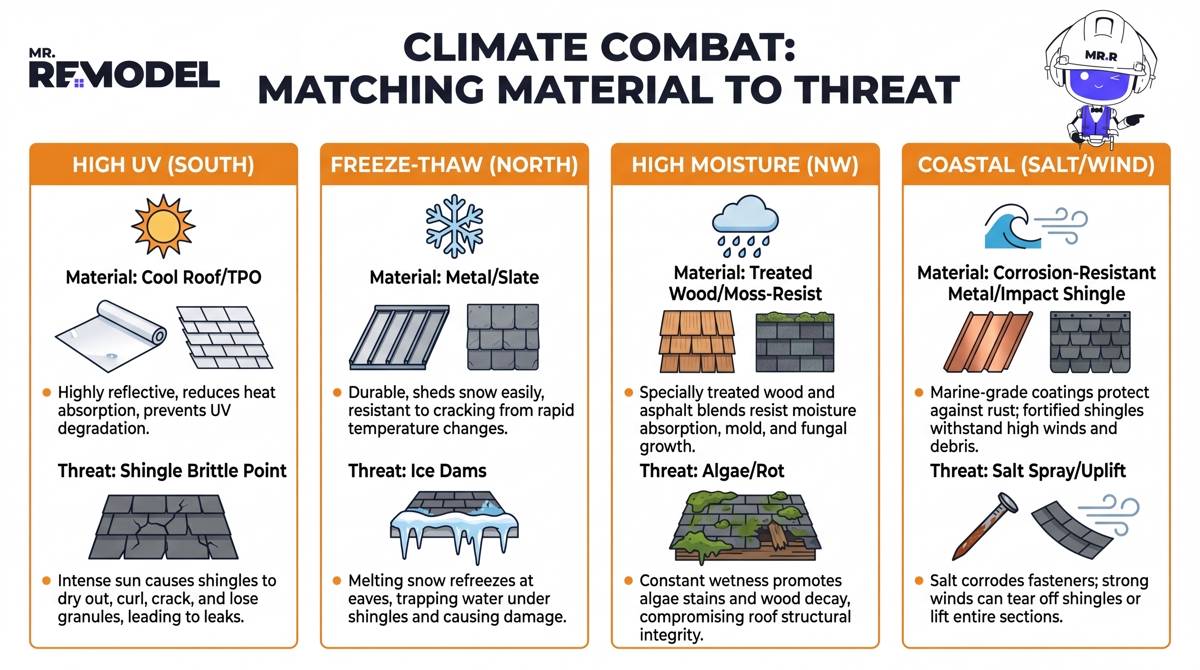
Theoretical lifespans assume ideal conditions, but your roof lives in the real world. Environmental stressors are the primary cause of premature roof failure. Different regions of the country face unique challenges that degrade materials differently.
The Impact of High Heat and UV Radiation
In hot and sunny climates like Florida or Texas, intense UV radiation is the main enemy. The U.S. Department of Energy explains that "cool roofs" help mitigate this. Reflective materials reduce the temperature of the roof surface.
UV rays dry out the volatile oils in asphalt shingles. This causes them to become brittle and crack. In these environments, a 30-year shingle may only last 15 to 18 years without proper ventilation and reflective coatings.
Freeze-Thaw Cycles and Snow Load
States like Colorado and New Hampshire experience extreme freeze-thaw cycles. When water gets into small cracks and freezes, it expands. This expansion can crack asphalt, tile, and even some stone materials.
Metal and slate are highly resilient in these conditions. They are designed to shed heavy snow quickly. This prevents the formation of ice dams, which can cause significant internal water damage during the winter months.
See Related: Storm Damage: Repair or Replace Decision Guide
High-Moisture and Humid Environments
In the Pacific Northwest, moisture is the primary concern. Constant rain and high humidity promote the growth of moss and algae. If left untreated, these organisms can lift shingles and allow water to seep into the decking.
Lawrence Berkeley National Laboratory data shows that reduced heat absorption slows degradation. In wet areas, choosing all-weather roofing materials is essential. Proper attic ventilation is also critical to prevent moisture from trapping heat under the roof.
Regional Investment Data: What Homeowners Are Paying
The cost of a roof replacement is often a reflection of the climate necessity. Mr. Remodel data highlights how homeowners in harsh climates invest more in premium, long-lasting materials. The following table shows average customer investments by state for 2025 and 2026.
This data shows that Utah and Pennsylvania homeowners are making the largest investments. This often points toward the selection of metal, tile, or slate. These materials provide a lifetime roofing solution that protects the home for decades.
See Related: Signs You Need a New Roof (vs Repair)
Factors That Shorten or Extend Roof Life
Beyond material and climate, several other factors influence how long your roof will last. Even the best materials will fail early if the installation or maintenance is poor.
- Installation Quality
A roof is only as good as the contractor who installs it. Poor nailing patterns or improper flashing can lead to leaks within the first few years. Using services like Mr. Remodel ensures you are connected with vetted, high-quality professionals.
- Ventilation
Attic ventilation is crucial for temperature regulation. Without it, heat builds up under the roof deck. This "cooks" the shingles from the inside out, significantly shortening their lifespan.
- Regular Maintenance
Cleaning gutters and removing debris prevents water from backing up. Small repairs, such as replacing a few missing shingles after a storm, can prevent the need for a full replacement.
- Roof Pitch
Steeper roofs shed water and snow more effectively. Flat or low-slope roofs are more prone to standing water. This increases the risk of membrane degradation and structural leaks.
Frequently Asked Questions (FAQ)
How do I know if my roof needs to be replaced or just repaired?
Visible signs like curling shingles, bald spots, and internal leaks suggest the need for an inspection. If more than 30% of the roof is damaged, a full replacement is usually more cost-effective.
Does a metal roof really last 50 years?
Yes, most metal roofing systems are designed to last between 40 and 70 years. Their ability to resist fire, wind, and impact makes them one of the most durable choices available today.
How does Mr. Remodel help with roof replacement?
Services like Mr. Remodel help by matching you with vetted contractors in your local area. This ensures you get competitive quotes from professionals who understand your specific regional climate needs.
Can I install a new roof over my old one to save money?
While "roof-overs" are possible, they are generally not recommended. Adding a second layer traps heat and prevents the contractor from inspecting the underlying roof deck for rot or damage.
What is the most durable roofing material for extreme hail?
According to the Tile Roofing Industry Alliance, clay and concrete tiles offer excellent impact resistance. Additionally, Class 4 impact-rated asphalt shingles are designed specifically to withstand heavy hail without cracking.
Maximizing Your Investment with a New Roof
Choosing a new roof is a complex decision that balances immediate costs with long-term durability. By matching the right material to your local climate, you can ensure your home stays protected for thirty years or more.
Whether you are dealing with the intense sun of Florida or the heavy snow of Colorado, the quality of your installation is what matters most. A professional contractor will ensure that your ventilation, flashing, and underlayment are all optimized for longevity.
Ready to find the perfect roofing solution for your home? Get a free quote for your roof replacement and connect with top-rated local experts.