1-855-QUOTEMR

Table of Contents [hide]
Who This Is For
This resource is written for homeowners planning a major exterior renovation who need to understand the evolving financial landscape of the modern construction market. It is specifically designed for those who want to move past outdated budget assumptions and select a material that offers the highest level of protection for their specific geographic region.
Key Takeaways
- Price Parity: According to our data, the cost gap between premium asphalt and metal has narrowed to the point of functional parity.
- Dimensional Dominance: High-performance architectural shingles currently hold a 71% market share due to their superior wind-resistance ratings.
- Regional Shifts: Mountain and coastal states are rapidly adopting metal roofing, with adoption rates exceeding 50% in certain high-risk zones.
- Thermal Performance: Desert regions now require high-mass materials, such as tile, to mitigate extreme UV degradation and wildfire risks.
- Investment ROI: Longevity and climate resilience now outweigh the initial price tag for modern property owners.
Your choice of roofing material is the only thing standing between your family and the destructive power of a changing environment. Selecting the best roofing materials for a 2026 renovation is no longer a simple choice between price and color, but a strategic decision based on structural integrity and long-term energy performance.
Navigating the nuances of modern construction is easier when you have a dedicated partner to help you filter through complex pricing data. Mr. Remodel is a referral service that bridges the gap between homeowners and local experts. We connect you with pre-screened, local contractors who understand the unique building codes of your area.
The 2026 Material Landscape and Market Shift
The days of treating a roof as a basic commodity are officially over for the American homeowner. Modern residents are prioritizing materials that can withstand more frequent and severe weather events. Our internal data shows a clear trend toward high-performance architectural shingles and durable metal systems that offer decades of security for your property.
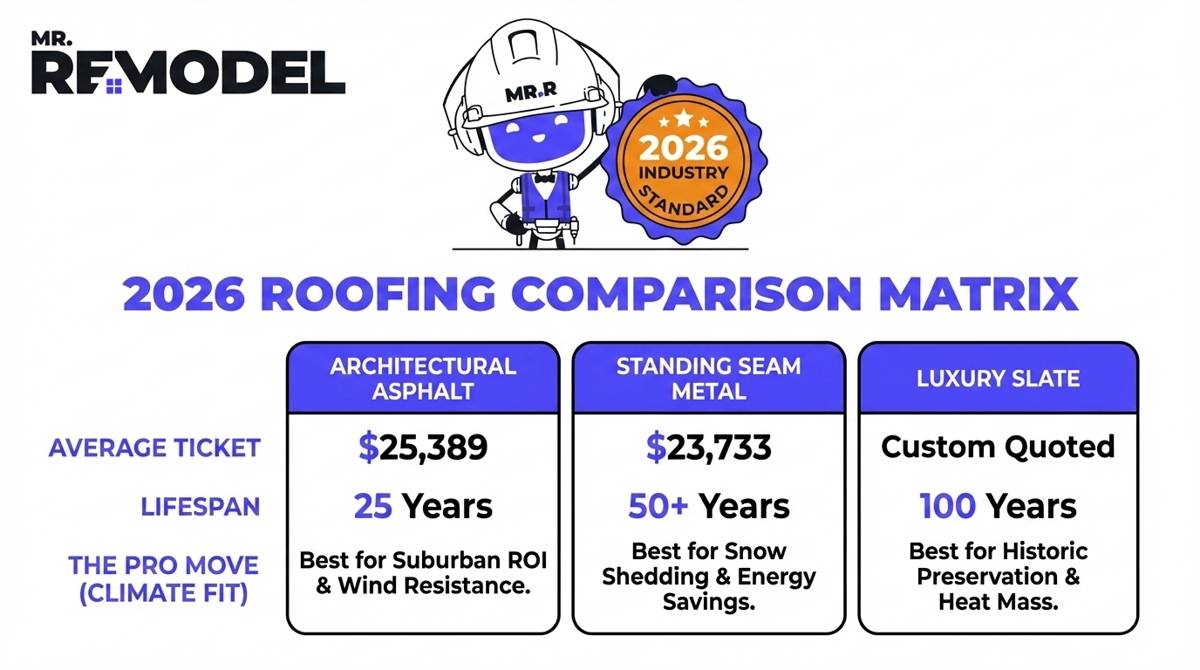
Our research indicates a clear market share breakdown for 2026 installations. Asphalt shingles still lead with 71.24% of the volume, but metal roofing has surged to nearly 19%. Luxury slate and tile systems hold about 8% of the market. This diversity reflects a growing understanding that one material does not fit every environment or home style.
Why Budget Estimates Are Frequently Inaccurate
Many online guides continue to cite pricing from the early 2010s, which creates unrealistic expectations for modern property owners. The reality of the 2026 market includes higher labor costs, stricter safety regulations, and a shift toward premium material grades. Most quality installations now start at a much higher entry point than they did just five years ago.
See Related: Roof Replacement Cost (2026): Materials, Labor, Regional Pricing & ROI
The Rise of High-Performance Engineered Systems
A modern roof is no longer just a layer of shingles or panels. It is a holistic system that includes specialized underlayments, advanced ventilation, and custom-fabricated flashing. These components work together to prevent moisture buildup and heat transfer, which are the primary causes of premature system failure in most modern homes.
Asphalt Shingles and Dimensional Dominance
Asphalt remains the most popular choice across the country, but the product itself has undergone a massive transformation. The industry has largely abandoned the thin, flat three-tab shingles of previous generations. In their place, heavy-duty architectural or dimensional shingles have become the national standard for quality.
According to technical specifications from the Asphalt Roofing Manufacturers Association (ARMA), modern dimensional shingles are engineered with multiple layers for increased thickness. This design provides superior wind ratings and a more attractive, textured appearance that mimics natural materials like wood or stone.
See Related: Asphalt Shingles: Cost, Lifespan, Pros & Cons
Analyzing the $25,389 Average Investment
Our verified data shows that the average ticket price for an asphalt shingle replacement is now $25,389.92. This figure often surprises homeowners who were expecting a four-figure quote. The increase is driven by homeowners choosing high-wind-rated products and professional installation over basic materials.
There are several specific reasons why modern asphalt installations carry a premium price tag today. The following list outlines the primary cost drivers that homeowners should expect in a professional quote:
- Heavy-Duty Composition: Modern shingles contain more asphalt and high-strength mats for better durability.
- Advanced Underlayments: Contractors now use synthetic barriers instead of traditional felt for improved water protection.
- Complex Rooflines: The intricate designs of modern suburban homes require more labor and specialized flashing.
- Steep-Slope Hazards: Increased safety requirements for steep roofs add to the overall labor cost of the project.
- Enhanced Ventilation: A proper shingle installation requires a balanced intake and exhaust system to stay cool.
Explaining the $57,000 Maximum Ticket Price
Our records indicate that some high-end shingle projects reach as high as $57,146.10. These luxury installs typically involve designer shingles that offer a unique aesthetic and the highest possible impact ratings. When combined with massive square footage and a complex roof design, asphalt is no longer a budget-friendly choice.
Metal Roofing and the Cost Paradox
The most disruptive trend in the 2026 market is the narrowing price gap between asphalt and metal. Generic roofing guides often claim that metal costs twice as much as shingles. However, our internal data reveals a surprising paradox: the average metal roof ticket is currently $23,733.00.
This means the average metal installation is actually priced slightly lower than the average premium shingle project. This occurs because metal is often installed on homes with simpler designs or in regions where the labor market is more competitive. Metal is no longer a luxury upgrade that is out of reach for the average homeowner.
Regional Adoption and Extreme Weather Spikes
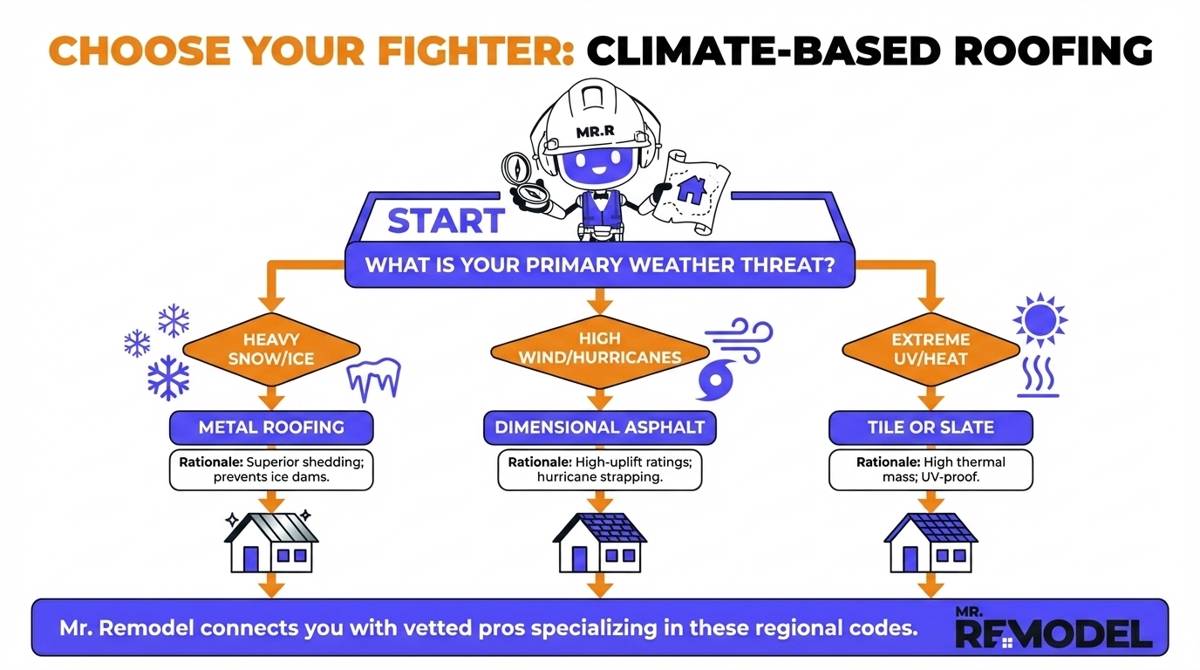
We see a massive surge in metal adoption in regions that face severe environmental threats. In West Virginia, metal now accounts for 52.5% of the total volume. Montana follows closely at 52.1%, as homeowners look for materials that can shed heavy snow and resist high-wind gusts.
These areas prove that metal has become the ultimate all-weather roofing solution. It provides a level of protection that standard shingles simply cannot match in extreme environments. Homeowners in these states view metal as a structural necessity for their long-term safety.
See Related: Metal Roofing: Cost, Energy Efficiency & Durability
Why Metal Excels in Wind and Snow Alleys
Federal guidelines from the FEMA Building Science Division highlight the superior uplift resistance of metal roofing. In states like Louisiana and Arkansas, where hurricane-force winds are a regular threat, adoption rates have climbed to over 32% for residential properties.
Metal roofing offers specific mechanical advantages that make it a favorite for homeowners in harsh climates. The following benefits contribute to the material's growing market share and reputation for extreme durability:
- Shedding Capabilities: The smooth surface of metal allows snow and ice to slide off easily, preventing ice dams.
- Fire Resistance: Metal panels are non-combustible, making them an essential choice for fire-prone mountain zones.
- Lightweight Profile: Despite its strength, metal is often lighter than multiple layers of shingles, reducing structural stress.
- Interlocking Panels: Modern standing-seam systems use interlocking ribs that prevent water from entering during storms.
- Reflective Surfaces: Metal naturally reflects solar heat, helping keep the home cooler and reducing strain on the framing.
Take the guesswork out of your exterior renovation by requesting a free quote from a top-rated local expert today.
Slate and Tile as the Sunbelt Standard
While slate and tile only account for about 8.17% of the national market, they have become a regional standard in the Southwest. In states like Utah and Arizona, adoption rates have climbed to over 16%. This is double the national average and reflects a strategic response to the desert's intense UV levels.
The U.S. Department of Energy validates the use of high-mass materials in these hot and arid climates. Slate and tile offer exceptional thermal mass, which means they absorb heat during the day and release it slowly at night. This regulates the home's interior temperature and reduces cooling costs.
See Related: Slate Roofing: Premium Cost, ROI & Lifespan
Defensive Benefits Against Arid Environments
Homeowners in the Sunbelt are not choosing slate and tile just for their classic beauty. These materials are chosen to defend against extreme UV degradation that can destroy other products in a few short years. They also provide mandatory fire protection for homes near wildfire-prone vegetation in California.
The Importance of Specialized Installation
Installing tile or slate is a highly technical process that requires a specialized skillset. These materials are extremely heavy and require a reinforced roof structure to safely support the load. You must work with a premium roofing company to ensure your home can support the investment.
Professional crews must address several structural factors when installing high-mass materials. The following steps are required to ensure the long-term success of a tile or slate roofing system:
- Structural Evaluation: An expert must confirm that your rafters and walls can handle the weight of natural stone or clay.
- Specialized Flashing: Stone and tile require custom-fabricated metal flashing to ensure every joint remains waterproof.
- Precise Layout: Each piece must be hand-fitted to ensure a consistent appearance and proper water drainage.
- Walking Hazard: These materials can be brittle, so installers must use specialized equipment to move across the roof.
- Lifetime Durability: When installed correctly, these systems can last for a century with minimal maintenance requirements.
See Related: Tile Roofing: Cost, Weight, and Longevity
Comparing Longevity and Future Maintenance
Every roofing material requires a different level of care to reach its full potential. While some products are marketed as maintenance-free, a regular inspection is the only way to catch small issues before they become major leaks. The complexity of the installation often dictates how much care will be needed over time.
Asphalt shingles typically require an inspection every few years to check for granule loss or wind damage. Metal systems should have their fasteners checked to ensure they remain tight as the panels expand and contract. Slate and tile are the most durable but may need occasional flashing repairs to stay waterproof.
See Related: Asphalt vs. Metal Roof Cost & Lifespan Comparison
The Impact of Installation Quality on Performance
The best materials in the world will fail if they are installed by an inexperienced crew. High-performance systems require precise attention to detail during the flashing and underlayment phases. A single mistake in the valley or around a chimney can lead to thousands of dollars in water damage.
Selecting a Material Based on Your Zip Code
Your specific neighborhood and local weather threats should be the final deciding factor in your material choice. A homeowner in a hail-prone region will have very different needs than one in a high-humidity coastal zone. A local expert can provide the specific regional context that a generic guide simply cannot offer.
Frequently Asked Questions
Which roofing material is the most energy-efficient?
Metal and tile are generally considered the most energy-efficient options because they reflect sunlight and provide thermal mass. These materials can significantly lower your cooling bills by up to 15% during the hot summer months.
Is metal roofing louder than asphalt during a storm?
When installed with high-quality synthetic underlayment and a solid wood deck, metal is no louder than any other roofing material. Modern insulation techniques and attic spaces effectively absorb the sound of rain and wind.
Can I install a heavy tile roof on any house?
No, you must have a structural engineer or a professional contractor verify that your home can support the weight of stone or clay. Many standard homes require extra bracing in the attic before they can safely hold a heavy roof.
Why are dimensional shingles better than 3-tab?
Dimensional shingles are made of multiple layers of material, making them much stronger and more wind-resistant than flat shingles. They also offer a more attractive, high-end look that improves your property's curb appeal.
Does a new roof improve home resale value?
Yes, a new roof is one of the highest-ROI exterior projects you can undertake. It provides immediate peace of mind to buyers and ensures the home will pass a structural inspection without any issues during the sale.
Matching the Best Material to Your Home
Selecting a material is a balance of initial cost, long-term performance, and regional resilience. Whether you choose the versatile protection of dimensional asphalt or the lifelong durability of metal, you are making a vital choice for your property. The 2026 market offers more high-performance options than ever before.
Don't let the complexity of modern roofing materials overwhelm your decision-making process. By focusing on your regional climate and your long-term goals, you can find a solution that fits your budget. Your home deserves a roof that is as beautiful as it is strong.
Ready to find the perfect material for your specific weather threats? Get started today by requesting a free quote through the Mr. Remodel network.