1-855-QUOTEMR

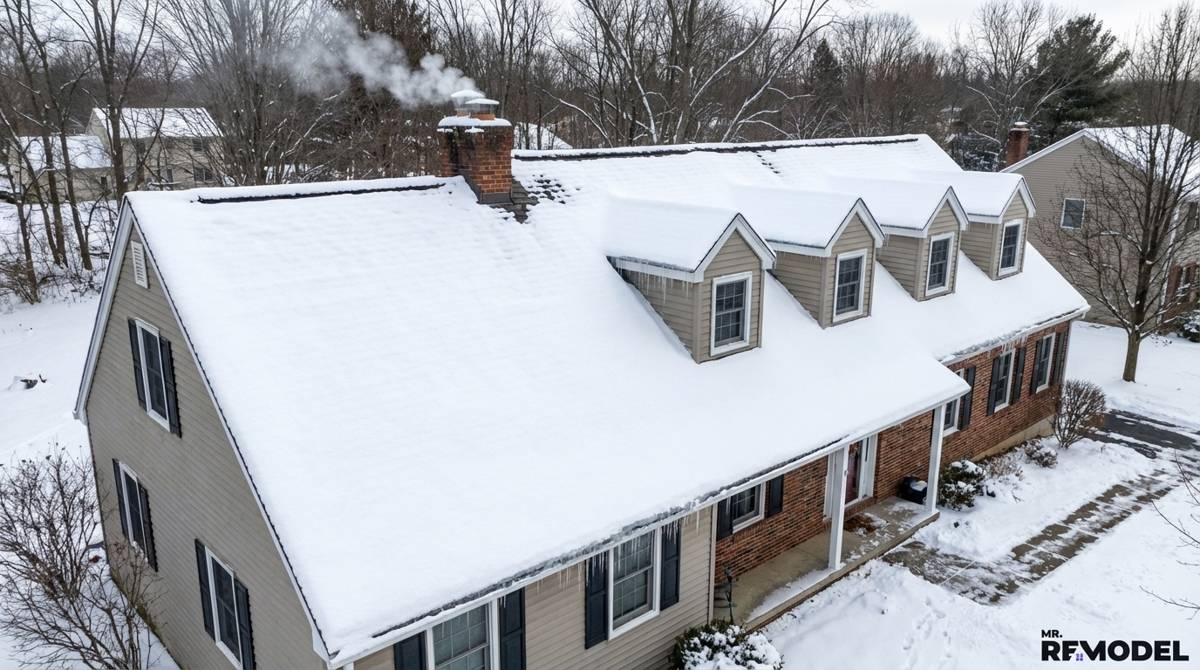
Table of Contents [hide]
Who This Is For
This guide is written for property owners who need to understand why regional weather patterns and local building codes cause significant price fluctuations. If you are trying to reconcile a high local quote with a lower national average, this data-backed breakdown explains the specific environmental premiums you must pay for a durable home.
Key Takeaways
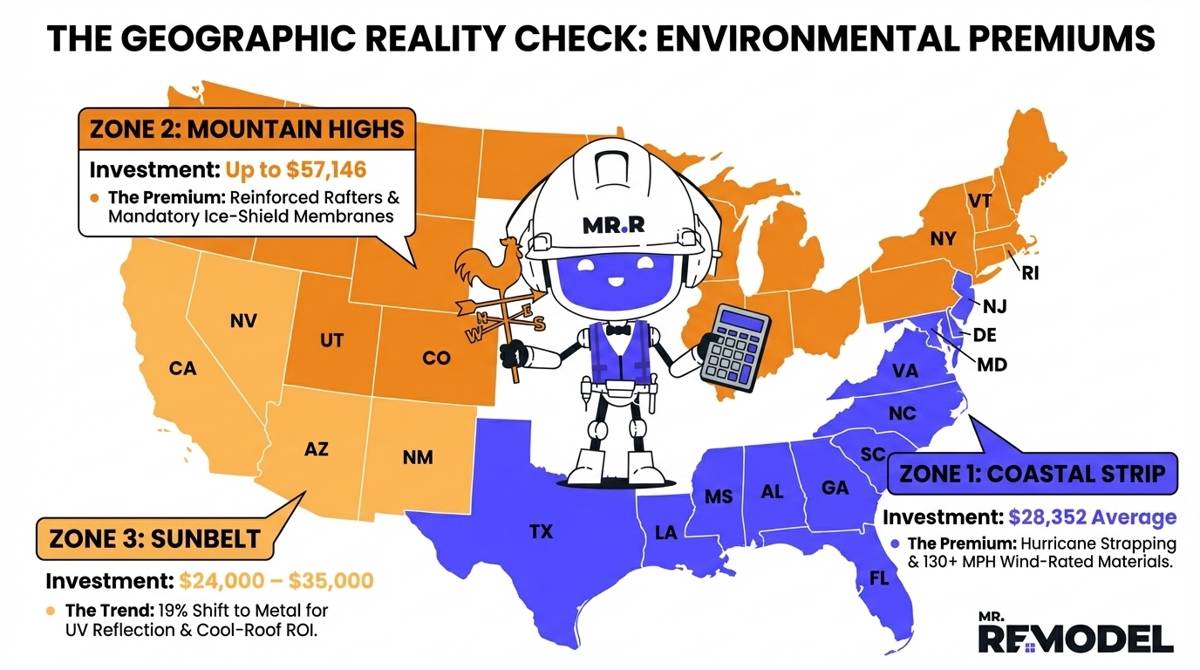
- Coastal Tax: Homes near the ocean average $28,352 in coastal tax due to mandatory high-wind upgrades.
- Mountain Extremes: Specialized structural reinforcement in snow-heavy zones can push costs to $57,146.
- Solar Efficiency: Hot regions are seeing a 19% shift toward metal for better heat reflection.
- System Longevity: Local weather is the primary factor that determines how long your materials last.
- Professional Guidance: Referral services help you find local contractors who specialize in your specific area.
Your local weather forecast does more than tell you when to grab an umbrella; it also determines how much your wallet will be stretched when it comes to home repairs. Understanding the current roof replacement cost by climate is the only way to build a realistic budget that accounts for your geographic area's unique safety requirements.
Planning a project that can withstand the elements requires specialized knowledge and a trusted local team. Mr. Remodel acts as a supportive connector, matching you with pre-screened, local contractors who understand your specific regional codes. We help you find the right professionals to ensure your new roof is built to last.
Coastal Regions and the Mandatory Coastal Tax
If you live within 5 miles of the ocean, you are likely facing a price tag approximately 12% higher than the national average. Our data shows that the typical coastal replacement currently sits at $28,352. These higher costs are driven by the rigorous safety standards required for storm resilience.
Why Coastal Building Codes Drive Prices Higher
Coastal areas are subject to extreme wind pressure and corrosive salt air. The NOAA - National Hurricane Center provides data on increasing coastal wind speed thresholds that local governments use to set building codes. These codes require specialized materials that are simply more expensive than standard residential products.
To secure a proper permit in these zones, your contractor must follow several specific requirements. These upgrades are essential for keeping your roof attached to your house during a major tropical event.
- Hurricane Strapping: Specialized metal connectors are used to anchor the roof structure directly to the home framing.
- High-Wind Shingles: Materials must be rated to withstand gusts of 130 miles per hour or higher.
- Ring-Shank Nails: These nails have extra grip to prevent shingles from lifting during intense wind pressure.
- Sealed Decks: Contractors often use specialized waterproof tapes on every seam of the plywood for extra protection.
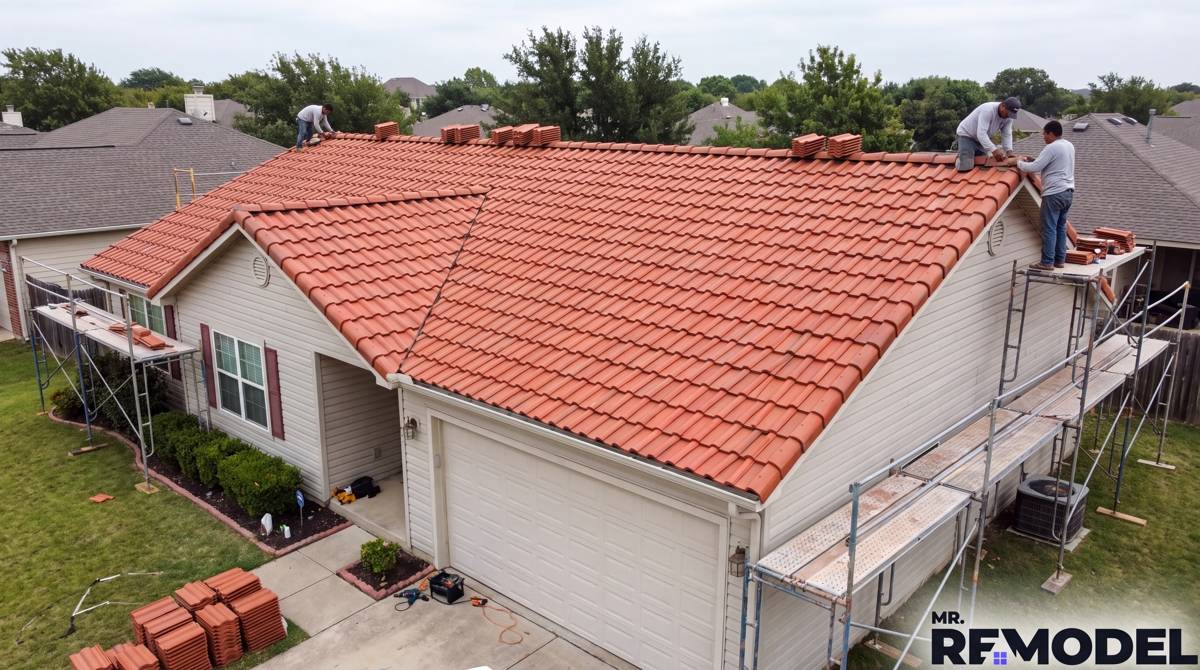
- Structural Tile: In many high-volume markets, such as Florida, heavy clay or concrete tiles are preferred for their wind resistance.
Coordinating Holistic Coastal Upgrades
Homeowners in these high-risk zones often combine their roofing projects with other exterior improvements. Strengthening your windows is just as important as securing your roof deck. You can find hurricane window contractors to help you create a fully hardened exterior that qualifies for lower insurance premiums.
See Related: Roof Replacement Cost (2026): Materials, Labor, Regional Pricing & ROI
Cold and Mountain Climates: Surviving the Snow
In the Midwest and Northeast, a standard roof replacement averages around $24,600. However, our data reveals that homes in high-elevation mountain regions like Colorado or Utah regularly see tickets push toward $57,146.10. This massive price ceiling is due to the extreme structural demands of heavy snow.
Heavy Snow Loads and Structural Reinforcement
The weight of accumulated snow can crush a standard roof that has not been properly reinforced. The FEMA Snow Load Guidelines explain how moisture content in snow creates immense pressure. Contractors must often add structural support to the rafters before installing new materials.
Building a winter-ready roof involves more than just shingles. It requires a specialized system designed to prevent the formation of ice dams, which can force water under your roof and into your walls.
- Ice and Water Shields: These thick, rubberized membranes are mandatory along the eaves to prevent leaks.
- Premium Underlayment: Synthetic barriers are used to provide a secondary layer of protection against driving sleet.
- Steep-Pitch Hazards: Many mountain homes have steep roofs to shed snow, which increases hazard pay for laborers.
- Heated Cables: Some high-end systems include electrical cables to prevent ice from building up in the gutters.
- Enhanced Ventilation: Proper airflow is critical to keep the roof deck cold and prevent uneven snow melting.
Ensuring a No-Leak Result in Winter
Preventing water damage in cold climates requires a meticulous approach to flashing and sealing. Our experts focus on no-leak roofing techniques to ensure your attic stays dry during the spring thaw. This attention to detail is what separates a standard job from a high-quality mountain installation.
Protect your home from the next winter storm by requesting a free quote from a top-rated local expert in your area today.
Hot and Arid Climates: The Shift to Metal Systems
In states like Texas, Arizona, and Nevada, the primary enemy of your roof is the sun. Constant thermal cycling, where materials expand and contract in the heat, destroys cheap shingles in just a few years. Our data shows a massive 19% adoption rate for metal roofing in these hot sunbelt states.
Reducing HVAC Loads with Cool Roof Technology
Thermal efficiency is a major driver for the high-ticket metal installations we see in hot zones. The U.S. Department of Energy validates that cool roofs can reflect solar heat and reduce cooling loads by up to 15%. This immediate ROI on your energy bill makes metal a smart choice.
Material Performance in Extreme Heat
Traditional asphalt shingles can reach temperatures of 150 degrees Fahrenheit on a summer day. This intense heat causes the oils in the shingles to evaporate, leading to cracks and granule loss. Modern homeowners are increasingly looking for all-weather roofing solutions that can survive decades of desert sun.
Metal roofing provides several advantages in arid regions that go beyond energy savings. It is a highly durable material that does not suffer from the same drying and cracking issues as organic products.
Benefits of Metal Roofing
- Thermal Reflection: Light-colored metal reflects most UV rays away from the house.
- Fire Resistance: In areas prone to wildfires, metal provides the highest possible level of protection for your home.
- Low Maintenance: Metal does not require the same frequent inspections or repairs as shingle systems in the heat.
- Recyclability: Most metal panels are made from recycled materials and are fully recyclable at the end of their life.
- Durability: A high-quality metal roof can last fifty years or more, even in the most intense desert environments.
Finalizing Your Localized 2026 Roofing Strategy
Materials perform drastically differently depending on your specific climate zone. A shingle that lasts thirty years in the mild weather of the Pacific Northwest might only last twelve years in the intense humidity of the Gulf Coast. Understanding these local nuances is the key to a successful investment.
See Related: How Long Do Roofs Last? Lifespan by Material & Climate
Why Zip Code Level Expertise Matters
Every municipality has its own set of rules for permit approval and final inspections. A contractor from a neighboring county might not be aware of the specific wind-speed requirements in your city. This is why connecting with local professionals who have a long history in your community is so important.
When you use our service, you are gaining access to a network of builders who live and work in your climate. They know exactly which underlayments perform best in your humidity levels and which shingles can handle your local hail risks. This specialized knowledge prevents expensive rework and early system failure.
Securing Your Rate Before Seasonal Demand
Roofing is a seasonal industry, and labor prices often spike right before hurricane season or the first winter snow. Our data shows that homeowners who secure their contracts early often save significantly on the labor portion of their quote. Acting now ensures you get the best team before their schedules are full.
Frequently Asked Questions
Does my home insurance cover the Coastal Tax?
Insurance usually covers the cost to bring a roof up to current code if the replacement is part of a valid claim. However, if you are doing a planned replacement, you will be responsible for the cost of these safety upgrades.
Why is metal more popular in hot states?
Metal does not absorb heat as much as dark asphalt shingles. By reflecting sunlight, it keeps the house cooler and prevents the material degradation that occurs when shingles get too hot for too long.
Do I really need an ice shield in a mild climate?
If your area experiences even a few freezing nights a year, an ice shield is a cheap insurance policy. It prevents water from backing up under your shingles when snow or ice melts slowly on your eaves.
How much does wind-rated material cost?
High-wind shingles typically cost about 15% to 20% more than standard shingles. However, they are often required by law in coastal counties to ensure the structure's safety.
Can a local contractor save me money on regional materials?
Yes, local contractors often have established relationships with regional suppliers. This allows them to secure better pricing on the specific materials required for your climate zone.
Localize Your 2026 Climate Protection Plan
Materials perform drastically differently depending on your specific climate zone. A shingle that lasts thirty years in the mild weather of the Pacific Northwest might only last twelve years in the intense humidity of the Gulf Coast. Understanding these local nuances is the key to a successful, energy-efficient investment.
Don't let the complexity of regional building codes hold you back from protecting your home. Take the first step toward a high-quality renovation by connecting with a professional who understands the specific requirements of your zip code. Your family's safety is worth the investment in a weather-resistant and thorough installation.
Ready to get started with a professional team you can trust for your home? Contact Mr. Remodel today for a free quote from a pre-screened contractor who can perform a safe and climate-compliant replacement.