1-855-QUOTEMR

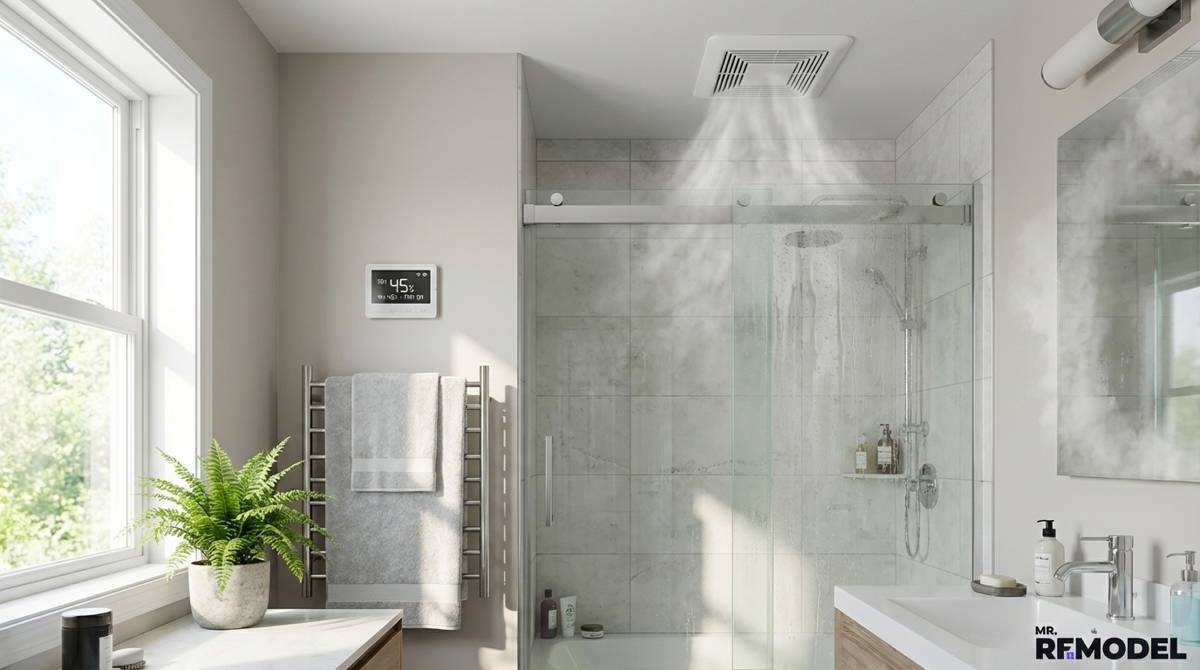
Table of Contents [hide]
Who This Is For
This guide is for homeowners who are planning a high-end remodel or noticing the first warning signs of indoor condensation. If you are investing in an airtight, energy-efficient home, you must understand how trapped moisture can threaten your property. We break down the exact technologies and regional building codes you need to protect your drywall, framing, and indoor air quality in 2026.
Key Takeaways
- The Airtight Trap: Modern windows and insulation create highly efficient homes that accidentally trap daily moisture. Proper ventilation is required to prevent structural rot.
- The Cost of Inaction: The average water damage restoration project costs $3,867. Upgrading your exhaust fans during a remodel is a cheap insurance policy against catastrophic rot.
- Smart Exhaust Technology: Modern humidity-sensing fans automatically detect moisture spikes and clear the room before condensation can settle on your walls.
- California Title 24 Compliance: New 2026 building codes mandate strict ventilation standards for tight homes to ensure indoor air quality remains safe.
- Regional Threats: Homes in Chicago face severe winter ice dams from trapped attic moisture, while properties in Florida and North Carolina battle relentless summer humidity.
When planning a major home upgrade, most people focus entirely on keeping the outside weather out. You install better windows, thicker insulation, and tighter siding. However, Mr. Remodel's data reveal that 31.6% of bathroom inquiries involve a complete structural remodel. During these massive projects, homeowners often overlook the most critical mechanical system in the room.
To build a truly modern space, you must master ventilation and moisture control for efficiency. A highly insulated home acts like a sealed plastic bag. It keeps your heating and cooling costs incredibly low, but it also traps every drop of steam from your shower inside the walls.
Without a smart exhaust strategy, your beautiful new bathroom can quickly become a breeding ground for mold and expensive structural decay. By understanding the mechanics of indoor airflow, you can protect your remodeling investment and ensure your home remains healthy for decades.
See Related: Energy Efficient Bathroom Remodeling
The Airtight Trap: Why Efficiency Causes Rot
Older homes were naturally drafty. The gaps around the doors and windows allowed the house to breathe, which naturally carried humid air outside. Modern renovations eliminate these drafts.
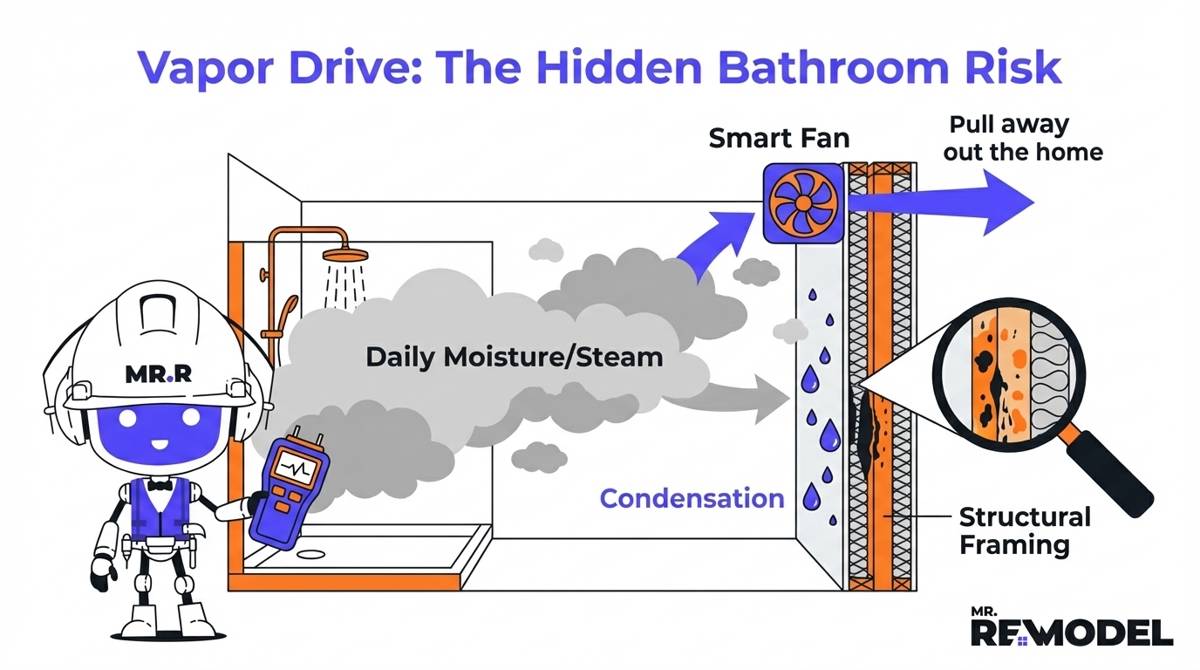
The U.S. Department of Energy refers to this dynamic as the energy and moisture nexus. When you seal the exterior envelope of your home, the steam from a hot shower has nowhere to go. It hits the cold drywall and condenses into liquid water.
Over time, this moisture penetrates the paint and sinks into the wood framing. The experts at the Building Science Corporation explain that this process is driven by vapor drive. Moisture naturally moves from warm areas to cold areas. In an airtight home, the moisture is driven directly into your structural cavities. This creates the perfect dark and damp environment for toxic mold to thrive.
The Financial Reality of Cost Avoidance
Many homeowners hesitate to spend $1,000 to $1,500 on a high-performance ventilation system. To put this cost into perspective, consider the financial consequences of inadequate moisture control.
Our national data show that the average cost of a water damage restoration project is exactly $3,867. In severe cases involving hidden mold remediation and structural wall rebuilding, these costs easily exceed $16,000.
View your exhaust fan as a preventative insurance policy. Paying for proper airflow today ensures you will not have to pay a water mitigation crew to tear out your brand-new tile tomorrow.
Upgrading your home defense requires precise mechanical planning. You can easily connect with verified local professionals to design a custom moisture control strategy that protects your walls and keeps your indoor air pristine. Get a free quote from Mr. Remodel to secure your home investment and protect your indoor air quality today.
2026 Smart Ventilation Solutions
The basic bathroom fan controlled by a wall switch is officially obsolete. Modern efficiency demands intelligent systems that operate without human intervention.
Humidity Sensing Exhaust Fans
The best defense against shower steam is a fan equipped with a built-in humidistat. These smart fans monitor the air in real time. The moment the humidity spikes, the fan turns on automatically. It runs until the room returns to a safe moisture level and then shuts itself off. This prevents the classic problem of homeowners forgetting to turn the fan on or leaving it running all day and wasting electricity.
Energy Recovery Ventilators (ERV)
For homeowners doing a whole-house efficiency upgrade, an ERV is the ultimate solution. These systems constantly exchange stale indoor air with fresh outdoor air. Before the indoor air is exhausted, the ERV captures its thermal energy and uses it to precondition the incoming fresh air. This allows your home to breathe perfectly without losing the expensive heating or cooling energy you just paid for.
The U.S. Environmental Protection Agency relies on ASHRAE 62.2 standards to set safe indoor air quality standards. These strict codes require bathrooms to have a minimum of 50 CFM of intermittent exhaust or 20 CFM of continuous exhaust to prevent hazardous mold growth.
Regional Moisture Threats
Your local climate drastically changes how moisture attacks your property.
In Chicago, our data show a high volume of water damage calls during the winter. This is driven by ice dams. When warm, moist air from the bathroom leaks into a freezing attic, it condenses on the roof deck, causing the snow above it to melt and refreeze at the gutters. This forces water directly back under the shingles and into the house.
Properties in Florida and North Carolina face the opposite threat. FEMA guidelines for mold protection highlight that relentless summer humidity makes these states the top-tier zones for moisture failure. A weak bathroom fan in these climates guarantees a mold problem.
Finally, California leads the nation in regulatory enforcement. The California Energy Commission mandates strict adherence to the 2025 Building Energy Efficiency Standards. Effective January 1, 2026, homes with tight exterior envelopes must feature mechanical ventilation systems that meet rigorous performance metrics.
Frequently Asked Questions
Why is my bathroom ceiling sweating after a shower?
Your ceiling sweats because your exhaust fan is either broken, undersized, or not being used. The hot steam from your shower hits the cooler drywall and condenses into liquid water. Upgrading to a fan with a higher Cubic Feet per Minute rating will pull this steam out of the room before it can settle on your paint.
What is a humidity-sensing exhaust fan?
A humidity-sensing fan features a built-in moisture detector. It turns on automatically when the room's humidity reaches a certain threshold and turns off once the air is dry. This guarantees your bathroom is properly ventilated even if you forget to flip the wall switch.
Does a tight and energy-efficient home really cause mold?
Yes, if it lacks proper mechanical ventilation. Older homes had drafty gaps that allowed moisture to escape naturally. When you seal a home with new windows and modern insulation, you trap daily moisture inside. You must install a smart exhaust system to artificially breathe for the house and prevent rot.
How much does water damage restoration usually cost?
The national average for residential water damage restoration is roughly $3,867. However, if the moisture is allowed to sit and cause structural rot or widespread toxic mold, remediation costs can easily exceed $16,000.
Prevent the Damage Before It Starts
Building a highly efficient bathroom is an incredible investment in your home comfort and your monthly utility budget. However, creating a completely airtight space without accounting for daily moisture is a recipe for disaster.
By understanding the mechanics of vapor drive and the limits of your exterior envelope, you can make intelligent decisions about your mechanical upgrades. Installing a humidity-sensing fan or an Energy Recovery Ventilator requires a slight increase in your initial remodeling budget. In return, you completely avoid the devastating $3,867 average cost of a water damage failure.
Mr. Remodel simplifies the process of upgrading your home defense. We connect you with top-rated local contractors who specialize in modern airflow dynamics. They understand the strict 2026 building codes in your state and will design an exhaust strategy that protects your drywall from rot.