1-855-QUOTEMR

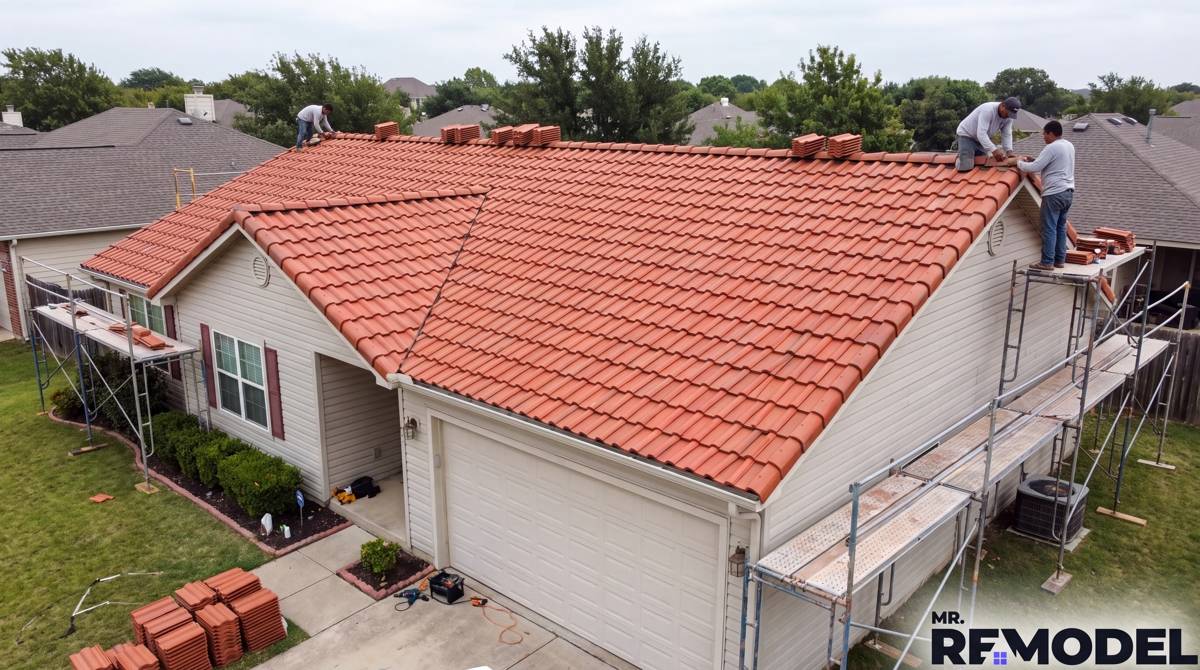
Table of Contents [hide]
Who This Is For
This guide is designed for property owners evaluating clay or concrete tile roof replacement, seeking transparent 2026 project cost data, structural load engineering requirements, and criteria for vetting specialized premium roofing contractors.
Key Takeaways
- Specialized Market Niche: Tile roofing represents 7.7% of total roofing inquiries, requiring specialized structural engineering and heavy-material handling.
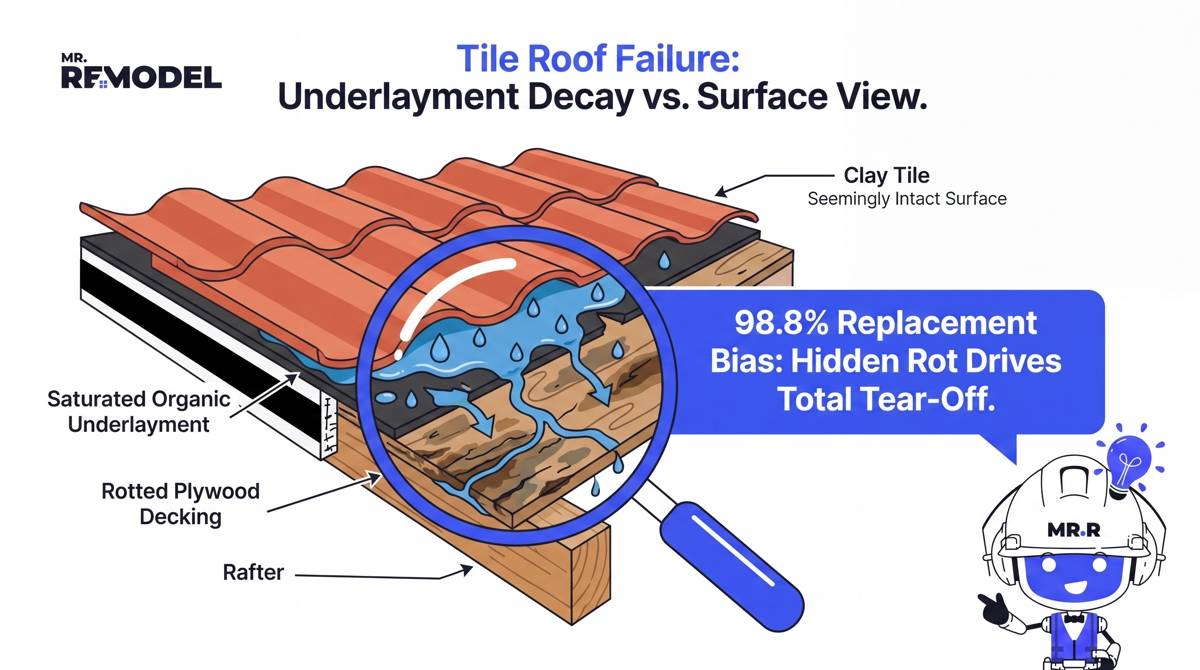
- Full Replacement Bias: Network data shows 98.8% of compromised tile roofs require a complete tear-off rather than spot repairs due to subterranean underlayment failure.
- Financial Investment: Baseline roof replacement investments start at $25,307 across national networks, reaching up to $57,146 for complex tile framing and structural reinforcement.
- Regional Code Compliance: Tile installations must meet strict regional standards, ranging from Class A fire ratings in California to high-wind shear resistance in Florida.
Clay and concrete tile roofs offer unmatched architectural elegance, extreme weather defense, and exceptional thermal insulation. However, replacing a heavy tile system requires rigorous structural planning and specialized trade skills.
When a tile roof reaches the end of its functional lifespan, hidden underlayment rot and cracked tiles jeopardize the safety of your entire property.
Understanding local project costs, structural weight limits, and contractor vetting standards helps homeowners make confident decisions during a major roof replacement.
The Financial Realities of Tile Roof Replacement
Homeowners considering tile roof replacement often find online pricing estimators misleading. Standard online calculators overlook crucial expenses such as crane rentals, structural rafter reinforcement, and heavy material disposal fees.
Internal project data from the Mr. Remodel network shows that baseline roof replacement investments average $25,307 across all material types.
For heavy clay or concrete tile systems, total costs routinely range between $25,307 and $57,146 depending on home size, roof pitch, and structural framing needs.
See Related: Roof Replacement Cost (2026): Materials, Labor, Regional Pricing & ROI
Why 98.8% of Tile Roof Inquiries Demand Full Tear-Offs
Property owners often wonder if replacing a few cracked surface tiles can solve an active roof leak. However, real-world contractor data proves that localized tile patching is rarely a viable long-term fix.
Network records reveal that out of 1,325 premium tile requests, 1,309 homeowners (98.8%) required a complete roof tear-off and replacement.
Tile roofing systems rely on a waterproof underlayment membrane buried beneath the tiles to shed water.
While clay and concrete tiles can endure for decades, the underlying organic felt or synthetic underlayment degrades within 20 to 30 years.
By the time water penetrates interior ceiling drywall, the buried underlayment is saturated across large sections.
Attempting spot repairs on an aging tile roof leaves compromised underlayment in place, risking continuous structural wood rot and mold growth.
See Related: Roof Repair vs Replacement: Cost, Lifespan & Decision Guide
Structural Weight Realities and Engineering Codes
Clay and concrete tiles are among the heaviest residential roofing materials installed on modern homes. Managing this dead load requires precise engineering compliance.
Heavy Load Standards and Rafter Evaluation
According to structural engineering guidelines from the Building America Solution Center, concrete and clay tiles weigh up to three times more than standard asphalt shingles.
Before installing heavy tiles, a licensed professional must inspect the attic framing and roof rafters to confirm structural adequacy.
If existing rafters show bowing or stress cracks, contractors must install sister joists or engineered trusses before loading new tile pallets onto the roof deck.
High Wind Shear and Fire Code Defense
In high-risk weather corridors, tile roofing provides exceptional structural protection against natural hazards.
Technical testing data from the Tile Roofing Industry Alliance confirms that properly fastened tile systems offer a Class A fire rating and withstand wind speeds up to 200 MPH.
In California, Class A fire ratings are essential for meeting strict Wildland-Urban Interface building codes.
In Sunbelt states like Florida and Texas, hurricane-clip tile fastening systems keep heavy tiles anchored during extreme windstorms.
See Related: Best Energy Efficient Windows for Hot Climates | 2026 Sun Belt Guide
How to Vet a Qualified Tile Roof Replacement Company
Selecting the right contractor is the most critical decision in any tile roof overhaul. Heavy tile handling demands specialized installation machinery, custom copper flashing skills, and trained labor.
Inspect Underlayment and Fastening Specifications
Always review a contractor proposal for underlayment specifications. Premium tile installations require high-temperature, self-adhering modified bitumen underlayments that seal around nail penetrations.
Standard organic felt paper degrades quickly under baked clay tiles in warm climates.
Evaluating technical standards established by the National Roof Certification and Inspection Association helps homeowners verify that installers follow correct tile stacking and underlayment procedures.
Compare Written Bids and Scope Details
Avoid vague verbal estimates. Request an itemized bid detailing tear-off labor, rotted decking replacement costs per sheet, perimeter batten installation, and tile brand warranties.
Reviewing comprehensive proposals from a reputable local roofing company protects you against unexpected change orders mid-project.
Comparing established roofing services allows you to evaluate material warranties and workmanship guarantees before signing a contract.
See Related: Roofing Permits & Code Requirements (What to Expect)
Connect with certified, pre-screened specialists through Mr. Remodel. Receive transparent pricing, expert rafter evaluations, and a premium roofing cost estimate tailored to your home.
See Related: Roof Tear-Off vs Overlay Cost Comparison
Understanding Conversion Timelines for Tile Projects
Analysis of 1,325 premium roofing inquiries highlights two distinct decision-making timelines among property owners.
The 30-Day Vetting Window (56.0% of Homeowners)
Exactly 743 homeowners spent up to 30 days researching tile contractors, evaluating material weight options, and comparing financing plans.
Taking time to compare bids allows homeowners to secure structural permits, arrange tile delivery schedules, and verify contractor credentials thoroughly.
The Emergency Breach Timeline (7.9% of Homeowners)
Conversely, 105 leads experienced severe storm damage or sudden roof leaks requiring 0-to-1-day contractor dispatch.
Having access to pre-vetted contractors ensures rapid emergency tarping to prevent interior water damage when tile membranes fail unexpectedly.
See Related: Roof Replacement Cost by Size (1,500, 2,000, 3,000+ Sq Ft)
Frequently Asked Questions
What is the average lifespan of a clay or concrete tile roof?
Clay and concrete roof tiles can last 50 to 100 years. However, the waterproof underlayment beneath the tiles lasts 20 to 30 years and must be replaced to keep the roof watertight.
How much does a tile roof replacement cost in 2026?
Baseline roof replacements average $25,307 across national network data. Premium tile replacements involving heavy material handling, underlayment upgrades, and rafter reinforcement typically range between $25,307 and $57,146.
Why do tile roof failures almost always require a complete tear-off?
Network data shows that 98.8% of tile inquiries require a full tear-off because leaks stem from rotted underlayment beneath the tiles. Spot-repairing surface tiles leaves deteriorated underlayment unchanged.
How do services like Mr. Remodel help homeowners with tile roof replacement?
Services like Mr. Remodel assist homeowners by matching them directly with pre-screened, licensed local roofing contractors who specialize in heavy tile systems and provide free project quotes.
Do I need a structural inspection before installing a tile roof?
Yes. Clay and concrete tiles add substantial dead load to a building. A qualified contractor or structural engineer must inspect your attic framing to ensure your rafters can support heavy tile loads.
Secure Your Home with Vetted Tile Roofing Specialists
Replacing a tile roof is a major investment that enhances architectural beauty, increases resale value, and provides unmatched fire and wind protection. However, long-term durability depends on proper underlayment selection, rafter load verification, and precision trade installation.
Do not risk your property investment with uncertified labor or quick-patch fixes on failing underlayment. Connect with trusted local specialists through Mr. Remodel today to get free, no-obligation quotes and schedule your professional tile roof evaluation.