1-855-QUOTEMR

Table of Contents [hide]
Who This Is For
This guide is for homeowners in the Sun Belt states like Arizona, Nevada, Texas, and Florida. If you are tired of your air conditioner running nonstop or if you are sitting in a room that feels 10 degrees hotter than the rest of the house, this article is for you. It helps those confused by window quotes that focus on insulation when the real problem is heat gain.
Key Takeaways
- SHGC is King: In hot climates, the Solar Heat Gain Coefficient is the only number that matters. You need a rating of 0.23 or lower to block the intense desert sun.
- Ignore U-Factor: Insulation metrics like U-Factor are for cold climates. Focusing on them in Phoenix or Miami can lead to buying the wrong window.
- The Whole Wall Strategy: Our data shows Sun Belt homeowners replace an average of 7 windows at once. Leaving one single pane window ruins the efficiency of the entire room.
- Low-E 366 is Standard: This triple-layer silver coating is the industry standard for heat rejection. It acts as invisible sunglasses for your home.
- Timing Matters: Custom heat-blocking windows have a 6 to 8 week lead time. You must order in March to ensure installation before the July heat spikes.
If you live in Phoenix, Las Vegas, or Miami, you face a different enemy than the rest of the country. Most window advice focuses on keeping heat inside during the winter. Your goal is the exact opposite. You are under siege from solar radiation. Your current windows are likely the breach in your defenses.
When the sun hits standard glass, the heat passes right through. It radiates into your living room and heats up your floors and furniture. Your air conditioner then has to work overtime to remove that heat. This cycle destroys your energy efficiency and shortens the life of your HVAC unit.
To win this battle, you do not need a generic window. You need the best energy-efficient windows for hot climates. In 2026, the technology to block this heat is readily available. It comes down to understanding two specific technical specifications known as SHGC and Low-E 366. This guide will explain exactly what those are and why they are mandatory for any home in the Hot Climate Zone.
The One Metric That Matters: SHGC
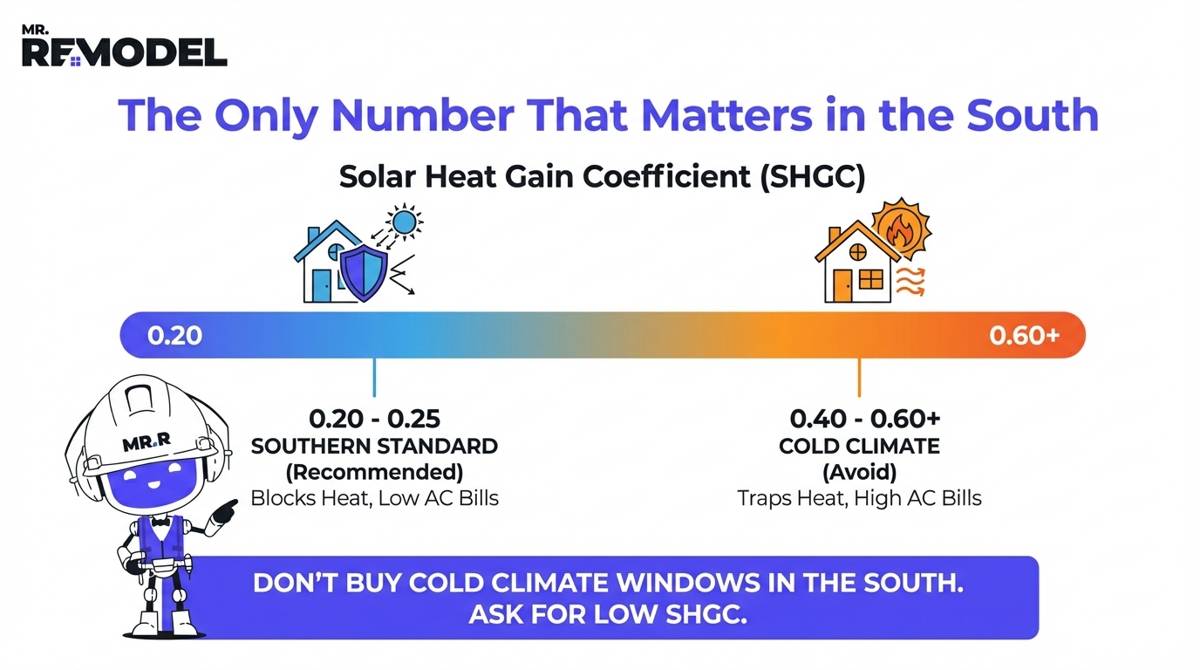
In the window industry, sales reps love to talk about R-Values and U-Factors. These measure insulation against cold air. In a hot climate, these numbers are secondary. The metric you must focus on is the Solar Heat Gain Coefficient (SHGC).
What is SHGC?
The Efficient Windows Collaborative defines SHGC as the fraction of solar radiation admitted through a window. The scale runs from 0 to 1.
- SHGC 0.75: Allows 75% of the sun's heat into your home. This is great for heating a home in Maine passively.
- SHGC 0.25: Blocks 75% of the sun's heat. This is essential for cooling a home in Texas.
The New Standard
According to the Energy Star Version 7.0 requirements for the Southern Zone, a window must have an SHGC of 0.23 or lower to qualify for federal tax credits.
If you are looking at a quote and the SHGC is 0.30 or higher, you should walk away. That window will not perform in high heat conditions.
See Related: U-Factor and SHGC Explained Simply
The Technology: Low-E 366 Glass
How do manufacturers achieve these low SHGC numbers without making the glass look like a dark limousine tint? The answer is Spectrally Selective Coatings. These are commonly known in the industry as Low-E 366.
How It Works
Low-E glass has microscopic layers of silver sprayed onto the glass surface.
- Standard Low-E (2 layers): Good for mixed climates.
- Low-E 366 (3 layers): Specifically designed for high solar exposure.
According to Cardinal Glass Industries, Low-E 366 blocks 95% of the sun's damaging UV rays. It significantly reduces infrared heat transfer. Cardinal is the leading supplier for major brands like Andersen and Pella.
The Clear Advantage
Research from Lawrence Berkeley National Lab shows that modern coatings can block heat while still admitting visible light. Unlike the dark films of the 1990s, Low-E 366 is virtually clear. This means you can enjoy the desert view without feeling the radiant burn on your skin.
See Related: Low-E Glass Explained
The Whole Wall Strategy: Mr. Remodel Data
One of the most revealing insights from Mr. Remodel data is the difference in project size between the North and the South.
- National Average: 5.5 windows per project.
- Sun Belt Average (NV, AZ): 6.6 to 7+ windows per project.
The Siege Mentality
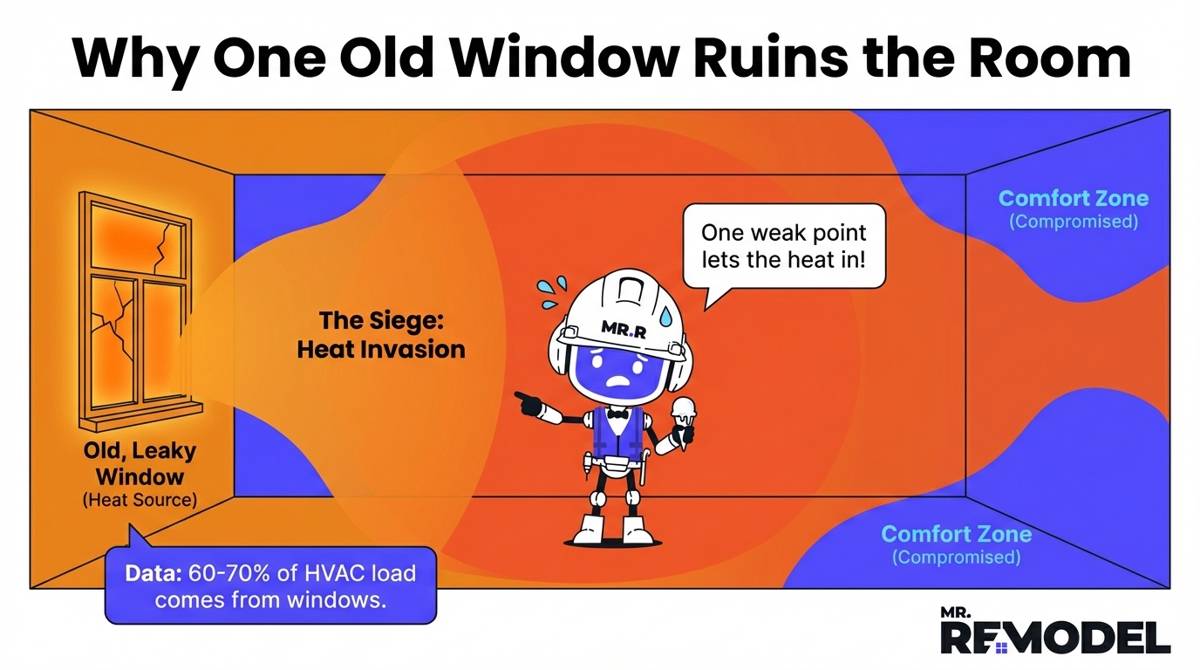
Why are homeowners in Las Vegas and Phoenix replacing more windows at once? Because they understand the Whole Envelope concept. In 100 degree heat, leaving one single pane window on a west-facing wall is like leaving the oven door open. It forces the AC to run constantly. This negates the benefits of the new windows installed next to it.
The West Wall Priority
If you cannot afford to replace 20 windows at once, focus on the West and South walls. These sides receive the most direct solar radiation. Replacing just the west-facing windows with Low-E 366 glass can lower the temperature of those rooms by 5 to 10 degrees.
See Related: Energy Efficient Windows: The 2026 Buyer’s Guide by Climate Zone
The Hurricane Hybrid: Efficiency Meets Safety
For our readers in Florida and the Gulf Coast of Texas, heat isn't the only threat. You also have to worry about hurricanes.
The Florida Solar Energy Center notes that windows are responsible for up to 30% of the cooling load in Florida homes. However, you also need Impact Resistance.
The Impact + Low-E Solution
You do not have to choose between safety and efficiency. Modern Impact Windows use laminated glass to stop flying debris. This is two sheets of glass bonded with a plastic interlayer. When you add a Low-E coating to this laminated sandwich, you get the ultimate shield.
- Safety: The plastic layer stops the burglar and the projectile.
- Efficiency: The Low-E coating stops the heat.
- Bonus: The laminated layer blocks 99% of UV rays. This prevents your furniture and floors from fading.
The Triple Pane Myth
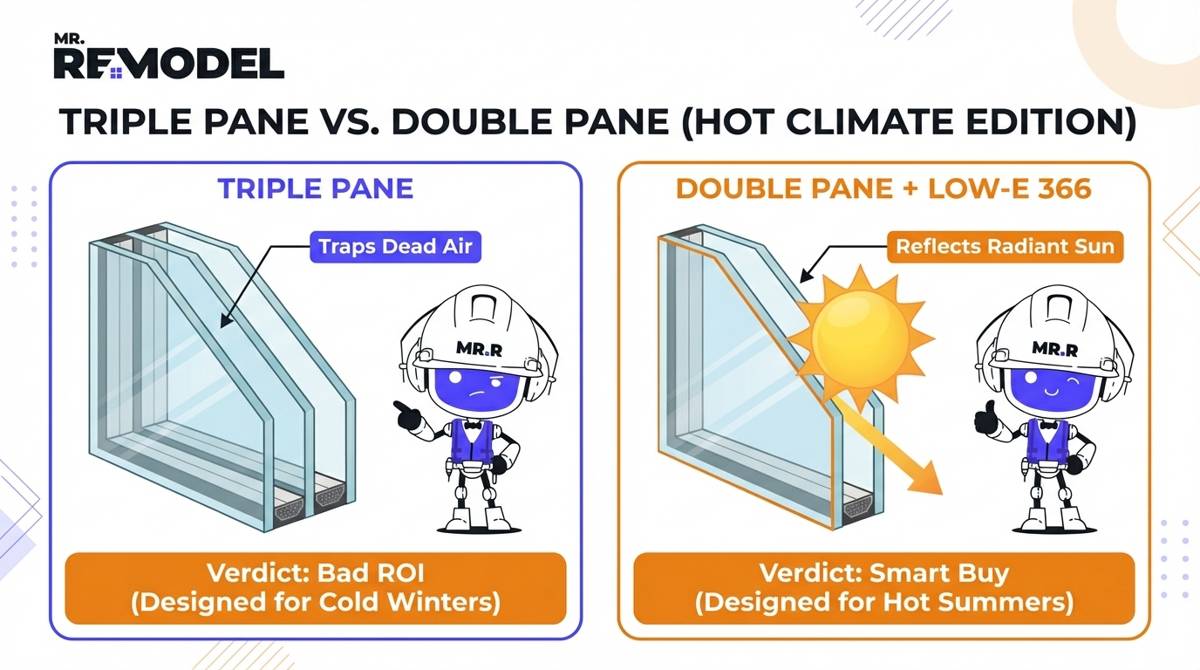
We often get asked if triple-pane windows are worth it in hot climates.
In hot climates, the answer is generally no.
Triple-pane windows are designed primarily to trap dead air. This is excellent for keeping heat inside a house during a Minnesota winter. In a hot climate, the third pane of glass offers diminishing returns.
You are better off spending your money on a high quality Double Pane window with Triple Silver Low-E 366 coating. The coating does the heavy lifting of reflecting the sun. A third pane of glass adds weight and cost without providing a proportional cooling benefit. Our data shows projects in Vegas average over $18,000. Spending extra on unnecessary glass layers pushes that cost even higher.
See Related: Are Triple-Pane Windows Worth the Extra Cost?
Timing the Market: The Summer Panic
Our search traffic data shows a massive spike in window replacement queries in Phoenix and Las Vegas starting in June. We call this the Summer Panic. Homeowners realize their AC can't keep up and desperately call for quotes.
The Delay Danger
Custom windows have a manufacturing lead time.
- Order in March: Installed by May, before the heat.
- Order in June: Installed by August, after the worst of the summer.
If you want to survive July in comfort, you need to be signing contracts in early spring.
Frequently Asked Questions
What is the most important rating for windows in hot climates?
In hot climates like Arizona, Florida, and Texas, the most critical number is the Solar Heat Gain Coefficient (SHGC). This measures how much solar heat enters your home. Unlike cold climates that focus on U-Factor for insulation, hot climates need a Low SHGC. Look for a rating of 0.25 or lower. This blocks 75% or more of the sun's heat from entering your living space.
Is triple-pane glass worth it in hot climates?
Generally no. Triple-pane windows are designed primarily to retain heat in cold winters. In markets like Las Vegas or Miami, the ROI on triple pane is poor because it does not block significantly more solar radiant heat than a high-quality double pane window with Low-E 366 coating. The extra cost is better spent on Solar Control coatings rather than a third layer of glass.
Why are window replacement quotes higher in Las Vegas and Florida?
Our verified sales data shows projects in Las Vegas average roughly $18,500. This is about $2,000 above the national average. This premium reflects two factors. First implies the need for advanced Triple Silver Low-E coatings to combat extreme UV exposure. Second is the requirement for Impact Resistant Glass for hurricane codes in Florida, which creates significantly higher manufacturing costs.
When is the best time to buy windows in a hot climate?
Data shows a massive spike in emergency window searches in Phoenix and Las Vegas once temperatures hit triple digits. However, custom windows often have a 6 to 8 week manufacturing lead time. To ensure your home is cool by July, the best time to order is March or April. This avoids the Summer Panic rush and potential installation delays.
Build Your Shield Against the Sun
Living in the Sun Belt requires a strategic approach to home improvements. You are not just decorating your home. You are fortifying it against the elements.
By prioritizing SHGC ratings and Low-E 366 glass, you turn your windows from a liability into an asset. You reduce the load on your AC. You protect your interiors from UV damage. You reclaim the comfort of your west-facing rooms.
Mr. Remodel can help you find local pros who understand the specific solar challenges of your region. Don't settle for a generic window that was designed for a cold climate.
Get a quote for high-performance cooling windows today.