1-855-QUOTEMR

Table of Contents [hide]
Who This Is For
This guide is for homeowners who have just received a window replacement quote and are experiencing sticker shock. If you are holding an estimate for triple-pane windows that is 30% higher than you expected and are wondering if the extra insulation is actually worth the money, this analysis is for you. It is particularly relevant for those living in Northern climates where extreme cold is a factor.
Key Takeaways
- The Rules Have Changed: Under Energy Star Version 7.0, windows in the Northern Zone must now meet a U-Factor of 0.22 or lower to qualify for federal tax credits. This effectively makes triple-pane glass the new standard for rebates.
- Comfort Over Cash: The financial payback period for triple-pane windows is often over 20 years. The real return on investment is physical comfort.
- The Radiant Cold Effect: Triple-pane glass stays significantly warmer on the inside during winter (62°F vs. 48°F), eliminating the feeling of a draft even when the window is perfectly sealed.
- Noise Reduction is Nuanced: Simply adding a third pane does not guarantee silence. For true soundproofing, you need laminated glass or dissimilar glass thickness.
- Condensation Control: Triple-pane windows can handle much higher indoor humidity levels without sweating, preventing mold growth on your sills.
You have likely heard that upgrading your windows will save you money. But when you look at the price tag for triple-pane glass, the math might look suspicious. On average, upgrading from a standard double-pane unit to a triple-pane unit increases the cost by 15% to 30%. On a whole-house project, that can equal thousands of dollars.
Is it a scam? Or is it the smartest investment you can make for your home?
In 2026, the answer depends almost entirely on your zip code. For homeowners in the South, triple-pane windows are often overkill. But for those in the North, they are rapidly becoming the baseline requirement. This shift is driven not just by energy prices but by new federal standards that have redefined what "efficient" actually means.
To understand if the upgrade is right for you, we need to look past the marketing brochures and analyze the physics of comfort and the hard reality of Return on Investment (ROI).
The New Standard: Energy Star Version 7.0
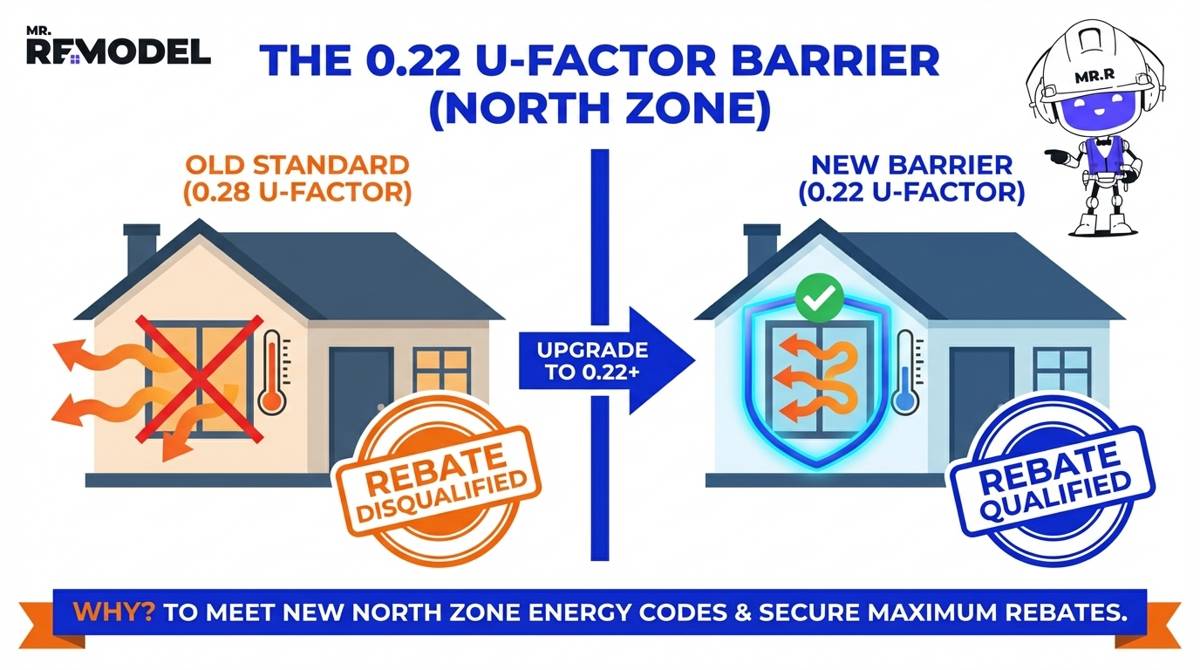
The biggest change in the window market recently was the implementation of Energy Star Version 7.0. This specification drew a hard line in the sand for Northern climates.
To earn the Energy Star label and the tax credits that come with it, windows in the North must now have a U-Factor of 0.22 or lower.
Achieving a 0.22 U-Factor with a standard double-pane window is nearly impossible for most manufacturers. To hit that number, they need to add a third pane of glass and a second chamber of argon or krypton gas.
Making the Tax Credit Math Simple
In colder climates like Minnesota and Wisconsin, choosing the wrong windows can actually cost you more. Here is the breakdown of how the Energy Efficient Home Improvement Credit changes the math:
Why This Matters:
The federal government offers a tax credit of 30% (up to $600/year) for energy-efficient upgrades. However, most double-pane windows no longer meet the strict Energy Star Version 7.0 standards required to get that money back.
The Bottom Line:
By choosing triple-pane windows, you get a higher-quality product that keeps your home warmer, but the $600 tax credit narrows the gap, making the upgrade much more affordable than it looks on paper.
Pro Tip: Before you sign any contract, ask your installer: "Do these windows meet Energy Star V7.0 requirements for my zip code?" If the answer is no, you are essentially leaving $600 on the table.
See Related: Energy Efficient Windows: The 2026 Buyer’s Guide by Climate Zone
The Comfort ROI: Why We Really Buy Them
If you run a strict financial analysis, triple-pane windows can take 20 years to pay for themselves in heating bill savings. If you plan to move in five years, the math says "don't buy them."
However, the math ignores the primary benefit: Radiant Comfort.
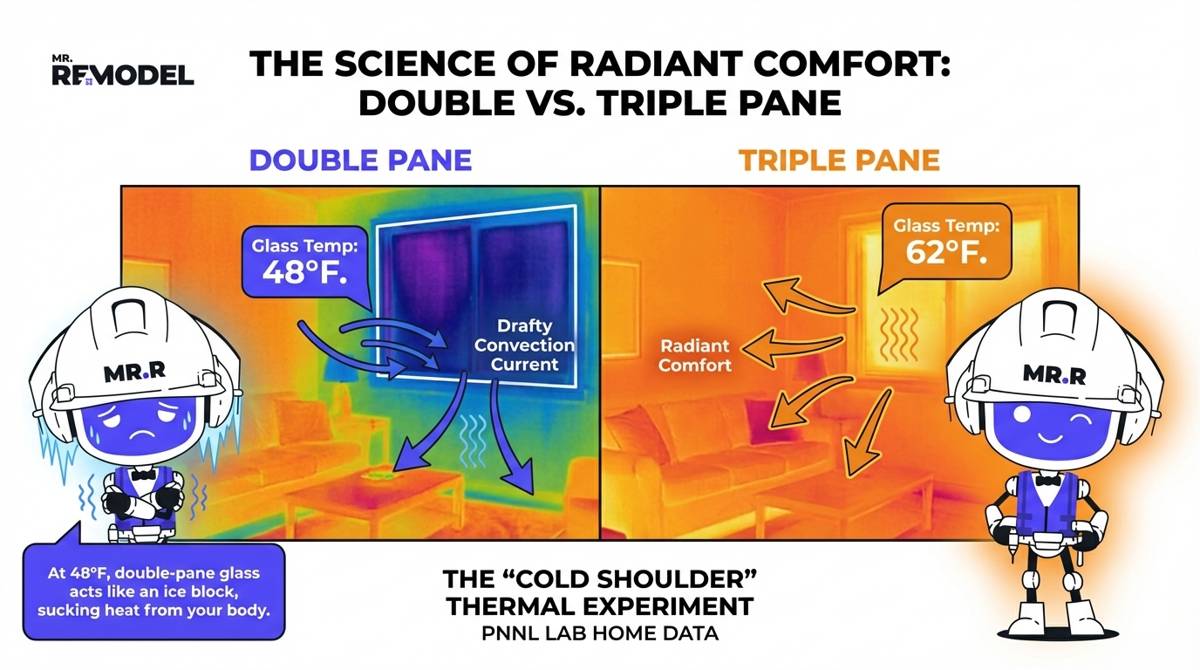
The Cold Shoulder Effect
Have you ever sat next to a window in January and felt cold, even though the window was closed and locked? That is not a draft. That is your body radiating heat toward the cold glass surface.
The Pacific Northwest National Laboratory (PNNL) conducted a study using Lab Homes to measure this exact phenomenon. When it was 0°F outside:
- Double-Pane Interior Glass Temp: 48°F.
- Triple-Pane Interior Glass Temp: 62°F.
That 14-degree difference is massive. At 48°F, the glass acts like an ice block, sucking heat from the room and creating a convection current that feels like a draft. At 62°F, the glass is neutral. You can sit right next to it in a t-shirt and feel comfortable. In the "Deep Freeze" zones like Minnesota and North Dakota, you aren't paying for energy savings; you are paying for the ability to use the square footage near your windows in winter.
See Related: Drafty Windows Causes
Condensation and Mold Prevention
Another critical factor for Northern homes is humidity. In the winter, we run humidifiers to combat dry air. However, if that moist air hits a cold double-pane window, it condenses into water droplets. Over time, this water runs down the glass, pools on the sill, and causes black mold growth.
According to the Efficient Windows Collaborative, triple-pane windows are far more resistant to condensation. Because the interior glass stays warmer, it remains above the dew point even when indoor humidity is higher (up to 40%), and outside temperatures are below zero. If you struggle with wet windowsills, upgrading to triple-pane is the only permanent structural fix.
The Soundproofing Myth
Many homeowners upgrade to triple-pane glass, expecting their home to become a recording studio. They are often disappointed.
While adding a third pane of glass adds mass, it does not automatically block more noise. Sound waves travel easily through rigid materials. If the three panes of glass are the same thickness, they can actually vibrate at the same frequency, passing sound through efficiently.
The Real Solution for Noise:
If your primary goal is blocking highway traffic or barking dogs, do not just ask for triple pane. Ask for:
- Dissimilar Glass Thickness: One pane is 3mm thick, another is 5mm. This disrupts the sound waves.
- Laminated Glass: This is a sandwich of glass with a plastic interlayer (like a car windshield).
According to NFRC Acoustical Ratings, a double-pane window with laminated glass often blocks more sound (higher STC rating) than a standard triple-pane unit.
See Related: Low-E Glass Explained
Cost Reality: Standard vs. Premium
Not all triple-pane windows are created equal. Mr. Remodel data shows a massive pricing spread depending on the performance level you are buying.
The Standard Triple ($1,845 Average)
This is the sweet spot for most homeowners in cold climates like Wisconsin.
- What you get: A high-quality vinyl frame with three layers of glass.
- Performance: It hits the target 0.22 U-Factor, which is the magic number to qualify for federal tax credits and keep your home comfortable.
- Why it’s popular: You get all the comfort and efficiency benefits of triple-pane glass without paying for over-engineered luxury.
The Passive House Premium ($4,305 Average)
Common in high-performance markets like Colorado, these are elite-tier windows.
- What you get: Often made of fiberglass or high-end wood with European-style tilt-turn engineering.
- Performance: Extreme efficiency (around0.15 U-Factor) and almost zero air leakage.
- Why it’s expensive: You are paying for high-end materials, extreme durability, and cutting-edge design meant for "Passive Houses" (homes that require almost no heating or cooling).
See Related: Window Replacement Options
Frequently Asked Questions
Do triple-pane windows increase home value?
Yes, but they rarely recoup 100% of their extra cost. According to the 2025 Cost vs. Value Report, new windows generally return about 70% of their cost in resale value. However, in extreme climates (like Alaska or Minnesota), the triple-pane window is becoming an expected standard. A home without them may sit on the market longer or invite lower offers because buyers know they will have to upgrade later.
Is triple-pane glass harder to see through?
Technically, yes, but barely. Adding a third sheet of glass and a second Low-E coating reduces the Visible Transmittance (VT) rating slightly. A standard double pane might have a VT of 0.60, while a triple pane might be 0.50. Most homeowners do not notice the difference unless the two windows are side-by-side, but the room may be slightly darker than with clear glass.
Are triple-pane windows heavier?
Yes, significantly. A triple-pane sash can weigh 50% more than a double-pane sash. This puts more strain on the window balances and hardware. It is critical to buy from a reputable manufacturer that uses heavy-duty balancers designed for this weight. If you put triple glass in a cheap vinyl frame, the frame can warp, or the sash can become difficult to lift over time.
How much energy do they actually save?
On average, switching from double to triple pane saves about 2% to 3% more on your total energy bill. That might sound small, but in dollars, it can be $100 to $200 per year in a cold climate. The primary saving comes from the fact that you can lower your thermostat because you don't feel the radiant cold near the walls.
Final Verdict: Is the Upgrade Worth It in 2026?
So, are triple-pane windows worth the extra cost?
YES, if:
- You live in the Northern Climate Zone (Energy Star North).
- You plan to stay in your home for more than 10 years.
- You currently feel cold when sitting near your windows.
- You want to qualify for the $600 tax credit.
NO, if:
- You live in a mild or Southern climate (Double-pane with Low-E is sufficient).
- You are moving in less than 5 years.
- Your primary goal is solely financial ROI rather than comfort.
Ultimately, triple-pane windows are a lifestyle upgrade as much as an energy upgrade. They make your home quieter, less drafty, and more consistent in temperature.
Mr. Remodel specializes in helping homeowners navigate these localized choices. We can connect you with contractors who install both standard and high-performance options, allowing you to compare the price difference in black and white before you commit.
Ready to compare triple-pane quotes for your home?