1-855-QUOTEMR

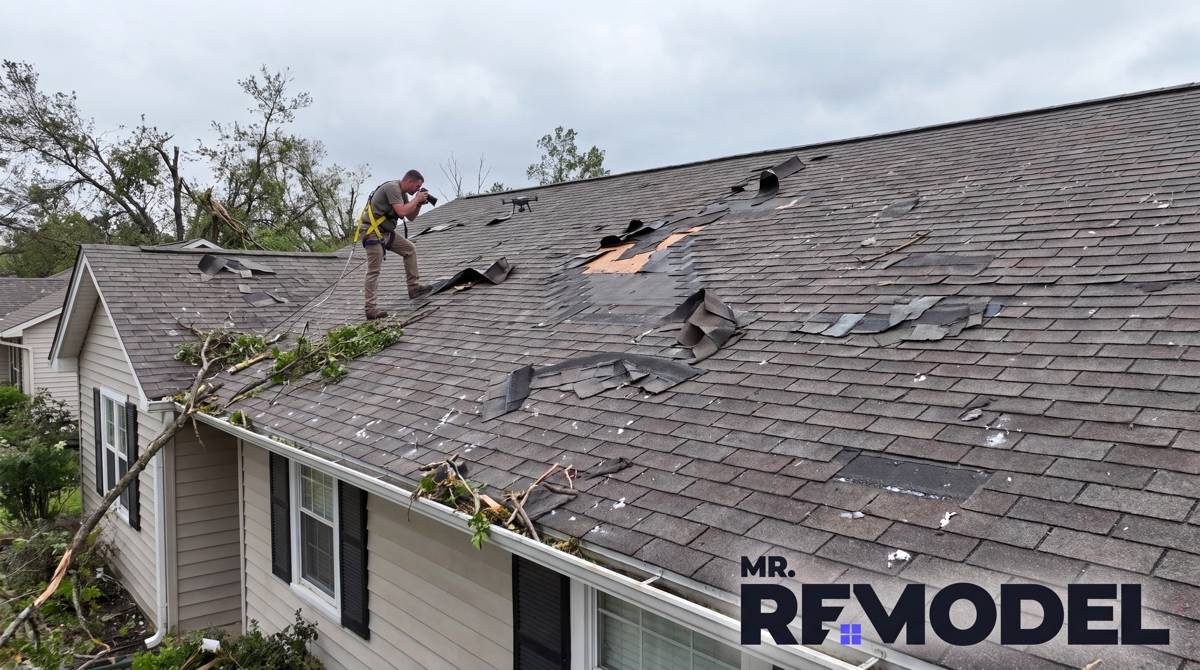
Table of Contents [hide]
Who This Is For
This guide is written specifically for homeowners who suspect hail, severe wind, or storm damage to their roof and need a clear ground-level diagnostic checklist alongside step-by-step advice on navigating insurance claims.
Key Takeaways
- Inspection Timing: Performing a ground-level inspection within 24 hours of a storm helps prevent cascading interior structural damage.
- Replacement Reality: Historical data shows that over 99% of severe storm damage evaluations reveal issues requiring complete roof replacement.
- Financial Protection: A documented roof evaluation protects a major asset, where average full replacement investments reach $25,307.
- Insurance Claim Accuracy: Professional documentation ensures insurance adjusters record all subtle hail impacts and wind-shear damage.
Severe weather can compromise your home's building envelope in minutes. Sudden windstorms, heavy hail, and falling tree limbs breach outer protective layers, exposing your framing to structural moisture.
Identifying structural issues early prevents secondary water damage and ensures your property stays protected.
Taking prompt action after a storm preserves your financial investment and keeps your home safe during severe weather seasons.
The Financial Reality of Storm Damage Roof Inspection
Homeowners often assume severe weather causes minor issues easily fixed with small patches. However, extensive project analysis tells a different story for damaged properties.
Internal project data from Mr. Remodel shows that out of 16,179 roofing projects analyzed, 16,023 required full system replacement. Only 156 inquiries were limited to superficial repairs.
When high winds or severe hail impact your roof, underlying plywood decking and moisture barriers are frequently compromised.
See Related: Storm Damage: Repair or Replace Decision Guide
The Critical 24-Hour Emergency Window
Across national project records, 2,150 homeowners required immediate project start times within 0 to 1 days after severe weather.
When high winds lift asphalt shingles, rainwater penetrates interior ceiling cavities rapidly. Furthermore, 100% of water damage inquiries initiated as live calls rather than web forms, showing how fast storm damage turns into an active emergency.
Ground-Level Storm Damage Inspection Checklist
You do not need to climb onto a dangerous, wet roof to identify severe storm damage. Performing a ground-level diagnostic inspection using binoculars allows you to collect crucial initial evidence safely.
Step 1: Check Eaves and Downspouts for Granule Loss
Look closely inside your gutter downspouts and splash blocks. Hail impacts knock protective mineral granules off asphalt shingles, accumulating as heavy dark sand at downspout outlets.
According to technical analysis by the Colorado Roofing Association, severe granule loss exposes underlying asphalt layers to accelerated solar decay, weakening shingle durability rapidly.
Step 2: Inspect Metal Flashing and Gutters for Denting
Examine metal gutters, downspouts, metal vents, and ridge caps. Soft aluminum components act as clear indicators of hail strike severity.
If your gutters display pea-to-marble-sized indentations, your shingle surface suffered similar impact energy during the storm.
Step 3: Spot Lifted, Creased, or Missing Shingles
Scan your roof lines for raised, missing, or misaligned shingles. High winds create localized uplift that breaks brittle adhesive seal strips.
Shingles showing horizontal creases across their face have lost structural integrity and will tear away during subsequent storms.
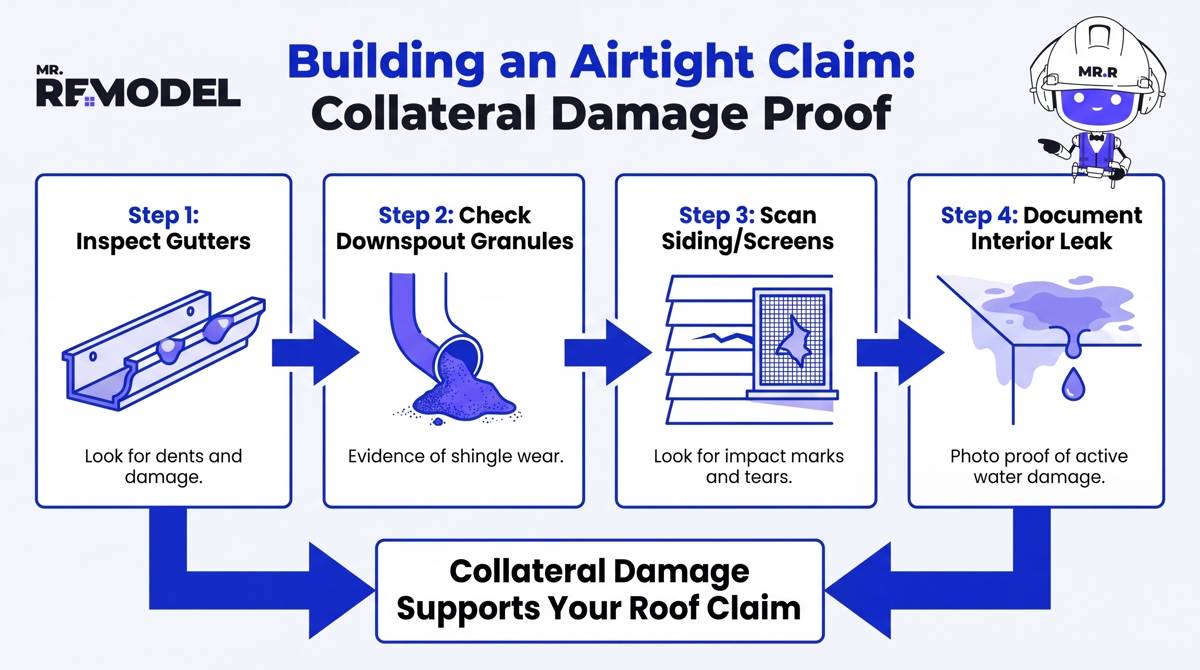
Step 4: Examine Siding, Windows, and Exterior Trim
Inspect collateral property elements around your home exterior. Check vinyl siding for cracks, window screens for tears, and painted wood trim for chipped paint.
Documenting collateral property damage provides secondary proof for insurance adjusters evaluating storm intensity.
Differentiating Wind Shear vs Hail Impact Damage
Understanding specific types of storm damage helps you explain property conditions clearly during your professional evaluation.
See Related: Roof Inspection Checklist Before Replacement
Characteristics of Hail Impact Damage
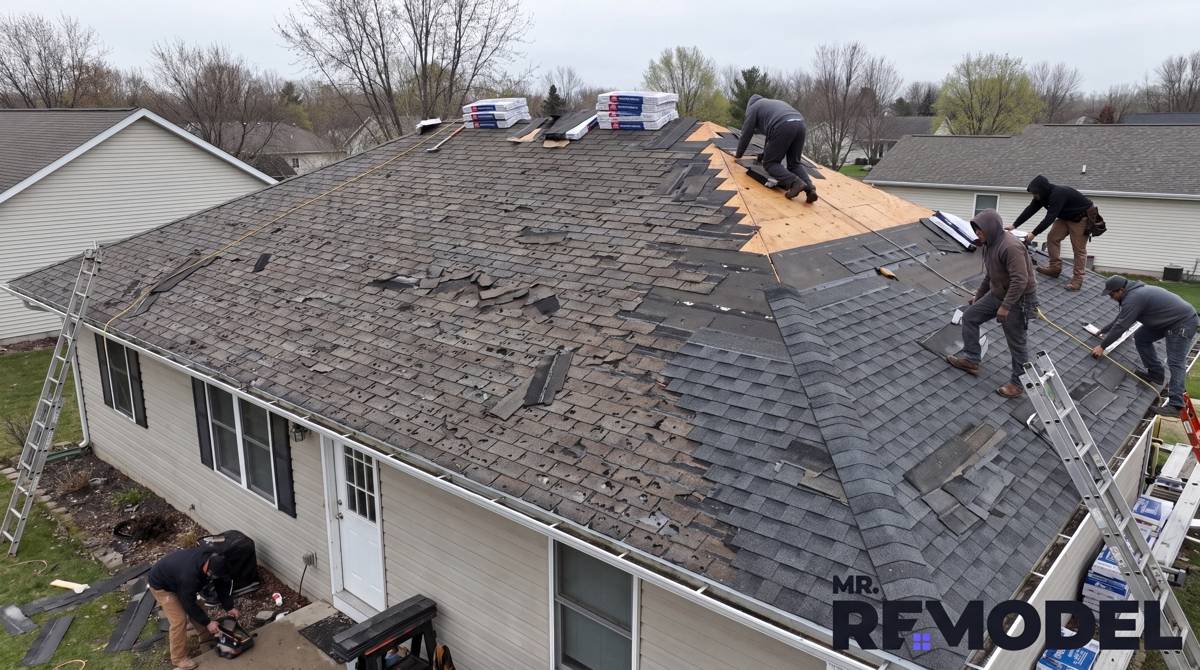
Hail creates random, non-directional impact marks across your roof surface. Strikes on asphalt shingles leave dark, soft bruises where granules were dislodged into the underlying asphalt mat.
Over time, these unsealed strike marks allow rainwater to seep directly through shingle layers.
Characteristics of Wind Shear Damage
Wind damage appears as clean lines of lifted or torn shingles, particularly along roof edges, gables, and ridge lines.
High-velocity winds catch shingle edges, breaking factory seal strips and exposing bare roof decking below to driving rain.
Navigating Insurance Claims for Roof Storm Damage
Documenting storm damage properly ensures your property insurance provider pays out fairly for necessary structural repairs.
See Related: Insurance Claims vs Out-of-Pocket Roof Replacement
Document the Exact Storm Date and Time
Record the specific date and time the severe weather event occurred. Insurance policies require proof that damage resulted directly from a specific storm rather than long-term wear.
Cross-reference local news reports or weather tracking logs to support your official insurance claim timeline.
Hire a Certified Inspector for Adjuster Meetings
Schedule a professional evaluation with a qualified inspector before your insurance adjuster arrives. Industry standards from the National Roofing Certification and Inspection Association stress that certified inspectors provide objective, itemized reports detailing hidden structural damage that adjusters might miss.
Having an experienced professional on-site during the adjuster meeting guarantees that all hail bruises and wind creases are properly documented.
See Related: Roof Replacement Cost (2026): Materials, Labor, Regional Pricing & ROI
Connect with verified, licensed local specialists right away to evaluate your roof envelope. Get fast dispatch times and a free quote for emergency tarping and repairs through Mr. Remodel.
Understanding Roof Replacement Costs After Storm Damage
When storm damage requires full system replacement, understanding pricing variables helps you evaluate insurance settlement offers accurately.
See Related: Roof Replacement Cost by Size (1,500, 2,000, 3,000+ Sq Ft)
Primary Cost Drivers for Roof Replacements
- Home Size and Square Footage: Total surface area dictates exact shingle bundles, underlayment rolls, and labor hours required.
- Material Selection: Out of 16,179 analyzed projects, asphalt shingles accounted for 11,546 installations, offering cost-effective durability compared to metal (3,068) or slate (1,322).
- Plywood Decking Repairs: Hidden water rot beneath torn shingles requires replacing damaged structural plywood sheets before new shingles are installed.
- Roof Pitch and Height: Steep multi-story roofs require additional safety rigging and specialized rigging equipment.
See Related: Signs You Need a New Roof (vs Repair)
How to Choose a Trusted Local Roofing Contractor
Selecting an experienced contractor ensures high-quality workmanship while protecting your financial investment.
Verify Licensing and Insurance
Always request proof of current general liability coverage and full workers' compensation insurance. Working with insured professionals shields you from personal liability if a worker is injured on your property.
Working with an established local roofing company ensures your team understands local building codes and regional weather demands.
Require Written Quotes and Scope of Work
Avoid contractors who offer vague verbal estimates. Your written quote should list specific material brands, warranty terms, permit fees, and disposal costs clearly.
Reviewing comprehensive roofing services options lets you compare material performance tiers before signing a contract.
Frequently Asked Questions
How soon after a storm should I inspect my roof?
You should conduct a ground-level inspection within 24 hours of severe weather. Identifying damage early prevents minor leaks from causing costly interior ceiling destruction.
Will insurance cover full roof replacement for storm damage?
Homeowners insurance typically covers full roof replacement if severe weather causes sudden, unrepairable structural damage. Coverage depends on your policy terms, roof age, and documented proof of storm impact.
Can I inspect my roof for storm damage myself?
You can safely perform a ground-level visual inspection using binoculars. However, you should never climb onto a steep, wet, or damaged roof. Hire a licensed professional to conduct climbing evaluations safely.
How do services like Mr. Remodel help after severe storm damage?
Services like Mr. Remodel assist homeowners by connecting them directly with vetted, licensed local roofing contractors who provide free quotes, emergency tarping, and expert insurance claim documentation.
What happens if I delay repairing storm damage?
Delaying repairs allows rainwater to seep into attic insulation, ceiling drywall, and wooden framing. Trapped moisture rapidly generates toxic mold growth and compromises your home's structural framing.
Protect Your Home with Fast Professional Evaluation
Severe storm damage demands immediate attention to safeguard your roof framing, ceiling drywall, and home interior. While ground-level visual checks capture obvious damage, hidden structural leaks require professional evaluation.
Do not wait for water stains to appear on your ceiling. Connect with vetted local contractors today through Mr. Remodel to get free, no-obligation quotes and schedule your storm damage roof inspection.