1-855-QUOTEMR

Table of Contents [hide]
Who This Is For
This guide is designed for homeowners who need a full roof replacement, wish to preserve cash flow, and are seeking transparent 2026 project cost benchmarks alongside contractor financing options.
Key Takeaways
- Financial Baseline: Average roof replacement investments across national networks sit at $25,307.08, with complex architectural upgrades reaching $57,146.10.
- Material Tiering: Asphalt shingles account for 11,546 network projects, offering standard financing pathways, while 3,068 premium metal installations require specialized capital loans.
- Financing Flexibility: Contractor-sponsored financing provides zero-down options, low monthly payments, and fast approval times without tapping home equity.
- Government Alternatives: Federal programs like HUD Title I offer secondary financing routes for homeowners improving structural safety and energy efficiency.
A roof replacement represents one of the largest capital investments a property owner will make. Facing sudden roof failure without liquid savings can create immense financial stress.
Modern financing options allow homeowners to break large replacement costs into manageable monthly payments while securing high-performance roofing materials immediately.
Understanding real-world material costs, contractor loan terms, and government financing programs empowers you to make strategic financial decisions for your home.
The Real Cost of Roof Replacement in 2026
Homeowners evaluating roof replacement often encounter misleading online price estimates that ignore structural labor and disposal fees.
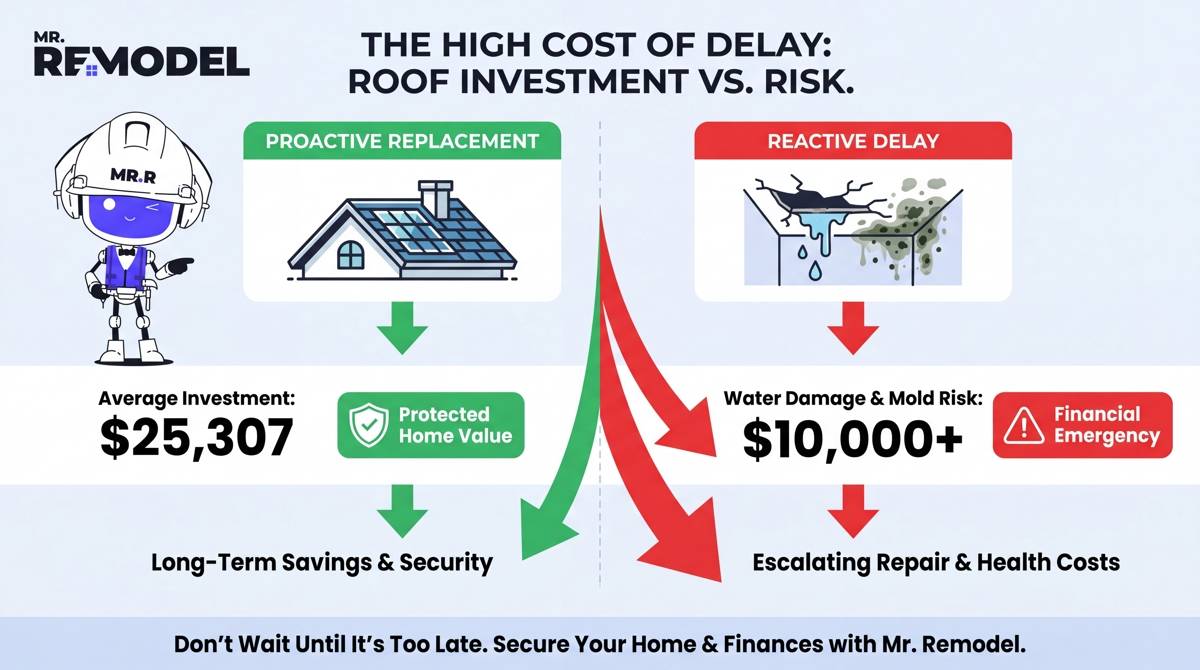
Internal network data from Mr. Remodel reveals that the average finalized roof replacement sale amount sits at $25,307.08 across national project records.
While standard installations begin at this baseline, complex architectural builds and heavy material tear-offs frequently reach up to $57,146.10.
Reviewing comprehensive roofing costs and services helps homeowners align their project scope with accurate loan figures before applying for capital.
See Related: Roof Replacement Cost (2026): Materials, Labor, Regional Pricing & ROI
Why Contractor Financing Matters for Modern Homeowners
Delaying a roof replacement due to upfront cost constraints often leads to cascading interior structural damage and mold remediation.
Securing financing directly through roof replacement contractors with financing bridges the gap between emergency need and available liquid capital.
Speed of Approval and Simple Paperwork
Contractor-sponsored financing programs feature streamlined digital applications with decision times under ten minutes.
Unlike traditional bank loans that require weeks of underwriting, contractor financing allows installation crews to start emergency repairs almost immediately.
Preserving Home Equity and Credit Lines
Contractor loans are typically unsecured personal installment loans that do not require using your home as collateral.
This structure protects your primary property equity while keeping existing credit lines open for unexpected life emergencies.
See Related: Roof Replacement Financing: Loans, Insurance & Payment Options
Comparing Financing Options by Roofing Material Tier
Project volume data highlights distinct financial requirements depending on whether you choose standard or premium roofing materials.
Financing Standard Asphalt Shingle Installations
Asphalt shingles represent the most popular choice for residential roofs, accounting for 11,546 projects across national network records.
With an average investment near $25,307.08, asphalt roofs pair exceptionally well with 12-month same-as-cash promotional financing or fixed 60-month loans.
Financing Premium Metal Roofing Systems
Metal roofing represents a high-performance upgrade, generating 3,068 inquiries across national network data.
Because metal roofs last over fifty years, financing a higher upfront cost via extended 120-month loan terms spreads payments out while lowering energy bills.
Guidelines from Energy.gov confirm that certified cool metal roofs reflect solar radiation, yielding long-term utility cost savings that offset monthly loan payments.
See Related: Best Roofing Materials (2026): Cost, Durability & Climate Fit
Common Types of Roof Replacement Financing
Exploring different lending structures helps you select the payment plan best aligned with your household budget.
Same-As-Cash Promotional Loans
Promotional same-as-cash plans allow you to pay zero interest if the full loan balance is settled within a specified window, typically 12 to 24 months.
This option works best for homeowners expecting an annual bonus, insurance settlement payout, or tax refund in the near future.
Fixed-Rate Installment Loans
Fixed-rate installment loans offer predictable monthly payments over three to ten years.
Interest rates remain locked for the entire term, protecting your budget against broader market rate fluctuations.
Government-Backed Home Improvement Loans
Homeowners seeking alternative loan pathways can explore federal programs designed for essential structural repairs.
Official documentation from HUD.gov details the Title I Property Improvement Loan Program, which offers government-backed financing for home repairs without requiring substantial home equity.
See Related: Roof Replacement Cost by Size (1,500, 2,000, 3,000+ Sq Ft)
How to Vet Contractors Offering Financing Options
Partnering with a reputable installer ensures you receive competitive loan rates alongside high-quality roof craftsmanship.
Check for Transparent Loan Terms
Ensure your contractor provides full written disclosures detailing annual percentage rates, repayment schedules, and pre-payment penalty terms.
Working with a trusted local roofing company guarantees clear communication regarding both installation timelines and financing terms.
Verify Licensing, Insurance, and Warranties
Never sacrifice installation quality for easy financing approval. Verify that your installer holds valid state licensing, active general liability insurance, and manufacturer certifications.
Reviewing comprehensive proposals through Mr. Remodel connects you with pre-vetted contractors offering flexible payment options and strong warranties.
Connect with licensed, pre-screened local contractors through Mr. Remodel. Receive flexible loan terms and get a free quote tailored to your budget today.
See Related: How to Choose a Roofing Contractor: Pricing, Quotes & Red Flags
Frequently Asked Questions
Can I finance a roof replacement with bad credit?
Yes, many contractor financing partners offer specialized loan programs for homeowners with less-than-perfect credit. Co-signers, higher down payments, or government-backed HUD loans can also help secure approval.
Is contractor financing better than using a Home Equity Line of Credit (HELOC)?
Contractor financing offers faster approvals and does not require putting your home up as collateral. A HELOC may offer lower interest rates but requires existing equity and takes weeks to process.
What is the average monthly payment for a financed roof replacement?
Monthly payments depend on total loan amount, interest rate, and term length. For an average $25,307.08 roof, monthly payments typically range between $250 and $450 on a standard 60-month loan term.
How do services like Mr. Remodel help homeowners secure roof financing?
Services like Mr. Remodel assist homeowners by matching them directly with pre-screened, licensed local roofing contractors who offer competitive financing options, free quotes, and transparent project estimates.
Are there pre-payment penalties on contractor roof loans?
Most reputable contractor financing programs do not charge pre-payment penalties. Homeowners can pay off their remaining loan balance early to save on total interest costs without extra fees.
Take Control of Your Home Upgrade with Flexible Financing
Replacing a damaged or aging roof protects your property value, family safety, and long-term financial stability. Modern financing programs eliminate the burden of massive upfront cash demands while giving you access to durable, high-efficiency materials.
Do not allow financial concerns to compromise your home building envelope. Connect with vetted, licensed local specialists through Mr. Remodel to explore flexible loan options and get free, no-obligation quotes.