1-855-QUOTEMR

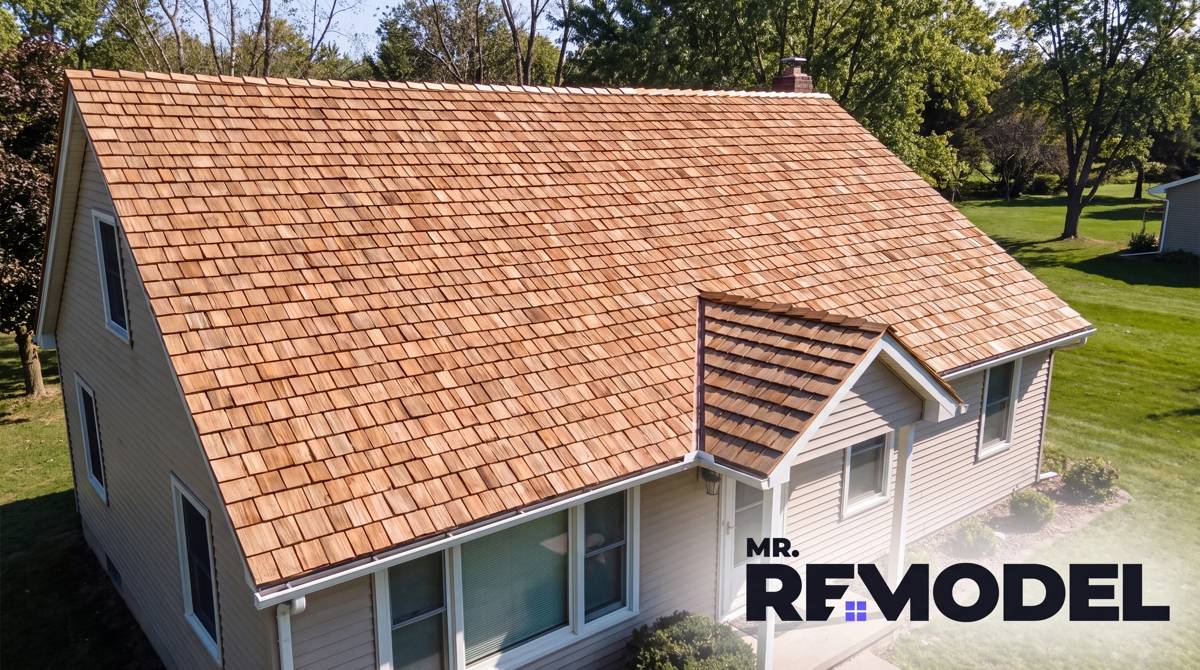
Table of Contents [hide]
Who This Is For
This guide is designed for homeowners evaluating cedar shake roof replacement, seeking transparent 2026 project cost data, regional code compliance guidelines, and criteria for vetting specialized premium roofing contractors.
Key Takeaways
- Specialized Market Share: Premium architectural materials like cedar shake represent 7.7% of total roofing inquiries, demanding highly skilled specialists.
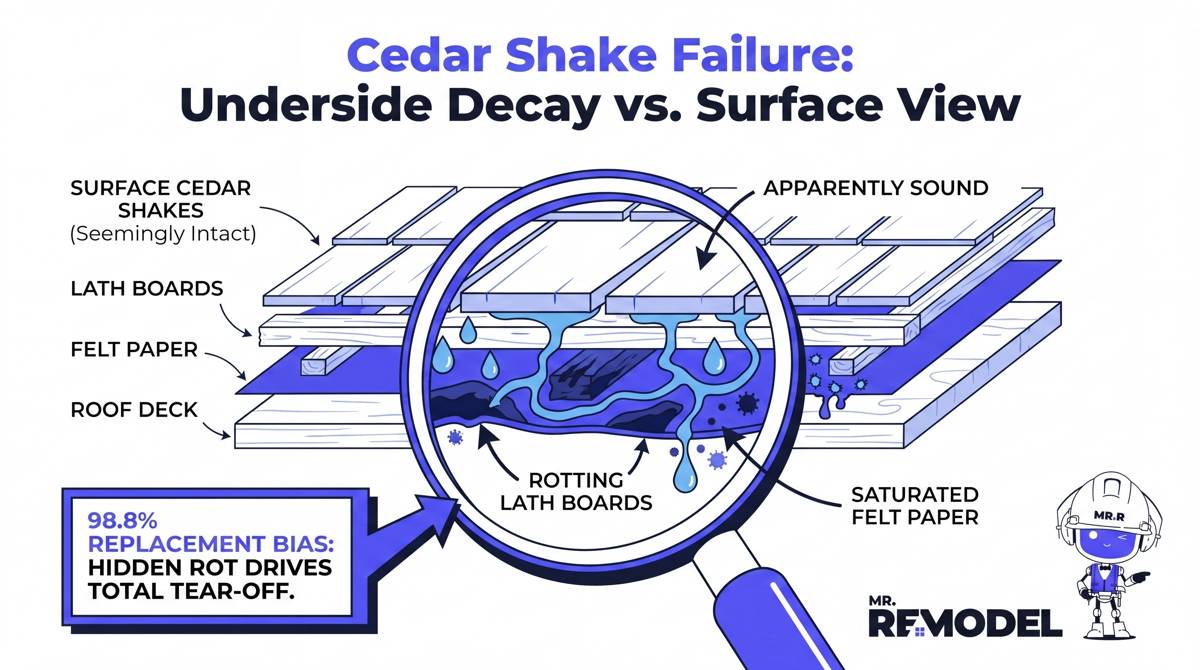
- Replacement Reality: Network data reveals 98.8% of cedar shake projects require a total tear-off rather than spot repairs due to subterranean degradation.
- Financial Investment: The baseline roof replacement investment across national networks averages $25,307, with complex architectural builds reaching $57,146.
- Regional Compliance: Cedar shake installations must meet strict local building codes, from California fire ratings to Midwest freeze-thaw load capacities.
Cedar shake roofing delivers timeless curb appeal and natural thermal insulation that synthetic alternatives rarely replicate. However, maintaining or replacing a real wood roof requires specialized engineering and skilled craftsmanship.
When a cedar shake system reaches the end of its natural lifespan, subtle moisture rot and split grains jeopardize the structural integrity of your entire home envelope. Understanding localized project costs, material performance tiers, and contractor vetting standards helps homeowners protect their financial investment during a major roof overhaul.
The Financial Realities of Cedar Shake Roof Replacement
Homeowners considering cedar shake replacement often struggle to find realistic project pricing online. Broad estimates frequently ignore structural tear-off fees, historical load assessments, and specialized Underwriters Laboratories fire-retardant treatments.
Across the national network at Mr. Remodel, the baseline cost for a full roof installation averages $25,307. However, high-end cedar shake installations involving heavy handsplit wood, steep pitches, and complex flashing details routinely range between $25,307 and $57,146.
See Related: Roof Replacement Cost (2026): Materials, Labor, Regional Pricing & ROI
Why 98.8% of Cedar Shake Inquiries Demand Full Tear-Offs
A common misconception among homeowners is that individual cracked or weathered cedar shakes can be continually patched over time.
Network data reveals that out of 1,325 premium roofing projects, 1,309 homeowners (98.8%) required a complete roof replacement rather than a minor surface repair.
Cedar shakes age from the underside upward due to trapped condensation and limited ventilation across old lath boards.
By the time surface curling or moss growth becomes visible from the ground, the underlying felt paper and roof deck are often saturated.
Attempting to patch localized sections on an aging cedar roof fails to resolve systemic rot and often invalidates manufacturer material warranties.
See Related: Roof Repair vs Replacement: Cost, Lifespan & Decision Guide
Regional Climate Adaptation and Building Code Standards
Cedar shake roofs must adapt to distinct environmental stressors across different geographic regions. High-volume state data highlights how climate dictates material treatment specifications and local code compliance.
California Fire Rating Compliance
In wildfire-prone zones across California, strict building codes regulate untreated wood shake installations.
According to engineering standards in the RCABC Roofing Practices Manual, cedar shakes must be factory pressure-impregnated with permanent fire-retardant chemicals to achieve Class B or Class C fire ratings.
Pairing pressure-treated shakes with specialized cap sheets allows homeowners to meet strict local fire safety standards without sacrificing natural wood aesthetics.
Midwest Freeze-Thaw and Structural Load Handling
Homeowners in Ohio and New Jersey experience severe freeze-thaw cycles that expand trapped moisture inside wood fibers.
Governmental structural research from the Washington State Dept. of Archaeology and Historic Preservation demonstrates that heavy snow loads require solid decking or reinforced skip-sheathing to prevent roof sag and structural failure.
Certifying that historical rafters can support wet, heavy cedar shakes protects structural framing during extreme winter blizzards.
Sunbelt Moisture and High-Wind Shear Protection
Coastal regions across Florida and Texas subject wood roofs to torrential rains, high humidity, and hurricane-force winds.
Technical product documentation from the Cedar Shake & Shingle Bureau confirms that pressure-impregnated preservative treatments prevent fungal decay, rot, and termite infestation in high-humidity zones.
Stainless steel ring-shank nails prevent wind uplift, keeping shakes firmly anchored during tropical storms.
See Related: Roof Replacement Cost by Size (1,500, 2,000, 3,000+ Sq Ft)
How to Vet Specialized Cedar Shake Contractors
Selecting qualified premium cedar shake replacement contractors requires evaluating trade certifications and hands-on experience with wood roofing mechanics.
Unlike standard asphalt shingle installations, wood shakes require precise spacing, felt interlayers, and specialized copper or stainless steel flashing.
Verify Trade Association Certifications
Ensure prospective contractors hold active certifications with recognized wood roofing organizations. Certified specialists understand proper shake spacing, allowing wood to expand when wet without buckling.
Hiring an experienced local roofing company ensures your installation team adheres to regional building codes and municipal permit rules.
Evaluate Detailed Scope of Work Proposals
Request written proposals that outline underlayment weight, flashing metals, and disposal fees.
Reviewing itemized bids from top-rated roofing services allows you to compare warranty terms before signing a contract.
See Related: Roofing Permits & Code Requirements (What to Expect)
Protect your home investment by connecting with certified wood roofing specialists in your area. Get transparent pricing and a free quote through Mr. Remodel today.
See Related: Roof Tear-Off vs Overlay Cost Comparison
Understanding Conversion Timelines for Cedar Shake Projects
Consumer research across 1,325 premium roofing projects highlights two distinct decision-making timelines among homeowners.
The 30-Day Vetting Cycle (56.1% of Homeowners)
Exactly 743 homeowners spent up to 30 days vetting contractors, reviewing material options, and comparing financing plans.
This thorough planning period gives property owners time to verify contractor credentials, examine historical shake samples, and secure required municipal permits.
The Emergency Breach Window (7.9% of Homeowners)
Conversely, 105 homeowners faced severe storm damage or sudden leaks requiring 0-to-1-day contractor dispatch.
Having access to pre-screened specialists ensures fast emergency tarping and rapid repair dispatch when weather breaches your roof envelope.
See Related: Roof Inspection Checklist Before Replacement
Frequently Asked Questions
What is the average lifespan of a cedar shake roof?
A professionally installed cedar shake roof lasts between 30 and 50 years when properly maintained. Lifespan depends on wood grade, climate conditions, underlayment quality, and routine clearing of moss and debris.
How much does cedar shake roof replacement cost in 2026?
Baseline roof replacements across national network data start around $25,307. Premium cedar shake installations involving heavy handsplit wood, steep pitches, and custom copper flashing typically range between $25,307 and $57,146.
Why do contractors recommend full replacement over spot repairs for cedar roofs?
Network data shows that 98.8% of cedar shake inquiries require full replacement because wood shakes deteriorate from the underside upward. Spot repairs fail to fix hidden moisture decay and rotting lath boards underneath old shakes.
How do services like Mr. Remodel help homeowners find cedar shake contractors?
Services like Mr. Remodel help homeowners by connecting them with vetted, licensed local roofing contractors who specialize in premium wood shake installations. Homeowners receive free quotes, transparent pricing, and expert contractor matching.
Are cedar shake roofs fire-safe for residential homes?
Modern cedar shakes can be factory pressure-impregnated with permanent fire retardants to achieve Class B or Class A fire ratings. These pressure-treated shakes comply with strict fire safety codes in states like California.
Protect Your Investment with Vetted Cedar Shake Specialists
Investing in a cedar shake roof replacement enhances architectural beauty, increases property value, and provides decades of natural insulation. However, achieving long-term durability requires experienced craftsmanship, correct felt interlayers, and strict building code compliance.
Do not leave your home vulnerable to structural water rot or uncertified installation practices. Connect with top-rated local wood roofing specialists through Mr. Remodel to secure free, no-obligation quotes and protect your premium property investment.