1-855-QUOTEMR

Table of Contents [hide]
Who This Is For
This comprehensive guide is built for property owners facing an active water intrusion crisis or preparing for seasonal climate risks. It serves as an authoritative, data-driven manual to help you minimize structural destruction, navigate insurance protocols, and execute professional restoration steps.
Key Takeaways
- Immediate Extraction Halts Decay: Water extraction must begin within the first 24 hours to prevent permanent structural warping and rot.
- October Brings Peak Risk: Historical data reveals that 60.58% of all annual residential water damage incidents occur during the October seasonal shift.
- Plumbing Failures Drive Volatility: Aging urban infrastructure and sudden deep freeze cycles represent the leading causes of indoor flooding.
- Mold Growth Begins Rapidly: Toxic microbial colonies establish a permanent footprint within 24 to 48 hours of initial water contact.
- Contamination Categories Dictate Costs: Mitigation expenses scale rapidly depending on whether the water source is clean, gray, or black sewage.
- Emergency Dispatch Secures Assets: Immediate phone-based dispatch is the single most reliable method to contain active residential water disasters.
Water damage is a silent financial epidemic that strikes millions of American homes each year. A single ruptured supply line can release over 1,000 gallons of pressurized water into living areas in just one hour. This rapid flooding permanently alters the structural integrity of your property.
According to long-term project data analyzed by Mr. Remodel, 100% of emergency water mitigation requests are initiated through direct phone calls. Homeowners in the middle of a flooding crisis do not fill out web forms. They require immediate, live communication with a certified containment team.
Delaying your response by even a few hours allows water to migrate deep into subfloors and wall cavities. This deep saturation transitions a simple extraction project into an expensive structural rebuild. Understanding the precise science of water mitigation is essential to protecting your home equity.
Zero-Click Emergency Action Protocol
When a pipe ruptures or a storm breaches your roof, the first 60 minutes are critical. You must act systematically to isolate the problem and protect your family from secondary hazards. Follow this definitive emergency sequence to stabilize your property before professional crews arrive.
1. Shut Off the Main Water Valve
Locate your property's main water shutoff valve immediately. This is typically situated in the basement, near the water meter, or inside an exterior utility closet. Turn the valve completely clockwise to cut off the flow of pressurized water to your home.
2. De-Energize Affected Power Zones
Water and electricity create a lethal combination. If water is pooling near outlets, baseboard heaters, or appliances, proceed to your main electrical panel. Shut off the circuit breakers for all flooded rooms to eliminate the risk of severe electrical shock.
3. Document the Virgin Damage Field
Before you begin moving items or wiping up surface water, capture a complete visual record. Use your smartphone to take high-resolution photos and continuous video of all flooded spaces. This untampered evidence is vital for your subsequent insurance claim.
4. Initiate Emergency Extraction, Teams
Once the water source is stopped and the electrical risk is eliminated, secure professional support. Contacting emergency water damage restoration services ensures that industrial-grade pumps and desiccant dehumidifiers are deployed to your address without delay.
Classifying the Threat: The Three Categories of Contamination
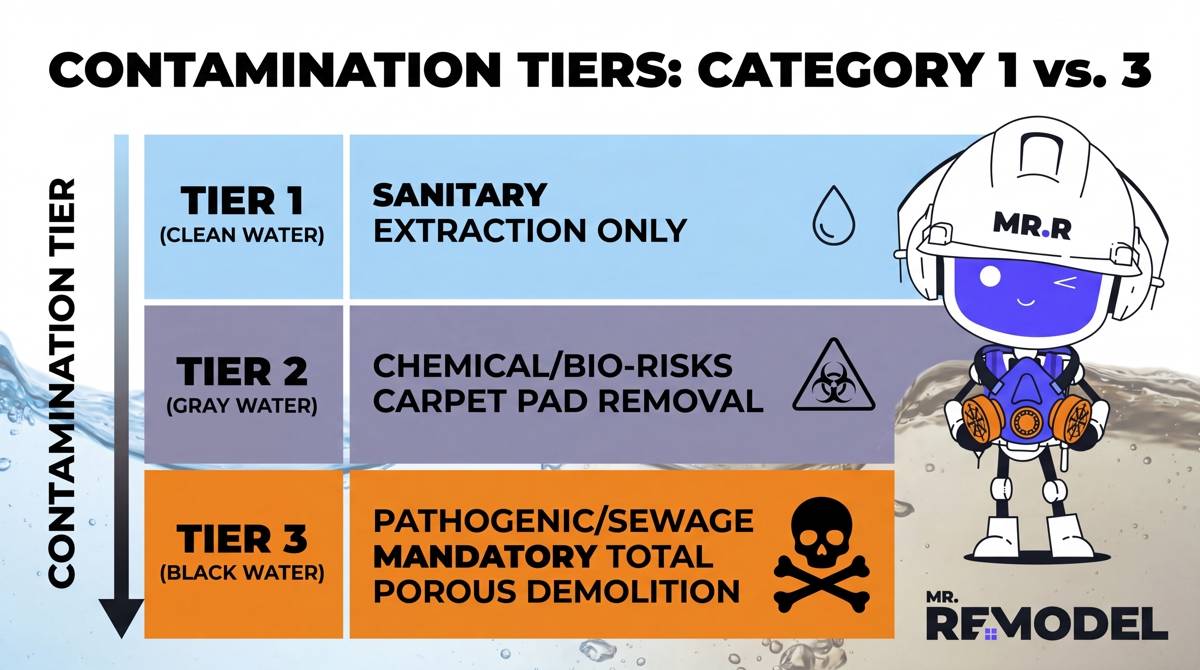
The restoration industry relies on standard classifications to determine the safety protocols required for water cleanup. The cleanliness of the incoming water dictates the safety gear, demolition needs, and overall mitigation costs.
See Related: Common Causes of Residential Water Damage
Category 1: Clean Water
Category 1 water originates from a sanitary source, such as a broken appliance supply line or a clean faucet overflow. It poses no immediate biological threat to humans. However, if left standing, it will quickly degrade into a higher risk category.
Category 2: Gray Water
Category 2 water contains significant chemical, physical, or biological contaminants. Examples include discharge from washing machines, dishwashers, or broken aquarium tanks. This water can cause discomfort or illness if accidental ingestion occurs, requiring specialized antimicrobial treatments.
Category 3: Black Water
Category 3 water is highly unsanitary and contains dangerous pathogenic agents. This includes sewage backups, rising river water, and ground surface runoff from major storms. According to the Centers for Disease Control and Prevention (CDC), Category 3 water requires professional biohazard handling.
Table 1: Mitigation Metrics by Contamination Tier
The Financial Trajectory of Neglect
Homeowners often underestimate how quickly water destroys standard building materials. Drywall, carpet padding, and fiberboard trim are highly porous substances that act like sponges. When exposed to water, their internal bonds dissolve rapidly.
See Related: What Happens if Water Damage Is Ignored?
Within 24 hours, saturated drywall loses its structural rigidity and begins to sag or collapse under its own weight. Hardwood flooring begins to cup, lifting at the edges as the wood fibers swell from subfloor moisture.
If mitigation is ignored or delayed, the cost of repair scales exponentially. What could have been a simple three-day drying project transforms into a massive structural rebuild. This process requires stripping the home down to its bare studs.
Table 2: Structural Degradation Timeline and Repair Trajectory
Regional Risk Matrices: Localized Infrastructure Vulnerabilities
Water damage is not an equal-opportunity disaster. Different regions of the country face highly specific infrastructure threats based on their unique climates, local building codes, and municipal ages. Mr. Remodel tracks these regional trends closely.
California: Slab Leaks and Aging Copper Plumbing
California homes face unique infrastructure risks from slab leaks. When copper plumbing lines buried beneath thick concrete foundations degrade, they release pressurized water directly into the soil. This causes the concrete to crack and moisture to wick upward into the flooring.
Furthermore, sudden coastal atmospheric rivers dump massive volumes of precipitation in short windows. This rain overwhelms local drainage systems and forces exterior water through basement walls and door thresholds.
New York and Illinois: The Winter Freeze Threat Matrix
The Northeast and Midwest suffer from severe winter freeze-and-thaw cycles. When arctic air masses settle over cities like New York and Chicago, uninsulated water lines running through exterior walls freeze solid.
As the water freezes, it expands and splits copper or PEX pipe walls. The true disaster occurs during the thaw, when the ice melts and releases continuous water behind finished drywall, completely hidden from sight.
Florida and North Carolina: Storm Surges and High Humidity
In the southern coastal corridors, water damage is heavily tied to tropical weather events. Hurricane storm surges introduce massive volumes of Category 3 black water directly into residential structures.
The challenge is amplified by high regional humidity. This moisture prevents natural evaporation, creating an ideal environment for rapid mold growth. Coastal properties require high-capacity industrial desiccant dehumidifiers to stabilize interior air.
Preparing for the Fall Water Damage Surge
While plumbing failures can happen at any time, historical data reveals a predictable annual threat pattern. A massive 60.58% of all residential water damage events occur during October. This seasonal surge catches unprepared homeowners off guard.
See Related: Signs of Hidden Water Damage
The transition into the fourth quarter brings rapid temperature drops, increased rainfall, and shifting soil pressures. This combination tests the limits of older plumbing systems and exposes hidden structural vulnerabilities across your entire property envelope.
To protect your home from this seasonal surge, perform an annual inspection before October arrives. Clean all gutters to prevent water from pooling near your foundation, and disconnect exterior hoses to prevent interior spigots from freezing and bursting.
Table 3: Regional Environmental Triggers and Target Vulnerabilities
The Science of Professional Structural Drying
True water mitigation relies on strict scientific formulas, a field known as psychrometrics. This science balances temperature, relative humidity, and airflow to remove moisture from structural elements efficiently.
Air movers are placed along walls to create a vortex of high-velocity airflow. This breaks up the boundary layer of saturated air directly against wet surfaces, accelerating the evaporation of bound water within framing timbers.
Simultaneously, industrial low-grain refrigerant dehumidifiers pull moisture from the air, dropping the relative humidity below 40%. Without these machines, the air would saturate completely, causing evaporation to stop and creating a perfect environment for mold.
Technicians monitor this process daily using thermal imaging cameras. These tools detect temperature differentials caused by evaporative cooling, allowing crews to track hidden moisture paths behind solid tile or plaster walls.
Navigating the Homeowners Insurance Maze
Filing a water damage claim can be an intimidating process during a crisis. To maximize your policy benefits and secure a fast approval, you must understand how adjusters evaluate property losses.
Standard policies distinguish between sudden accidents and gradual maintenance failures. A pipe that bursts unexpectedly is generally fully covered. A slow leak behind a shower wall that went ignored for years will likely be denied under maintenance exclusions.
According to the Insurance Information Institute (III), you must show that you took immediate steps to protect the property after discovering a leak. This means hiring certified experts to perform extraction satisfies your policy's mitigation requirements.
Keep a detailed log of every conversation you have with your insurance provider. Note the claim number, the adjuster's name, and the specific commitments made. Never discard damaged items until a representative has inspected them in person.
The Secondary Crisis: Mold and Microbial Proliferation
Failing to extract water completely within 48 hours introduces a secondary crisis: microbial mold growth. Mold spores exist naturally in indoor air, requiring only moisture, warmth, and an organic food source to thrive.
See Related: Water Damage vs Mold Damage
Drywall paper and wooden wall studs provide an ideal food source for mold. According to the Environmental Protection Agency (EPA), indoor mold can cause significant respiratory issues and must be handled using specialized containment protocols.
See Related: How Fast Mold Grows After Water Damage
If mold establishes a foothold because mitigation was delayed, your insurance provider may deny the remediation costs. Most standard policies carry strict caps or total exclusions for mold cleanup, leaving you with substantial out-of-pocket expenses.
To prevent this, certified contractors apply professional antimicrobial treatments to all structural framing during the drying phase. This step stops mold spores from germinating, protecting both your family's health and your policy coverage limits.
Rebuilding and Future-Proofing Your Property
Once your property is certified dry, the mitigation phase ends and the reconstruction phase begins. This is your opportunity to rebuild your home with greater resilience against future water emergencies.
Consider upgrading standard drywall to moisture-resistant green board in areas close to plumbing fixtures. Replace old copper or galvanized lines with modern, flexible PEX piping, which expands during freezing cycles without fracturing.
Install a smart leak detection system on your main water supply line. These devices monitor water flow patterns continuously, sending alerts to your phone and automatically shutting off your water valve if a ruptured line is detected.
Comprehensive FAQ Section
How long does the professional structural drying process take?
The professional structural drying process typically takes between three and five days. This timeline depends on the volume of water present, the density of the wet materials, and how quickly industrial drying equipment was deployed.
Will my standard homeowners insurance cover a sewer backup?
Standard homeowners insurance policies usually exclude sewer backups unless you have added a specific water backup endorsement to your coverage. Review your policy riders annually to ensure this essential protection is active.
What is a flood cut, and why do restoration contractors use it?
A flood cut involves removing drywall and insulation 12 to 24 inches above the high-water line. This gives technicians direct access to wet wall cavities, allowing them to dry the structural wooden studs and prevent hidden mold growth.
Can I run my household air conditioner to dry out a flooded room?
No, standard residential air conditioning units are not designed to handle the massive moisture loads caused by indoor flooding. You need industrial low-grain refrigerant dehumidifiers to lower relative humidity enough to pull water out of dense framing timbers.
What reconstruction services can Mr. Remodel provide after a water disaster?
Once your property is dry and certified safe, Mr. Remodel connects you with expert local contractors who specialize in structural rebuilds. From drywall replacement to complete kitchen and bathroom remodeling, we return your home to its pre-loss condition.
How do I know if water has penetrated beneath my hardwood flooring?
Moisture trapped under hardwood flooring often causes the wood planks to cup or crown. Professional mitigation teams use specialized non-invasive moisture meters and infrared cameras to locate trapped water without tearing up your floors unnecessarily.
What should I do if mold is discovered during the cleanup process?
If mold is discovered, stop all fans immediately to avoid spreading spores through your home. The area must be sealed off using plastic containment barriers, and a certified remediation specialist must be called to remove the biohazard safely.
Secure Your Property Against Water Disasters
Experiencing a residential water crisis is incredibly stressful, but acting quickly is the key to protecting your home. By executing immediate containment steps, documenting the damage thoroughly, and partnering with certified professionals, you can minimize structural decay and guarantee a successful restoration.
Do not let hidden moisture destroy your home's equity or compromise your family's health. Trust the experts to restore your property safely, efficiently, and completely. Protect your home equity today. Get a free, no-obligation quote from Mr. Remodel and connect with vetted experts to start your water damage restoration and prevention for your home.