1-855-QUOTEMR

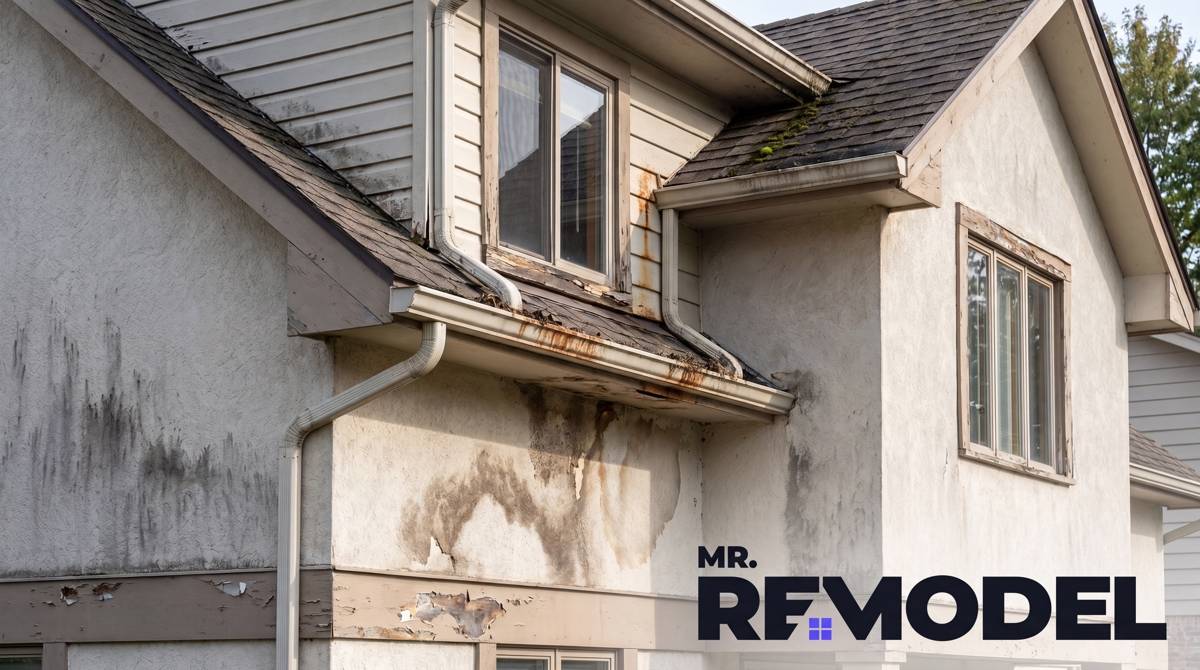
Table of Contents [hide]
Who This Is For
This guide is designed for property owners who suspect moisture issues behind their walls or floors. It provides actionable diagnostic steps and regional data to help you identify structural decay before it triggers a complete home emergency.
Key Takeaways- Immediate Diagnostics: Strange odors, wall bubbling, and warped floor boards act as the primary early indicators of internal moisture.
- The Structural Threshold: Visible signs of hidden water damage indicate that the issue has already breached the wall surface and requires expert assessment.
- The Q4 Danger Zone: Proprietary data shows that hidden damage discovery surges in October due to seasonal shifts in humidity and temperature.
- 100% Call Priority: Emergency data confirms that when homeowners finally detect these signs, they skip web forms to prioritize immediate phone dispatch.
- Geographic Sensitivity: Hidden leaks manifest differently across the country, ranging from slab failures in California to wall rot in humid Florida.
Water damage rarely announces itself with a dramatic burst. Instead, it often begins as a slow, quiet infiltration behind your home’s finished surfaces. By the time you notice physical changes in your walls or floors, the moisture has likely been affecting your structural framing for weeks.
Internal metrics from Mr. Remodel illustrate the severity of this issue. We have processed 104 emergency service requests, and every single one was initiated via a direct phone call. This indicates that once homeowners confirm the signs of hidden damage, the window for passive research is closed.
The 7 Primary Signs of Hidden Water Damage
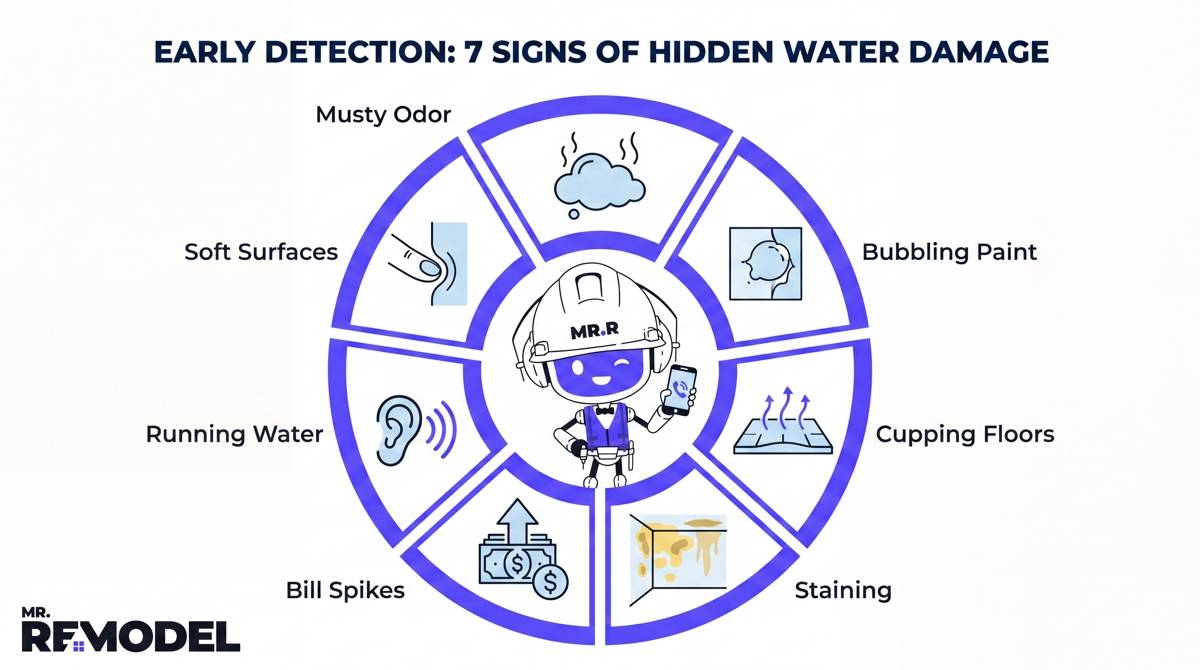
Diagnostic accuracy is key to preventing long-term decay. Keep an eye out for these seven common indicators that suggest water is moving where it should not be.
1. Persistent Musty Odors
A damp, earthy smell in a room that otherwise appears dry is often the first sign of hidden moisture. This odor is caused by mold growth inside wall cavities or under floorboards. Never ignore this scent, even if you cannot find a visible leak.
2. Bubbling or Peeling Paint
Water infiltration softens the bond between your paint and the wall surface. If you notice bubbling, blistering, or peeling paint in areas not directly exposed to water, moisture is likely trapped behind the plaster or drywall.
3. Warped or Cupping Flooring
Wood expands when it absorbs moisture. If your hardwood floors appear wavy or start to cup, this is a clear sign that water is present beneath the boards. This often indicates a slab leak or a burst pipe located under your foundation.
4. Visible Staining and Discoloration
Yellow or brown stains on ceilings and walls are classic indicators of a slow leak. These stains often grow in size over time. If a stain remains wet to the touch or grows after a rainstorm, you have an active infiltration problem.
5. Unexplained Increases in Utility Bills
A sudden, unexpected spike in your water bill is a strong diagnostic tool. This often indicates a hidden supply line leak. Even a small pinhole leak can waste thousands of gallons of water while saturating your wall structures over time.
6. Sounds of Running Water
If you can hear the sound of water running when all your household taps are closed, your home likely has a pressurized plumbing leak. This sound often indicates a pipe break located somewhere within your wall assembly or beneath your floor structure.
7. Sagging or Soft Surfaces
When water penetrates drywall or subflooring, the structural materials weaken significantly. If you notice soft spots on your floor or a ceiling panel that appears to be sagging, the damage has reached a critical stage and requires emergency repair.
See Related: Complete Homeowner's Guide to Water Damage
Regional Risk Profiles and Structural Decay
Hidden water damage manifests differently depending on your home's location and age. Climate factors play a massive role in how moisture attacks your structure.
California (12.50% of Demand)
Older California homes are prone to hidden slab leaks. Because these properties often feature plumbing pipes embedded directly into concrete foundations, a leak can remain hidden until it compromises the entire floor structure.
New York and Florida (8.65% Each)
New York homes are susceptible to hidden plumbing deterioration within aging urban apartments. In contrast, Florida homes face aggressive mold proliferation inside wall cavities because high ambient humidity prevents the structure from drying out naturally.
North Carolina and Illinois (7.69% and 6.73%)
North Carolina homeowners often deal with crawlspace rot caused by coastal humidity. Meanwhile, Illinois properties frequently face basement see page issues caused by the severe freeze-thaw cycles that characterize the Midwest.
See Related: Common Causes of Residential Water Damage
The Q4 Seasonal Vulnerability Peak
Hidden water damage is not a random event; it is often tied to seasonal shifts. Our data shows a massive discovery surge in October. Approximately 60.58% of all hidden damage reports hit during this month.
As temperatures shift, roof failures and trapped summer condensation begin to manifest. If you live in an area with sharp seasonal changes, perform a thorough property inspection in September to catch failing systems before the October surge begins.
The Science of Structural Destruction
Water destroys homes through three primary mechanisms. Understanding these processes helps explain why professional intervention is required immediately upon discovery.
Bulk Water Infiltration
This occurs when water physically enters the home through leaks or floods. It saturates everything it touches, weakening the structural integrity of timber and drywall.
Vapor Diffusion
Even without bulk leaks, moisture moves through building materials as a gas. Green Built Alliance explains that modern energy-efficient homes can trap this vapor, causing rot if the home cannot breathe properly.
Fungal Colonization
Once moisture is trapped, mold begins to consume the organic materials in your walls. United Policyholders notes that mold damage is often excluded from standard insurance policies, leaving homeowners to cover the cleanup costs themselves.
See Related: Water Damage vs Mold Damage
Why Passive Detection Fails
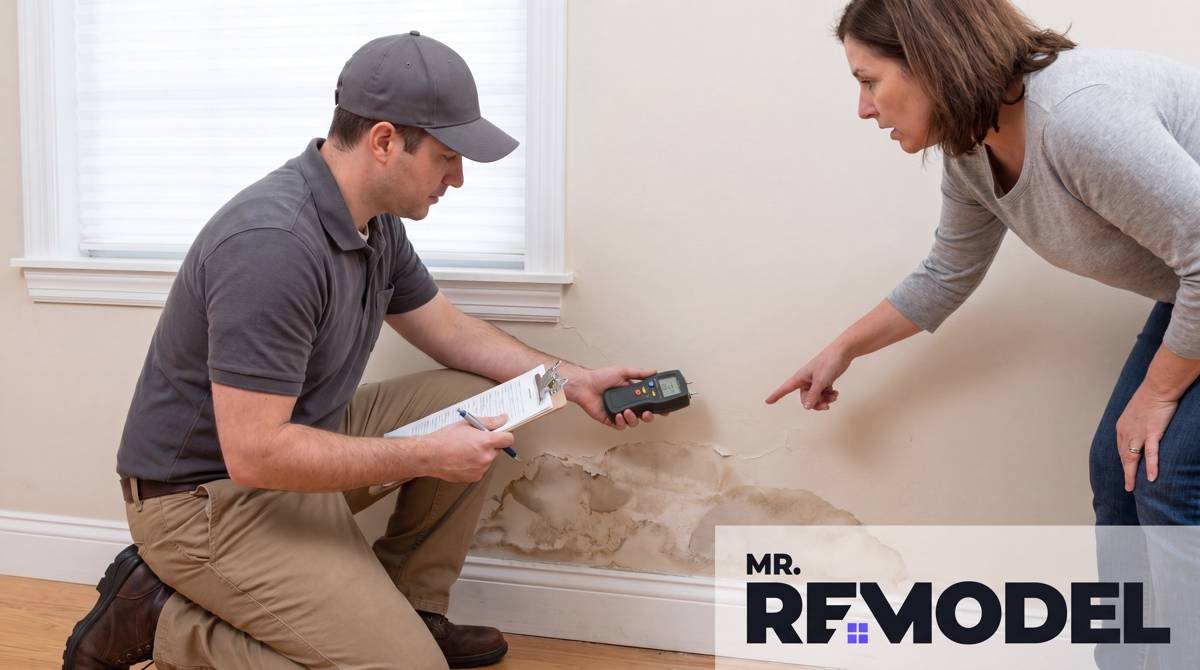
Many homeowners rely on DIY methods to check for hidden damage, but these are often insufficient. Professional restorers use thermal imaging and high-precision moisture meters.
The Center for Neighborhood Technology highlights that thermal imaging is a powerful tool for detecting temperature differentials. These tools can see "cold spots" behind walls that indicate wet insulation or saturated structural framing.
Frequently Asked Questions
What should I do if I detect hidden water damage?
Immediately locate your main water shut-off valve and turn it off. Once the supply is stopped, call for emergency water damage restoration to prevent further structural decay.
Can hidden water damage cause health issues?
Yes. Hidden leaks foster mold growth behind walls. These mold colonies release spores and toxins that can negatively impact indoor air quality and trigger respiratory issues.
See Related: How Fast Mold Grows After Water Damage
How do professionals find leaks without destroying walls?
Experts use specialized non-invasive tools like thermal imaging cameras, moisture meters, and acoustic leak detectors. These tools allow them to pinpoint the exact source of a leak without unnecessary demolition.
Will my homeowner insurance cover hidden water damage?
Coverage depends on your specific policy. Most insurers cover sudden plumbing failures but often deny claims for damage caused by long-term maintenance neglect.
See Related: What Happens if Water Damage Is Ignored?
Why should I choose Mr. Remodel for diagnostics?
Services like Mr. Remodel help by matching you with vetted local contractors. Our experts utilize professional diagnostic technology to confirm the severity of hidden damage, ensuring the right repairs are made.
Act Now to Protect Your Home Investment
Hidden water damage is not a problem that solves itself; it only becomes more expensive and dangerous over time. If you have identified the signs mentioned in this guide, you should seek a professional assessment immediately.
Platforms like Mr. Remodel are ready to assist. Get a free, no-obligation quote, connect with local water damage restoration experts, and prevent further structural decline. Do not wait for a small leak to turn into a major home emergency.