1-855-QUOTEMR

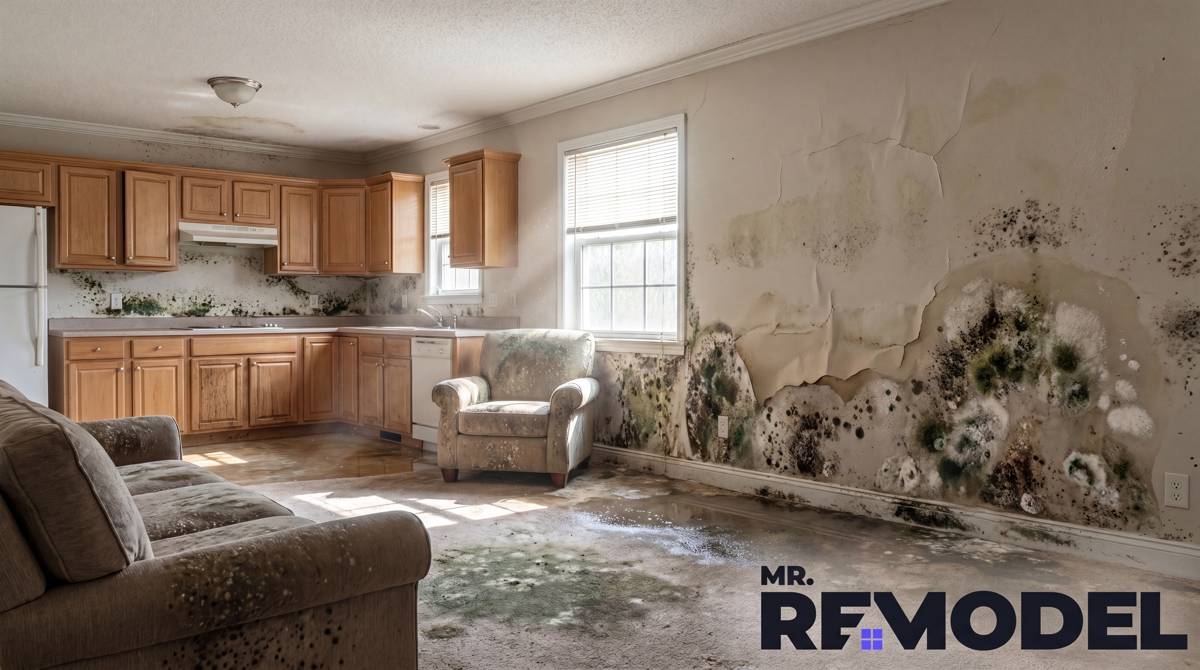
Table of Contents [hide]
Who This Is For
This guide is designed for property owners who have recently experienced a plumbing failure, leak, or flood. It provides the critical biological timeline, diagnostic thresholds, and immediate triage actions necessary to prevent an active mold colony from damaging your home.
Key Takeaways
- The 48-Hour Threshold: Mold colonization typically initiates on saturated building materials within 24 to 48 hours of moisture exposure.
- Q4 Seasonal Surge: Proprietary data indicates that October is the highest-risk month for mold discovery due to sudden seasonal temperature transitions.
- 100% Call Conversion: Internal data confirms that 100% of property owners experiencing an active water event bypass web forms to prioritize phone dispatch.
- Geographic Accelerators: High-humidity climates, such as coastal Florida, can accelerate the mold growth timeline to well under 24 hours.
- Structural Preservation: Immediate industrial extraction is the only effective way to prevent permanent biological degradation of wall and floor substrates.
When water leaks into your home, you are not just dealing with a puddle. You are entering a biological race against the clock. Mold spores are present everywhere in your indoor environment, lying dormant until they find the right conditions to germinate.
If a structure stays wet, those conditions are met almost instantly. According to the Environmental Protection Agency (EPA), if wet or damp materials are dried within 24 to 48 hours, mold colonization typically does not occur.
Once this window closes, the spores begin to feed on the organic matter within your drywall, wood framing, and carpet backing. Ignoring the timeline does not just make the cleanup harder; it allows the mold to physically consume the structural components of your home.
Why Regional Climate Matters
The generic "24 to 48-hour" rule is a baseline, not a universal law. Your local climate significantly modifies how fast mold grows in your home.
The Coastal Humidity Effect
In high-humidity regions, the environment is already saturated, making it much harder for materials to dry naturally. Internal data shows that Florida homes, accounting for 8.65% of our service requests, often see mold blooms well before the 24-hour mark because the moisture simply has nowhere to evaporate.
The Seasonal Heating Spike
In northern climates, fall and winter present a different danger. When you turn on your indoor heating system in October, you create a warm, moist microclimate inside your wall cavities. Data from our 2025/2026 logs shows a massive 60.58% spike in water damage leads in October. This is the "Fall Transition," where dormant spores suddenly find the perfect environment to thrive.
Diagnostic Signs of Active Growth
You may not always see the mold immediately, but your home will tell you it is there. If you suspect an issue, look for these specific indicators:
- Earthy or Musty Odors: This is often the first sign of an active colony, even if the growth is hidden inside a wall cavity.
- Discoloration: Look for black, green, or white powdery stains on baseboards, drywall seams, or underneath sinks.
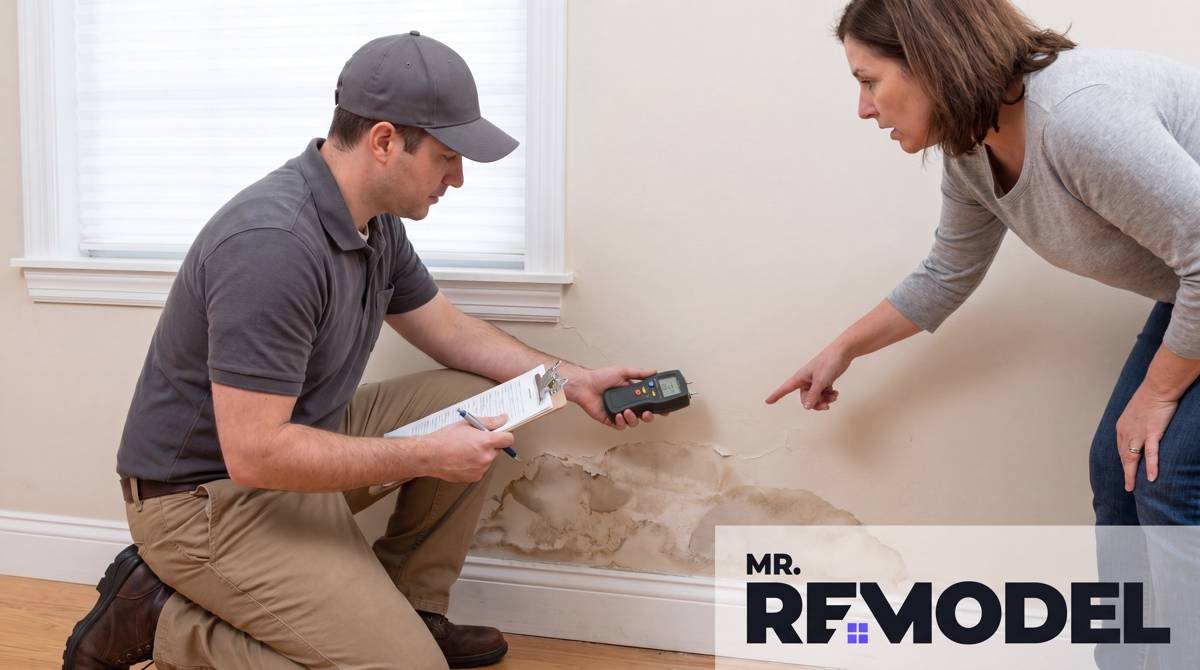
- Structural Changes: If your paint is bubbling, peeling, or if floorboards are cupping, moisture has likely penetrated the surface and initiated growth.
See Related: Signs of Hidden Water Damage
The Urgency of Professional Intervention
When mold begins to grow, your health and your property value are both at risk. The Centers for Disease Control and Prevention (CDC) notes that dampness and mold in buildings are linked to a range of respiratory health issues.
Internal lead metrics from Mr. Remodel illustrate the level of urgency required. Of 104 emergency mitigation requests analyzed, 100% of homeowners skipped web forms to contact us via phone. They understood that every minute spent navigating a digital form is a minute where mold spores are propagating.
If you have detected signs of a leak, you must secure an emergency dispatch immediately. Get a free water damage mitigation quote now to start the drying process before the clock runs out.
See Related: What Happens if Water Damage Is Ignored?
Structural Impact: Salvage vs. Tear-Out
The speed of your response determines whether you can salvage your materials. Once mold has taken root, the integrity of the substrate is compromised.
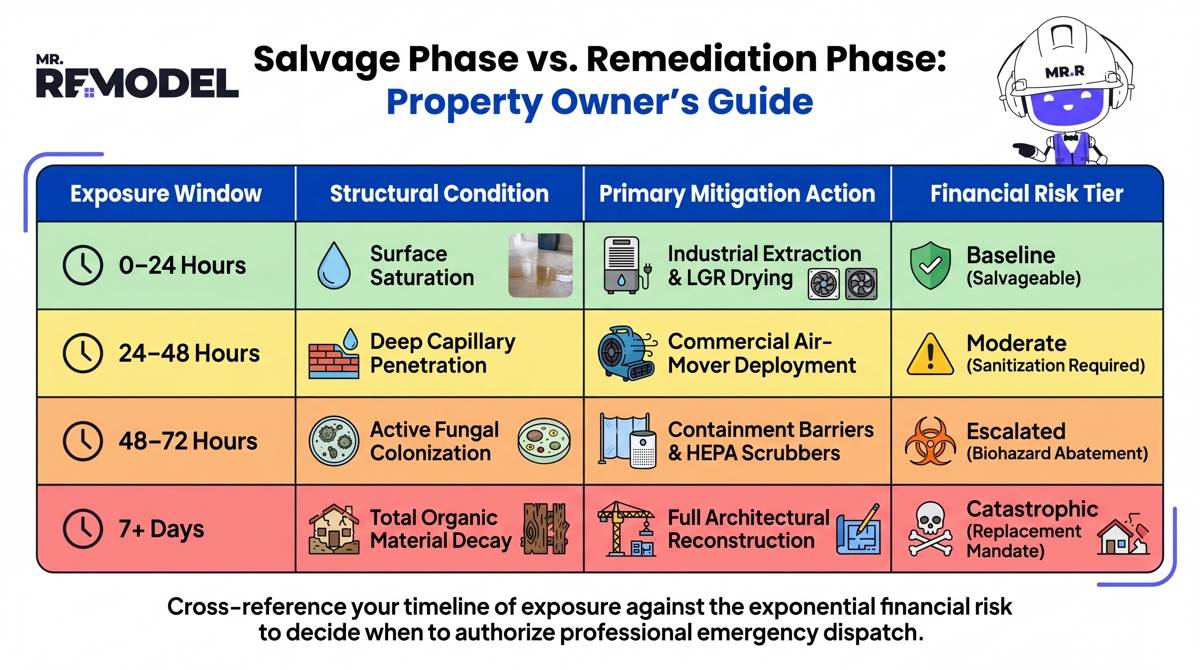
- Salvage Phase (0–24 Hours): Immediate industrial extraction can often save drywall, insulation, and timber framing.
- Remediation Phase (24+ Hours): If mold growth is confirmed, the material must be professionally contained, removed, and treated.
The Federal Emergency Management Agency (FEMA) emphasizes that structural safety and disaster recovery depend on acting before the mold becomes a biohazard.
See Related: Common Causes of Residential Water Damage
Frequently Asked Questions
Is it safe to clean mold myself?
The EPA recommends professional help for any mold contamination larger than 10 square feet. Standard household cleaners often fail to kill the root, and without industrial HEPA air scrubbers, you risk spreading spores to unaffected rooms.
How do I know if the mold is black mold?
"Black mold" is a term used for many types of toxic fungi. You cannot reliably identify mold species by sight. If you see dark, fuzzy growth and smell a musty odor, treat it as a serious biohazard and seek professional help.
Does homeowner insurance cover mold?
Most policies cover sudden, accidental water damage but exclude mold growth that results from gradual, unaddressed leaks. This is why acting within the first 48 hours is vital for your claim's eligibility.
Why do northern homes get mold in the fall?
As temperatures drop, homeowners close windows and activate furnaces. This creates a warm, stagnant environment that provides the perfect growth medium for any moisture trapped in walls over the summer.
Why trust Mr. Remodel for mold prevention?
Services like Mr. Remodel help protect your investment by connecting you with vetted, local contractors. We ensure you get the right industrial-grade equipment to stop mold in its tracks.
See Related: Water Damage vs Mold Damage
Secure Your Home Before the Growth Accelerates
Mold growth is a direct consequence of unmanaged water. If you are reading this because you have a leak, do not delay. The biological clock is ticking, and the costs of waiting only increase as the colony spreads.
Connect with our network of professionals at Mr. Remodel to receive an immediate assessment. Get a free, no-obligation quote and connect with vetted contractors who have the industrial tools necessary to stop mold growth and preserve the structural integrity of your home.