1-855-QUOTEMR

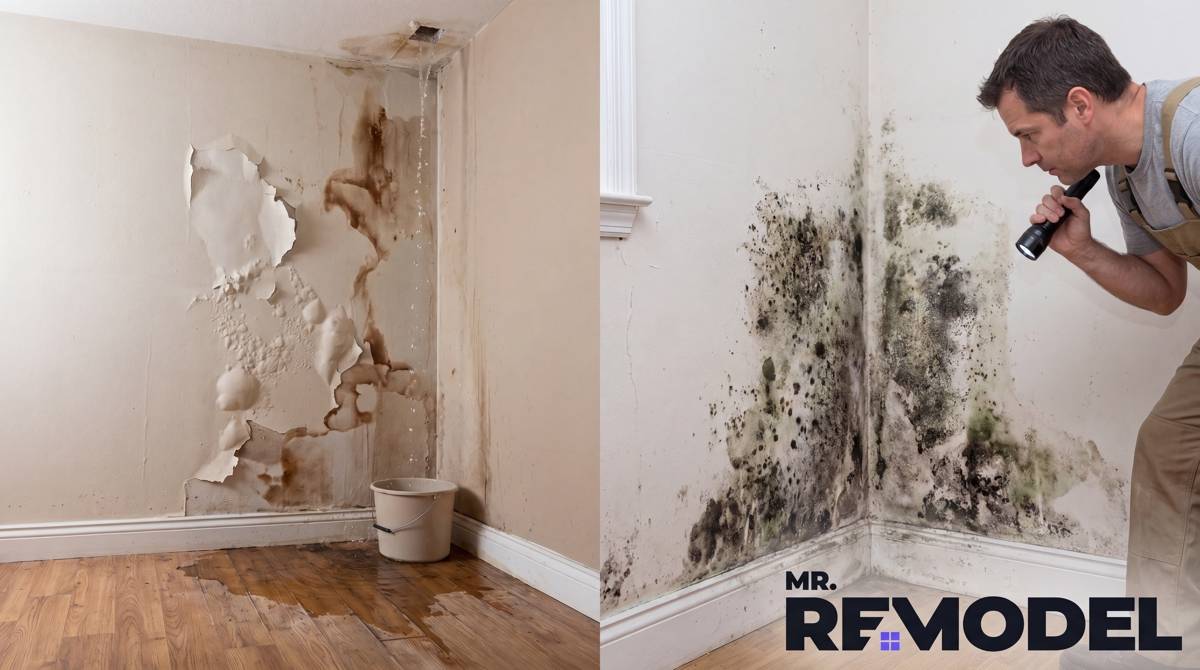
Table of Contents [hide]
Who This Is For
This guide is designed for homeowners currently evaluating a dark wall stain, soft flooring, or a strange indoor odor. It provides real-time diagnostic rules, transition timelines, and regional environmental benchmarks to help you identify whether your home requires emergency structural drying or specialized biological remediation.
Key Takeaways
- The Baseline Distinction: Water damage involves physical saturation from liquid leaks, while mold damage is a secondary biological growth chewing through organic material.
- The 48-Hour Threshold: Saturated structural building materials trigger active fungal colonization within a tight 24 to 48-hour exposure window.
- Geographic Climate Accelerators: Coastal atmospheric conditions, such as high humidity levels in Florida, compress the biological decay timeline severely.
- Insurance Coverage Gaps: Homeowner policies generally cover sudden, accidental plumbing breaks but exclude gradual mold issues caused by maintenance delays.
- Urgent Phone Communication: Consumer metrics show 100% of property owners in a crisis skip digital forms to request direct phone dispatch.
Discovering an unexpected stain or musty smell inside your home creates a high-stress household emergency. Homeowners face a critical diagnostic crossroad that dictates their property restoration strategy. Understanding whether your home has a structural moisture leak or an active biohazard colony is essential.
Operational data from Mr. Remodel indicates that 104 out of 104 emergency mitigation requests were initiated via direct phone calls, since homeowners completely abandon digital contact sheets when water or mold threatens their home investment. Immediate phone communication ensures fast containment before property degradation scales.
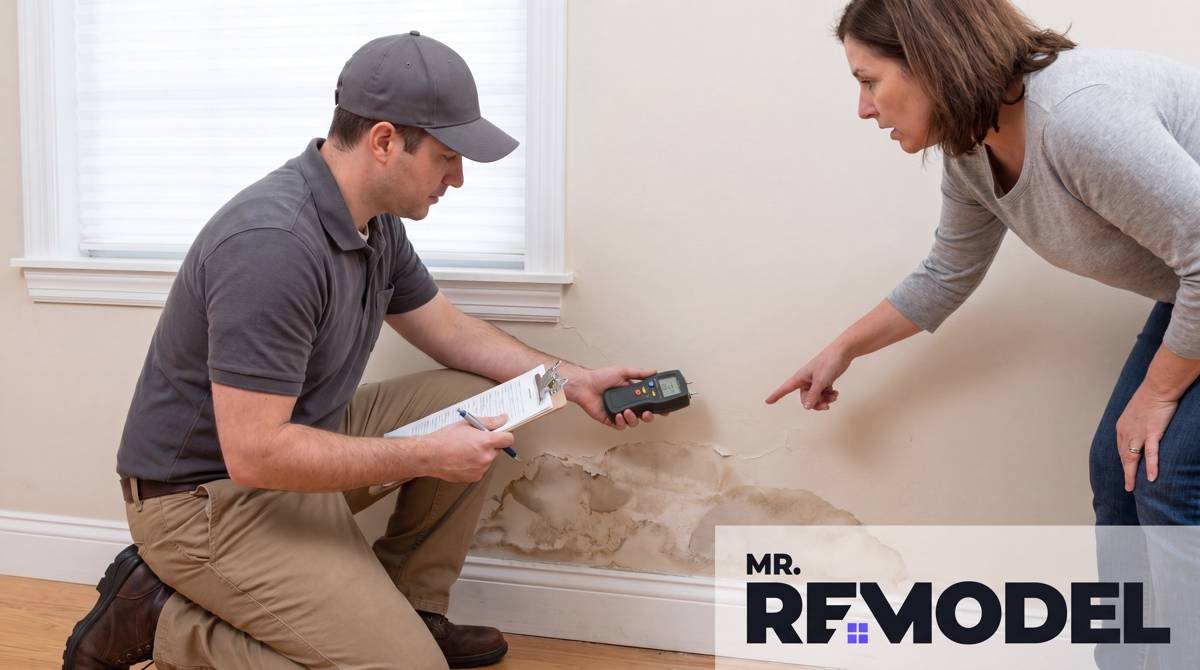
A simple diagnostic rule helps settle the initial assessment. If a structural building element is physically wet or weeping, you are dealing with active water damage. If the surface has turned black, green, or powdery and releases an earthy scent, it has transitioned into mold damage.
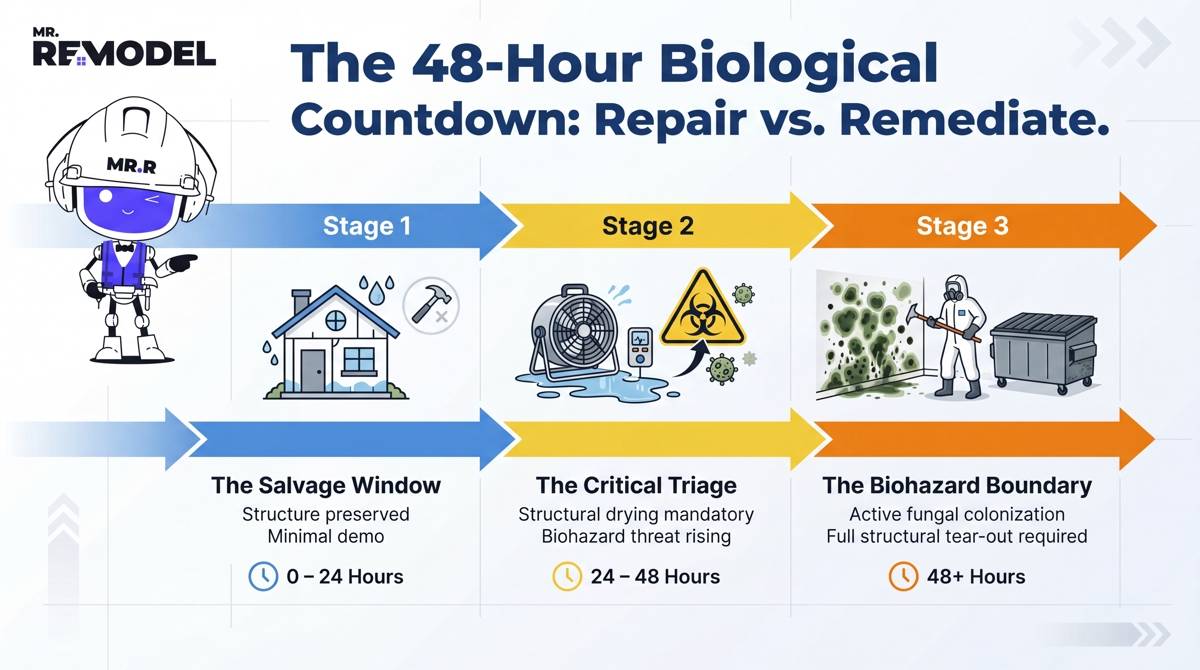
The 48-Hour Biological Transition Window
Water damage and mold outbreaks are not entirely separate issues; they are two progressive stages of the same structural decay timeline. The physical presence of moisture triggers a rapid biological countdown.
The Germination Phase
Fungal spores require very little encouragement to begin a destructive colonization process. The United States Environmental Protection Agency (EPA) notes that if damp or wet building substrates are dried within 24 to 48 hours, mold colonization typically does not occur. Missing this window alters your remediation requirements completely.
The Breakdown of Organic Assets
Once a substrate passes the 48-hour saturation threshold, a chemical shift occurs. Mold spores feed on the organic cellulose found inside your drywall paper, wood framing, and carpet backing. This biological activity permanently degrades the material, turning a simple drying task into an expensive demolition job.
Physical Diagnostic Checklists: Mapping the Differences
Homeowners can use distinct physical and sensory indicators to identify which hazard is currently attacking their living space.
Structural Sensation Profiles
Active water damage leaves building substrates soft, spongy, or visibly swollen. Drywall panels will sag under water weight, and baseboards will warp or split away from the wall. The underlying framing remains structurally intact if dried quickly, allowing for preservation.
Sensory and Fungal Anomalies
Mold damage presents as a distinct surface growth rather than a simple clean liquid stain. It appears as dark splotches that look fuzzy, velvety, or slimy. These colonies release volatile organic compounds that create a persistent, musty smell inside enclosed spaces.
Regional Climate Realities and Infrastructure Vulnerabilities
The speed at which water damage turns into an active mold outbreak varies significantly depending on your geographical location. Local weather profiles alter structural drying expectations.
High-Humidity Coastal Hazards
Operating within coastal zones introduces intense environmental complications for property owners. Internal data from Mr. Remodel shows that Florida accounts for 8.65% of emergency mitigation volume. High ambient humidity in Florida accelerates mold growth, turning clean leaks into category three biohazards within 48 hours.
Cold Climate Infrastructure Failure
Midwestern and northeastern territories present unique seasonal infrastructure threats. New York accounts for 8.65% of regional demand, driven by winter radiator leaks and urban building pipe bursts. Illinois represents 6.73% of requests, where unaddressed summer basement moisture freezes, cracking concrete foundations.
Low-Humidity Leak Paths
Arid western environments alter how moisture moves through a property layout. California represents 12.50% of emergency volume, often caused by hidden slab leaks beneath luxury flooring. The lower ambient humidity in California can help slow down initial mold growth if homeowners catch the leak early.
Crawlspace and Runoff Risks
Coastal storm corridors face regular groundwater management challenges. North Carolina drives 7.69% of emergency service requests. High groundwater tables and coastal storm runoff trap moisture inside crawlspaces, rotting subfloors, and creating large mold ecosystems beneath the living spaces.
Safety Protocols and Respiratory Health Management
Ignoring active structural moisture or biological growth presents serious risks to your building integrity and your family's wellness.
Respiratory Well-Being Risks
Living around unmitigated fungal growth can lead to chronic respiratory issues. The Centers for Disease Control and Prevention (CDC) connects damp building spaces with coughing, wheezing, and upper respiratory issues. Sufferers with pre-existing lung conditions face severe health risks from long-term exposure.
Building Structure Preservation
Persistent water saturation weakens the load-bearing elements of a home. Federal Emergency Management Agency (FEMA) disaster recovery guidelines warn that unmanaged moisture rots wood studs and wall framing. Delaying remediation compromises structural safety and lowers overall property values.
The October Peak: Preparing for Q4 Seasonal Shifts
Our proprietary consumer interaction metrics show that water and mold emergencies follow clear seasonal trends. Homeowners must understand these spikes to protect their properties.
Data from Mr. Remodel reveals that a massive 60.58% of all emergency service requests occur during a single month: October. This peak is triggered by shifting fall temperatures.
Unaddressed summer humidity and minor leaks reach a breaking point during the Q4 weather transition. Saturated building cavities turn into active mold infestations as heating systems click on. Homeowners should inspect their properties in late summer to catch hidden leaks before the October surge begins.
Financial Policy Gaps: Navigating Insurance Claims
Understanding how insurance adjusters evaluate property damage determines whether your cleanup costs are covered or denied.
Sudden Bursts vs. Wear and Tear
Standard homeowner insurance policies cover water damage only if it stems from a sudden, accidental event. Examples include a hot water tank bursting or a washing machine hose splitting. Adjusters approve these claims because the damage could not be prevented through regular maintenance.
The Long-Term Neglect Exclusion
In contrast, mold damage is frequently excluded from baseline policy payouts. Insurance providers view mold as a maintenance issue caused by owner neglect or delayed action. If an adjuster finds that a leak went unaddressed for weeks, they can deny the entire cleanup claim.
If your property has roof leaks that threaten your attic framing, check repair pricing early. Managing exterior vulnerabilities avoids expensive mold remediation projects.
See Related: Roof Replacement Cost (2026): Materials, Labor, Regional Pricing & ROI
Professional Technical Responses: How Remedies Differ
Resolving a home moisture emergency requires deploying the right mechanical or biological remediation strategy.
Structural Drying Workflows
If a technician arrives within the initial 48 hours of a clean water leak, the response focuses on structural drying. Crews deploy vehicle-mounted extraction pumps to pull liquid from finishes. Next, they install low-grain refrigerant dehumidifiers to lower air vapor pressure and preserve the framing.
Biological Remediation Workflows
If a leak is ignored, the project shifts to biohazard remediation. Technicians must erect physical plastic isolation walls to prevent cross-contamination. They then run negative air scrubbing machines equipped with HEPA filters to pull dangerous airborne spores out of your breathing zones.
If your home has old window units with failing perimeter seals, review window installation costs. Upgrading weathered units keeps seasonal rainwater out of your home's framing.
See Related: Window Replacement Cost by City: Pricing Guide
Water Damage vs Mold Damage FAQs
Can water damage exist without mold damage being present?
Yes, water damage exists independently during the initial 24 to 48 hours after a leak occurs. If professional extraction and structural drying finish within this window, the substrate returns to a safe baseline before mold germination begins.
See Related: Signs of Hidden Water Damage
Why does home insurance cover plumbing leaks but deny mold claims?
Policies cover sudden and accidental disasters like a pipe burst. They exclude gradual mold growth because it falls under normal homeowner maintenance duties. Act quickly to document the leak source and preserve your claim eligibility.
See Related: What Happens if Water Damage Is Ignored?
What are the main causes of hidden mold growth inside walls?
Common causes include pinhole plumbing leaks, overflowing window tracks, and poor ventilation in bathrooms. These hidden issues allow moisture to build up within enclosed wall cavities over time.
See Related: Common Causes of Residential Water Damage
Is it safe to clean up a large mold outbreak independently?
The EPA recommends hiring certified professionals for any mold contamination that covers more than 10 square feet. Standard home vacuum cleaners and household fans lack proper HEPA filtration and will spread invisible spores to unaffected rooms.
How do professional services accelerate my property recovery?
Services like Mr. Remodel protect your home investment by matching you with vetted local contractors. This network ensures your property receives the right equipment and certifications to return your living space to a safe baseline.
Restore Your Home Safety With Professional Support
Managing a home water or mold emergency can feel overwhelming, but you do not have to handle the recovery alone. Delaying extraction allows moisture to migrate deep into floor joists, causing structural wood rot and expensive material losses. Relying on commercial extraction tools is the most reliable way to secure insurance approvals and protect your property value.
The expert network at Mr. Remodel protects property investments by connecting homeowners with vetted local contractors. Do not wait for mold colonies to spread through your family living spaces or for structural timber to warp.
Take action today to get a free, no-obligation quote for emergency water damage restoration from certified specialists in your neighborhood.