1-855-QUOTEMR

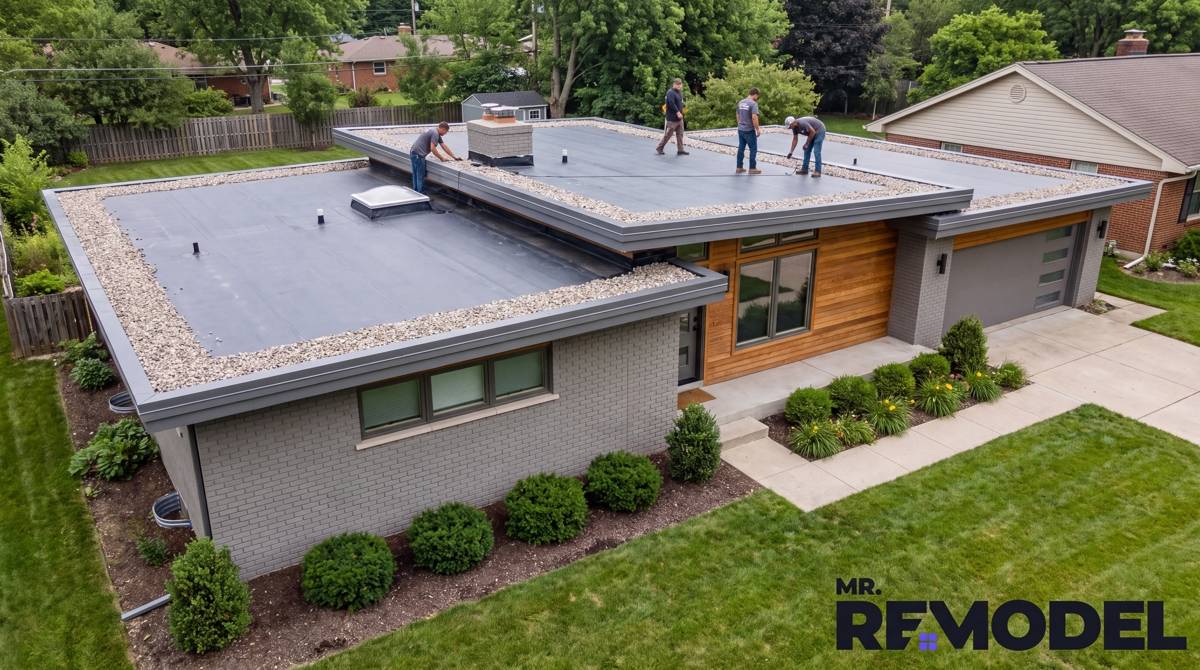
Table of Contents [hide]
Who This Is For
This guide is written specifically for homeowners dealing with flat or low-slope roof leaks who need reliable material comparisons, current pricing expectations, and guidance on hiring specialized contractors.
Key Takeaways
- Replacement Necessity: Over 98% of flat roof inquiries result in complete replacement because hidden membrane moisture makes localized repairs ineffective.
- Rapid Urgency Window: Nearly 35% of homeowners facing low-slope failures need a verified contractor on-site within 24 to 48 hours to stop structural damage.
- Material Lifespans: Single-ply synthetic membranes like TPO and EPDM offer durable, leak-free lifespans ranging from 20 to 30 years.
- Energy Savings: Modern cool roof installations significantly lower home energy consumption by reflecting maximum solar heat away from the building.
A failing flat roof creates immediate structural risks for any home. Unlike pitched roofs that shed water using gravity, low-slope systems rely on continuous, watertight barriers to protect structural decking.
When a flat membrane breaks down, trapped water quickly causes sagging, interior ceiling damage, and wood rot.
Taking swift action protects your financial investment and restores your home envelope before minor leaks escalate into major structural hazards.
Why Flat Roof Leaks Require Complete Replacement
Homeowners dealing with active low-slope leaks often hope a simple patch will restore their roof. However, historical project analysis proves that spot repairs rarely solve underlying flat roof failure.
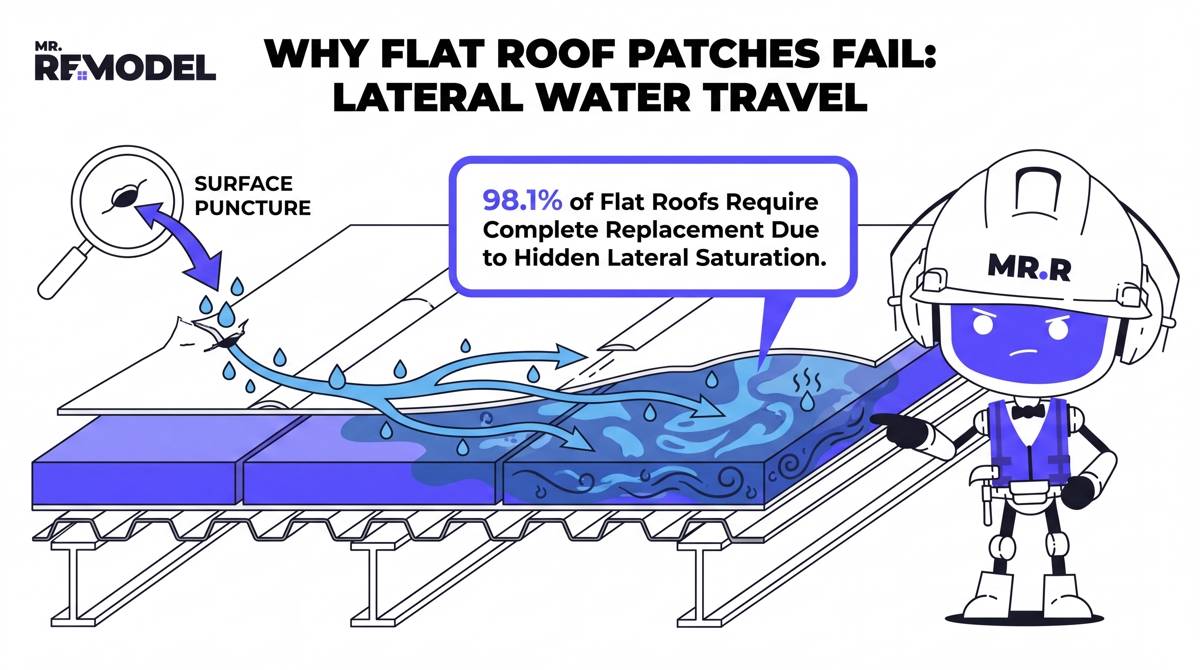
Internal project data from Mr. Remodel shows that out of 269 low-slope roofing inquiries, 98.1% of homeowners required a complete tear-off and installation.
When water penetrates single-ply seams, it travels laterally beneath the membrane, saturating lower insulation layers long before dripping through your drywall.
See Related: Roof Repair vs Replacement: Cost, Lifespan & Decision Guide
Recognizing the Signs of Low-Slope Membrane Failure
Identifying early warning signs allows you to schedule a replacement before water reaches your home interior.
Water Pooling and Ponding
Flat roofs are engineered with a subtle slope to move water toward drains or scuppers. According to building energy guidelines from the U.S. Department of Energy, low-slope roofs require a minimum slope of one-quarter inch per foot to drain properly.
When structural decking sags, water sits in pools. Water remaining on your roof longer than 48 hours breaks down membrane seams and accelerates material decay.
Blistering and Membrane Shrinkage
Sunlight and thermal changes degrade synthetic materials over time. UV exposure causes asphalt and rubber to lose flexibility, leading to severe material shrinkage.
As the membrane pulls away from wall flashing, blisters and edge tears form. These openings allow rain to drive directly underneath your waterproofing layers.
Top Flat Roof Replacement Materials for 2026
Choosing the correct membrane material ensures your new roof withstands severe weather and extreme temperature shifts. Modern single-ply membranes offer clean installations and superior waterproofing compared to traditional tar and gravel systems.
See Related: Best Roofing Materials (2026): Cost, Durability & Climate Fit
TPO (Thermoplastic Polyolefin)
TPO is a popular choice for contemporary residential low-slope replacements. Its bright white surface reflects solar heat, reducing air conditioning costs during hot summer months.
Installers fuse TPO seams using hot air, creating a continuous bond that resists water leaks and wind uplift.
EPDM (Ethylene Propylene Diene Monomer)
EPDM is a synthetic rubber membrane known for exceptional durability and flexibility. It remains pliable in freezing temperatures, making it an excellent option for northern climates subject to heavy ice and snow.
Rubber membranes install quickly using high-strength adhesives, offering property owners reliable, budget-friendly roof upgrades.
PVC (Polyvinyl Chloride)
PVC represents a premium single-ply option that delivers exceptional chemical and fire resistance. Its heat-welded seams form a permanent bond that remains watertight under standing water.
While PVC carries a higher initial price point, its long service life delivers high value for complex residential layouts.
Energy Efficiency and the Cool Roof Advantage
Upgrading your low-slope system provides a great opportunity to lower household energy expenses. Because flat roofs receive direct sunlight throughout the day, choosing reflective materials significantly reduces indoor heat gain.
Research published in Frontiers in Energy Research confirms that the roof is the primary building element exposed to solar radiation, accounting for the highest percentage of cooling loads in warm climates.
Installing white TPO or reflective coatings reflects up to 80% of solar energy away from your home, keeping living spaces comfortable while lowering utility costs.
Do not wait for small flat roof leaks to cause costly ceiling damage. Connect with vetted, licensed flat roofing professionals near you to secure free quotes and schedule a comprehensive site inspection today.
Regional Climate Impacts on Low-Slope Roof Lifespans
Flat roofs face unique environmental stressors depending on your geographic location. Understanding local climate conditions helps you select the best insulation and membrane combination for your area.
High UV and Coastal Regions
In Sunbelt states like Florida, California, and Texas, intense solar heat breaks down cheap roofing materials rapidly. High temperatures cause materials to expand and contract daily, straining perimeter flashings.
Selecting high-reflectance, durable flat roofing systems prevents seam failure caused by severe thermal cycling.
Cold Northern Climate Factors
In northern regions like Pennsylvania, snow accumulation places continuous weight on low-slope structural joists.
According to engineering data from the Air Infiltration and Ventilation Centre, installing continuous rigid foam insulation beneath your membrane prevents heat from escaping into attic spaces, eliminating ice dam formation along eaves.
Understanding Flat Roof Replacement Costs
Flat roof installation costs depend on material selection, total square footage, insulation thickness, and structural tear-off requirements.
See Related: Roof Replacement Cost (2026): Materials, Labor, Regional Pricing & ROI
Primary Cost Factors to Consider
- Roof Size and Geometry: Larger surface areas increase total material volume, while skylights, chimneys, and HVAC curbs require hand-flashing labor.
- Tear-Off Requirements: Removing multiple layers of old built-up roofing or saturated insulation increases disposal and labor fees.
- Insulation R-Value: Modern energy codes require specific rigid foam thickness to achieve compliant insulation values.
- Drainage Improvements: Installing tapered insulation crickets creates proper slope, preventing water pooling in low spots.
See Related: Roof Replacement Cost by Material (Asphalt, Metal, Tile, Slate)
How to Choose a Qualified Flat Roof Contractor
Installing low-slope waterproofing requires specialized welding tools and technical training. Working with an experienced contractor ensures your installation meets local building codes and manufacturer specs.
Verify Specialized Experience
Low-slope membranes require specific installation methods, such as hot-air welding or specialized adhesive application. Always ask prospective contractors for references showcasing recent single-ply residential projects.
Following a clear process for finding a top-rated contractor helps you avoid uncertified installers who rely on cheap caulking instead of heat-welded seams.
Demand Tapered Insulation Plans
If your roof suffers from standing water, ask contractors to include a tapered insulation layout in their proposal.
Installing custom-cut insulation crickets directs water toward your gutters and scuppers, ensuring long-term protection with no-leak waterproof membranes.
Frequently Asked Questions
How long does a flat roof replacement take?
Most residential flat roof replacements take between 1 and 3 days to complete. Simple single-ply installations finish quickly, while projects requiring deck repairs or custom insulation tapering take longer.
Can you install a new flat roof over an existing layer?
While building codes sometimes allow two roof layers, overlays are not recommended for low-slope systems. Installing over saturated materials traps moisture inside your ceiling framing and voids manufacturer warranties.
How do I know if my flat roof needs a full replacement?
If your roof shows widespread seam splitting, large surface blisters, or persistent leaks across multiple areas, complete replacement is necessary. Internal data shows over 98% of flat roof leaks require full replacement.
How do services like Mr. Remodel help during a roof replacement?
Services like Mr. Remodel assist property owners by matching them with verified, licensed local roofing contractors who specialize in low-slope membrane installations, insulation tapering, and complete roof tear-offs.
What is the most durable material for a flat roof?
TPO and PVC membranes are widely recognized as top options for low-slope durability. Their heat-welded seams create a continuous waterproof barrier that resists UV damage and standing water.
Protect Your Investment with Professional Flat Roofing
A leaking flat roof requires prompt attention to protect your home from compounding water damage. While spot fixes offer short-term relief, upgrading to a modern single-ply membrane provides long-lasting waterproofing and improved energy efficiency.
Do not let low-slope leaks compromise your home envelope. Connect with vetted local professionals through Mr. Remodel for free, no-obligation quotes and schedule your flat roof replacement consultation.