1-855-QUOTEMR

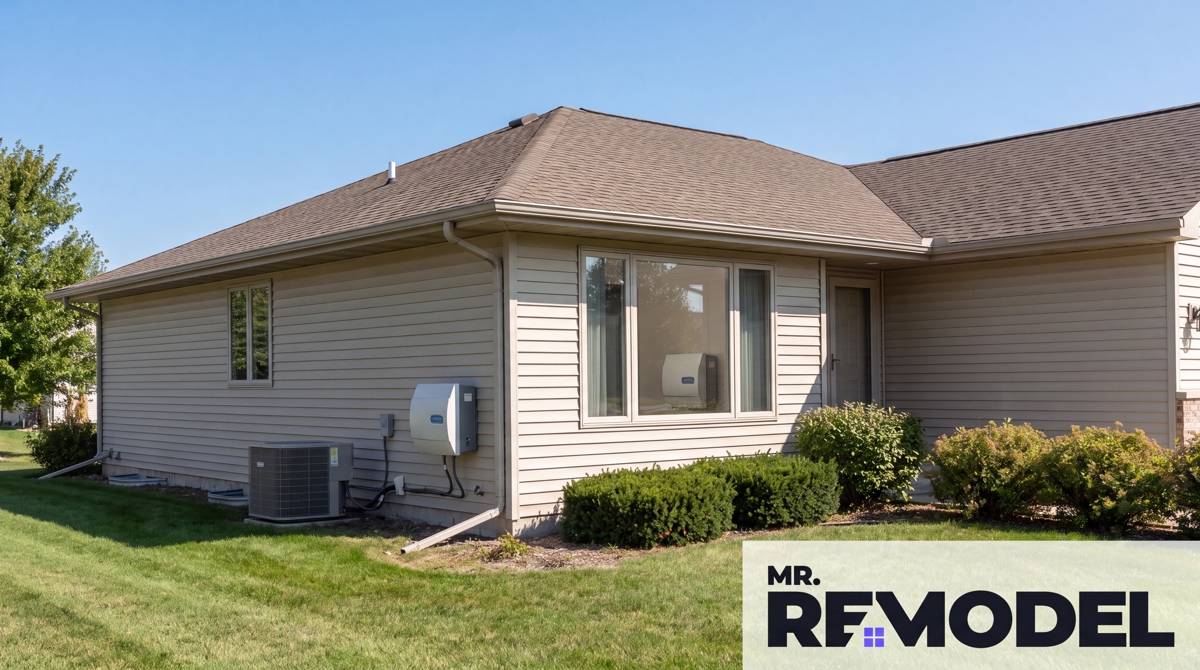
Table of Contents [hide]
Who This Is For
This comprehensive guide is built for homeowners seeking to permanently eliminate airborne allergens, dust, and pathogens by integrating commercial-grade filtration into their central heating and cooling systems, complete with transparent 2026 installation cost data.
Key Takeaways
- Average Project Cost: The national average cost to purchase and install a whole-house air filtration array stands at $2,610.
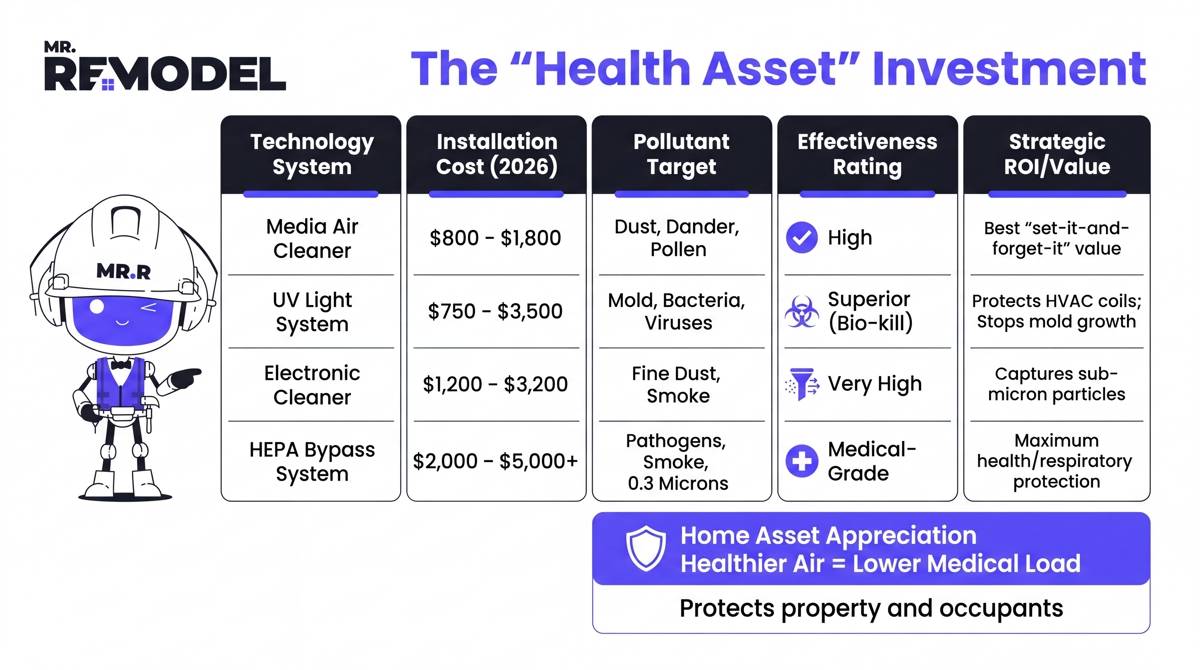
- Premium Filtration Expenses: Medical-grade HEPA purification systems represent the top tier of home filtration, carrying an installation range of $2,000 to $5,000 or more.
- Germicidal Alternatives: Ultraviolet (UV) light disinfection systems cost between $750 and $3,500 to integrate into existing mechanical air handlers.
- Structural Variable Penalties: Custom sheet metal alterations or extensive duct modifications can add an extra $1,500 to $9,000 to your total project bill.
Indoor environmental health has evolved from an occasional comfort consideration into a core focus of modern residential property management.
Because standard HVAC filters are only engineered to protect internal blower motors from large dust bunnies, microscopic particulates like pollen, mold spores, viruses, and smoke continue to re-circulate through living spaces unchecked. Transitioning to a dedicated inline purification system addresses these invisible threats directly.
Data compiled by Mr. Remodel indicates that high-efficiency whole-home filtration arrays substantially reduce dust settlement and biological pollutants throughout structural spaces, delivering long-term value for homeowners looking to protect both their family's health and their structural investments.
Initial Assessment & Warning Indicators
Many homeowners only begin researching inline filtration arrays after experiencing noticeable shifts in home comfort or visible structural symptoms. Recognizing the physical warning signs of degraded air quality early prevents prolonged exposure and protects sensitive mechanical systems from accumulating heavy internal dust layers.
See Related: Signs of Poor Indoor Air Quality
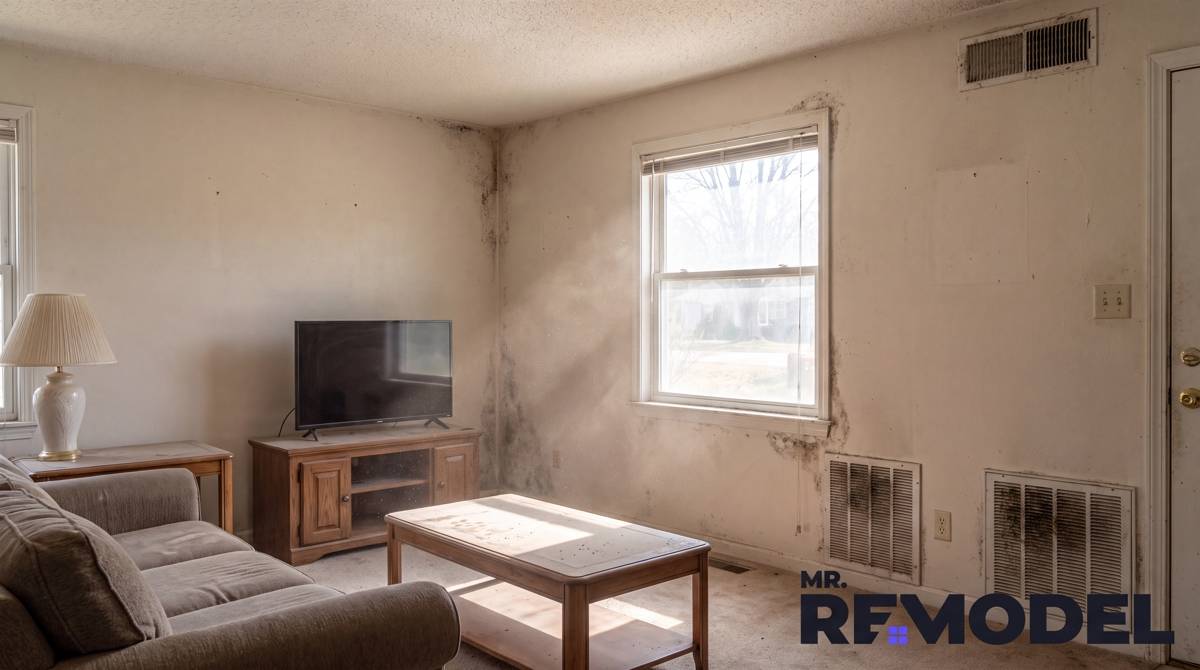
When indoor spaces suffer from insufficient air changes, high airborne particulate counts manifest as rapidly accumulating dust layers on household surfaces, persistent musty odors near air supply grilles, or increased seasonal allergy symptoms among family members.
Before finalizing any equipment decisions, it is critical to evaluate how your building envelope manages external factors. For instance, upgrades that tighten a home can unintentionally trap stale air inside, highlighting the need for strategic mechanical ventilation adjustments.
See Related: Are Triple Pane Windows Worth It? | 2026 ROI & V7 Tax Credits
2026 Cost Breakdown by Purifier Technology
Whole-home air purifiers are installed directly within your main return air ductwork or supply plenum. This configuration cleans all the air circulating through your home every time the blower motor operates. The total investment varies based on the purification technology you select.
High-Efficiency Particulate Air (HEPA) Systems
Bypass HEPA filtration represents the highest standard in residential air purification. True HEPA media captures 99.97% of particulates down to 0.3 microns, effectively trapping bacteria, smoke, and fine dander.
Because dense HEPA media creates high resistance to airflow, these systems are installed in a bypass configuration with their own internal blower motor to protect your main HVAC system from performance drops.
Installing a whole-house HEPA filter stands as the most robust residential option, with costs ranging from $2,000 to $5,000 or more depending on system capacity.
Ultraviolet (UV) Light Systems
Instead of trapping particulates, UV purifiers utilize short-wave ultraviolet light (UV-C) to disrupt the DNA of biological contaminants passing through the air handler.
These arrays are highly effective at neutralizing airborne mold spores, viruses, and bacteria. A whole-house UV light filter costs an average of $750 to $3,500 to install, with prices depending on whether you choose a single-lamp coil irradiation system or a multi-lamp in-duct system.
Integration Planning & Structural Adjustments
The final cost of your air purification project is heavily influenced by your home's existing mechanical layout. While newer homes often feature dedicated expansion slots, older properties frequently require duct modifications to fit large equipment housings.
If your property's existing layout requires sheet metal alterations, custom transformations, or extensive duct rerouting to safely fit the new purifier housing, you can expect to pay a duct modification penalty ranging from $1,500 to $9,000.
See Related: Window Costs and Value | Real Project Data & ROI Guide
Understanding Airflow Resistance & Blower Motor Balance
Integrating heavy filtration into a central HVAC system requires a careful look at static pressure. Denser filter media presents greater resistance to airflow. If filter restrictions are too high, the central blower motor will draw excessive power, reduce airflow across your coils, and potentially lead to early compressor failure.
Guidelines from the U.S. Environmental Protection Agency (EPA) caution that standard residential blower units are rarely built to push air through standard, unassisted HEPA media. This makes professional HVAC system balancing essential to ensure your new purification equipment works in harmony with your furnace or heat pump.
See Related: Indoor Air Quality Guide
Managing Total Climate Control Integration
To maintain a healthy indoor environment, air purifiers should work alongside other climate control systems. When calculating the long-term return on your home improvement choices, it is smart to think about how all your structural components manage moisture and energy efficiency.
- Managing Airflow & Envelope Loads: Upgrading your air purification works best when your home's exterior envelope effectively blocks outdoor humidity and drafts, helping you maximize your overall investment.
See Related: How Much Do New Windows Save on Cooling Bills | $16k Cost vs. ROI
- Balancing Humidity and Ventilation: Air purifiers remove floating particulates, but they do not control moisture levels. In humid climates, combining filtration with dedicated moisture control systems protects your home from mold growth within the ductwork.
See Related: Ventilation and Moisture Control for Efficiency: Protecting Your Home Investment
- Seasonal Environmental Shifts: In hot, damp summer months or dry winter seasons, managing air purity requires distinct approaches to humidity control to prevent duct contamination and static charges.
See Related: Whole-Home Humidifiers & Whole-Home Dehumidifiers
DIY Limits vs. Professional Installation Triggers
While changing out a standard 1-inch return air filter is a basic DIY task, installing a whole-home purification system requires advanced trade skills.
Professional Installation Triggers
- Sheet Metal Fabrication: Cutting & sealing primary duct plenums.
- Electrical Integration: Wiring 120V line-voltage connections.
- Static Pressure Testing: Measuring total external static limits.
- UV Shielding Placement: Ensuring zero external UV light exposure.
Because this process involves high-voltage wiring, custom sheet metal fabrication, and precise static pressure calculations, it requires professional HVAC work.
Labor rates typically run between $100 and $250 per hour depending on regional demand and project complexity. Failing to properly balance air pressures can shorten the life of your central furnace or cooling unit.
Frequently Asked Questions
What is the national average cost to install a whole-home air purifier?
The national average cost to purchase and install a whole-house air filtration array stands at $2,610. The ultimate cost varies depending on system technology and the layout of your existing ductwork.
Can I add a HEPA filter directly into my existing furnace slot?
No. True HEPA filters are too thick and dense for standard residential furnace slots. Putting one in without modifications will restrict airflow, overheat the blower motor, and cause your system to fail. HEPA systems require a dedicated bypass housing with an auxiliary fan motor.
How long do whole-home air purifier filters last before replacement?
Large media filtration inserts and bypass HEPA filters are built for longevity, generally lasting between 6 and 12 months. UV bulbs do not filter dust, but they require replacement every 12 to 24 months as their germicidal power declines.
Do whole-house air purifiers remove odors and chemical smells?
Standard particulate filters and UV systems do not stop odors or volatile organic compounds (VOCs). To neutralize cooking smells, smoke odors, or paint fumes, choose a purification array that includes a heavy activated carbon module.
Will a whole-home air purifier eliminate the need for regular dusting?
While a whole-house purifier captures the majority of floating airborne dust, it cannot pull settled dust off furniture, floors, or window treatments. You will still need to dust occasionally, though you should notice a significant decrease in how quickly dust accumulates on home surfaces.
Elevate Your Indoor Environment
Investing in a whole-home air purification system is a powerful way to clear out airborne allergens, manage dust, and maintain clean air throughout every room in your home.
Ready to improve your home's air quality? Contact Mr. Remodel to get a free, no-obligation quote and connect with verified local contractors who can ensure your filtration system is integrated perfectly into your home's HVAC system.