1-855-QUOTEMR

Table of Contents [hide]
Who This Is For
This comprehensive guide is built for homeowners seeking to permanently eliminate winter dryness, lower seasonal heating bills, improve respiratory health, and protect wood finishes by integrating a dedicated humidification system into their central HVAC ductwork.
Key Takeaways
- Average Project Cost: Installing a central whole-home humidifier typically ranges from $400 to over $2,500, heavily dictated by whether you select a bypass, fan-powered, or medical-grade steam unit.
- Winter Heating ROI: Proper relative humidity slows skin evaporation, allowing a home at 68°F to feel as warm as 71°F. This optimization allows you to safely lower your thermostat and cut winter heating bills by up to 8%.
- Silo Harmonization: To achieve complete respiratory protection, residential humidifiers must work alongside filtration systems to capture airborne pathogens effectively.
- System Longevity Benefits: Maintaining balanced humidity levels between 30% and 50% preserves home infrastructure by preventing wood flooring, drywall, and custom millwork from cracking.
When winter arrives, turning on your central furnace or heat pump keeps your home warm, but it introduces a hidden comfort challenge: severe indoor dryness. As cold outdoor air is pulled inside and heated, its relative humidity drops significantly. This dry air acts like a sponge, pulling moisture out of your skin, woodwork, and respiratory system.
While small portable units can humidify a single room, they require daily refilling, take up floor space, and risk breeding mold if left uncleaned. Upgrading to a central whole-home system addresses this challenge directly by delivering controlled, automated moisture to every room simultaneously.
Data compiled by Mr. Remodel indicates that managing winter moisture levels protects your household's health while providing an immediate return on investment by maximizing heating efficiency.
Recognizing the Health and Physical Indicators of Dry Air
Many homeowners only begin researching inline humidifiers after experiencing noticeable shifts in winter comfort or discovering visible structural symptoms. Recognizing the early physical warning signs of an overly dry indoor environment prevents prolonged discomfort and protects your home's structural elements.
See Related: Signs of Poor Indoor Air Quality
When indoor spaces drop below recommended humidity thresholds, dry air manifests physically as persistent static electricity shocks, morning sore throats, dry nasal passages, and chapped lips. According to research from the Cleveland Clinic, balanced relative humidity plays an important role in thinning mucus secretions and reducing respiratory inflammation during cold and flu season.
Beyond personal health, dry winter air damages your home infrastructure. Wood is a natural material that shrinks when it loses moisture. If your home's humidity drops below 30% for extended periods, you may notice hardwood floor planks separating, molding joints pulling apart, and drywall seams cracking.
To gain a broader understanding of how your home's systems work together to manage comfort and air currents, reviewing foundational indoor climate principles helps ensure your HVAC equipment operates smoothly.
See Related: Indoor Air Quality Guide
2026 Installation Costs by Humidifier Technology
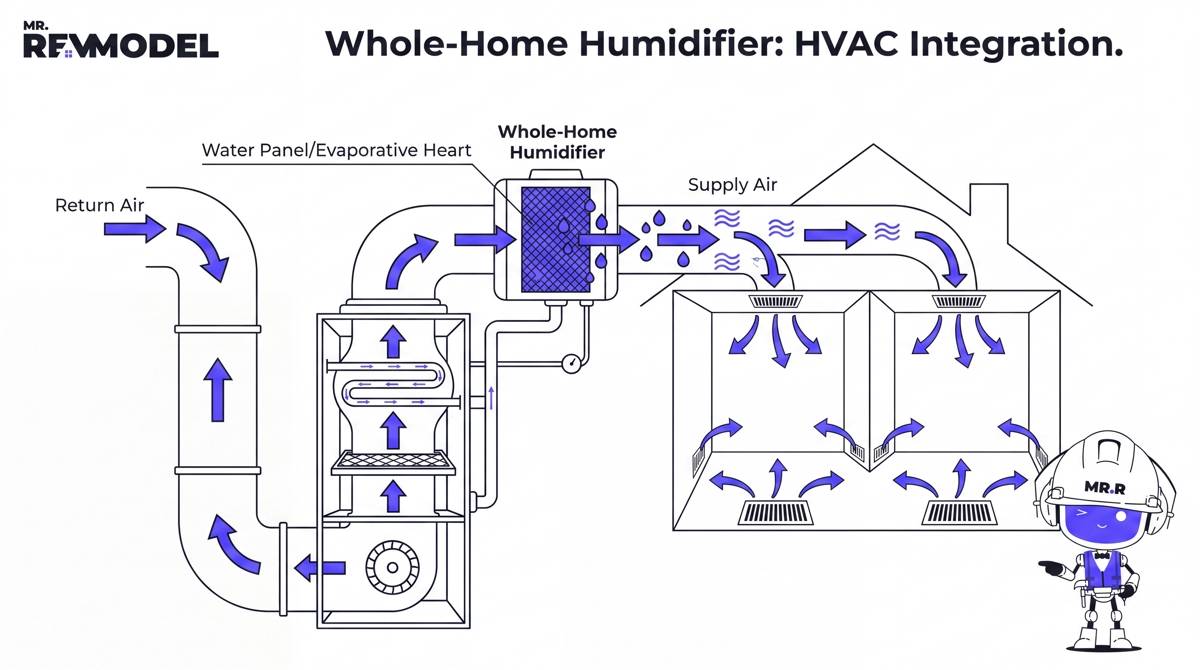
Whole-home humidifiers are installed directly onto your existing supply or return air plenums. They connect to your home's water supply line to automatically maintain a set humidity level via a digital humidistat. The overall project cost is largely determined by the specific design you select.
- Bypass Humidifier Install: $400 to $700
- Fan-Powered Humidifier Install: $600 to $950
- Premium Steam Humidifier Install: $1,000 to $2,500+
Bypass Humidifiers
Bypass units are the most popular and budget-friendly whole-home options. These systems route a portion of warm air from the supply duct through a water-saturated evaporative pad and back into the return air stream.
Because they have no internal motor, they rely entirely on your central furnace's blower fan to circulate moisture. Installing a bypass humidifier ranges from $400 to $700.
Fan-Powered Humidifiers
Fan-powered units operate similarly to bypass designs but feature an internal fan motor that actively pulls air across the evaporative pad.
This design delivers moisture more efficiently and can operate even when the furnace is not actively heating, making it an excellent match for homes with smaller mechanical closets. Standard fan-powered installations typically range from $600 to $950.
Steam Humidifiers
Steam humidification represents the top tier of residential indoor air care. Instead of relying on passive evaporation, these units use electric electrodes to boil water and inject pure steam directly into your ductwork.
This system operates independently of heating cycles and provides precise control over indoor moisture levels. A whole-house steam system costs between $1,000 and $2,500+, making it the ideal choice for large properties, homes with valuable wood artwork, or households using modern heat pumps that produce lower supply air temperatures.
The Financial Return: Slashing Winter Energy Bills
While whole-home humidifiers require an upfront investment, they deliver clear financial returns. Dry air accelerates moisture evaporation from your skin, which lowers your perceived body temperature and makes you feel colder than the actual room temperature.
By maintaining relative humidity between 30% and 50%—in line with U.S. Environmental Protection Agency (EPA) guidelines—air retains heat more effectively. This allows a room at 68°F with proper humidity to feel just as comfortable as a dry room at 71°F.
Data from Mr. Remodel indicates that homeowners save 3% to 4% on heating costs for every degree they lower their thermostat. By optimizing your home's humidity, you can comfortably lower your winter thermostat by two degrees, reducing your seasonal heating bills by up to 8%.
System Synergy: Balancing Humidification with Air Purification
Achieving clean, comfortable indoor air requires multiple HVAC components to work together seamlessly. Adding moisture to dry air provides great respiratory relief, but that moisture must be introduced into a clean airflow stream to prevent indoor air quality issues.
If your home's ductwork contains fine dust, high humidity can cause those particulates to clump together and settle inside your air handler. To prevent this, your humidification system should work alongside a high-efficiency purification array to capture airborne irritants before moisture is added.
See Related: Whole-Home Air Purifiers
Furthermore, managing moisture levels is a delicate balance. While low humidity causes skin and respiratory discomfort, excessive moisture (above 50%) can encourage mold growth and dust mite activity inside wall cavities. To maintain this balance year-round, your system may require additional support from a dedicated summer dehumidifier.
See Related: Whole-Home Dehumidifiers
DIY Limits vs. Professional Installation Triggers
While setting up a portable tabletop humidifier is a simple task, integrating a whole-home system into your central HVAC setup requires specialized skills. The process involves tapping into your home's main water line, running plumbing lines to drain pans, cutting into sheet metal ductwork, and wiring low-voltage controls into your furnace circuit board.
To protect your system's performance and avoid accidental water damage, this type of upgrade requires professional HVAC work. Experienced technicians ensure your system is properly calibrated, avoiding water flow issues or mold growth within your air ducts.
Frequently Asked Questions
What is the ideal indoor humidity level during winter?
According to the EPA, the ideal indoor relative humidity during the winter should be maintained between 30% and 50%. Keeping humidity within this range prevents dryness symptoms without causing moisture condensation on your windows.
Do whole-home humidifiers require regular maintenance?
Yes. To ensure clean operation, evaporative water pads on bypass and fan-powered systems should be replaced once per year, usually at the start of the winter heating season. Steam systems require occasional cleaning to remove mineral deposits from the boiling canister.
Can a whole-house humidifier cause mold in my ductwork?
When installed by an experienced professional and set to the proper humidity level, whole-house systems do not cause mold. Built-in sensors ensure the system only adds moisture when air is actively moving, preventing water from pooling inside your ducts.
Does a whole-home humidifier use a significant amount of water?
Bypass and fan-powered models use a modest amount of water, running only when your heating system is actively operating. Modern systems are designed to minimize water waste by channeling excess drainage directly into your home's wastewater lines.
How long do whole-home humidifiers typically last?
With proper seasonal maintenance and regular pad changes, a high-quality whole-home humidifier can last between 10 and 15 years, often matching the lifespan of your primary furnace or air handler.
Take Control of Your Indoor Air Quality
Integrating an automated humidifier into your central heating system is a reliable way to eliminate winter static electricity, protect your home's woodwork, improve respiratory comfort, and lower your energy expenses.
Ready to improve your home's winter comfort? Get a free, no-obligation quote through Mr. Remodel to connect with vetted local HVAC professionals who can design the ideal humidification system for your home.