1-855-QUOTEMR

Table of Contents [hide]
Who This Is For
This guide is explicitly designed for property owners experiencing an active water intrusion crisis. It provides immediate, step-by-step triage actions, professional safety protocols, and transparent structural drying timelines to help protect investments and restore home safety.
Key Takeaways
- Immediate Source Control: Shutting off the main water valve instantly limits overall structural degradation.
- The 48-Hour Window: Mold colonization begins on damp organic surfaces within 24 to 48 hours of initial water contact.
- Call vs. Click Metrics: Proprietary market data proves 100% of emergency homeowners choose phone calls over web forms.
- Electrical Safety Rules: Never enter rooms with standing water until your main circuit breakers are turned off.
- Seasonal Peak Hazards: Autumn weather transitions create major seasonal volume surges, peaking heavily during October.
An active indoor flood creates an immediate architectural emergency for homeowners. Structural building components absorb water with every passing minute. You must execute basic triage steps instantly to limit overall property degradation.
Data compiled across the restoration sector shows that timing dictates your final financial liability. According to historical data tracked by Mr. Remodel, 100% of crisis interactions occur via direct phone calls due to extreme urgency. Sufferers prioritize direct phone communication over typing online requests when water threatens their home investment.
Step 1: Secure Source Elimination
Locate your main utility shut-off valve immediately to stop incoming supply pressure completely. If the source originates from an appliance line or fixture, trace secondary isolation valves directly behind the unit. Turning this valve clockwise completely isolates the mechanical system failure.
Step 2: Electrical Hazard Abatement
Never cross standing surface fluids if water lines reach baseline wall outlets or extension cords. Navigate directly to your main electrical panel and disable circuit breakers servicing the impacted structural zones. If the panel resides in a damp basement, request emergency utility disconnection before entering.
Step 3: Dispatch Emergency Extraction Crews
Once utilities are stable, contact professional extraction fleets to remove bulk surface water. Standard household shop vacuums cannot match the extraction power of commercial vehicle-mounted submersible pumps. Moving standing water early stops moisture from migrating deeper into dense timber framing.
Critical Safety Protocols and Immediate Hazard Control
Physical safety must remain your absolute priority during an active household flood. Saturated building environments contain hidden mechanical and biological hazards that require careful management.
Navigating Structural Flooding
Large-volume water intrusions can compromise subfloor assemblies and ceiling drywall panels quickly. Look out for sagging plasterboard overhead or soft spots underfoot before entering an affected room. Guidance from Ready.gov emphasizes avoiding active floodwaters due to hidden physical debris and electrical shock hazards.
Evaluating Chemical Water Categories
Professional mitigation crews classify indoor water into three strict contamination categories. Category one consists of clean supply water, while category two involves chemical grey water from appliances. Category three includes highly dangerous black water, which contains pathogenic bacteria and sewage.
Protecting Your Respiratory Health
Avoid handling category three black water or contaminated materials without wearing proper protective gear. Saturated carpet backing and insulation hold dangerous pathogens that require commercial disposal. Wear heavy rubber boots, nitrile gloves, and an N95 respirator mask if you must handle damp items.
The 48-Hour Microbial Timeline: Preventing Mold Growth
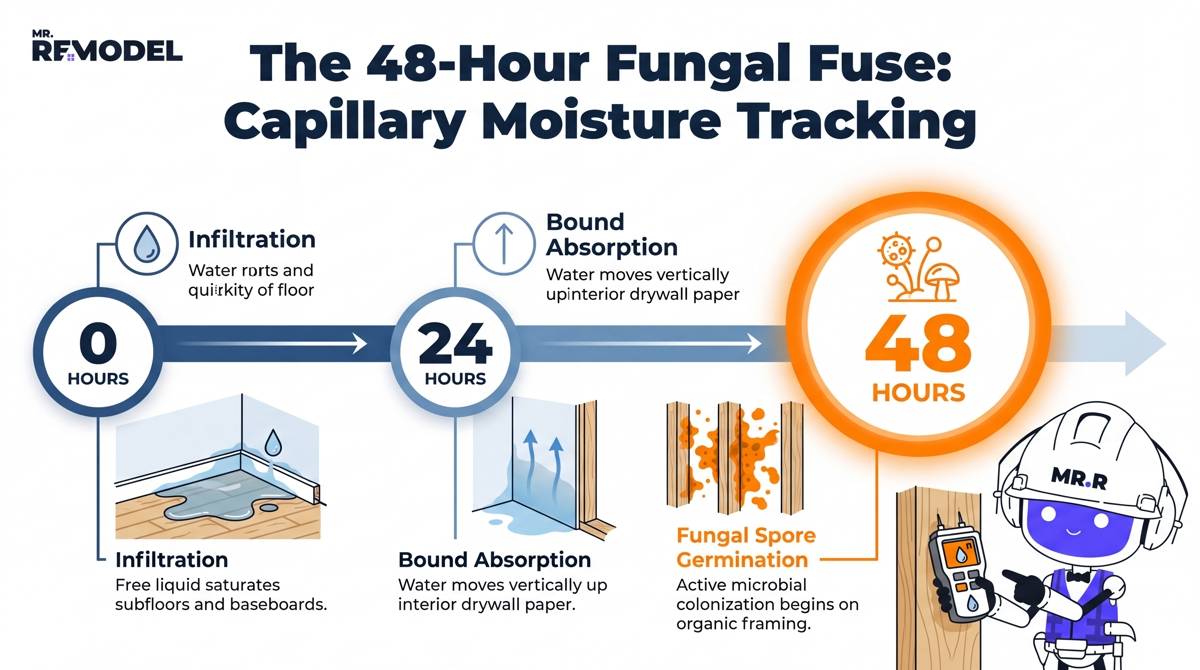
The clock starts ticking against your property structure the moment water escapes a plumbing line. Postponing professional drying work by even one day increases your overall restoration costs significantly.
Germination on Organic Substrates
Fungal spores require very little encouragement to begin active reproduction cycles. The U.S. Environmental Protection Agency (EPA) notes that mold colonies initiate growth on damp surfaces within a tight 24 to 48-hour window. Prompt dehumidification keeps invisible spores from spreading to unaffected areas.
Bound Moisture Infiltration
Surface wiping with household towels is completely insufficient for true home preservation. Water moves vertically through interior drywall panels and subflooring layers via capillary action. This bound moisture stays trapped inside wall cavities, causing structural wood rot if left unmanaged.
Industrial Evaporation Strategies
Certified restoration technicians use a balanced thermodynamic approach to remove bound water molecules. High-velocity air movers evaporate moisture out of wet timber framing elements. Simultaneously, low-grain refrigerant dehumidifiers pull that moisture from the surrounding air to maintain safe vapor pressure.
See Related: Emergency Water Damage Cleanup Guide
Documenting Structural Assets for Insurance Validation
Securing full coverage for an unexpected restoration project requires following exact insurance protocols. You must document the damage thoroughly before changing the scene or starting demolition.
Visual Proof Standards
Capture high-definition photographs and video footage of all damaged areas before starting extraction. Document the source leak, visible water lines on drywall, and ruined personal property carefully. This itemized visual proof forms the foundation of your insurance reimbursement claim.
Preserving Structural Claims
Standard homeowner insurance policies require you to take immediate action to limit secondary damage. Leaving water standing for days while waiting for an adjuster can cause claims to be denied. Hiring certified crews to extract water immediately shows you are fulfilling your policy duties.
See Related: Water Damage Insurance Claim Guide
Localized Infrastructure Risks and Seasonal Surge Alerts
Water intrusion hazards are heavily influenced by local climate shifts and changing seasonal weather patterns across the country.
High-Volume Regional Threats
Proprietary market data highlights specific property vulnerabilities across different geographical territories. California and New York markets account for over 21% of the total emergency dataset. California homes experience heavy rainfall runoff, while New York properties battle aging urban utility infrastructure.
Targeted City Case Studies
Specific municipalities face high water emergency risks due to distinct weather transitions. For example, metropolitan Chicago drives 2.88% of national demand due to deep sub-zero plumbing bursts. Municipalities like Bakersfield and Gardena, CA combine to drive 5.7% of the national emergency response volume.
The Q4 Autumn Threat
Homeowners must prepare for dramatic seasonal spikes in water damage events during the fall. Internal data from Mr. Remodel indicates that a massive 60.58% of all water mitigation crises occur in October. Shifting temperatures strain residential plumbing lines as winter approaches.
Because local mitigation fleets book up quickly during October, property owners should secure professional help immediately.
Advanced Material Sorting and Sanitization Rules
Sorting through saturated household materials requires understanding which substrates can be safely saved. Non-porous items are simple to clean, but porous components usually require replacement.
Handling Saturated Building Items
Technical steps outlined by the EPA help homeowners sort materials safely after an unexpected flood. Hard surfaces like metal, tile, and solid concrete can be washed and sanitized completely. Porous items like insulation and ceiling tiles must be discarded immediately.
Managing Carpet Assemblies
Wall-to-wall carpeting can sometimes be preserved if exposed exclusively to category one clean water. Technicians pull up the carpet layer and discard the cheap foam padding underneath. The carpet fabric is then sanitized and dried using commercial air movers.
Evaluating Water Damage Restoration Costs
Understanding the baseline expenses of a property emergency helps you evaluate professional repair quotes. Total project fees depend on the size of the room and the water category involved.
Typical Mitigation Fees
Standard residential room drying and sanitization typically ranges from $1,500 to $4,500. This baseline fee covers professional water extraction, equipment tracking, and antimicrobial treatments. If category three sewage is present, costs increase due to extra hazardous waste disposal rules.
Rebuilding Material Invoices
After achieving certified structural dryness, property owners must replace ruined finish materials. Replacing standard water-damaged subflooring and drywall elements averages between $2,500 and $7,000, depending on the layout. High-end finishes or extensive reconstruction can push these figures higher.
See Related: Water Damage Restoration Cost Guide
Finding Vetted Support
Navigating high water damage restoration costs requires working with certified professionals. Homeowners should look for contractors who use standardized estimation software to ensure transparent pricing. Vetted support ensures your project matches local building codes.
See Related: Questions To Ask a Water Damage Contractor
Emergency Water Damage Frequently Asked Questions
What should I do during the first 60 minutes of a leak?
You should turn off your main water isolation valve and disable circuit breakers servicing the flooded area. Once utilities are stable, document the damage using photos and call an emergency extraction crew.
How long does the structural drying process take?
A standard residential structure requires between three and five days to achieve certified dryness. Thick materials like hardwood subfloors, concrete slabs, and heavy framing timber may need extra drying time.
See Related: How To Prevent Future Water Damage
Will homeowner insurance pay for emergency water extraction?
Standard policies usually cover sudden plumbing bursts, water heater failures, and accidental fixture overflows. However, damage caused by long-term maintenance neglect or external rising floodwaters typically requires separate coverage.
Can I handle a large water cleanup project on my own?
Minor surface spills are manageable independently, but extensive flooding requires professional-grade equipment. Industrial low-grain refrigerant dehumidifiers manage vapor pressures in ways retail home fans cannot.
Why does mold grow so quickly after a plumbing leak?
Fungal spores require only moisture and an organic food source, like drywall paper, to begin germinating. Mold colonization starts within 24 to 48 hours of initial water contact if rapid dehumidification is not started.
Connect With Trusted Local Mitigation Experts
Managing an unexpected water crisis can feel overwhelming, but taking fast action protects your property value. Postponing water extraction leads to extensive subfloor warping, structural wood rot, and expensive mold remediation projects. Deploying commercial drying equipment right away is the most reliable way to secure insurance approvals and keep your family safe.
Platforms like Mr. Remodel support your recovery by matching you directly with vetted, licensed local contractors. Do not risk secondary property damage or structural settlement issues while waiting on independent adjusters. Get a free, no-obligation quote from dependable restoration specialists in your neighborhood.