1-855-QUOTEMR

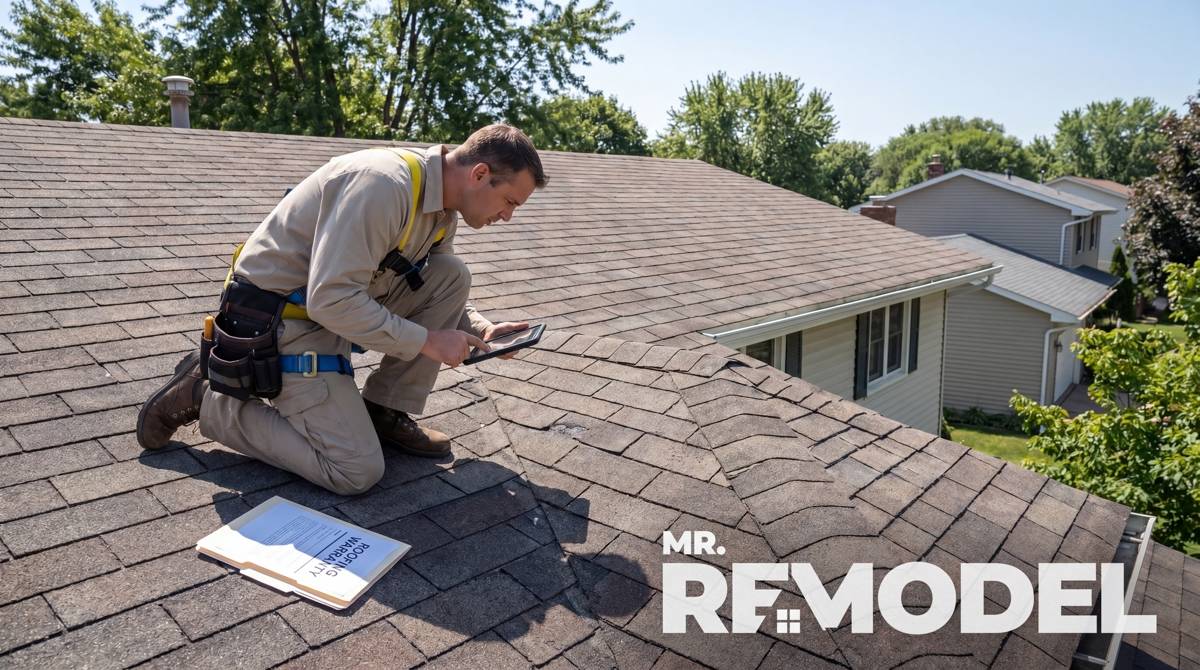
Table of Contents [hide]
Who This Is For:
This guide is for homeowners currently evaluating roofing contractors and estimates. It clarifies the specific protections offered by material manufacturers versus installation labor to ensure you do not face unexpected repair costs in the future.
Key Takeaways
- Labor vs. Material: Workmanship warranties cover installation errors, while manufacturer warranties only protect against material defects.
- Baseline Industry Standards: A reputable contractor should provide a minimum 10-year workmanship warranty to protect your investment.
- Financial Protection: Labor accounts for roughly 60% of total roofing costs, making labor-specific coverage the most important financial safeguard.
- The Prorated Trap: Many long-term material warranties are prorated, meaning their financial value decreases significantly as the roof ages.
- Scam Prevention: Roofing fraud is a major industry issue. Verify your warranty terms in writing before providing any substantial upfront deposits.
Investing in a new roof is a significant financial commitment. National averages for a professional roof replacement currently range from $8,900 to $29,500. This wide price gap makes the terms of your warranty a critical factor in the long-term value of your home.
Many homeowners assume a 50-year warranty covers everything. This is a dangerous misconception. Understanding the difference between manufacturer and workmanship coverage is the only way to avoid paying twice for the same roof. This guide uses market data to clarify your protections.
Defining the Two Pillars of Roofing Protection
There are two distinct types of warranties involved in every roofing project. The first comes from the company that made the shingles or metal panels. The second comes from the contractor who physically installs them on your home. Both are essential for a full safety net.
What is a Manufacturer Warranty?
A manufacturer warranty covers the materials themselves. If your shingles crack or lose granules due to a factory defect, the manufacturer is responsible. These warranties typically last between 25 and 50 years. They are designed to guarantee the chemical and structural integrity of the product.
What is a Workmanship Warranty?
A workmanship warranty covers the installation process. If the contractor fails to install flashing correctly or misses a nail, this warranty applies. Labor-related failures usually show up within the first few years. A strong workmanship warranty ensures the contractor returns to fix their mistakes at no cost to you.
The Financial Risk of Labor Failure
Data from Mr. Remodel indicates that labor constitutes approximately 60% of total project costs. If a roof fails due to poor installation, the materials may still be fine. However, the cost to remove and reinstall them is immense. This is why labor protection is so vital.
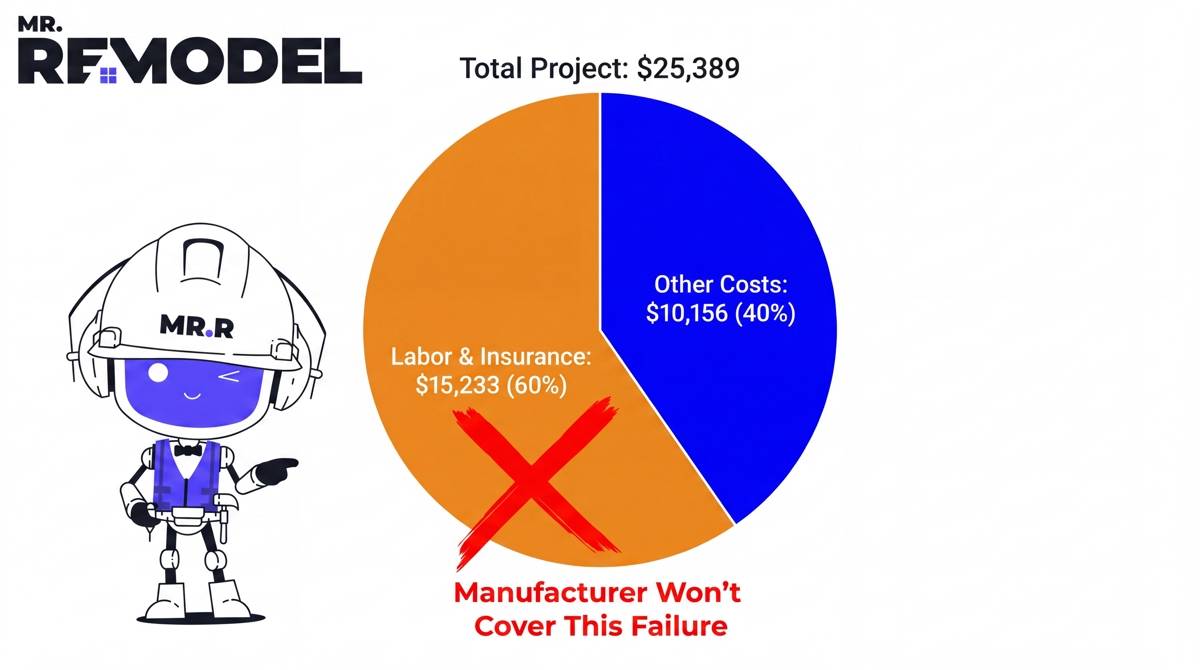
Why Labor Accounts for 60% of Your Investment
Roofing is a high-risk, labor-intensive trade. For a standard asphalt roof costing $25,389, nearly $15,000 of that total is dedicated to skilled labor and insurance. If a leak occurs because of a workmanship error, the manufacturer will not pay for the labor to fix it.
See Related: Roof Leak Repair vs Full Replacement Cost
The Hidden Danger of Prorated Material Coverage
Many 50-year material warranties look great in a sales pitch. However, these are often prorated. After a set period, usually 10 to 25 years, the manufacturer pays less for every year the roof ages. By year 30, they might only cover a fraction of the material costs.
How to Spot Warranty Red Flags in Estimates
The Better Business Bureau reports that roofing scams are the top-reported home improvement fraud. Scammers often promise lifetime warranties but have no intention of honoring them. They may even use warranties to justify asking for large upfront payments.
The Correlation Between Warranty Length and Deposits
A contractor who demands more than 50% of the project cost upfront is a major statistical red flag. Legitimate operations typically ask for 10% to 20% to cover initial material deliveries. A reputable firm backs its labor with a written warranty without requiring full payment before work begins.
See Related: Red Flags When Hiring a Roofing Contractor
If a contractor cannot provide a clear, written workmanship warranty, do not sign the contract. A verbal promise of a warranty is legally difficult to enforce. Always ensure the warranty terms are a formal line item in your initial estimate.
See Related: Roofing Estimates Explained: What Should Be Included
Regional Cost Data and the 3-Bid Method
The value of a warranty is directly tied to the cost of local labor. Replacement costs are highly volatile depending on where you live. For example, a project in Nashville can reach $24,533. In West Chester, Pennsylvania, that same project might range from $4,952 to $13,484.
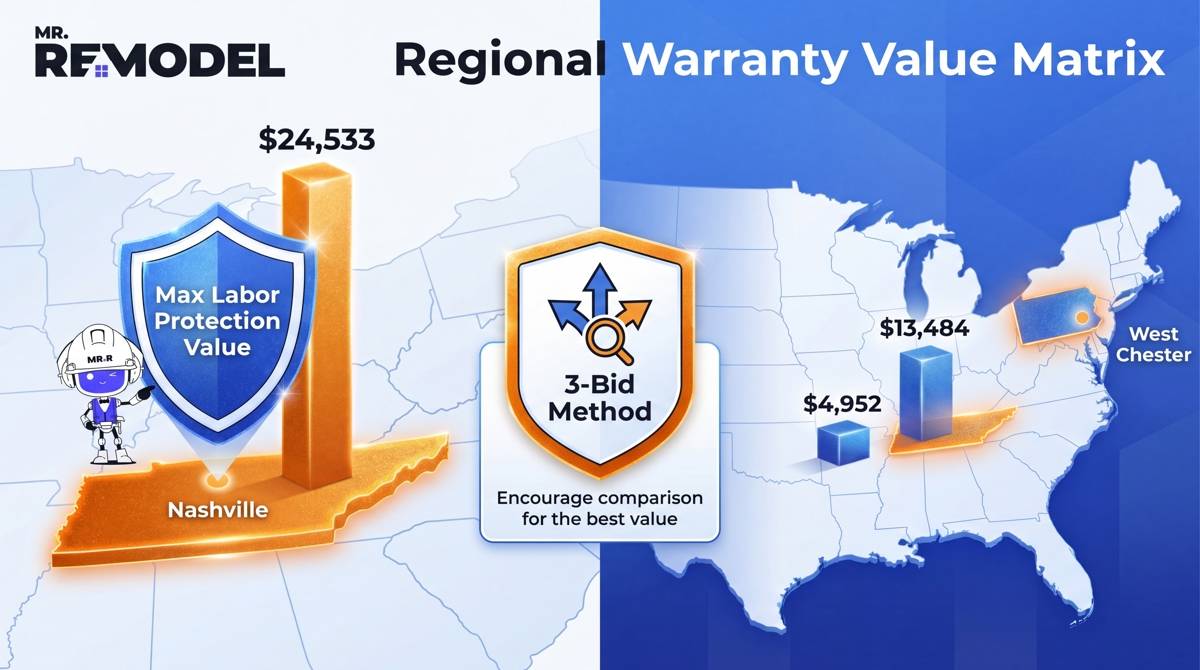
Comparing Nashville and Pennsylvania Market Realities
High-cost markets like Nashville make a workmanship warranty even more valuable. Saving the cost of a $15,000 labor bill is a significant financial win. Because of these regional variations, the NRCA recommends using the 3-bid method to compare warranty terms alongside pricing.
See Related: How to Compare Roofing Quotes (3-Bid Method)
When you free quote through a reputable service, you can compare how different local companies handle their labor guarantees. This allows you to find a balance between a competitive price and high-quality protection.
Factors That Can Void Your Roofing Warranty
A warranty is a legal contract with specific rules. If you do not follow these rules, the coverage becomes void. Homeowners often lose their protection because of simple maintenance mistakes or unauthorized alterations.
Improper Ventilation and Extreme Weather
Most manufacturers require specific attic ventilation levels. If your attic is too hot, it can bake the shingles from the inside out. Manufacturers will often deny claims if they find the ventilation was inadequate. Extreme weather events like lightning or tornadoes are also common exclusions in state-level warranty forms.
See Related: Storm Damage: Repair or Replace Decision Guide
Unauthorized Alterations and Patching
Having an uncertified handyman touch your roof can immediately void your manufacturer warranty. Many brands require certified labor for all "cutting and patching" work. If you have a minor leak, always call your original installer first to maintain your coverage.
See Related: Lifespan of different roofing materials
Verification: Licenses, Insurance, and Bonds
A warranty is only as good as the company that stands behind it. If a contractor goes out of business, their workmanship warranty disappears. This is why you must verify that the company is fully licensed and insured before work begins.
See Related: Roofing Contractor Licensing, Insurance & Certifications
A stable company with a high volume of local projects is more likely to honor its labor guarantee. Check for institutional benchmarks in your area. For instance, many government-level workmanship warranties set a two-year standard, but top-tier residential contractors often push this to 10 years or more.
See Related: How to Choose a Roofing Contractor: Pricing, Quotes & Red Flags
Frequently Asked Questions
What is a normal length for a workmanship warranty?
In the 2026 market, a 10-year workmanship warranty is the baseline standard for reputable contractors. Some premium companies may offer lifetime labor warranties, but anything less than two years is a sign of a low-quality installer.
Does the manufacturer's warranty cover the cost of labor?
No, standard manufacturer warranties only cover the cost of the materials. If a shingle is defective, they will send you new shingles. They will not pay for the crew to remove the old ones or install the new ones unless you have a specific labor-inclusive rider.
Can a roofing warranty be transferred to a new owner?
Many manufacturer warranties are transferable one time within a certain timeframe. This is a massive selling point that adds to your home's ROI. Always keep your warranty paperwork in a safe place to show potential buyers.
Why do some warranties require an inspection?
Companies emphasize quality because manufacturers often require a final inspection to activate premium warranties. This ensures the installation meets their strict technical standards, protecting both the homeowner and the brand.
What should I do if my contractor refuses to honor a warranty?
If your contractor is still in business but refuses to fix a workmanship error, you should contact your local consumer protection agency. Having a detailed, written warranty and original estimate is essential for resolving these types of disputes.
Protecting Your Investment With The Right Warranties
Understanding roofing warranties is about more than just reading the fine print. It is about recognizing that labor constitutes 60% of your $25,307 national average investment. By distinguishing between material defects and installation errors, you can secure the comprehensive protection your home deserves.
Regional price differences in markets like Nashville and Pennsylvania show that the stakes are high. Do not let a lack of documentation lead to thousands of dollars in out-of-pocket repairs. Always demand written labor and material guarantees before your project starts.
Ready to find a contractor who stands behind their work? Connect with Mr. Remodel and get your free quote, and ensure your new roof is protected for decades to come.