1-855-QUOTEMR

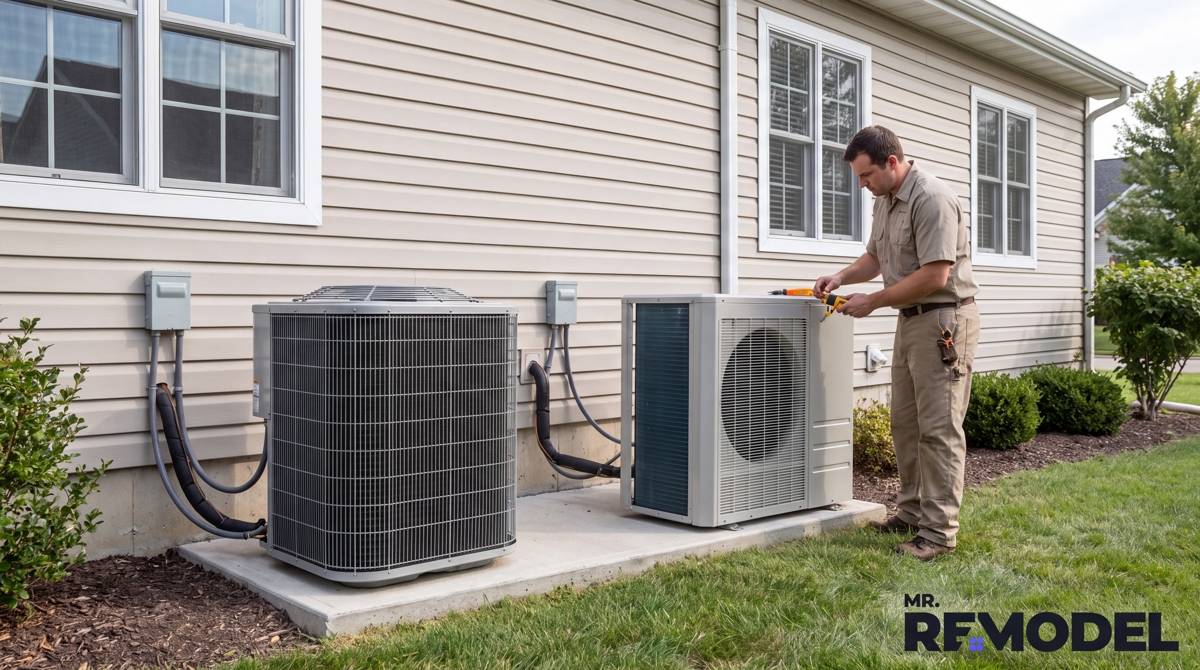
Table of Contents [hide]
Who This Is For
This comparison is designed for homeowners currently evaluating HVAC replacement options. If you are struggling to decide between a traditional cooling-only system and a modern heat pump, this guide provides the financial and operational data you need to choose the best solution for your 2026 home upgrade.
Key Takeaways
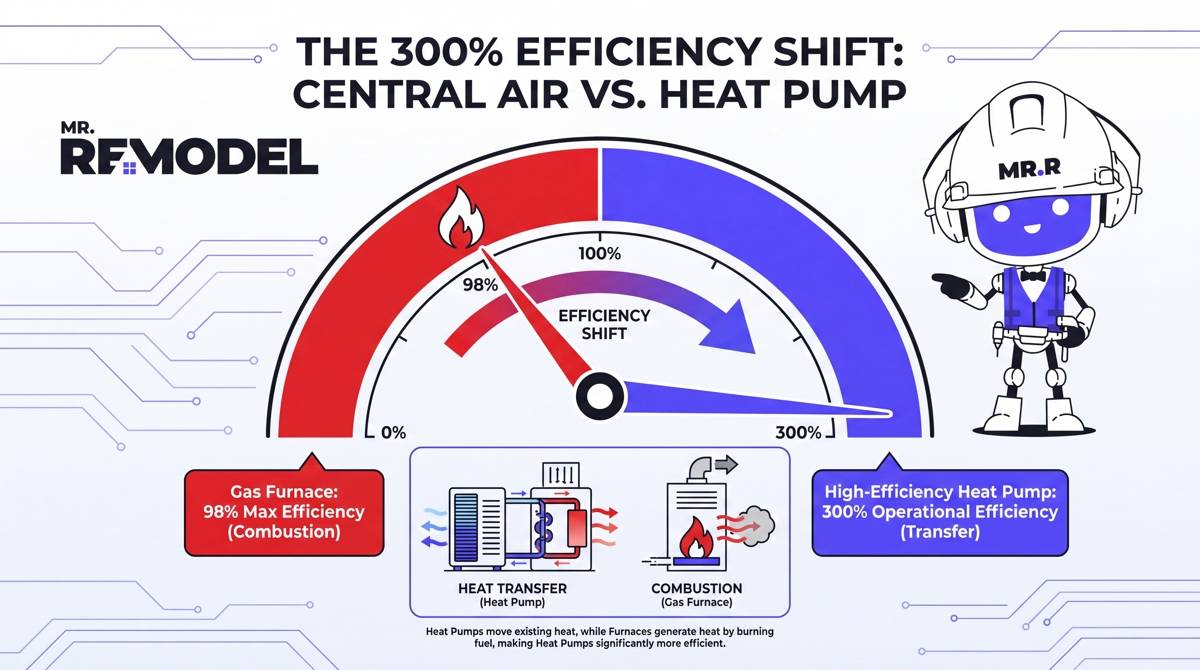
- Efficiency Shift: Modern heat pumps provide up to 300% operational efficiency by transferring heat, far outperforming the 98% efficiency limit of the best gas furnaces.
- Cost Strategy: While heat pumps often carry a higher initial capital investment, they handle both heating and cooling in one unit, potentially saving you the cost of a separate furnace.
- Federal Incentives: Heat pumps qualify for significant federal tax credits under the Inflation Reduction Act, an advantage that most traditional central air units do not offer.
- Full-System Integration: Choosing the right HVAC system requires balancing your current ductwork condition with your long-term energy goals for your home.
- Planning Advantage: Upgrading your HVAC system proactively allows you to utilize current rebate programs, avoiding the high cost and stress of an emergency mid-crisis installation.
Choosing between a central air conditioning system and a heat pump is a significant decision. For years, the traditional split system was the default choice for millions of American homes. However, 2026 technology has shifted the landscape in favor of high-efficiency alternatives.
Many homeowners find that modern heat pumps are not just an alternative to cooling-only systems, but a total replacement for the traditional furnace-and-AC pairing. According to the Department of Energy Heat Pump Guide, these systems move heat rather than generating it through combustion. This shift results in vastly improved energy utilization.
If you are currently evaluating your next move, Mr. Remodel helps you navigate these choices by prioritizing long-term value. Understanding these differences will ensure your home stays comfortable regardless of the seasonal shifts outside.
Understanding Mechanical Differences
At its core, a central air conditioning system is a one-way street. It is designed to move heat out of your home. It cannot provide heat. To get heat in a traditional setup, you must also operate a separate gas or electric furnace.
A heat pump, however, is a two-way street. It functions exactly like an air conditioner during the summer. When temperatures drop, it reverses its cycle to draw heat from the outdoor air and move it into your living space.
This dual functionality is the primary driver of the current market shift. Because one unit handles both heating and cooling, you simplify your maintenance schedule and potentially eliminate the cost of replacing a separate furnace down the road.
See Related: Types of HVAC Systems | 2026 Cost & Efficiency Comparison Guide
Financial Benchmarks for 2026
When comparing costs, it is important to look at the total system installation rather than just the exterior unit.
Installation Cost Comparison
The upfront investment for a high-efficiency heat pump is typically higher. However, you must factor in the savings from not needing to buy or maintain a gas furnace. Furthermore, heat pumps qualify for significant federal tax rebates under the Inflation Reduction Act, which can offset up to $2,000 in costs.
Traditional cooling-only central air systems do not typically qualify for these same clean-energy tax advantages. When you calculate the total cost over ten years, the heat pump often becomes the objectively superior financial choice.
Efficiency and Performance
The disparity in efficiency is where the heat pump truly dominates the modern market. Traditional gas furnaces are capped at roughly 98% efficiency, meaning even the best unit wastes at least 2% of the fuel it consumes.
In contrast, high-efficiency heat pumps can achieve 300% efficiency. Because they transfer existing heat rather than burning fuel to create it, they produce three units of heat energy for every single unit of electricity consumed.
This difference in Consumer Central Air Conditioners and Heat Pumps technology means lower monthly energy bills. If you are looking to hedge against volatile utility rates, the heat pump provides a clear and consistent advantage.
When to Choose Central Air
Despite the heat pump surge, traditional central air systems still serve a purpose. If you have a relatively new, high-efficiency furnace and your existing ductwork is in excellent condition, replacing the AC component with a high-efficiency central unit can be a cost-effective path to improved comfort.
However, if your furnace is nearing the end of its life, it is rarely wise to replace your AC with a cooling-only unit. Instead, that is the perfect time to pivot to a heat pump system.
If you are uncertain about your current setup, we recommend consulting with a professional. You can find professional HVAC services capable of assessing your structural requirements and giving you a clear view of your current system's health.
The Role of Structural Upgrades
Your HVAC system does not operate in a vacuum. It interacts with your windows, insulation, and roof. If you are planning an HVAC upgrade, consider how other parts of your home contribute to the total energy load.
For example, energy-efficient windows can significantly reduce the size of the HVAC system you actually need. Similarly, a roof replacement is often necessary to protect your attic insulation from moisture.
Investing in these all-weather home upgrades ensures your new HVAC system is not forced to work harder than necessary. A well-sealed home is a comfortable home, regardless of the system type you select.
Frequently Asked Questions
Is a heat pump better than a central air conditioner?
In terms of energy efficiency and overall versatility, yes. Heat pumps provide both heating and cooling from a single unit and can reach 300% efficiency. Central AC systems are cooling-only and must be paired with a separate furnace for heating.
Do I need a furnace if I have a heat pump?
Many homeowners choose "dual-fuel" systems, where a heat pump handles most of the load, and a gas furnace activates during extreme sub-freezing events. However, modern cold-climate heat pumps are increasingly capable of handling heating duties on their own.
How long do heat pumps last compared to central air?
Both systems generally last between 15 and 20 years. The longevity depends more on the quality of the installation, the condition of your ductwork, and your commitment to biannual maintenance than on the system type itself.
Do I get a tax credit for a new heat pump?
Yes. Under the Inflation Reduction Act, you can qualify for significant federal tax credits for installing qualifying high-efficiency heat pumps. Always check the current energy database or consult your tax professional for the most recent rebate amounts.
How does Mr. Remodel help me decide?
Services like Mr. Remodel help by matching you with vetted local contractors. These experts can perform a detailed inspection of your current system and ductwork to tell you exactly whether a heat pump or a central split system will offer the best ROI for your specific home.
Make Your HVAC Choice with Confidence
Deciding between central air and a heat pump is an investment in your home’s future comfort and value. While the traditional cooling-only system remains a viable option for some, the efficiency gains and tax incentives associated with modern heat pumps make them the clear leader for most residential upgrades in 2026.
By planning your replacement now, you can take advantage of federal rebates and secure a system that will perform efficiently for the next two decades.
Ready to secure the best setup for your home? Mr. Remodel simplifies the upgrade process by connecting you directly with vetted local professionals. Get a free, no-obligation quote and start your home's HVAC upgrade with complete confidence.