1-855-QUOTEMR

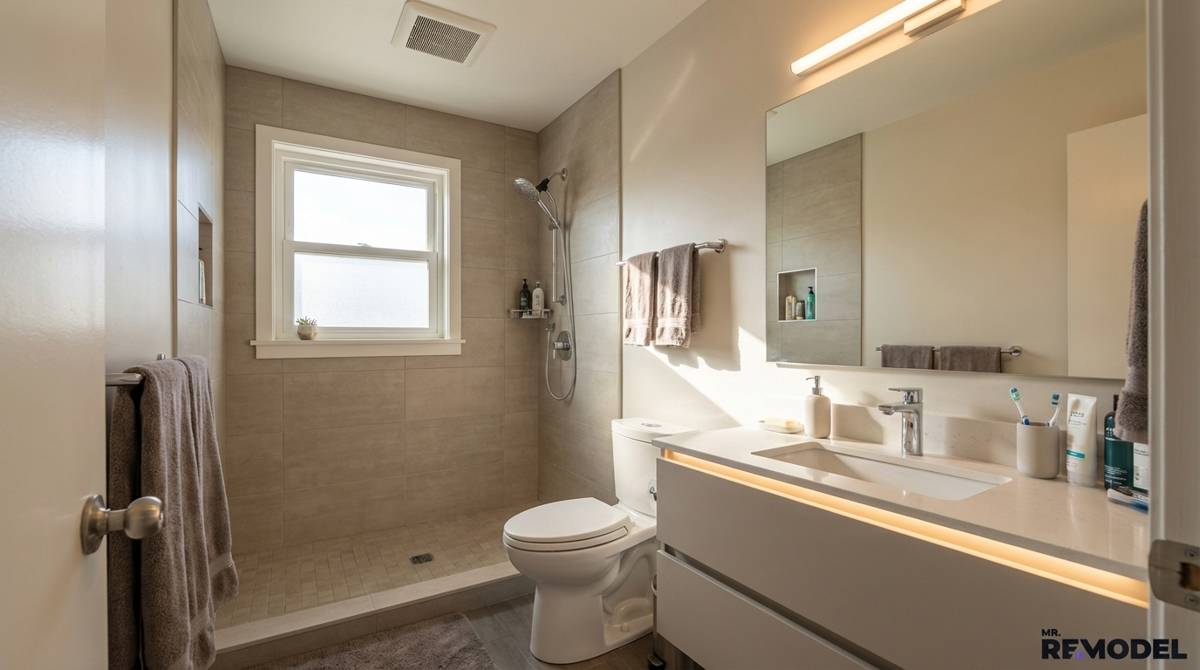
Table of Contents [hide]
This guide is for meticulous homeowners in the planning phase of a bathroom renovation. If you want a beautiful space that also slashes your utility bills, you are in the right place. We provide the exact technical data, local building code requirements, and return-on-investment numbers you need to plan a modern upgrade for 2026.
Key Takeaways
- The Water and Energy Link: Reducing your hot water usage directly lowers your gas or electric bill. They are not separate expenses.
- Tub-to-Shower ROI: Converting an old bathtub into a high-efficiency shower costs an average of $18,310. This upgrade drastically reduces daily water consumption.
- California Title 24 Updates: As of January 2026, California requires strict high-efficacy lighting and occupancy sensors in new bathroom remodels.
- The Shower First Strategy: Over 36% of homeowners prioritize the shower. Modern low-flow heads maintain luxury pressure while using 30% less water.
- Maximize Local Rebates: Cities in Arizona and Florida offer significant cash rebates for installing certified fixtures and water recycling systems.
When most homeowners start dreaming about a bathroom renovation, they focus on tile colors and vanity styles. However, our data shows that 44.5% of users spend over 30 days carefully planning their project. If you are part of this research-driven group, you know that a beautiful bathroom also needs to be a smart financial investment.
To achieve true long term savings, you must approach this as an energy-efficient bathroom remodeling project. This means looking past the surface to understand the hidden mechanics of your home. A modern upgrade is not just about changing the look of the room. It is about creating a highly engineered wet area that actively lowers your monthly utility costs.
In 2026, local building codes and rebate programs have completely transformed how we approach bathroom design. By combining high-efficiency fixtures with smart layout choices, you can capture significant financial returns while enjoying a luxury experience. Mr. Remodel tracks these regional trends to ensure your project meets the highest standards.
See Related: Energy Efficient Bathroom Remodeling
The Hidden Water and Energy Connection
A common mistake in bathroom planning is treating water conservation and energy efficiency as two separate goals. In reality, they are deeply connected.
Heating water is one of the largest energy expenses in any home. Every time you turn on the hot water tap, your water heater consumes gas or electricity to maintain the temperature. When you reduce the volume of hot water you use, you instantly reduce the energy required to heat it.
See Related: How Much Energy a Bathroom Remodel Can Save
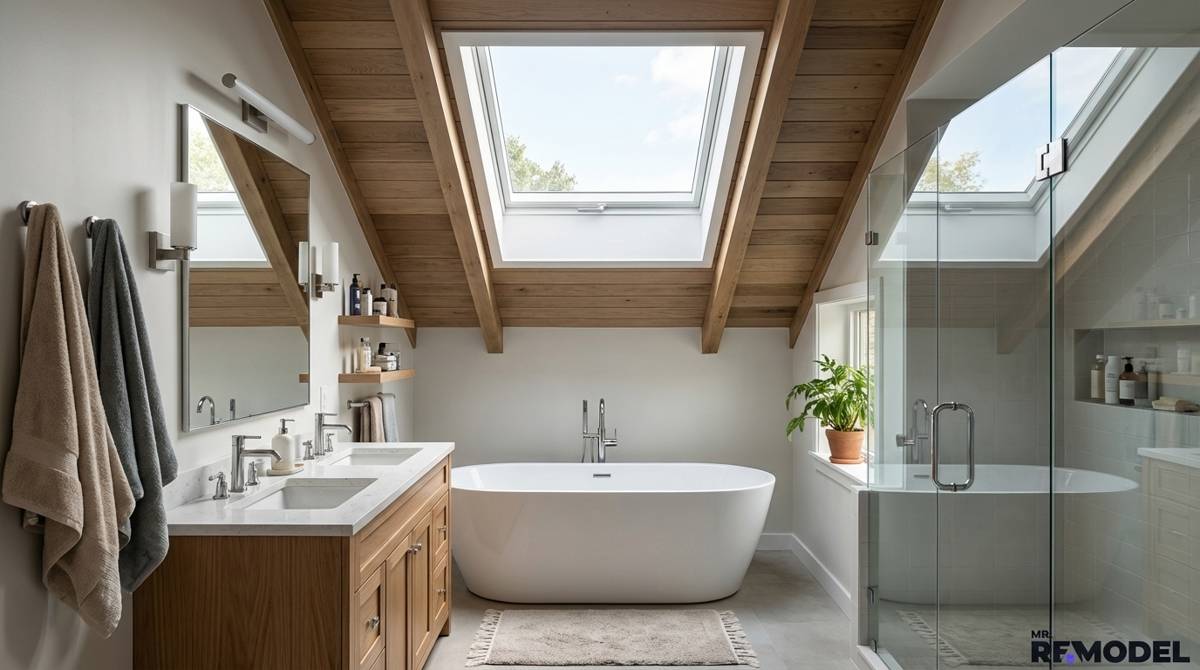
The Premium Tub-to-Shower Conversion
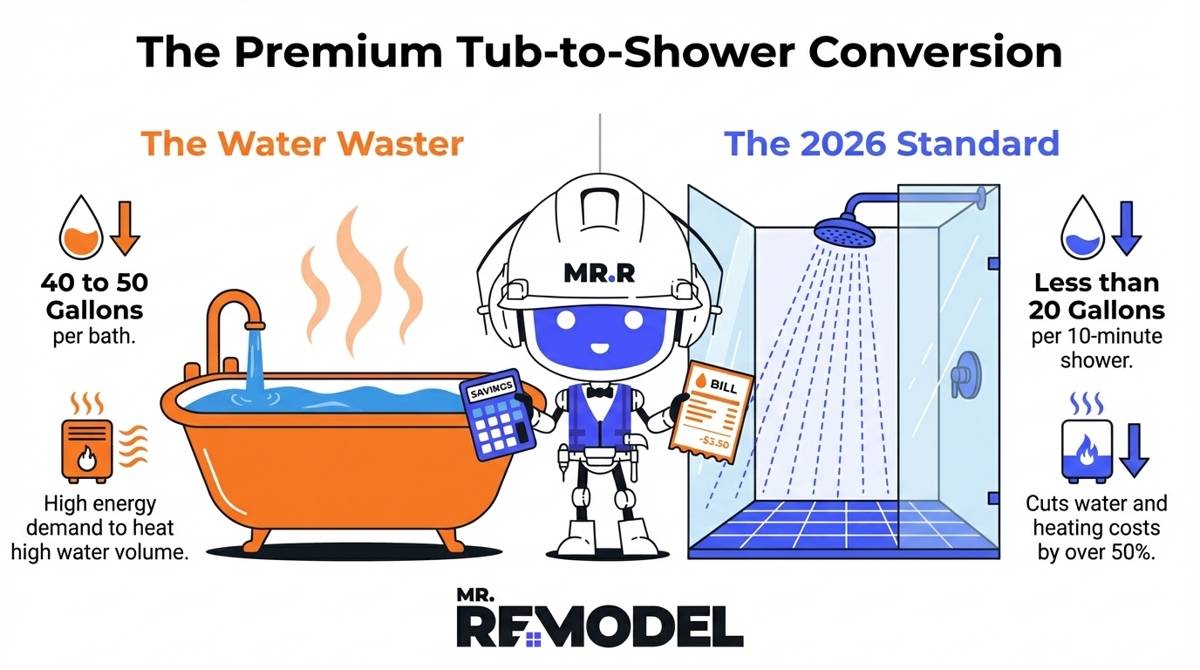
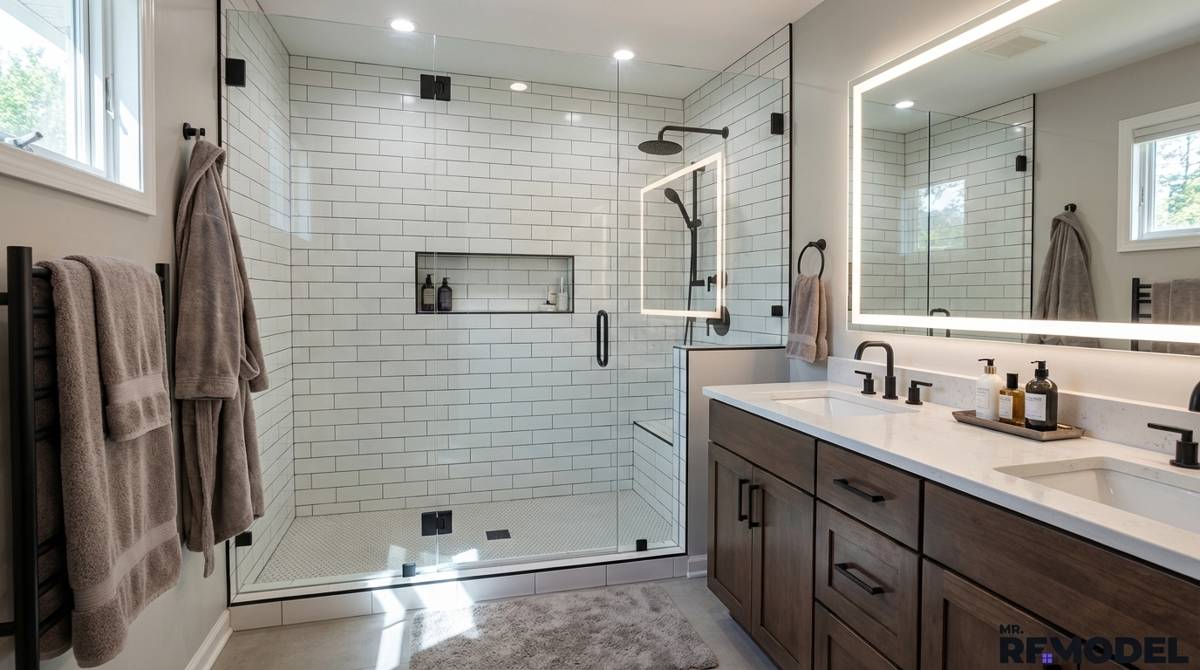
Our records indicate that 36% of users want to prioritize shower upgrades over bathtubs. The most impactful way to reduce water usage is to convert from a tub to a shower.
A standard bathtub requires 40 to 50 gallons of water to fill. A modern 10-minute shower uses less than 20 gallons. By removing the tub and installing a walk-in shower, you can reduce your water consumption for bathing by more than 50%.
This is known as the efficiency premium. The average cost for this premium conversion is $18,310. While this is a 17% premium over a standard cosmetic remodel, it replaces a massive, water-wasting fixture with a sleek, highly efficient wet area.
See Related: Low-Flow Showers vs Standard Showers
2026 Regional Code Compliance and Rebates
Depending on where you live, energy efficiency is no longer just a good idea. It is the law. Our top markets feature strict guidelines and lucrative incentives for homeowners.
California Title 24 Standards
If you live in California, your remodel must comply with the 2025 Building Energy Efficiency Standards (Title 24). These rules became fully effective on January 1, 2026. The California Energy Commission mandates that all new bathroom lighting must be high-efficiency. Furthermore, you must install vacancy or occupancy sensors that automatically turn off lights and exhaust fans when the room is empty.
Arizona Water Conservation and Rebates
In Arizona, water is a precious commodity. The University of Arizona provides extensive resources on linking outdoor and indoor conservation. Many homeowners bundle their interior bathroom remodels with outdoor landscape projects. Cities like Glendale and Chandler offer direct cash rebates for installing certified high-efficiency toilets.
Florida Water Star Certification
Florida homeowners face unique challenges related to humidity and water use. The Florida Water Star program outlines strict residential criteria for indoor water efficiency. To achieve Silver or Gold certification, your remodel must include 1.28-gallon-per-flush toilets and showerheads that use no more than 2.0 Gallons Per Minute.
Navigating local building codes and capturing available rebates requires precise planning and the selection of certified fixtures. Mr. Remodel connects you with verified local contractors who understand your exact city codes and incentives so you can maximize your return on investment. Get your free bathroom remodel quote today.
High Efficiency Fixtures and Ventilation
To maximize your savings, you must select the right hardware.
The U.S. Environmental Protection Agency runs the WaterSense program. They highlight October as Shower Better Month, which is the perfect time to schedule a tub-to-shower conversion. Choosing fixtures with the WaterSense label ensures they use at least 20% percent less water than federal standards require.
Upgrading your toilet is equally important. Older models use up to 3.5 gallons per flush, while modern dual flush systems use as little as 1.0 gallon for liquid waste.
See Related: Water Saving Toilets and Fixtures Explained
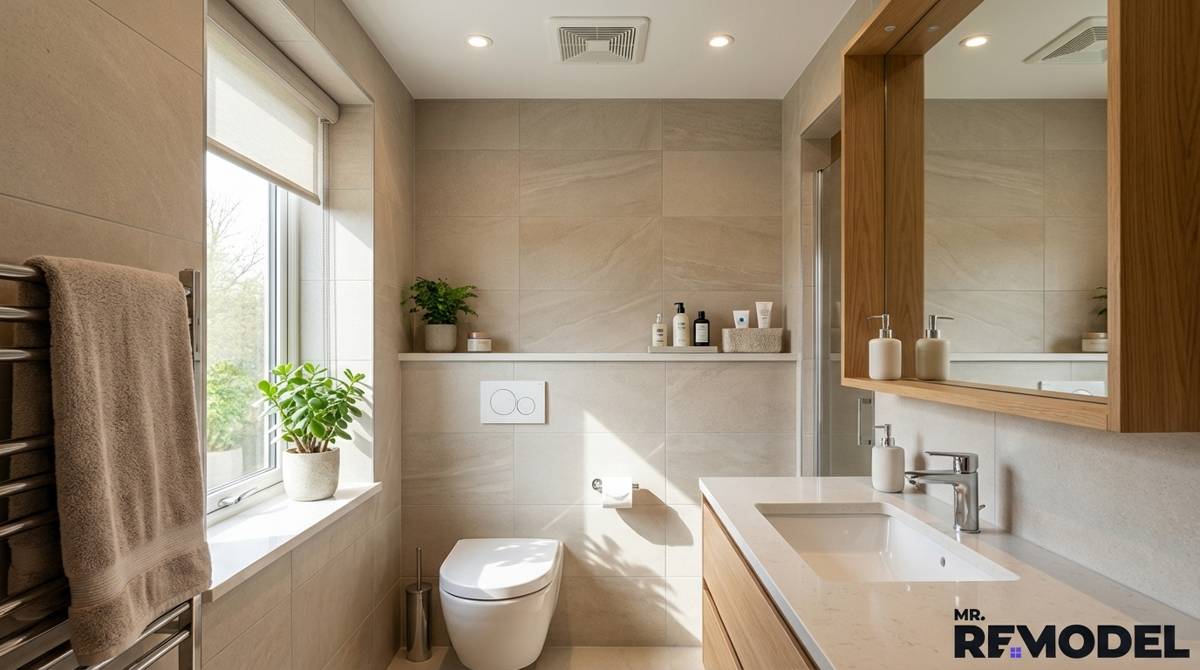
Finally, do not ignore your exhaust fan. Proper moisture control prevents mold and protects your new investment. Modern fans use incredibly low-wattage DC motors and feature built-in humidity sensors. They only run when the room is actually wet.
See Related: Ventilation and Moisture Control for Efficiency
Frequently Asked Questions
Do energy-efficient bathroom remodels actually save money?
Yes. By installing low-flow showerheads, efficient toilets, and LED lighting, you significantly reduce both your water bill and the energy bill associated with heating your water. Over the 15- to 20-year lifespan of the bathroom, these monthly savings offset a large portion of the initial remodeling cost.
What is a tub-to-shower conversion?
A tub-to-shower conversion involves removing a traditional bathtub and replacing it with a large walk-in shower. Because filling a bathtub requires significantly more water than taking a standard shower, this conversion is one of the most effective ways to lower your household water consumption.
Are there rebates for remodeling my bathroom?
Many local municipalities and utility companies offer cash rebates for installing water-saving fixtures. Cities in Arizona, California, and Florida frequently offer incentives for toilets and smart irrigation controllers. You should always check with your local water authority before purchasing materials.
Do low-flow showerheads have bad water pressure?
No. Modern engineering has completely solved the pressure issues of older low-flow models. Today, certified fixtures use advanced air injection and specialized nozzle designs to deliver a powerful, luxurious spray while using 30 percent less water than standard showerheads.
Plan Your Project with Precision
An energy-efficient bathroom remodel is a complex project that requires careful planning. Because 44.5% of homeowners take over a month to finalize their designs, you have the time to research your local codes and select the best possible materials.
Upgrading to a high-efficiency wet area does require a larger upfront investment. However, the combination of lower utility bills, potential city rebates, and increased home equity makes it the smartest financial path for your 2026 renovation.
Mr. Remodel simplifies this process by connecting you with top-rated local contractors who specialize in high-efficiency upgrades. They understand your specific state building codes and can help you select the exact fixtures needed to qualify for local rebates.
Start planning your energy-efficient bathroom today with a free quote from Mr. Remodel.