1-855-QUOTEMR

Table of Contents [hide]
This guide is for meticulous homeowners diving into the technical specifications for their upcoming bathroom renovation. If you want to understand the mechanics of water-saving hardware and how flow rates affect your daily comfort, this breakdown is for you. We explain the differences between fixture types simply and provide the compliance data you need to maximize your return on investment in 2026.
Key Takeaways
- Decoding the Metrics: Understanding Gallons Per Flush and Gallons Per Minute is critical for passing 2026 building inspections in high-growth states.
- Toilet Technology: Dual flush systems offer superior water management compared to traditional gravity-fed toilets and can save a household up to $140 annually.
- Showerhead Mechanics: Modern low-flow showerheads use aerating or laminar-flow technology to maintain high pressure while adhering to strict 1.8-gallon-per-minute limits.
- The Barbell Cost Strategy: The highest return on investment comes from pairing inexpensive fixture upgrades with a premium tub-to-shower conversion.
- The Energy and Water Nexus: Reducing the volume of hot water you use in the shower directly cuts the electrical or gas load on your water heater by up to 60%.
When selecting materials for a renovation, Mr. Remodel data reveals that 44.5% of homeowners spend over a month meticulously planning their upgrades. During this research phase, the sheer volume of technical jargon on plumbing boxes can feel incredibly overwhelming.
Having water-saving toilets and fixtures explained properly requires looking past the marketing labels. You need to understand the physical mechanics of how these valves and showerheads actually operate inside your home. In 2026, building codes in major states dictate exactly how much water your fixtures are legally allowed to consume. By mastering these technical details, you can select hardware that provides a luxury experience while perfectly aligning with local conservation mandates.
See Related: Energy Efficient Bathroom Remodeling
The Mechanics of GPF and GPM
Before purchasing any plumbing hardware, you must understand the two primary metrics of water efficiency. Let us break down exactly what these acronyms mean for your daily routine.
- Gallons Per Flush (GPF): This measures the exact volume of water a toilet releases into the bowl during a single flush.
- Gallons Per Minute (GPM): This measures the maximum flow rate of water from a showerhead or sink faucet over 60 seconds.
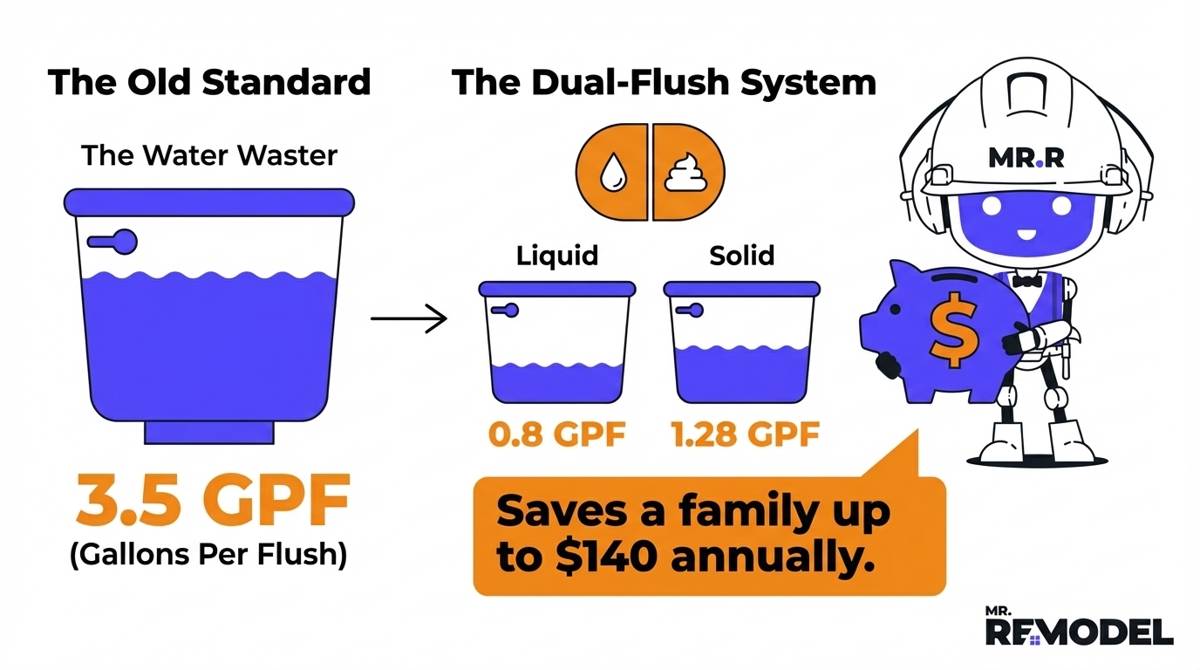
Older homes typically feature toilets that use 3.5 GPF and showerheads that pump out 2.5 GPM. Modern building codes have drastically lowered these limits to conserve municipal water supplies, forcing manufacturers to get creative with how water is delivered.
High Efficiency Toilets: Gravity vs Dual Flush
Upgrading your toilet is one of the fastest ways to reduce your indoor water footprint. The U.S. Environmental Protection Agency WaterSense program confirms that replacing old models can save a family up to $140 per year on utility bills.
Gravity Fed Systems
Traditional toilets rely purely on gravity. When you press the handle, a flapper opens, and a large volume of water drops from the tank into the bowl. To meet modern 1.28 GPF standards without sacrificing flushing power, manufacturers have redesigned the bowl's interior shape to create a much more forceful siphoning action with less water.
Dual Flush Technology
Dual-flush toilets offer ultimate control over your water usage. They feature a two-button actuator on the top of the tank. One button releases a partial flush of roughly 0.8 gallons for liquid waste. The second button releases a full 1.28-gallon flush for solid waste. This precise mechanical control prevents you from wasting a full tank of water when it is completely unnecessary.
See Related: How Much Energy a Bathroom Remodel Can Save
The Shower First Market: Aerating vs Laminar Flow
Our internal data show that 36% of homeowners prioritize shower upgrades over other bathroom projects. When shopping for a new showerhead, you must choose between two distinct technologies to maintain strong water pressure at lower flow rates.
Aerating Showerheads
These fixtures mix air into the water stream right before it exits the nozzle. This creates large and heavy droplets that feel incredibly powerful against your skin. The injected air makes the water feel full and luxurious even when the fixture is restricted to a highly efficient 1.8 GPM flow rate.
Laminar Flow Showerheads
Laminar flow fixtures do not mix air into the water. Instead, they form dozens of individual and parallel streams. This creates a clear and steady flow of water that produces much less steam. Laminar fixtures are ideal for homeowners who want a gentler shower experience or who live in highly humid climates where excess steam is an issue.
See Related: Low-Flow Showers vs Standard Showers
The Barbell Strategy: Fixtures Meet Tub to Shower Conversions
The most successful 2026 renovations utilize a barbell cost strategy. This involves pairing small fixture upgrades with one major structural change.
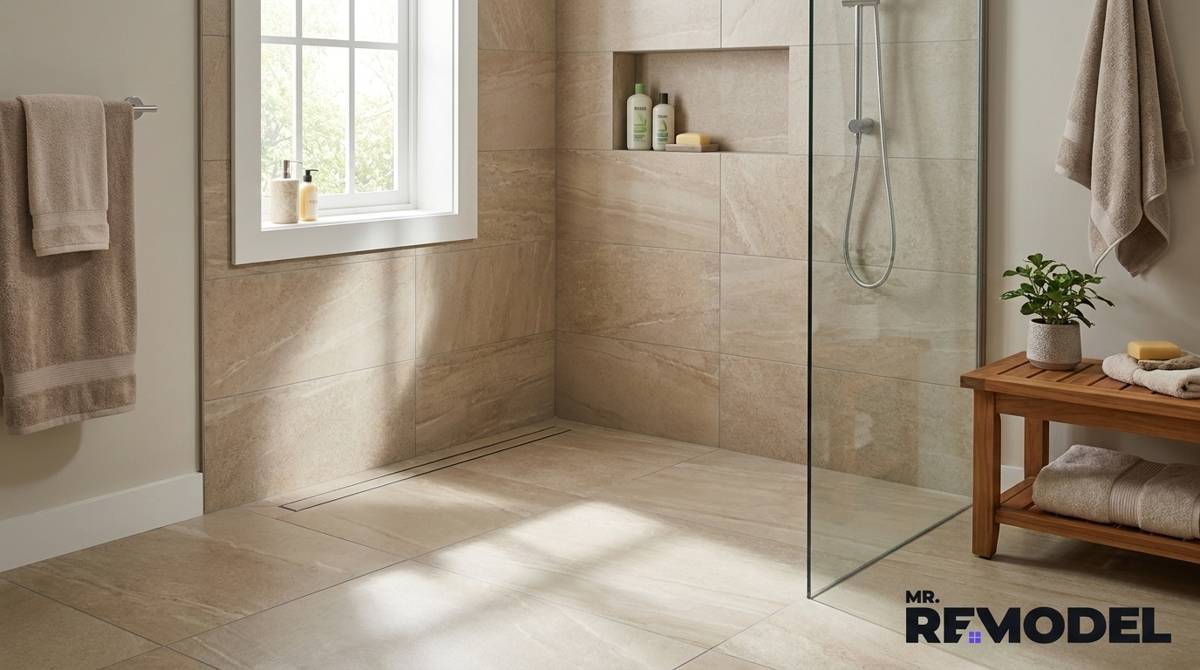
Homeowners are increasingly choosing to remove their water-wasting bathtubs. The average cost of a premium tub-to-shower conversion is $18,310. While this is a significant structural investment, it represents the gold standard of bathroom efficiency.
A bathtub requires roughly 50 gallons of water to fill. A modern shower equipped with a 1.8 GPM showerhead uses only 18 gallons during a 10-minute wash. This conversion slashes your water consumption by well over 50%.
The U.S. Department of Energy notes that reducing the volume of hot water directly lowers your water heating costs by 25% to 60%. This creates a powerful energy-and-water nexus in which your structural choices actively lower your gas and electric bills every single month.
Securing the right fixtures for your home requires a verified expert who understands these complex water and energy dynamics. You can seamlessly explore your options and get a free quote for your bathroom remodel today to ensure full compliance and maximum rebates.
2026 Regional Compliance Data
If you live in a high-growth state, your fixture choices are legally restricted by advanced building codes. Navigating these rules ensures your project passes inspection the first time.
The 2025 California Plumbing Code mandates that all new toilets must use no more than 1.28 GPF. Furthermore, showerheads cannot exceed a flow rate of 1.8 GPM. Installing non-compliant fixtures in California will result in a failed inspection.
The Texas Water Development Board outlines similar best practices for retrofitting residential fixtures to protect local reservoirs. Meanwhile, the Arizona Water Company provides highly lucrative incentives. Arizona homeowners can secure up to a $200 cash rebate simply for replacing an outdated toilet with a certified WaterSense model.
Frequently Asked Questions
What is the difference between an aerating and a laminar flow showerhead?
Aerating showerheads mix air into the water stream to create large and powerful droplets that feel highly pressurized. Laminar flow showerheads produce individual, clear streams of water without adding air. This results in a gentler spray and creates much less steam in the bathroom.
How much water does a dual flush toilet actually save?
A dual-flush toilet lets you use a partial flush for liquid waste. Compared to an older model that uses 3.5 gallons per flush, a dual-flush system can save a family of four over 13,000 gallons of water annually.
Does a low-flow showerhead mean I will have bad water pressure?
No. Modern engineering ensures that low-flow fixtures maintain excellent pressure. By using advanced nozzle designs and air-injection technology, manufacturers can limit the overall water flow to 1.8 Gallons Per Minute while still delivering a forceful, highly satisfying shower experience.
Why is removing my bathtub considered an energy upgrade?
Filling a bathtub requires a massive amount of hot water. Your water heater must consume a significant amount of electricity or gas to heat that volume of water. By converting to a walk-in shower equipped with low-flow fixtures, you drastically reduce your hot water usage. This immediately lowers your energy bill.
Upgrade Your Hardware with Confidence
Selecting the right plumbing fixtures is the most important technical decision of your bathroom remodel. By understanding the mechanics of dual flush toilets and the engineering behind aerated showerheads, you can build a space that is both luxurious and highly efficient.
When you combine these smart fixture choices with a high-value tub-to-shower conversion, you maximize your utility savings and easily comply with strict 2026 building codes.
You do not have to navigate these technical specifications alone. Mr. Remodel connects you with verified local professionals who know exactly which products meet your state regulations and qualify for local cash rebates.