1-855-QUOTEMR

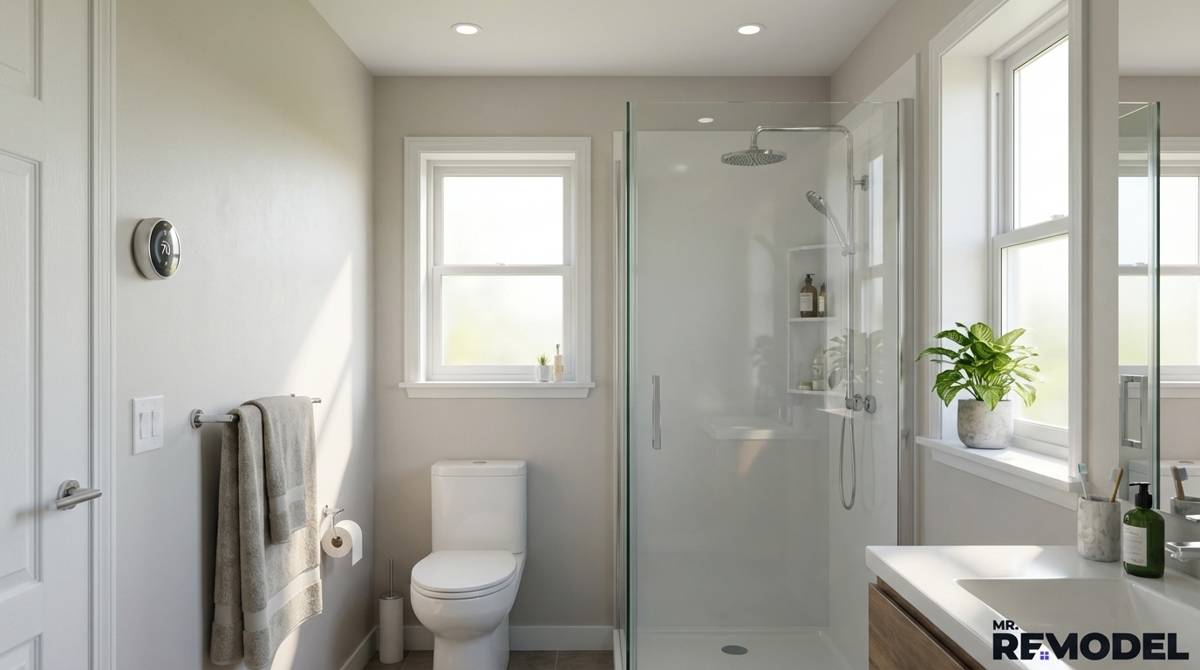
Table of Contents [hide]
Who This Is For
This guide is for meticulous homeowners looking for hard numbers to justify their upcoming renovation budget. If you want to move beyond basic aesthetics and understand the functional return on investment of your project, this breakdown is for you. We explain the exact electrical and gas savings generated by modern bathroom upgrades so you can plan your 2026 remodel with absolute financial confidence.
Key Takeaways
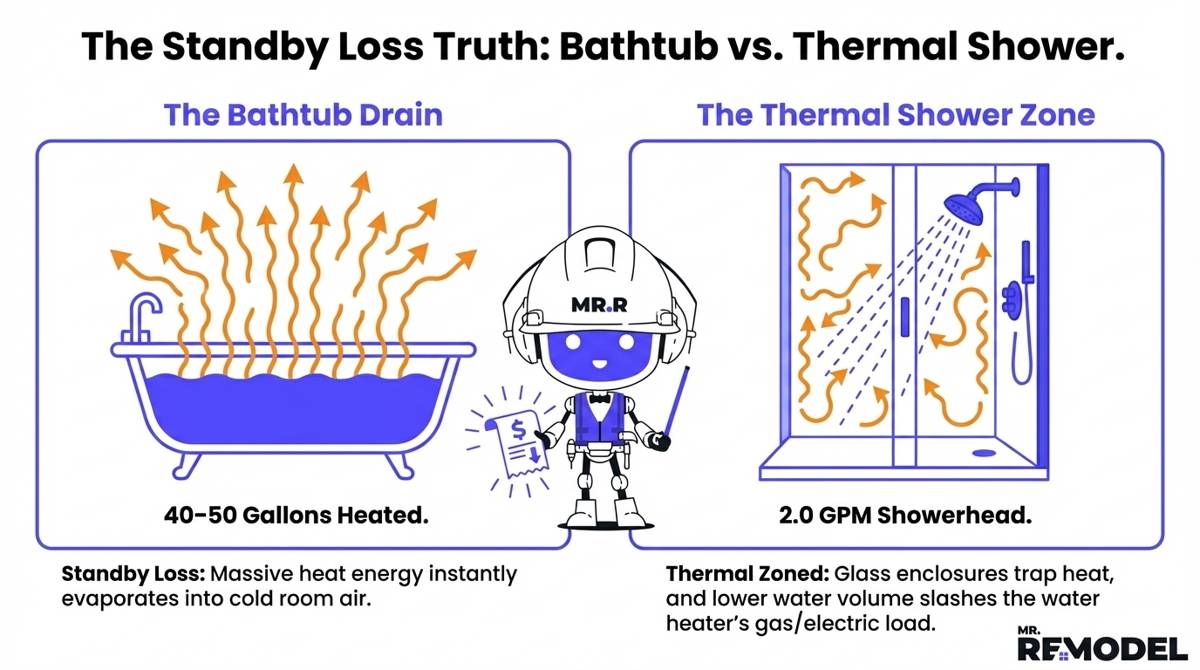
- The Standby Loss Reality: Heating a 40-gallon bathtub requires a massive amount of energy, and that heat is instantly lost to the room air. Showers eliminate this standby energy waste.
- The Efficiency Majority: Over 53% of modern bathroom projects prioritize high-impact wet area upgrades over purely cosmetic changes.
- HVAC Protection: Smart humidity-sensing exhaust fans prevent your central air conditioning from overworking, which acts as a hidden secondary energy saver.
- Luxury Efficiency Premium: Homeowners willingly invest an average of $18,310 in tub-to-shower conversions because the structural efficiency drastically lowers monthly utility costs.
- State-Specific Rebates: High-utility-cost states like California, Florida, and Washington offer lucrative incentives for energy-saving bathroom renovations.
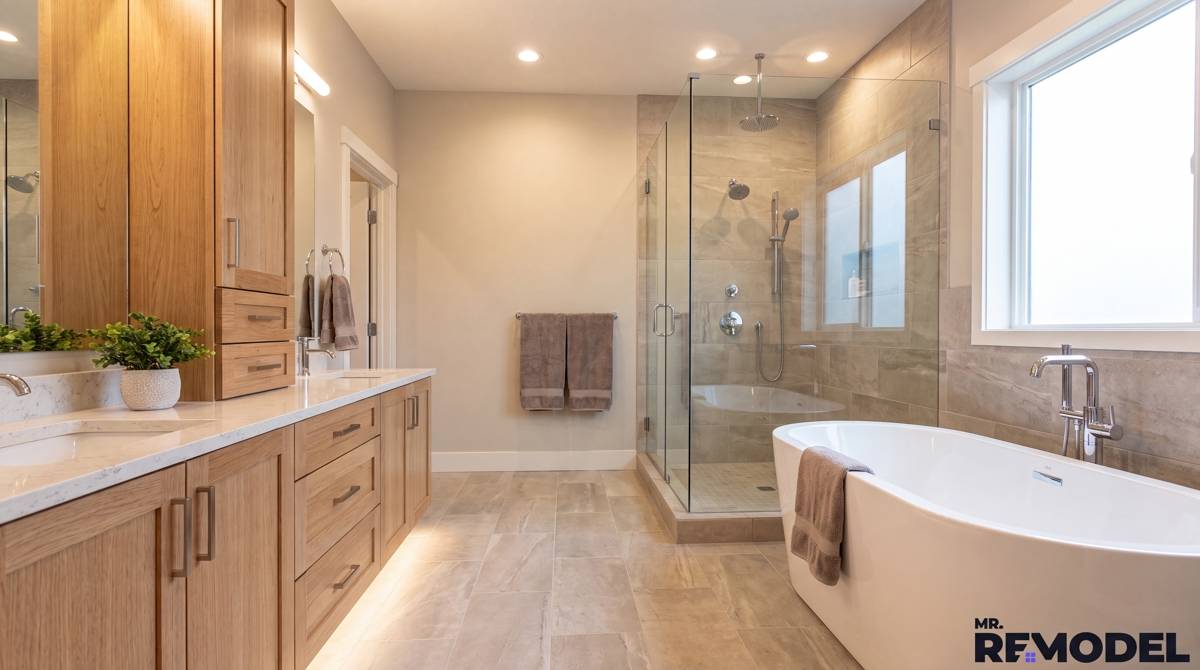
When you receive a remodeling quote between $15,000 and $18,000, it is completely natural to look for financial justification. Most homeowners spend over 30 days in a deep research phase, trying to ensure they are making a smart long-term investment. While beautiful tile and modern vanities add to your home equity, the true monthly financial return comes from upgrading the mechanical systems hidden behind your walls.
According to data from Mr. Remodel, energy savings in bathroom settings depend heavily on the water-energy nexus. Reducing your water volume is the single most direct way to slash your water-heating energy loads. By understanding exactly how much energy a modern upgrade saves, you can confidently invest in a space that actively pays you back every single month.
See Related: Energy Efficient Bathroom Remodeling
The Water and Energy Nexus: Eliminating Standby Loss
The largest energy drain in your bathroom has nothing to do with your lightbulbs. It is your water heater.
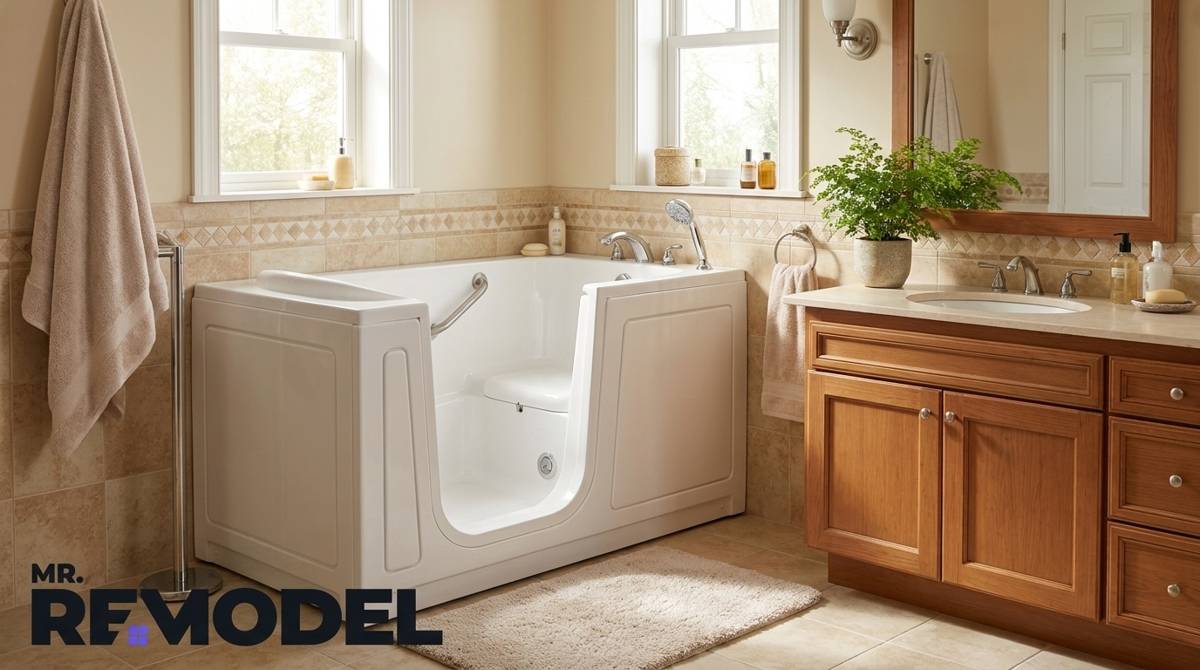
The U.S. Department of Energy (DOE) provides extensive data on estimating the costs and savings of water heating. Every time you fill a traditional bathtub, your system must heat 40 to 50 gallons of water. Furthermore, bathtubs suffer from massive standby loss. The moment the hot water hits the cold porcelain and the open air, it begins rapidly losing heat.
Conversely, the EPA WaterSense program confirms that switching to a modern 2.0-gallon-per-minute showerhead drastically reduces this heating load. An average family saves enough electricity to power an entire house for 11 days per year simply by adopting certified shower fixtures. By reducing the sheer volume of hot water required for daily hygiene, you directly cut the gas or electricity your water heater consumes.
See Related: Water Saving Toilets and Fixtures Explained
The Financial Math of Tub-to-Shower Conversions
Our national remodeling data show that 53.13% of projects are now efficiency-leaning. This means homeowners are prioritizing functional shower upgrades over full cosmetic tear-outs.
The premier upgrade in this category is the tub-to-shower conversion. Homeowners highly value this structural efficiency, investing an average of $18,310 to remove their old tubs. This represents a $3,156 premium over a standard cosmetic remodel.
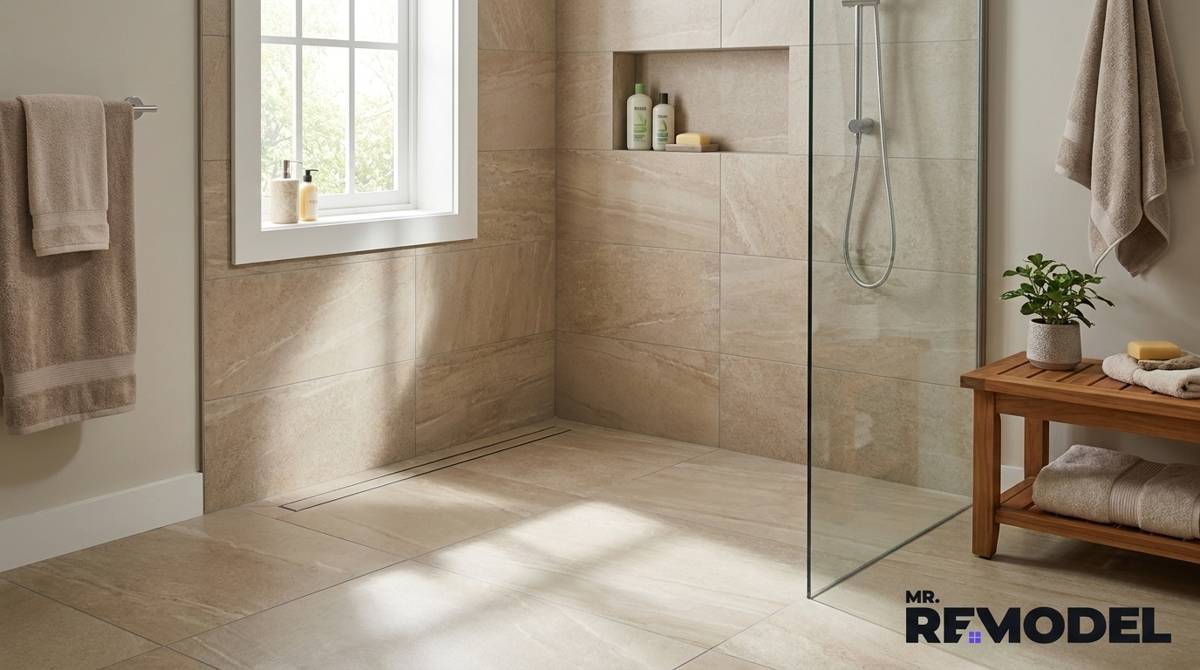
However, this premium is a calculated investment. A walk-in shower eliminates the massive energy demands of a bathtub. By combining a 1.8-gallon-per-minute showerhead with a sleek glass enclosure that traps heat, you create a highly efficient thermal zone. This structural change saves more energy over 10 years than any other single bathroom upgrade.
See Related: Low-Flow Showers vs Standard Showers
Smart Ventilation: Protecting Your HVAC System
Another major energy drain in outdated bathrooms is poor moisture management. When you take a hot shower, thick humidity fills the room and spills out into your hallways.
Humid air feels significantly warmer than dry air. When this moisture escapes the bathroom, your central air conditioning system has to work overtime to cool the house back down.
Upgrading to a smart ventilation system solves this problem. According to Energy Star ventilating fan specifications, modern exhaust fans use incredibly low-wattage DC motors. More importantly, they feature built-in moisture sensors. These smart fans automatically turn on when humidity rises and shut off the moment the room is dry. This prevents your HVAC system from overworking, which represents a major secondary energy-saving strategy.
Capturing these high-efficiency rebates requires precise planning and certified installation. You can easily connect with local experts and get a free quote for your bathroom remodel today to ensure your home meets the latest utility standards.
See Related: Ventilation and Moisture Control for Efficiency
2026 Regional Codes and Utility Rebates
If you live in a region with high utility rates, energy-efficient remodeling is heavily incentivized. Our data shows massive planning volume in California, Florida, and Washington, where local building codes demand high performance.
The California Energy Commission mandates strict compliance with the 2025 Building Energy Efficiency Standards (Title 24). Effective January 2026, your bathroom remodel must include high-efficiency LED lighting and mandatory humidity-sensing exhaust fans to pass inspection.
Fortunately, meeting these strict codes often unlocks financial rewards. You can use the Database of State Incentives for Renewables & Efficiency (DSIRE) to map out specific local utility rebates. Many power companies offer direct cash back for installing Energy Star-certified fans and WaterSense plumbing fixtures.
The 2026 Energy Saving Audit Checklist
Use this simple checklist during your 30-day planning phase to ensure your design maximizes your return on investment.
Frequently Asked Questions
Does a bathroom remodel really lower my electric bill?
Yes. By replacing outdated incandescent bulbs with LEDs and installing a low-wattage DC motor exhaust fan, you immediately reduce the room's electrical draw. More importantly, if you have an electric water heater, reducing your hot water usage with low-flow fixtures will create a noticeable drop in your monthly power bill.
Why is removing a bathtub considered an energy-saving upgrade?
Bathtubs require 40 to 50 gallons of hot water per use. Heating this large volume of water consumes a massive amount of gas or electricity. Furthermore, the water loses heat quickly to the surrounding air. A walk-in shower uses a fraction of that water, drastically reducing the workload on your water heater.
What is a moisture-sensing exhaust fan?
A moisture-sensing fan includes a built-in humidistat. Instead of relying on a manual wall switch, the fan automatically turns on when it detects high humidity from a shower. It runs efficiently until the moisture is cleared and then shuts itself off. This prevents wasted electricity and protects your home from mold.
How do I find rebates for my bathroom remodel?
Many local utility companies and municipal governments offer cash rebates for installing energy-efficient fixtures. You can check your local utility provider's website or search the national DSIRE database to find specific incentives available in your zip code.
Invest in Functional ROI
Understanding exactly how much energy a bathroom remodel can save changes the way you plan your project. It transforms a simple cosmetic update into a strategic financial investment.
By eliminating the standby heat loss of an old bathtub, protecting your HVAC system with smart ventilation, and adhering to modern building codes, you can build a luxury space that actively lowers your utility bills. While high efficiency upgrades carry a premium price tag, the monthly energy savings and increased home equity make them the smartest choice for 2026.
Mr. Remodel is here to help you execute this strategy perfectly. We connect you with verified local contractors who understand the complex water and energy dynamics of modern remodeling. They will help you select the exact materials needed to pass strict local inspections and capture maximum utility rebates.