1-855-QUOTEMR

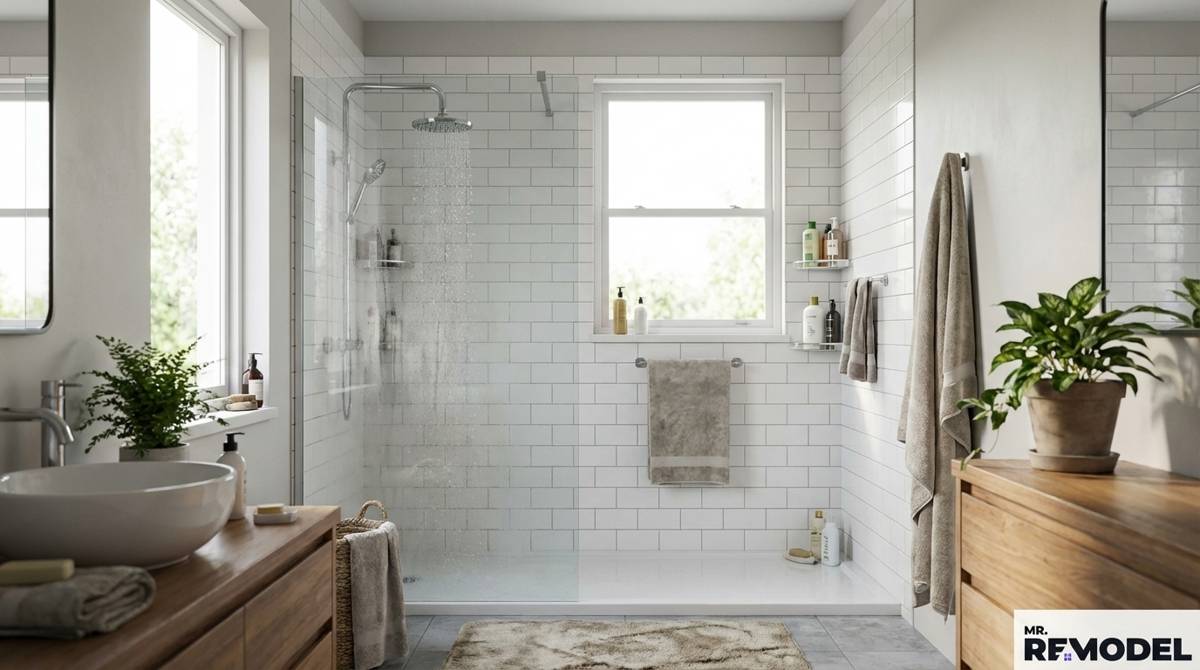
Table of Contents [hide]
Who This Is For
This guide is for homeowners who are actively planning a bathroom remodel and worrying about water pressure. If you are afraid that upgrading to a high-efficiency showerhead will leave you with a weak trickle of water, this breakdown is for you. We explain the engineering behind modern shower systems, showing how you can achieve a drenching, luxurious experience while significantly reducing your utility bills.
Key Takeaways
- The Pressure Stigma is Dead: Modern 1.8-gallon-per-minute showerheads use pressure-compensating valves to deliver a forceful spray that rivals older, water-wasting models.
- Flow vs Pressure: Gallons Per Minute measures volume, not force. Advanced air injection technology makes less water feel like much more.
- The Efficiency Premium: Homeowners gladly pay an average of $18,310 for a tub-to-shower conversion because it offers a 74% return on investment in the 2026 real estate market.
- Eliminate Standby Loss: A low-flow shower reduces the thermal wait time and energy waste associated with filling a massive 40-gallon bathtub.
- Regional 1.8 GPM Mandates: In high-volume markets like California and Washington, the old 2.5 GPM standard is now illegal for new remodels.
When navigating a major home upgrade, the fear of losing daily comfort is incredibly common. For decades, homeowners have avoided low-flow fixtures because early versions delivered terrible water pressure. Today, Mr. Remodel data shows that 44.5% of remodeling leads spend over 30 days researching fixtures to avoid this exact problem.
Fortunately, plumbing engineering has undergone a complete transformation. Comparing low-flow showers vs. standard showers in 2026 requires recognizing that "standard" is now an outdated term. Advanced technology has successfully separated water volume from water pressure. By understanding how these modern fixtures actually work, you can confidently build a highly efficient bathroom that feels like a premium spa.
See Related: Energy Efficient Bathroom Remodeling
The Big Myth: Flow vs Pressure
The biggest misconception in bathroom remodeling is that reducing your water volume ruins your water pressure. This is physically incorrect.
Water flow is measured in Gallons Per Minute. This is simply the amount of water leaving the nozzle. Water pressure is measured in Pounds Per Square Inch. This is the force behind the water.
Older standard showerheads relied on high volume (2.5 GPM or more) to create a heavy feel. Modern low-flow systems (1.8 GPM or less) use specialized nozzles and pressure-compensating valves to restrict the volume while maintaining high velocity.
The U.S. EPA WaterSense program enforces strict performance criteria. To earn a certification label, a modern showerhead must pass rigorous spray force and spray coverage tests to guarantee user satisfaction.
See Related: Water Saving Toilets and Fixtures Explained
The 74% ROI Tub-to-Shower Conversion
Our 2026 market data show that 53.1% of the total bathroom remodeling market is now focused entirely on the shower area. The traditional bathtub is rapidly becoming an outdated, high-waste relic.
This shift has created a massive efficiency premium. Homeowners are currently investing an average of $18,310 for complete tub-to-shower conversions. This is a 20% premium over the $15,154 spent on basic cosmetic remodels.
Why are homeowners paying more for this specific upgrade? The answer is return on investment. A beautifully tiled, low-flow walk-in shower yields up to a 74% ROI at resale. Buyers in the 2026 real estate market view an engineered, high-efficiency wet area as a major luxury upgrade.
Securing this high return on investment requires exact planning and compliant hardware. You can bypass the research phase and instantly connect with verified local professionals who handle these premium conversions from start to finish. Get your free bathroom remodel quote today to see how affordable a luxury upgrade can be.
Eliminating Standby Loss and Energy Waste
The financial benefits of a low-flow shower extend far beyond your water bill.
The U.S. Department of Energy confirms that upgrading to low-flow fixtures is the single best strategy for reducing residential water-heating energy loads.
When you use a traditional bathtub, you incur significant standby loss. You waste incredible amounts of gas or electricity waiting for 40 gallons of hot water to reach the tub, and that water immediately loses heat to the open air. A modern 1.8 GPM shower eliminates this thermal wait time. You use hot water instantly and efficiently, strictly for the minutes you are standing under the spray.
Research from the Alliance for Water Efficiency confirms the water-energy nexus. Their data show that widespread adoption of 1.8 GPM upgrades can reduce global household carbon footprints by up to 1.5 gigatons while saving homeowners hundreds of dollars annually.
See Related: How Much Energy a Bathroom Remodel Can Save
2026 Regional Mandates for 1.8 GPM
If you live in a high-growth hub, the debate between standard and low flow is already settled by local laws.
The California Energy Commission enforces Title 20 Appliance Efficiency Regulations. This completely outlaws the sale and installation of older 2.5 GPM showerheads. Any new fixture installed in California must flow at 1.8 GPM or less.
Similarly, the Washington State Department of Commerce mandates strict 1.8 GPM building energy codes. If your contractor installs an old standard fixture in these states, your renovation will fail its municipal inspection.
2026 Shower Performance Comparison
Use this table during your 30-day planning window to understand exactly what you gain by upgrading.
|
|
Frequently Asked Questions
Will a 1.8 GPM showerhead feel weak?
No. Modern engineering prevents this. By using pressure-compensating valves and air injection, manufacturers accelerate the water droplets before they leave the nozzle. This creates a highly pressurized, drenching spray that feels just as powerful as an older 2.5 GPM model.
What is a pressure-compensating valve?
This is a small device built into modern low-flow showerheads. It automatically adjusts the size of the water pathway based on the water pressure coming from your pipes. If your home has low pressure, the valve opens wider. If you have high pressure, it restricts the flow. This ensures a perfectly consistent, forceful spray at all times.
Does a tub-to-shower conversion increase home value?
Yes. Real estate data show that a modern walk-in shower offers a 74% midrange return on investment. Buyers increasingly prefer the accessibility, aesthetic appeal, and energy efficiency of a large shower over a traditional bathtub.
Why are 2.5 GPM showerheads illegal in some states?
States like California, Washington, and Colorado face strict water conservation challenges. They have passed appliance efficiency regulations that lower the maximum allowable flow rate to 1.8 GPM or 2.0 GPM. This protects local municipal reservoirs and significantly reduces the strain on the electrical grid caused by water heaters.
Upgrade to the Modern Standard
The stigma surrounding low-flow showers is based on decades-old technology. Today, choosing a 1.8 GPM showerhead is no longer a sacrifice. It is a massive functional upgrade.
By combining advanced pressure-compensating nozzles with a highly desirable tub-to-shower conversion, you maximize your daily comfort while achieving a 74% return on investment. You eliminate the energy waste of filling a bathtub and ensure your home perfectly complies with strict 2026 building codes.
You do not have to figure out these flow rates and compliance laws on your own. Mr. Remodel connects you with verified local contractors who understand exactly how to engineer a high-pressure, low-volume shower system.