1-855-QUOTEMR

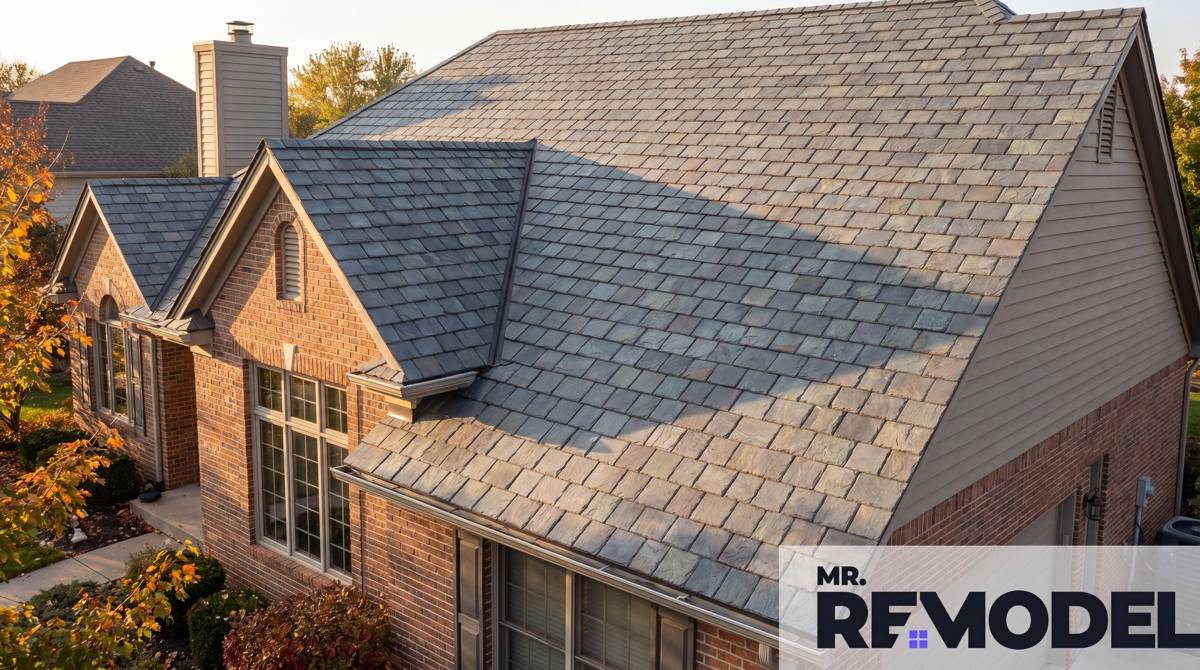
Table of Contents [hide]
Who This Is For
This engineering and cost report is designed for single-family homeowners looking to replace their current roofs with a premium, high-ticket architectural upgrade. If you want to move past cheap fixes and need deep data on structural weight loads, real-world pricing per square, and long-term financial returns, this guide is for you.
Key Takeaways
- Complete Overhaul Priority: Proprietary field tracking shows that 98.8% of homeowners pursuing slate roofs choose a complete replacement rather than a patch fix.
- Massive Weight Reduction: Synthetic slate panels weigh roughly 250 pounds per square, eliminating the costly structural reinforcement required by 1,500-pound natural stone.
- Dual Buying Timelines: Over 56% of property owners schedule synthetic upgrades within 30 days to accommodate architectural boards, while 42% leverage rapid insurance payouts for a 7-day fast-track installation.
- Lower Financial Entry: Engineered polymer shingles cut raw material and installation labor budgets by 40% to 60% compared to traditional natural quarry tile.
- Elite Climate Defense: Synthetic systems provide a Class A fire rating for wildfire zones, a Class 4 impact rating against severe hail, and zero moisture absorption for freeze-thaw protection.
Are you looking to enhance your home exterior with the classic look of a historical slate roof? For single-family homeowners, traditional stone tiles have long represented the absolute peak of luxury and architectural design. However, standard stone tile demands a massive financial commitment and intensive structural planning.
According to building safety publications from the Federal Emergency Management Agency’s Roof Systems Weight Considerations, standard roof decking frames have strict load limits. Heavy natural slate frequently requires expensive structural reinforcing before installation can even begin.
To solve this weight dilemma, modern material science has introduced premium synthetic slate. These advanced shingles are manufactured using recycled polymers and injection-molded rubber, perfectly mimicking the rough texture and chiseled edges of natural slate.
At Mr. Remodel, we track active home improvement projects to give you honest answers about your next upgrade. Our data helps you compare real installation budgets and hidden structural payload limits.
Analyzing Material Costs and True Price Per Square
When reviewing premium roofing estimates, the standard unit of measurement is a square, which equals 100 square feet of roof surface. Traditional quarry slate requires highly specialized stone artisans and slow, meticulous hand-nailing techniques.
Synthetic slate shingles are lightweight and feature integrated alignment lines, allowing certified roofing crews to install them much faster. This massive reduction in labor hours lowers your overall project budget.
2026 PRICE PER SQUARE COMPARISON
Our closed-sales data indicates that standard asphalt roof replacements across our network average $8,435.69. However, premium composite installations exist in an elite tier above standard trackable platform analytics.
A comprehensive synthetic slate project typically ranges from $25,000 to $45,000+, depending on your home's footprint and layout complexity. These premium projects are often processed directly through specialized manufacturer financing or custom architectural firm billing.
Evaluating your complete exterior structure helps ensure a successful remodel. Homeowners looking to maximize their visual curb appeal often pair their new composite roof with other high-end options.
See Related: Energy Efficient Windows | 2026 Ratings, Costs & Savings Guide
The Engineering Physics of Weight Loads and Structure
The most significant technical gap on generic home improvement websites is the failure to calculate true structural payload metrics. Natural slate is incredibly dense, pushing down on your home with immense physical force.
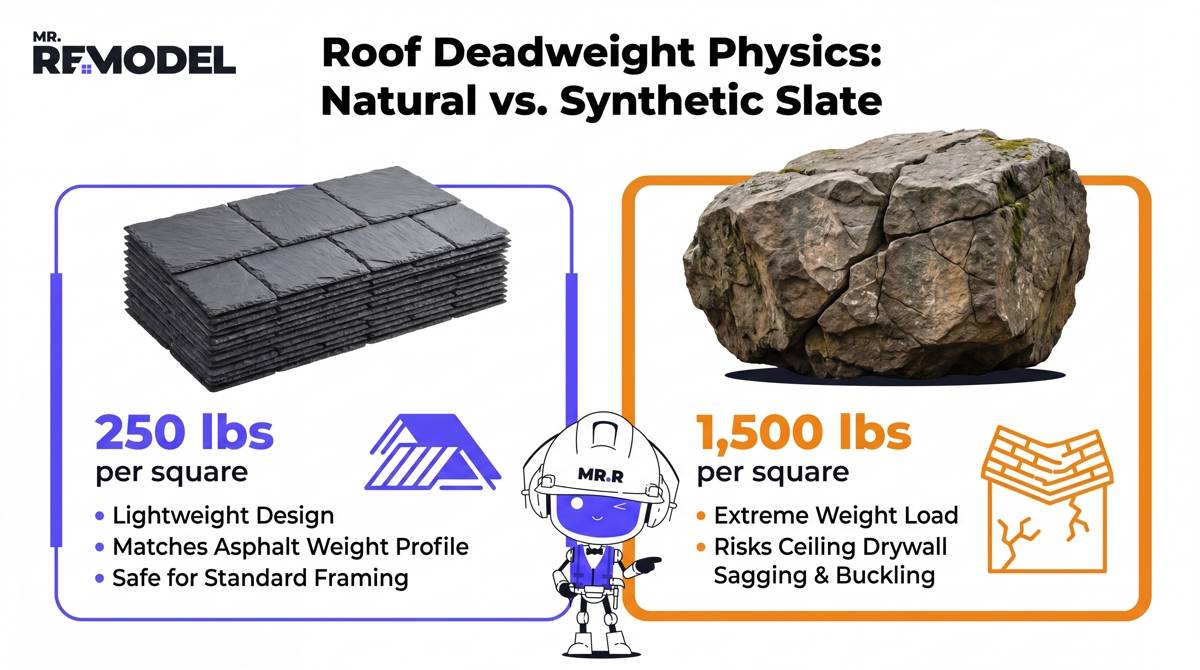
Natural stone tiles weigh between 800 and 1,500 pounds per square. If your home was originally framed for standard asphalt shingles, placing that much weight on your rafters can cause your ceiling drywall to sag or buckle.
Synthetic slate shingles weigh a low 250 pounds per square, matching the weight profile of standard asphalt options. This lightweight design allows you to secure a luxury look without spending thousands of dollars on structural framing upgrades.
The 98.8% Full Replacement Imperative
When investing in a high-end architectural material, attempting localized repairs or patch jobs on an aging structure is not a viable strategy. Flimsy patches on a failing deck leave your home vulnerable to moisture leaks.
Our internal project tracking of 1,325 verified slate and synthetic queries confirms this reality. A massive 98.8% of homeowners choose a complete structural installation over minor fixes, proving that premium buyers prioritize full asset protection.
Navigating the Two Primary Buying Windows
Our operational metrics show that synthetic slate buyers generally fall into two distinct purchasing groups, each driven by different project timelines.
The 30-Day Calculated Architectural Planner
Over 56% of homeowners plan their projects within a stable 30-day window. These users are typically navigating municipal historic preservation rules or strict Homeowners Association guidelines.
Our network works closely with these homeowners to provide accurate synthetic slate roofing costs. Getting early itemized estimates helps you secure rapid board approvals without delaying your exterior renovation schedule.
The 7-Day Fast-Track Crisis Sector
Conversely, 42% of homeowners require immediate project kickoff within a tight 7-day window. These homeowners are often upgrading to advanced composite systems following a major roof failure.
These fast-track buyers use rapid insurance payouts to upgrade to impact-resistant polymer systems. Investing in a no-leak roofing cost breakdown helps you stabilize your home envelope quickly after a major storm.
Stop risking structural sagging with heavy stone tiles or dealing with ugly, curling shingles. Let Mr. Remodel connect you with fully licensed, factory-certified crews today. Contact our team to get a free quote for professional roofing services tailored to your home's unique layout.
Regional Climate Stressors and Code Compliance
The performance advantages of engineered polymer tiles change significantly depending on your specific regional weather hazards. Our national business database tracks these climate correlations to help you select the ideal setup.
Wildfire Defense in the Western Zone
Homeowners across California deal with strict Wildland-Urban Interface building codes. These local safety regulations mandate non-combustible roofing materials to protect properties from flying embers.
According to cool-roof research from the U.S. Department of Energy’s Cool Roof Selection Guide, injection-molded polymers feature exceptional thermal emittance. Using cool-colored synthetic slats reflects solar radiation away from your attic, reducing your summer air conditioning costs.
High Wind Resistance in Coastal Storm Corridors
Properties located near volatile coastlines, such as Florida, face severe wind uplift forces during tropical storms. Natural slate tiles can catch the wind and shatter into dangerous flying debris.
Wind-uplift testing briefs from the Federal Emergency Management Agency’s Structural Design Guidelines validate that interlocked synthetic systems show superior resistance to high-speed wind shear. The mechanical fasteners keep the shingles locked down in winds up to 150 mph.
Freeze-Thaw Resilience in the Frost Belt
Homeowners across cold regions like Ohio and New Jersey face a completely different winter threat: moisture absorption. Natural stone tiles feature tiny fissures that trap water, which freezes, expands, and cracks the stone.
Advanced synthetic slate shingles feature a zero-porosity surface that prevents any water absorption. This moisture protection ensures your tiles survive intense winter freeze-thaw cycles without chipping or splitting.
Vetting Certified Specialty Architectural Contractors
Because synthetic slate requires specialized flashing techniques and precise layout lines, you cannot trust this high-ticket project to a standard neighborhood handyman. Finding factory-certified roofing crews is essential to preserve your long-term warranty coverage.
When vetting highly rated local roofing contractors, confirm they use heavy-gauge corrosion-resistant fasteners. Certified teams understand the nuances of modern exterior architectural styles and ensure your roof ventilation balances your home's thermal airflow.
Partnering with true exterior technicians ensures your property receives comprehensive weather protection that lasts for decades. Investing in high-performance materials protects your home from leaks and builds lasting property value.
When designing a permanent home envelope, smart property owners often evaluate their complete exterior infrastructure. Coordinating your roof project with other essential drainage upgrades helps keep your home's foundation dry.
See Related: Gutter Installation Guide: Costs, Timeline, and What Contractors Don’t Tell You
Investing in advanced composite materials ensures your home remains protected through every storm season. Transitioning to an engineered roof allows you to enjoy the classic look of traditional slate with total peace of mind.
Frequently Asked Questions
What is the average weight difference between natural and synthetic slate?
Natural stone slate is incredibly heavy, weighing between 800 and 1,500 pounds per square foot, which often requires added structural framing reinforcement. Synthetic slate shingles weigh just 250 pounds per square, matching the weight profile of standard asphalt.
How much does synthetic slate roofing cost per square in 2026?
A premium synthetic slate installation typically ranges from $8.00 to $12.00 per square foot installed. While it commands a premium over standard asphalt, it reduces your raw material and labor expenses by 40% to 60% compared to natural stone.
Can synthetic slate shingles withstand extreme hurricane-force winds?
Yes. Federal wind shear testing confirms that interlocked synthetic slate tiles are engineered to withstand wind speeds between 110 and 150+ mph. This wind resistance makes them an exceptional choice for storm-heavy regions like Florida.
Do engineered polymer shingles absorb water during freezing weather?
No. Advanced synthetic tiles feature a completely non-porous polymer composition that ensures zero moisture absorption. This protects your roofline from the cracking, splitting, and chipping common to natural stone during winter freeze-thaw cycles.
How do services like Mr. Remodel assist with a synthetic slate upgrade?
Platforms like Mr. Remodel take the guesswork out of premium renovations by matching you directly with vetted, factory-certified contractors. This ensures your architectural upgrade includes accurate quotes, specialized labor, and robust warranty coverage.
Protect Your Building Envelope and Secure Active ROI
Investing in a synthetic slate roof allows you to balance luxury architectural style against verified structural performance. Preparing for local climate regulations and selecting lightweight polymer systems avoids the high costs of structural reinforcement.
Choosing a complete seamless replacement and partnering with certified installation teams turns a standard roof repair into a long-term property asset. Perfecting your exterior wind and water defense shields your framing, improves your thermal efficiency, and preserves your home equity.
Ready to secure a clear, high-performance plan for your property? Get your free,no-obligation quote from Mr. Remodel to analyze your local storm risks and launch your upcoming architectural upgrade with absolute confidence.