1-855-QUOTEMR

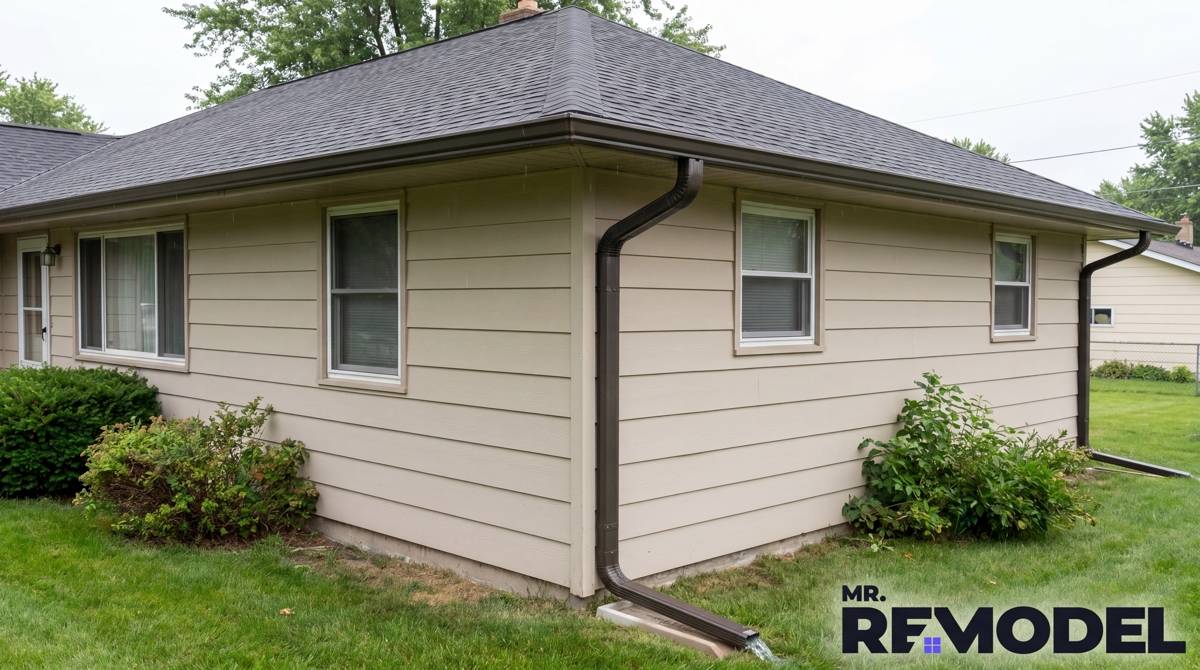
Table of Contents [hide]
Who This Is For
This guide is designed for homeowners responding to active leaks, those planning a full exterior renovation, and savvy investors looking to protect their property from structural water damage.
Key Takeaways
- Market Standard: Seamless aluminum is the 2026 benchmark, costing between $9.00 and $16.00 per linear foot.
- Foundation Insurance: A $2,500 gutter system protects against foundation repairs that often range from $10,000 to $25,000.
- The 85% Rule: Roughly 85% of modern homes utilize seamless systems because sectional vinyl is prone to cracking.
- Efficiency: Professional crews can typically install a 200-linear-foot system in less than eight hours.
- Regional Needs: High-rainfall zones like the Pacific Northwest require 6-inch K-style upgrades ($12-$18/ft).
- Extreme Weather: Northeast homes need reinforced hangers every 16 inches to withstand heavy ice damming.
According to FEMA and the City of Cincinnati, just one inch of standing water can cause over $10,000 in structural damage to a home. Most homeowners view gutters as a minor roof accessory. In reality, your gutter system is the first line of defense for your foundation.
Modern homeowners are moving away from cheap, DIY solutions. The market has shifted toward high-performance, seamless systems. These systems eliminate the seams where leaks typically begin. This guide provides the data you need to make an informed decision about your home drainage.
Gutter Pricing Benchmarks: Material and Labor Data
The cost of gutter installation is largely driven by material choice and the complexity of the roofline. In 2026, we are seeing a stabilization in aluminum prices. However, specialized metals like copper and zinc remain premium options.
2026 Material Cost Comparison Table
Mr. Remodel data shows that aluminum is the clear winner for ROI. It does not rust and remains lightweight. Steel is stronger but requires more maintenance to prevent corrosion over time.
See Related: Roof Replacement Cost by Size (1,500, 2,000, 3,000+ Sq Ft)
The Seamless Dominance: Why Sectional Gutters Are Failing
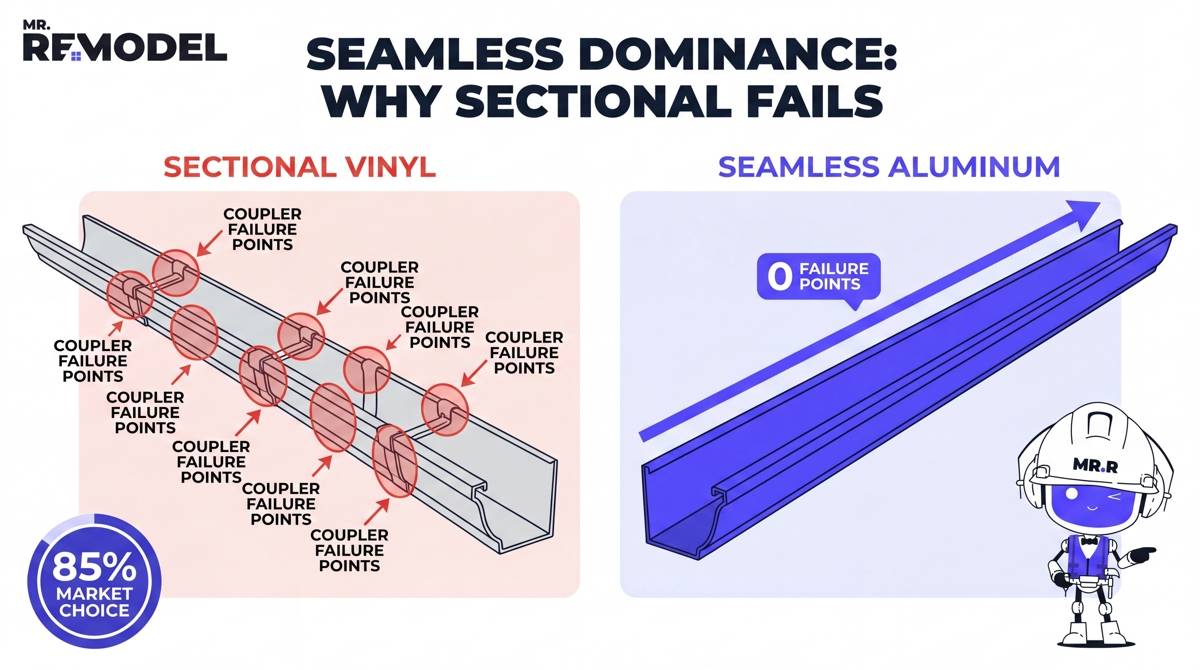
In the past, many homeowners purchased 10-foot sections of vinyl or aluminum from big-box stores. These systems rely on "couplers" and sealants at every joint. Every joint represents a future failure point where water can penetrate.
Our internal data indicates that 85% of modern installations are now seamless. Seamless gutters are custom-extruded on-site. A machine takes a flat coil of metal and shapes it into a continuous gutter. This ensures there are no seams between corners.
Sectional vinyl systems now account for less than 15% of the market. These systems are prone to cracking in cold weather. They also expand and contract at different rates than the sealant used to join them. This leads to persistent leaks within three years.
The Hidden ROI: Gutters as Foundation Insurance
The American Society of Civil Engineers highlights that residential drainage systems often fail because they are undersized. When gutters overflow, water pools at the base of the home. This saturates the soil and puts immense hydrostatic pressure on your basement walls.
A typical professional gutter investment costs around $2,500 for a standard home. If you neglect this, foundation repairs can easily reach $25,000. This makes gutters one of the highest-ROI maintenance tasks a homeowner can perform.
Beyond the foundation, proper drainage protects your landscaping. High-velocity water falling from a roof can destroy expensive flower beds. It can also cause soil erosion that leads to "grading" issues. Negative grading directs even more water toward your home.
See Related: Does a New Roof Increase Home Value? (Data + % ROI)
Technical Specifications: Sizing and Profiles
Not all gutters are shaped the same. The two most common profiles are K-Style and Half-Round. Each has specific hydraulic capacities.
K-Style Gutters
K-Style is the most popular profile in North America. The shape resembles crown molding, which adds aesthetic value to the roofline. It holds more water than a half-round gutter of the same width.
Half-Round Gutters
Half-round gutters are often used on historic or European-style homes. They are less prone to clogging because they have no corners where debris can hide. However, they are more expensive to install due to specialized hardware.
5-Inch vs. 6-Inch Systems
The standard residential gutter is 5 inches wide. However, we are seeing a massive shift toward 6-inch systems. A 6-inch gutter can handle nearly 50% more water volume. This is critical for homes with steep roof pitches.
Regional Engineering: Climate-Specific Requirements
The weather in your specific region dictates how your gutter system should be engineered. A one-size-fits-all approach often leads to system failure during extreme weather events.
Regional Installation Variables Table
In the Northeast, snow loads can rip gutters off the fascia board. We recommend spacing hidden hangers every 16 inches rather than the standard 24 inches. This provides the structural integrity needed to survive a harsh winter.
See Related: Roof Inspection Checklist Before Replacement
Installation Timelines: What to Expect
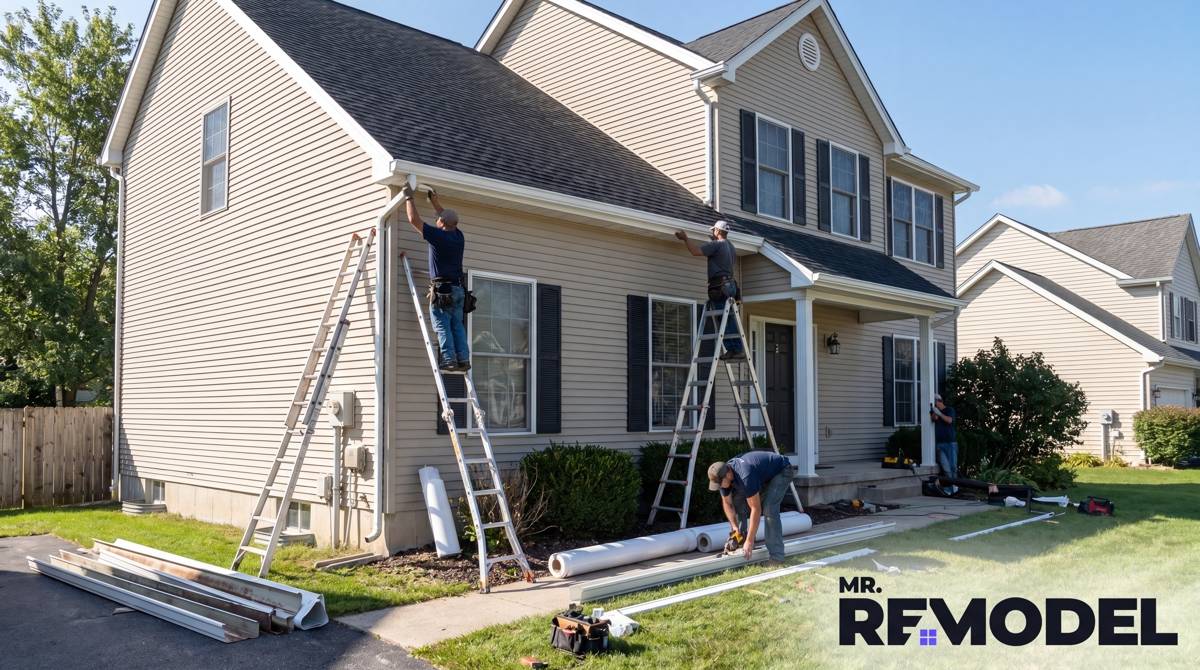
Efficiency is a hallmark of Mr. Remodel. A professional crew arrives with a trailer equipped with a gutter machine. They measure each side of your house and extrude the metal to the exact inch.
The 8-Hour Standard
For a standard 200-linear-foot home, the process is incredibly fast. Most crews can finish the job in under 8 hours. This includes removing the old system and cleaning up the site.
- Site Assessment: The crew checks the fascia for rot.
- Extrusion: Gutters are "printed" on-site from metal coils.
- Sloping: Gutters are pitched toward downspouts.
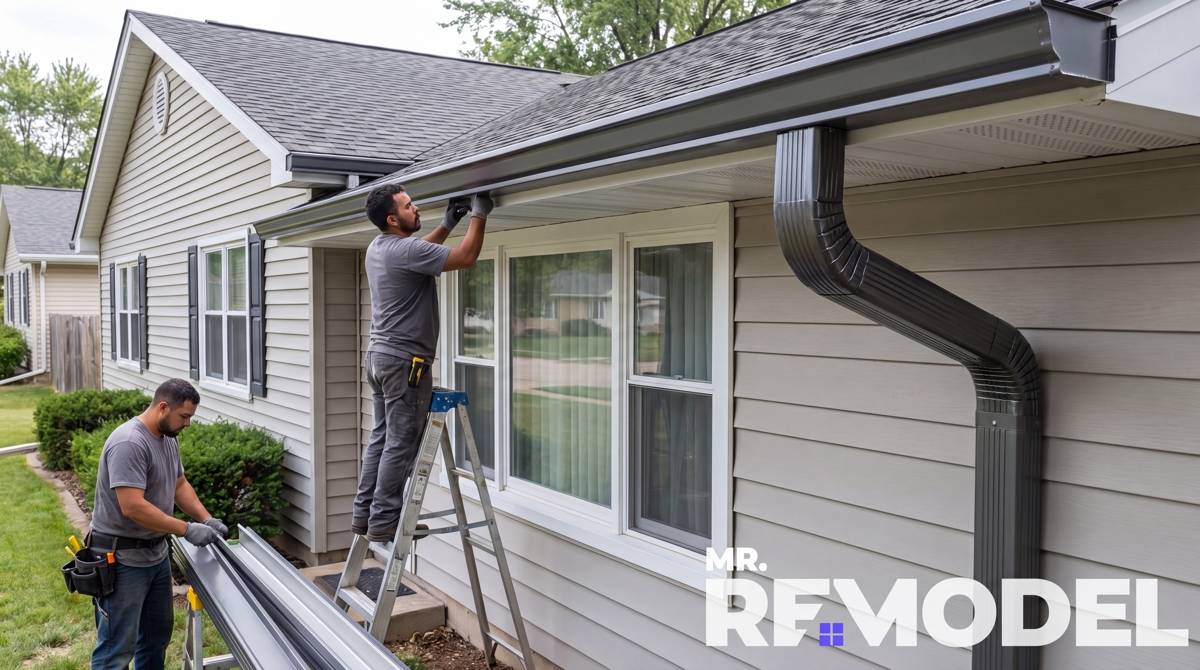
- Hardware: Hidden hangers are screwed into the rafters.
- Downspouts: Outlets are cut, and downspouts are attached.
According to guidelines from Snohomish County Planning & Development, gutters must slope at least 1/16 of an inch per 10 feet. Professionals use levels to ensure this pitch is perfect. Incorrect sloping leads to standing water and mosquito breeding.
Don't wait for the next storm to test your drainage. Contact Mr. Remodel to connect with expert roofing and exterior services and a free gutter estimate.
Material Science: Choosing the Right Metal
The thickness of the metal, known as the "gauge," is just as important as the material itself. Most economy installers use 0.027-gauge aluminum. For a lifetime roofing and renovation project, we recommend 0.032-gauge aluminum.
Aluminum (The Industry Favorite)
Aluminum is lightweight and naturally resistant to rust. It is easy to paint and comes in a wide variety of factory-finished colors. It is the most cost-effective way to get a seamless system.
Steel (The Heavy-Hitter)
Galvanized or stainless steel is chosen for its strength. It can withstand falling branches and heavy ladders better than aluminum. However, galvanized steel will eventually rust if the protective coating is scratched.
Copper (The Eternal Choice)
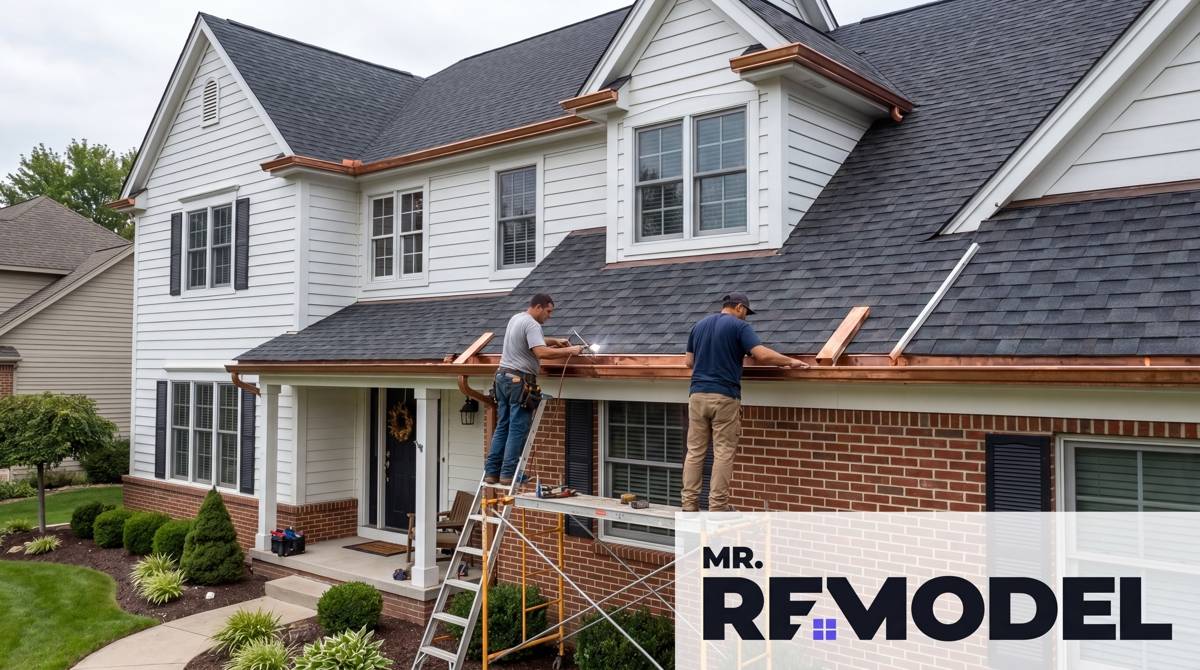
Copper is the gold standard of gutter materials. It develops a beautiful green patina over time. It never needs painting and can last over a century. However, it requires specialized soldering skills for installation.
See Related: Roof Leak Repair vs Full Replacement Cost
The Role of Downspouts and Drainage
A gutter is only as good as its downspouts. If the water cannot leave the gutter quickly, the system will overflow. This is a common issue with "standard" 2x3-inch downspouts.
Experts recommend 3x4-inch downspouts for almost every home. This larger size is much less likely to clog with small twigs or leaves. It also ensures the system can handle the hydraulic load of a heavy downpour.
See Related: Downspout Installation Cost and Why It Matters for Drainage
Downspouts must also be directed away from the house. We recommend extensions that carry water at least 5 to 10 feet away from the foundation. For a cleaner look, these can be tied into underground drainage pipes.
Gutter Guards: Are They Worth the Cost?
Gutter guards are a controversial topic in the industry. Some homeowners swear by them, while others find them ineffective. There are several types of guards to consider.
- Micro-mesh: The most effective at blocking small debris like pine needles.
- Sponge guards: Inexpensive but can grow mold and trap seeds.
- Screen guards: Good for large leaves but can blow off in high winds.
- Surface tension: Water clings to the metal while debris falls off.
Mr. Remodel data shows that micro-mesh guards can reduce cleaning frequency by 90%. However, no guard is completely maintenance-free. You will still need to check the system once a year for fine sediment buildup.
See Related: Are Gutter Guards Worth It? 2026 Costs, ROI, and Maintenance Realities
DIY vs. Professional Installation: The Risks
It is tempting to buy sectional gutters and install them yourself. However, the risks often outweigh the savings. Working on a ladder is inherently dangerous. Falls from ladders are a leading cause of home improvement injuries.
Beyond safety, DIY systems almost always leak. Without a gutter machine, you are forced to use seams every 10 feet. Each seam is a potential failure point. If you miscalculate the slope, water will sit in the gutter and rot your fascia boards.
A professional installation includes a warranty on both materials and labor. If the system leaks or pulls away from the house, the contractor fixes it. This peace of mind is worth the additional labor cost.
See Related: How to Choose a Gutter Contractor (Red Flags and Pricing Tactics)
2026 Gutter Service Value Matrix
Research Methodology
This 2026 guide is based on a comprehensive analysis of 4,614 consumer inquiries from our proprietary dataset. We have combined these behavioral markers with 2026 industry-standard pricing models for residential homes. Our cost estimates are based on a standard 200-linear-foot home to provide an accurate financial anchor for your project.
Frequently Asked Questions
How long does it take to install a new gutter system?
Most residential projects are completed in a single day. A standard 200-linear-foot home usually takes between 4 and 8 hours. This includes the removal of old materials and a final site walkthrough.
What is the average cost per foot for seamless gutters in 2026?
The current market average for seamless aluminum is $9.00 to $16.00 per linear foot. This price includes materials, labor, and disposal of old gutters. High-end materials like copper will be significantly higher.
Why should I choose 6-inch gutters over 5-inch?
A 6-inch gutter can handle significantly more water volume. If your home has a large roof surface or a steep pitch, 5-inch gutters may overflow during heavy storms. This extra capacity is cheap insurance against water damage.
How often should I clean my gutters if I don't have guards?
We recommend a minimum of two cleanings per year. One should occur in late spring after seeds have fallen. The second should be in late fall after all leaves have dropped.
Can contractors install gutters in the winter?
Yes, as long as the fascia is not covered in ice and there is no active heavy snow. Professional crews can install systems year-round in most climates to ensure your home is protected before the spring thaw.
How do I know if my gutters need to be replaced?
Look for signs of sagging, peeling paint, or rust spots. If you see water "striping" on your siding or pools of water near your foundation, your system has likely failed.
What is the benefit of hidden hangers?
Hidden hangers are screwed through the back of the gutter and into the fascia. They are much stronger than the old "spike and ferrule" method. They also provide a cleaner look as they are not visible from the ground.
Protecting Your Home from the Top Down
A high-quality gutter system is more than just a convenience. It is a critical piece of engineering that preserves the structural integrity of your home. By investing in a seamless system, you eliminate leaks and reduce maintenance.
The data is clear. A $2,500 investment today can prevent $25,000 in foundation repairs tomorrow. Whether you choose aluminum for its value or copper for its longevity, the most important factor is professional installation and proper sloping.
Mr. Remodel is dedicated to providing the highest standard of exterior protection. We use proprietary data and local climate intelligence to ensure your system never fails when you need it most. Get free, no-obligation quotes and connect with the best local contractors in your area.