1-855-QUOTEMR

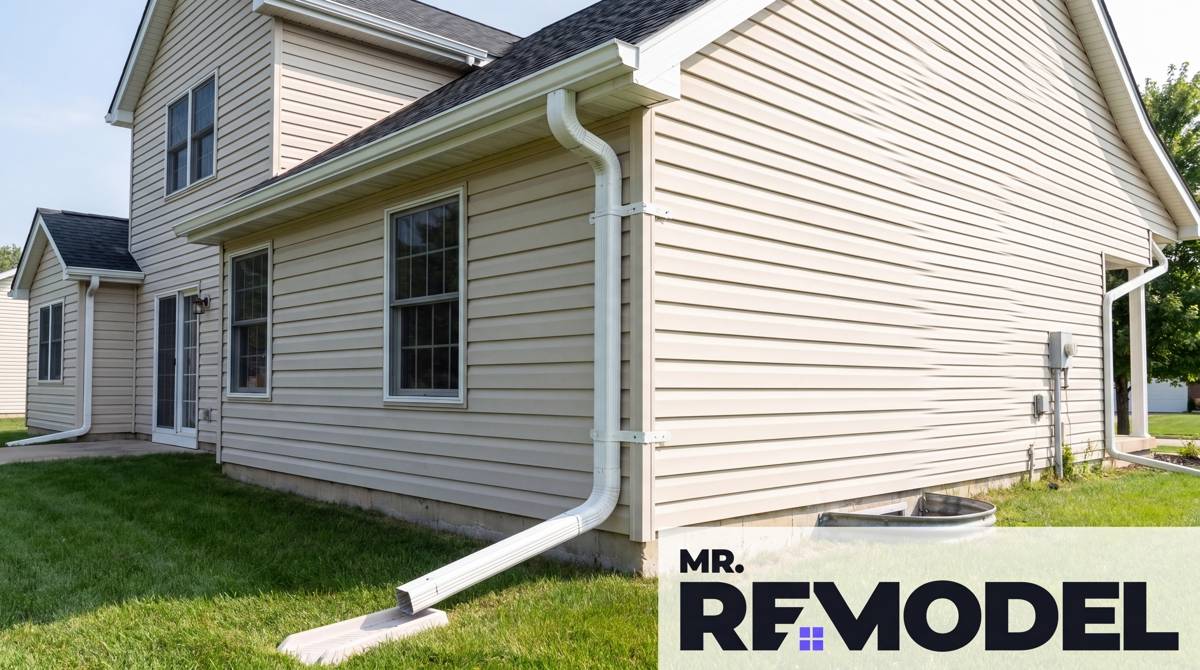
Table of Contents [hide]
Who This Is For
This guide is essential for homeowners noticing pooling water near their foundation, basement dampness, or landscape erosion. It is designed to help property owners understand the financial transition from simple gutter repairs to comprehensive water management systems.
Key Takeaways
- Preventive Savings: Investing in a $150 to $350 buried extension can prevent foundation piering costs that often exceed $20,000.
- Discharge Standards: For maximum protection, water must be discharged at least 6 to 10 feet away from the home foundation.
- Material Pricing: Aluminum downspouts cost between $7.00 and $31.00 per linear foot, with a total average residential overhaul costing $1,527.
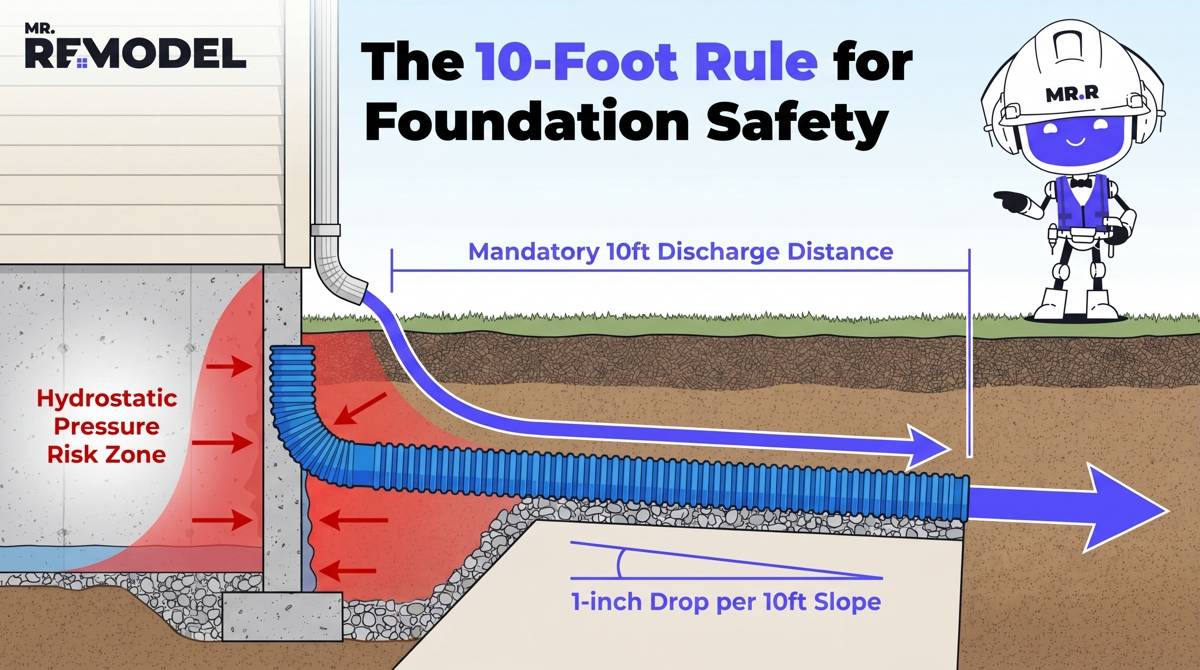
- Slope Precision: Professional underground drainage requires a precise slope of 1 inch of drop per 10 feet of pipe to prevent water backflow.
- Structural Risk: Poor drainage creates hydrostatic pressure, which is a primary cause of bowing basement walls and sinking foundations.
Every year, thousands of homeowners face catastrophic structural failures that could have been prevented with a simple piece of aluminum. A single inch of rain on a 2,000 square foot roof produces roughly 1,250 gallons of water. Without proper downspouts, that volume dumps directly onto your foundation.
Mr. Remodel data shows that reactive foundation repairs are 50 times more expensive than proactive drainage upgrades. Understanding the costs of installation and the mechanics of water diversion is the first step in home preservation. This guide breaks down the 2026 market for downspouts and extensions.
Above-Ground Downspout Costs: Materials and Installation
When evaluating your exterior, the downspout is the vertical component that carries water from the gutters to the ground. In 2026, aluminum remains the market standard due to its durability and rust resistance. Above-ground aluminum downspouts range from $7.00 to $31.00 per linear foot.
Most residential properties require an average overhaul cost of approximately $1,527 for a complete system. This price includes the downspouts, elbows, and secure mounting straps. Vinyl options are cheaper but often crack under extreme temperature fluctuations or UV exposure.
See Related: Gutter Installation Guide: Costs, Timeline, and What Contractors Don’t Tell You
Comparing Downspout Material Pricing
Material choice impacts both the upfront cost and the lifetime value of the system. While vinyl is accessible for DIY projects, professional contractors almost exclusively recommend seamless aluminum or copper for long-term health.
See Related: Roof Replacement Cost (2026): Materials, Labor, Regional Pricing & ROI
The Last Mile: Buried Extensions and Underground Drainage
Standard downspouts usually end with a small elbow that deposits water just inches from the foundation. This is the most common point of failure in residential drainage. According to the University of Minnesota Extension, water must be moved away from the house to prevent basement seepage.
Mr. Remodel emphasizes the last-mile solution as a critical upgrade. Buried downspout extensions typically cost between $150 and $350 per spout. These systems carry water through underground pipes to a safe discharge point far from the structure.
The True Cost of Buried PVC Systems
If you opt for a fully integrated underground system, you must account for both pipe materials and excavation labor. Material costs for underground PVC generally run between $3 and $6 per linear foot. However, the labor involved in trenching is where the budget often expands.
Excavation labor typically costs between $50 and $100 per hour. This is because professional equipment and expertise are required to maintain a precise slope. If the trench is not dug correctly, water will pool in the pipe or flow backward toward your basement.
See Related: Roof Leak Repair vs Full Replacement Cost
The Cost of Failure: Why Foundation Health Depends on Downspouts
The primary purpose of a downspout is to protect the foundation. When water pools near the footings, it creates hydrostatic pressure. The American Society of Civil Engineers notes that this pressure is a major driver of residential structural damage.
If you neglect your drainage, you are trading a $150 extension for a massive repair bill. Basement waterproofing can cost anywhere from $4,500 to $15,500. If the pressure causes walls to bow, steel braces can cost $3,000 to $10,000 per wall.
Catastrophic Structural Repair Baselines
The most severe consequence of poor drainage is foundation sinking or settling. Correcting this through a process called piering is an invasive and expensive procedure.
- Piering/Leveling: $5,000 to $20,000+
- Sump Pump Installation: $1,200 to $3,500
- Landscape Regrading: $2,500 to $6,000
By investing in professional gutter and downspout installation, you mitigate these risks. Proper water management ensures that the soil around your home remains stable and dry.
The DIY Trenching Trap: Why Precision Matters
Many homeowners attempt to dig their own drainage trenches to save on labor. However, this is a common point of failure. According to professional standards from Snohomish County Planning & Development, downspouts must have a consistent slope.
The standard requirement is a 1-inch drop for every 10 feet of horizontal pipe. Achieving this by hand is extremely difficult. Small errors in the slope lead to standing water, which attracts pests and can cause the pipe to freeze and burst in winter.
Professional Staging and Equipment
When you work with Mr. Remodel, you get access to contractors who use laser levels and trenching machines. These tools ensure that the discharge point is lower than the entry point. They also ensure that the water is released 6 to 10 feet away from the foundation as recommended by FEMA.
See Related: How to Choose a Gutter Contractor: Red Flags and Pricing Tactics
Regional Pricing and Material Factors in 2026
Where you live significantly influences the cost of downspout installation. In High Cost of Living (COL) areas like New York or San Francisco, labor surcharges can increase total project costs by 20% to 35%. Soil composition also plays a role in underground costs.
Digging through rocky or clay-heavy soil requires more time and heavier machinery than digging through sandy loam. Homeowners in the Northeast should prioritize expert roofing and exteriors that can withstand heavy snow loads and ice damming.
Climate-Specific Hardware Upgrades
In regions with heavy rainfall, such as the Pacific Northwest or the Southeast, standard 2x3-inch downspouts may be insufficient. Upgrading to 3x4-inch oversized downspouts is a smart investment. These allow for higher water volume and are less likely to clog with small debris.
See Related: Lifetime Roofing and Siding: Smarter Longer-Term Upgrades
Maintenance and Inspection: Extending System Life
Even the best-installed system requires periodic maintenance. Clogged downspouts cause water to back up into the gutters, leading to roof leaks and fascia rot. A roof inspection checklist before replacement should always include a thorough evaluation of the drainage system.
Signs You Need an Upgrade
If you notice any of the following, it is time to consult a professional:
- Water spilling over the sides of your gutters.
- Peeling paint or rotted wood on your fascia boards.
- Eroded soil or deep "trenches" beneath your downspout elbows.
- Dampness or a musty smell in your basement or crawlspace.
See Related: Signs You Need a New Roof (vs Repair)
Research Methodology
This 2026 guide is based on a comprehensive analysis of 4,614 consumer inquiries from our proprietary dataset. We have combined these behavioral markers with 2026 industry-standard pricing models for residential homes. Our cost estimates are based on a standard 200-linear-foot home to provide an accurate financial anchor for your project.
Frequently Asked Questions
How far should a downspout extend from the house?
For a standard foundation, water should be discharged at least 6 feet away. If you have a basement or crawlspace, 10 feet is the professional recommendation to prevent water from seeping back toward the structure.
What is the best material for downspouts in 2026?
Seamless aluminum is the top choice for most homeowners. It offers an excellent balance of price, durability, and aesthetics. It will not rust and can be color-matched to your home siding or trim.
Can I install buried downspout extensions myself?
While possible, it is not recommended due to the precision required for the slope. Poorly sloped pipes lead to clogs and water backflow. Services like Mr. Remodel help by matching you with vetted contractors who have the proper excavation equipment.
How much do oversized downspouts cost?
Oversized 3x4-inch downspouts typically cost $2 to $5 more per linear foot than standard 2x3-inch models. They are highly recommended for large roof areas or regions with frequent heavy downpours to prevent gutter overflow.
Will new downspouts improve my home resale value?
While they may not increase the appraised value significantly, they are a major selling point. Savvy buyers and inspectors look for proper drainage as a sign of a well-maintained home. It provides peace of mind that the foundation is protected.
Investing in Your Home's Long-Term Stability
The true cost of downspout installation is more than just the price of metal and labor. It is an insurance policy against the catastrophic failure of your home foundation. By spending $150 to $350 on extensions today, you avoid the $20,000 nightmare of foundation piering tomorrow.
Proper drainage is the foundation of lifetime roofing and siding performance. Whether you are upgrading your gutters or reacting to a basement leak, prioritizing the last mile of water diversion is essential for every homeowner.
Don't wait for the next heavy storm to find out your drainage is failing with the help of Mr. Remodel. Get free, no-obligation quotes and connect with local, vetted contractors who specialize in foundation-saving drainage solutions.