1-855-QUOTEMR

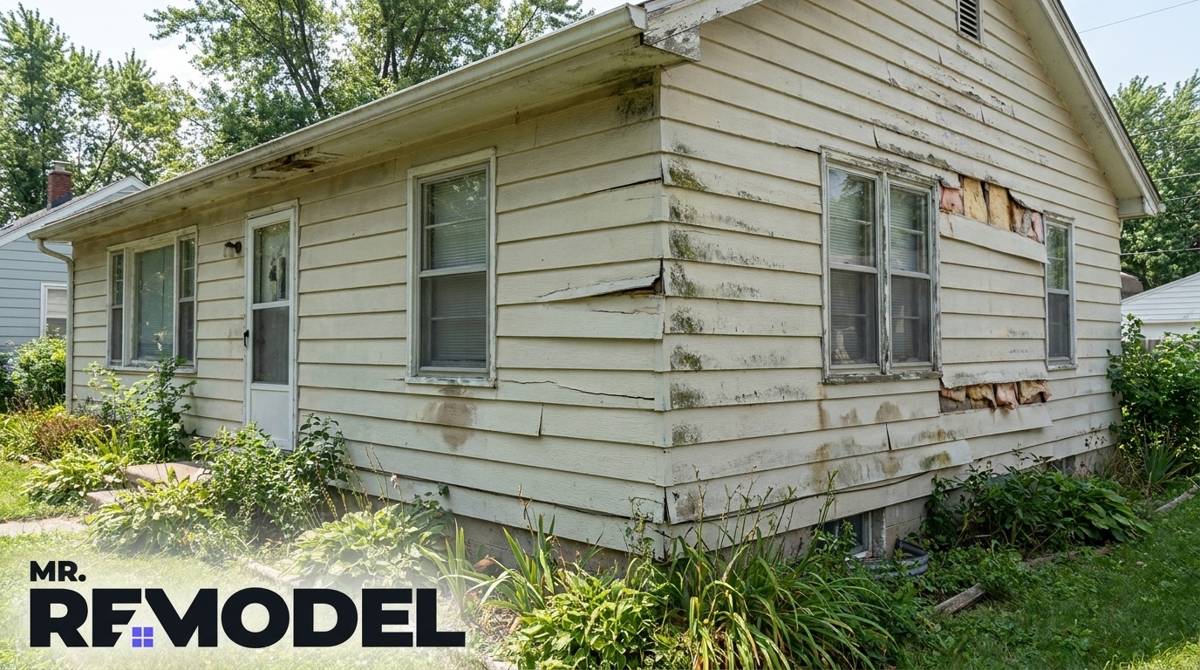
Table of Contents [hide]
Who This Is For
Homeowners noticing exterior damage, dealing with leaks, seeing rising maintenance needs, or trying to decide whether siding repair is enough or full replacement is the smarter long-term investment.
Key Takeaways:
- Damage Can Spread: Visible siding problems may point to deeper moisture or structural concerns.
- Water Is Serious: Water intrusion should never be ignored.
- Repairs Have Limits: Frequent repairs can cost more than replacement over time.
- Replacement Is Common: Most Mr. Remodel siding inquiries are for installation rather than repair.
- Early Action Helps: Inspecting problems early can prevent larger repair costs.
Siding problems often start small, then spread before homeowners realize how serious they are. If you are seeing cracks, warping, loose panels, rot, or moisture stains, these may be signs your home needs new siding rather than another short-term repair.
Siding protects the exterior walls from weather, moisture, pests, and temperature changes. Once it starts failing, the damage can move behind the surface and affect sheathing, insulation, trim, and interior walls.
Why Siding Fails Over Time
Siding wears down because it is exposed to sun, rain, wind, temperature swings, pests, and everyday aging. Even strong materials can fail when they are old, poorly installed, or exposed to repeated moisture.
The United States Department of Energy explains that the home exterior is part of the building envelope, which affects comfort and energy performance. Its Energy Saver resources can help homeowners understand how exterior systems support the home.
Moisture is one of the biggest threats. The U.S. Environmental Protection Agency (EPA) explains that moisture control is important for healthy homes because moisture problems can contribute to mold and building damage.
Poor installation can also shorten siding life. If panels are fastened too tightly, flashing is missing, or water is not directed away correctly, siding can fail sooner than expected.
See Related: Siding Replacement Guide
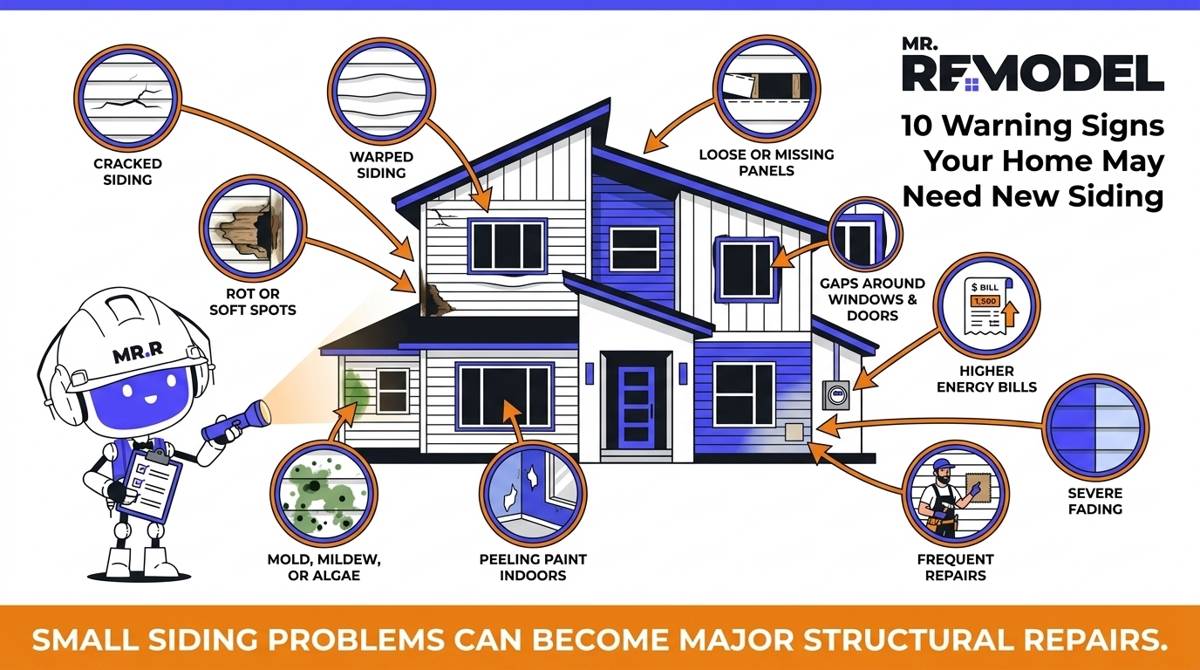
10 Signs Your Home May Need New Siding
Not every siding problem requires full replacement. However, these warning signs should be inspected before they become more expensive.
1. Cracked Siding
Cracks allow water, insects, and air to reach areas behind the siding. A few damaged pieces may be repairable, but widespread cracking often means the siding is brittle or aging.
2. Warped Siding
Warped siding can pull away from the wall and create gaps. This may happen from heat exposure, moisture, poor installation, or age.
3. Rot or Soft Spots
Soft siding, crumbling wood, or areas that feel weak can point to rot. The United States Department of Agriculture (USDA) Forest Products Laboratory provides research on wood decay and moisture behavior, which can help homeowners understand why damp exterior materials deteriorate over time.
4. Mold, Mildew, or Algae Growth
Growth on the surface does not always mean replacement is needed. But recurring mold, mildew, or algae near seams, corners, or shaded areas may point to trapped moisture.
5. Peeling Paint Inside the Home
Peeling paint or bubbling wallpaper inside exterior walls may be a sign of moisture entering behind the siding. This should be checked quickly.
6. Loose or Missing Panels
Loose siding can let wind-driven rain reach the wall. Missing panels should be replaced right away, especially before storm season.
7. Gaps Around Windows and Doors
Gaps around trim, windows, doors, and corners may allow water to enter. These areas are common weak points when siding or flashing fails.
8. Higher Energy Bills
Damaged siding alone may not be the only cause of higher energy bills, but gaps, air leaks, and failed exterior materials can affect comfort. The Department of Energy’s Energy Saver guidance is useful for understanding how home envelope problems can affect efficiency.
9. Severe Fading
Faded siding is often cosmetic, but extreme fading can also mean the material has aged and lost some surface durability. This is especially important if fading appears along with cracking or brittleness.
10. Frequent Repairs
If you keep repairing the same siding issues, replacement may be more cost-effective. Repeated repair bills can add up without solving the bigger problem.
Repair or Replace?
Repair may be enough when the problem is isolated. A few cracked vinyl panels, a small section of storm damage, or one loose piece may not justify full replacement.
Replacement is usually better when damage is widespread, siding is near the end of its lifespan, moisture has reached the wall system, or matching old material is difficult.
Mr. Remodel siding data shows that homeowners overwhelmingly choose larger installation projects over small repairs once siding problems become significant. Installation generated 5,462 inquiries, or about 92% of siding demand, compared with 445 repair inquiries, or about 8%.
That means installation demand is more than 12 times greater than repair demand. This supports a common homeowner pattern: once siding problems spread, replacement often becomes the more practical path.
See Related: Siding Repair vs Replacement
Think your siding may be beyond repair? Get a free quote from fully vetted local siding contractors from Mr. Remodel.
What Happens If You Ignore Damaged Siding?
Ignoring damaged siding can lead to larger problems behind the surface. Water can reach sheathing, insulation, framing, and interior walls.
Over time, moisture may contribute to mold, rot, pest intrusion, and structural deterioration. What begins as a small exterior issue can turn into a larger repair.
The National Association of Home Builders (NAHB) provides homeowner resources that can help homeowners think about exterior maintenance and home performance as part of long-term ownership.
The safest approach is to inspect siding problems early. Waiting usually gives moisture and pests more time to cause damage.
Choosing Replacement Materials
When replacement makes sense, homeowners should compare materials based on cost, maintenance, durability, climate, and appearance.
Vinyl is the most requested material in Mr. Remodel siding data. It generated 4,057 inquiries, representing about 69% of all siding inquiries.
Vinyl is popular because it is affordable, widely available, and lower maintenance than many other materials. Fiber cement is often chosen for durability and a more premium look. Engineered wood can offer a wood-like appearance with improved consistency.
Wood siding has classic appeal but requires more maintenance. Metal siding can be durable and modern, while stucco may suit certain climates and home styles.
See Related: Siding Replacement Guide
When to Schedule a Professional Inspection
You should schedule a siding inspection when you notice cracking, warping, rot, loose panels, interior moisture stains, or repeated repair needs. It is also smart to inspect siding after severe storms.
Homeowners may also want an inspection before winter, before selling a home, or before buying an older property. A siding contractor can check whether the problem is cosmetic, repairable, or a sign that replacement is needed.
Ask the contractor to inspect siding, trim, flashing, windows, doors, corners, and areas near the roofline. These are common places for water problems to start.
See Related: How Long Does Siding Last?
Frequently Asked Questions
What are the first signs that siding needs to be replaced?
The first signs often include cracks, warping, loose panels, fading, soft spots, peeling interior paint, or moisture stains near exterior walls. If these problems appear in several areas, replacement may be more practical than repeated repairs.
Can damaged siding be repaired instead of replaced?
Yes, damaged siding can sometimes be repaired when the issue is limited to a small area and matching material is available. Replacement is usually better when damage is widespread, moisture is present, or the siding is near the end of its lifespan.
How long should siding last?
Siding lifespan depends on material, installation quality, climate, and maintenance. Vinyl may last 20 to 40 years, while fiber cement, metal, and stucco can last longer when properly installed and maintained.
Does damaged siding affect home value?
Damaged siding can affect home value because it may reduce curb appeal and raise concerns about moisture, maintenance, and exterior protection. Buyers may see cracked, warped, or rotting siding as a sign that the home needs major work.
Signs Your Home Needs New Siding: Final Takeaway
Siding damage should not be ignored, especially when cracks, warping, rot, moisture stains, or loose panels appear in multiple areas. Early inspection can help you decide whether a small repair is enough or whether replacement will protect the home better.
If your siding is failing, compare materials, ask about hidden moisture damage, and review detailed written estimates. To take the next step, connect with a fully vetted local siding contractor from Mr. Remodel.