1-855-QUOTEMR

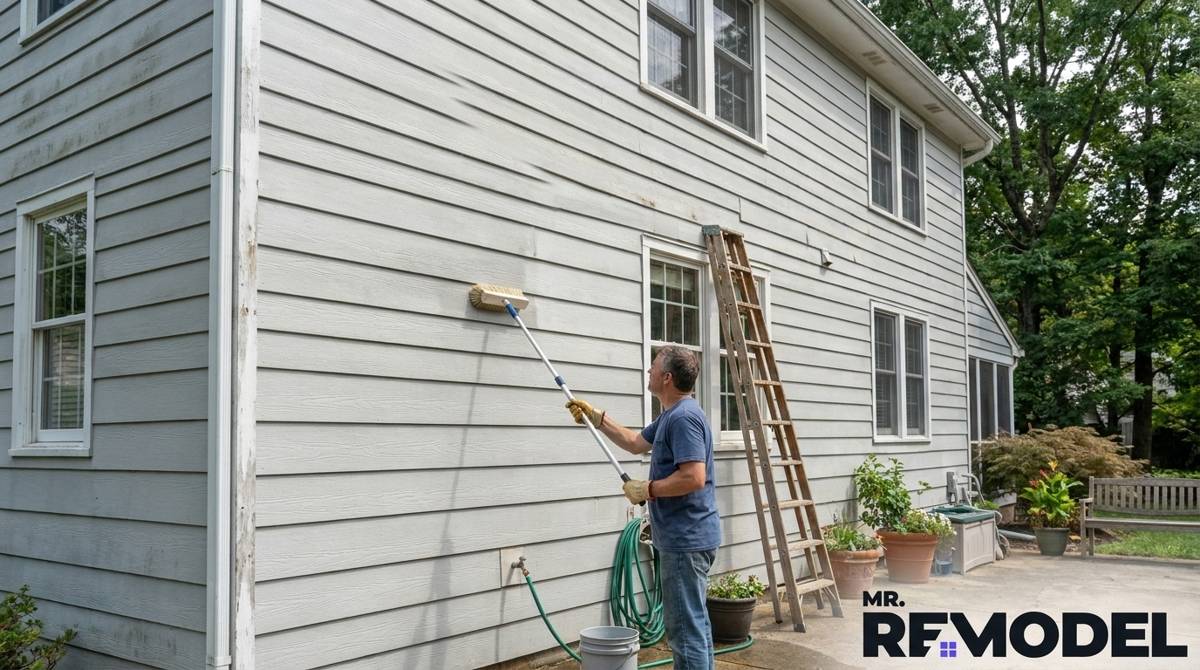
Table of Contents [hide]
Who This Is For:
Homeowners who already have fiber cement siding, recently installed it, or want to protect their siding investment through regular cleaning, inspections, repainting, caulk maintenance, and moisture control.
Key Takeaways:
- Inspect at Least Once a Year: Look for cracks, loose caulk, damaged boards, and signs of moisture.
- Clean Gently: Use mild soap, a soft brush, and a low-pressure garden hose for routine cleaning.
- Maintain Caulk and Flashing: Gaps around windows, doors, trim, and joints can let water behind the siding.
- Repaint When Needed: A failing finish can expose siding to moisture and weather damage.
- Fix Damage Promptly: Cracked boards, moisture stains, and repeated repairs may mean maintenance is no longer enough.
Fiber cement siding is known for durability, curb appeal, and lower maintenance compared with natural wood. But it still needs regular care. Weather, moisture, sunlight, caulk failure, and poor drainage can all affect how well it performs over time.
A simple maintenance routine can help protect the finish, reduce moisture risk, and catch small problems before they become expensive repairs. Mr. Remodel siding data shows that installation projects account for 5,462 inquiries, or about 92%, while repair projects account for 445 inquiries, or about 8%.
This shows that many homeowners eventually reach a point where siding work becomes larger than routine upkeep. Regular maintenance can help homeowners spot problems earlier and decide when repairs or replacement may be needed.
Why Fiber Cement Siding Requires Maintenance
Fiber cement is built to handle weather better than many traditional exterior materials, but it is not maintenance-free. Its finish, caulk joints, clearances, flashing, and installation details all need attention.
James Hardie’s care and maintenance guidance recommends routine cleaning and inspection to help keep fiber cement siding in good condition.
Paint and factory finishes help protect fiber cement siding from the elements. Over time, sun, rain, wind, and seasonal temperature changes can wear down the surface.
When the finish fades, chips, cracks, or peels, moisture can become a bigger concern. Repainting at the right time helps protect both appearance and performance.
Moisture control also matters. Fiber cement resists rot better than natural wood, but water can still cause problems if it gets behind the siding or enters damaged areas.
The APA resource on moisture control for residential buildings explains why wall systems need to manage water properly. Good drainage, flashing, and drying potential are important for any exterior cladding.
The International Code Council (ICC) 2021 International Residential Code, Section R703 Exterior Covering covers exterior wall covering requirements. Homeowners do not need to memorize code, but they should know that siding performance depends on more than the visible boards.
Annual Fiber Cement Siding Inspection Checklist
Inspect fiber cement siding at least once a year. Spring and fall are good times because they help you catch winter damage or prepare for wet weather.
Walk around the home slowly and check each wall from top to bottom.
Look for:
- Cracked, chipped, or broken boards
- Peeling, bubbling, or fading paint
- Failed caulk around windows, doors, trim, and joints
- Loose or missing flashing
- Stains, mildew, algae, or mold
- Soft trim or signs of moisture damage
- Boards touching soil, decks, rooflines, or landscaping
- Sprinklers spraying directly on the siding
- Gaps, separation, or loose fasteners
If you see water stains, repeated mildew, or damage around openings, look for the source. Cleaning the surface will not solve the problem if water keeps entering behind the siding.
How to Clean Fiber Cement Siding
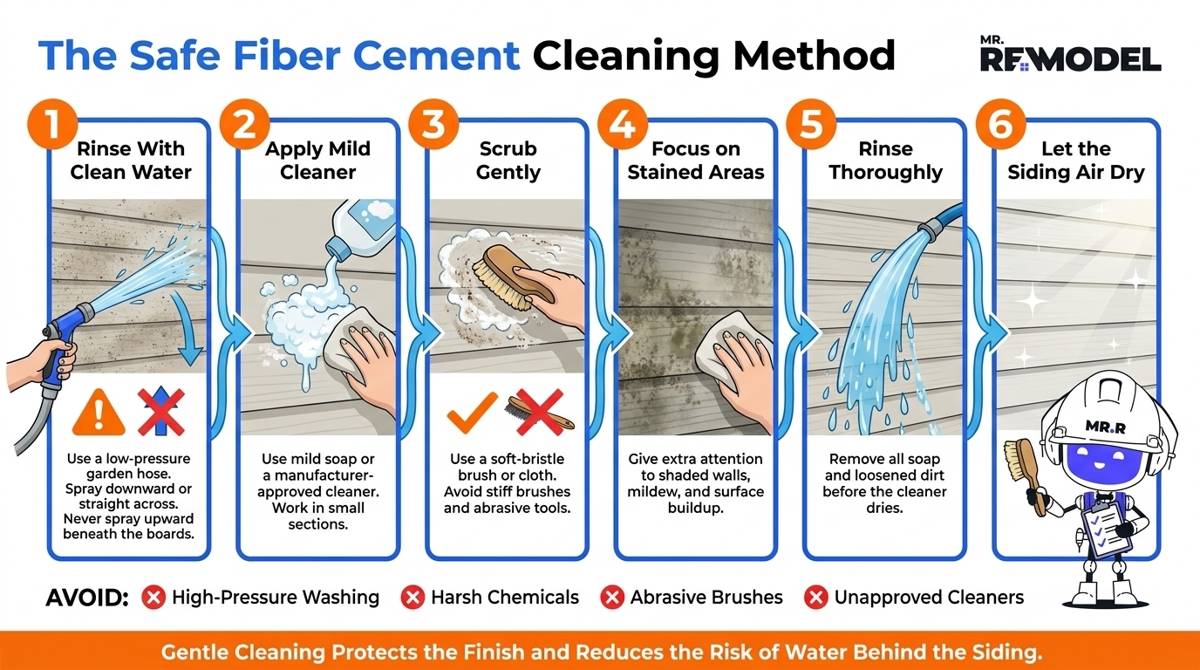
Fiber cement siding usually does not need harsh cleaning. Gentle methods are safer for the finish and the wall system behind it.
Start with a garden hose, mild detergent, and a soft-bristle brush or cloth. Work in small sections and rinse thoroughly before the cleaner dries.
First, rinse the siding with clean water from a garden hose. Use low pressure and spray downward or straight across, not upward under the boards.
Next, apply mild soap or a manufacturer-approved cleaner. Scrub gently with a soft brush or cloth, especially on dirty or stained areas.
Finally, rinse thoroughly and allow the siding to air dry. After it dries, inspect the surface again for chips, cracks, caulk failure, or stains that did not come off.
Mold and mildew are often signs of moisture, shade, or poor drainage. The Environmental Protection Agency (EPA) provides guidance on mold cleanup in your home, including the importance of fixing moisture sources.
If mildew keeps returning, check gutters, downspouts, landscaping, sprinklers, and shaded areas. Repeated staining may point to a drainage issue, not just a cleaning issue.
Avoid high-pressure washing unless the siding manufacturer allows it and the person doing the work understands fiber cement. North Carolina State Extension’s guide to pressure washing your home explains why pressure and technique matter.
Repainting and Protecting the Finish
Fiber cement siding may need repainting when the finish starts to fade, crack, peel, chalk, or lose protection. Repainting helps preserve appearance and moisture resistance.
Follow manufacturer guidance for paint type, surface preparation, and timing. A quality exterior paint and proper prep work can make a major difference.
Before repainting, the siding should be clean and dry. Damaged caulk, cracked boards, and loose trim should be repaired first. Painting over hidden moisture problems can trap damage instead of fixing it.
Prevent Moisture Damage
Moisture control is one of the most important parts of fiber cement siding maintenance. Many siding problems begin when water sits against the wall.
Keep gutters clean, so water does not spill down the siding. Direct downspouts away from the foundation and exterior walls.
Trim shrubs, vines, and tree branches away from the siding so the surface can dry. Avoid letting sprinklers hit the exterior wall every day.
Maintain proper clearance between siding and soil, decks, roofs, and hard surfaces. If siding is too close to these areas, water can collect and cause damage.
Inspect flashing around windows, doors, rooflines, decks, and penetrations. Flashing should move water away from vulnerable areas.
Need help repairing or replacing damaged siding? Get a free quote from fully vetted local siding contractors.
Common Maintenance Mistakes
The biggest fiber cement maintenance mistakes usually involve water, pressure, or delayed repairs.
- Do not ignore cracked caulk. Small gaps around windows, doors, trim, and joints can let water behind the siding.
- Do not delay repainting when the finish is failing. Paint protects the surface, and waiting too long can make repairs more expensive.
- Do not use harsh chemicals, abrasive brushes, or unapproved cleaners. These can damage the finish.
- Do not let sprinklers soak siding or landscaping press against the wall. Constant moisture can shorten the life of the exterior system.
- Do not skip annual inspections. A short walkaround once or twice a year can help you catch problems early.
See Related: Siding Maintenance Guide
When Maintenance Is No Longer Enough
Some fiber cement siding issues can be fixed with cleaning, caulking, repainting, or replacing a few boards. Other problems may point to larger failure.
Maintenance may not be enough if you see widespread cracking, multiple damaged boards, repeated moisture stains, loose siding, soft sheathing, or water entering the home.
Replacement may also make more sense when repairs are recurring or when the siding is old, heavily weathered, or no longer protecting the wall system properly.
See Related: Siding Replacement Guide
Frequently Asked Questions
How often should fiber cement siding be inspected?
Fiber cement siding should be inspected at least once a year, and again after major storms. Check for cracked boards, loose caulk, peeling paint, moisture stains, damaged flashing, and areas where siding is too close to soil, decks, or landscaping.
Does fiber cement siding need repainting?
Yes. Fiber cement siding may need repainting when the finish fades, peels, cracks, chalks, or no longer protects the surface well. Follow the manufacturer’s recommendations for paint type, preparation, and timing.
Can you pressure wash fiber cement siding?
Pressure washing should be used carefully, if at all. High pressure can damage paint, force water behind siding, or harm caulk and trim. Gentle cleaning with a garden hose, mild soap, and a soft brush is usually safer.
What is the best cleaner for fiber cement siding?
A mild soap and water solution or a manufacturer-approved cleaner is usually best for routine cleaning. Avoid harsh chemicals, abrasive tools, and cleaners not recommended for fiber cement siding.
How to Maintain Fiber Cement Siding: Final Takeaway
Fiber cement siding can be a durable, long-lasting exterior option when it is cared for properly. Regular inspections, gentle cleaning, caulk maintenance, repainting, and moisture control all help protect the siding and the wall system behind it.
If the siding has widespread cracks, moisture damage, repeated repairs, or failing boards, maintenance may no longer be enough. To compare repair and replacement options, connect with fully vetted local siding contractors.