1-855-QUOTEMR


Table of Contents [hide]
Who This Is For:
Homeowners who want their siding to last longer, avoid expensive repairs, inspect their exterior with more confidence, and know when cleaning or small repairs are no longer enough.
Key Takeaways:
- Regular Inspections Matter: Checking siding at least once or twice a year helps catch small problems early.
- Cleaning Depends on Material: Vinyl, wood, fiber cement, metal, and stucco need different care.
- Moisture Is the Biggest Risk: Cracks, gaps, failed caulk, and trapped water can lead to hidden damage.
- Repairs Have Limits: Isolated damage may be repairable, but widespread rot, warping, or moisture issues may require replacement.
- Qualified Contractors Help Protect the Home: Professional repairs and replacements are important when siding damage affects the wall system behind it.
Siding protects your home from rain, wind, sun, pests, and daily weather exposure. When it is maintained well, it can help preserve curb appeal, reduce moisture problems, and extend the life of your exterior.
This siding maintenance guide explains how to inspect, clean, and care for major siding materials. It also explains when simple maintenance is enough and when repairs or replacement may be the smarter choice.
Why Siding Maintenance Matters
Siding is one of the home’s first layers of protection. It helps shield the wall system from weather, moisture, pests, and impact damage.
When siding is ignored, small issues can spread. A cracked panel, failed caulk joint, loose board, or damaged flashing area can allow water to reach the wall behind the siding.
Moisture is one of the most serious siding problems. Once water gets behind the siding, it can damage sheathing, insulation, framing, and interior finishes.
The Building America Solution Center’s Water Management System Builder’s Guide explains the importance of drainage, flashing, water-resistant barriers, and wall systems that can manage moisture.
Regular maintenance also helps preserve curb appeal. Clean siding, sound caulk, intact paint, and repaired damage make the exterior look cared for before problems become obvious from the street.
Seasonal Siding Maintenance Checklist
Siding maintenance is easier when you break it into seasons. You do not need to inspect every detail every month, but a regular schedule helps prevent surprises.
Spring: Inspect After Winter
Spring is a good time to check for winter damage. Look for cracks, loose panels, peeling paint, damaged caulk, mildew, and water stains.
Pay special attention to areas near gutters, downspouts, rooflines, decks, porches, and landscaping. These areas often collect moisture.
Summer: Clean and Touch Up
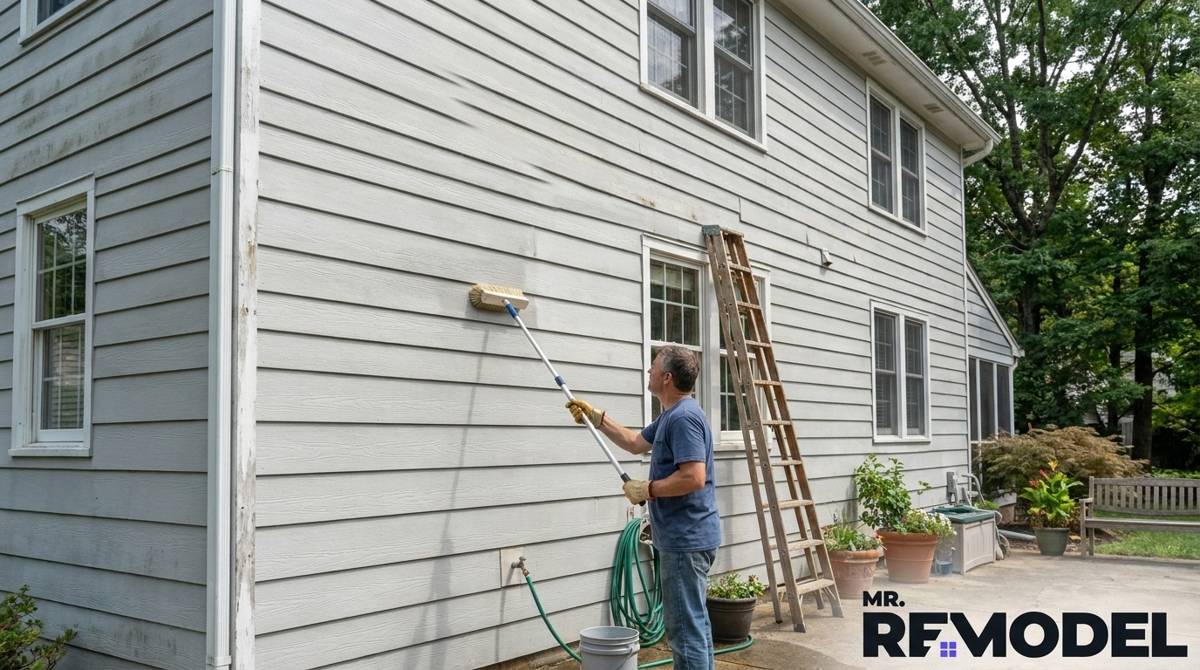
Summer is often a good time to clean siding. Use cleaning methods that match your siding material, and avoid aggressive pressure washing unless the product allows it.
Wash dirt, pollen, mildew, and surface stains. Then check for fading, chalking, peeling paint, insect activity, and storm damage.
Fall: Prepare for Cold and Wet Weather
Fall is a good time to prepare siding for winter. Small gaps, cracks, and drainage issues can become worse when cold weather arrives.
Clear gutters, check downspouts, remove leaves near siding, inspect ground clearance, and schedule professional repairs before harsh weather if needed.
Winter: Monitor Trouble Spots
Winter maintenance is mostly about watching for problems. Do not ignore siding areas that collect snow, ice, or runoff.
Look for ice near rooflines, moisture stains, loose siding after storms, and areas where snow piles against the house.
How to Inspect Your Siding
Start with a slow walk around the home. Look at the siding from the ground, then move closer to inspect details around windows, doors, trim, vents, decks, and corners.
Check for cracks, gaps, loose sections, warped panels, soft spots, peeling paint, failed caulk, and stains below windows or rooflines.
Mildew, algae, and surface stains are common on shaded or damp walls. The Environmental Protection Agency (EPA) guides mold cleanup in your home, including the importance of controlling moisture.
Surface mildew may be a cleaning issue. Recurring stains may point to poor drainage, leaking gutters, heavy shade, or water getting behind the siding.
Also, look for moisture damage. Warning signs can include swelling, bubbling paint, soft trim, musty smells, loose siding, or interior wall stains.
The United States Department of Energy’s air sealing guidance explains how gaps and leaks can affect comfort and home performance.
Maintenance Tips by Siding Material
Every siding material needs maintenance, but not in the same way. Always follow manufacturer instructions when available.
Vinyl Siding
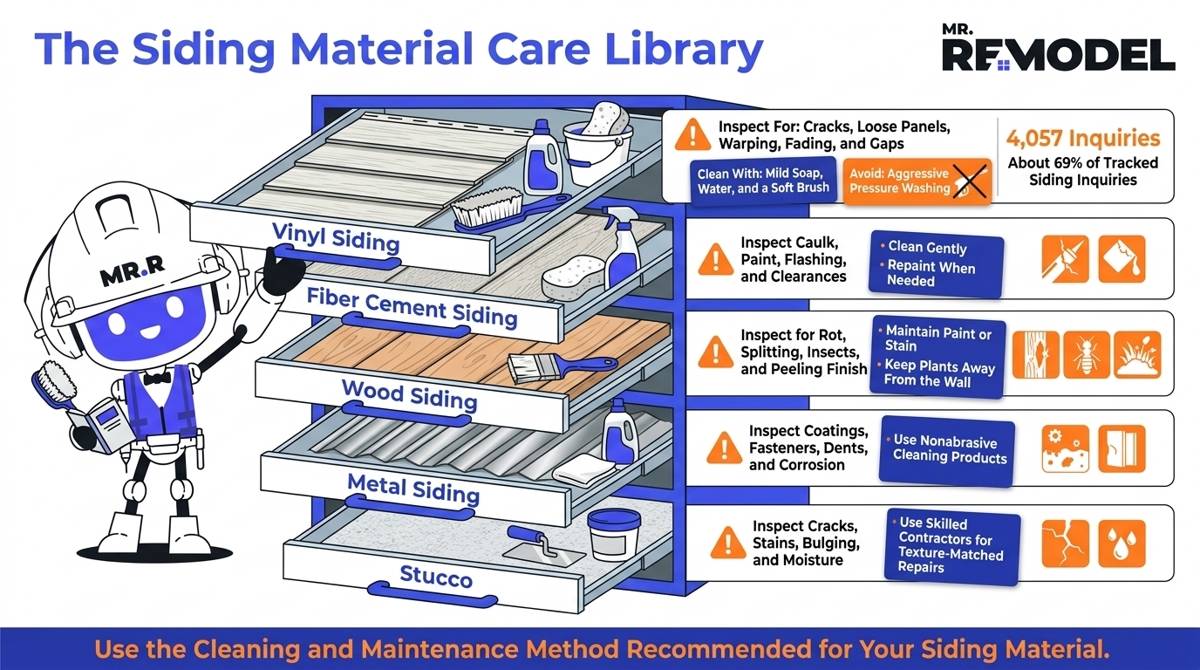
Vinyl is usually low maintenance. It does not need painting, and it is easy to clean with mild soap, water, and a soft brush or cloth.
Inspect vinyl for cracks, loose panels, warping, fading, and gaps. Be careful with pressure washing because water can be forced behind the panels.
Vinyl generated 4,057 inquiries in the Mr. Remodel dataset, or about 69% of tracked siding inquiries. This shows strong homeowner interest, but it does not mean vinyl needs no care.
See Related: How to Clean Vinyl Siding
Fiber Cement Siding
Fiber cement is durable, but it still needs inspection. Check caulk joints, paint condition, clearances, flashing, and areas near the ground or rooflines.
Clean fiber cement gently and avoid damaging the finish. Repainting may be needed over time, depending on product, finish, exposure, and climate.
See Related: How to Maintain Fiber Cement Siding
Wood Siding
Wood siding needs the most routine care. It should be inspected for peeling paint, failed stain, rot, warping, splitting, insects, and moisture damage.
Paint or stain must be maintained so water does not soak into the wood. Plants should be kept away from the siding so the material can dry properly.
The United States Department of Agriculture (USDA) Forest Products Laboratory’s Wood Handbook explains how moisture and decay affect wood materials.
Metal Siding
Metal siding is often durable and low maintenance, but it can dent, scratch, corrode, or loosen. Inspect for damaged coatings, rust on steel products, loose fasteners, and impact marks.
Clean metal siding with mild products and avoid abrasive tools that can damage protective finishes.
Stucco
Stucco should be inspected for cracks, staining, bulging, and moisture problems. Small cracks may need prompt attention before water enters.
Stucco repairs can be more specialized because texture and color matching are important. Poor patching can be obvious.
Need professional siding repairs or replacement? Get a free quote from fully vetted local siding contractors.
When Maintenance Is Enough and When It Is Not
Routine maintenance may be enough when damage is small, isolated, and mostly cosmetic. Examples include light dirt, minor mildew, small caulk gaps, a single loose panel, small paint touch-ups, or one damaged board that can be replaced.
Professional repair may be needed when siding is cracked, broken, loose, dented, rotting, or damaged by storms. Repairs may also be needed when flashing fails, trim separates, or water stains appear.
Replacement may be better when damage is widespread, recurring, or tied to moisture behind the siding. Warning signs include large areas of rot, multiple cracked sections, siding pulling away, soft sheathing, repeated moisture problems, or high repair costs compared with replacement.
See Related: When to Replace Siding
Common Siding Maintenance Mistakes
Do not pressure wash siding too aggressively. Pressure washing can damage siding, force water behind panels, loosen caulk, or strip paint. Soft washing or hand cleaning is often safer for routine maintenance.
Do not delay repairs. A loose panel, cracked board, failed caulk joint, or small leak can turn into a larger moisture problem.
Do not ignore recurring stains, mildew, soft boards, or peeling paint. Cleaning the surface is not enough if water keeps returning.
Also, avoid harsh cleaning products unless the manufacturer recommends them. Strong chemicals can damage finishes, discolor siding, or harm landscaping.
See Related: Siding Replacement Guide
Frequently Asked Questions
How often should siding be cleaned?
Most siding should be cleaned at least once a year, but homes in humid, coastal, dusty, shaded, or tree-heavy areas may need more frequent cleaning. Always use cleaning methods that match the siding material.
How often should siding be inspected?
Siding should be inspected at least once or twice a year and after major storms. Spring and fall are good times to check for cracks, loose panels, failed caulk, mildew, moisture damage, and peeling paint.
Can pressure washing damage siding?
Yes. Pressure washing can damage siding, strip paint, force water behind panels, loosen caulk, or crack older materials if done incorrectly. Gentle cleaning methods are often safer for routine maintenance.
What maintenance does vinyl siding require?
Vinyl siding usually needs cleaning, inspection for cracks or loose panels, mildew removal, and checks around trim, windows, and doors. It does not need painting, but it can still be damaged by impact, heat, or poor installation.
Siding Maintenance Guide: Final Takeaway
Consistent siding maintenance helps protect your home’s exterior, preserve curb appeal, and catch problems before they become major repairs. Cleaning, inspections, caulk checks, moisture control, and material-specific care all play a role.
Maintenance has limits. If siding is widely damaged, failing, or allowing moisture behind the wall system, replacement may be the better long-term choice. To compare repair and replacement options, connect with fully vetted local siding contractors.