1-855-QUOTEMR

Table of Contents [hide]
Your roof is a giant sunshade. Pick it wisely and you lower attic temps, ease HVAC strain, and save money. In this professional roofing services guide, we cover materials, coatings, daylighting, and how to find pro roofing solutions that deliver measurable energy efficiency.
How Roofs Affect Energy Use
Roofs control how much sun your home absorbs and how much conditioned air you keep. Dark, low-reflectance surfaces soak up solar radiation, driving attic temps far above outdoor air. That heat radiates to ceilings and ducts, forcing your AC to work harder.
Energy-smart roofing reduces that load in three ways:
- Reflect more sun: High-SRI, cool-color shingles or reflective metal finishes lower surface temperature and cut heat gain.
- Move hot air out: Balanced soffit-to-ridge ventilation carries heat and moisture out of the attic.
- Seal and insulate: Air sealing at the ceiling plane, tight flashing, and proper insulation stop leaks, reduce thermal bridging, and protect against moisture.
Pairing reflectivity, ventilation, and air sealing is what turns a roof into an energy saver—not just a sun shield.
Energy-Saving Roofing Materials
Cool Asphalt Shingles with Solar-Reflective Granules
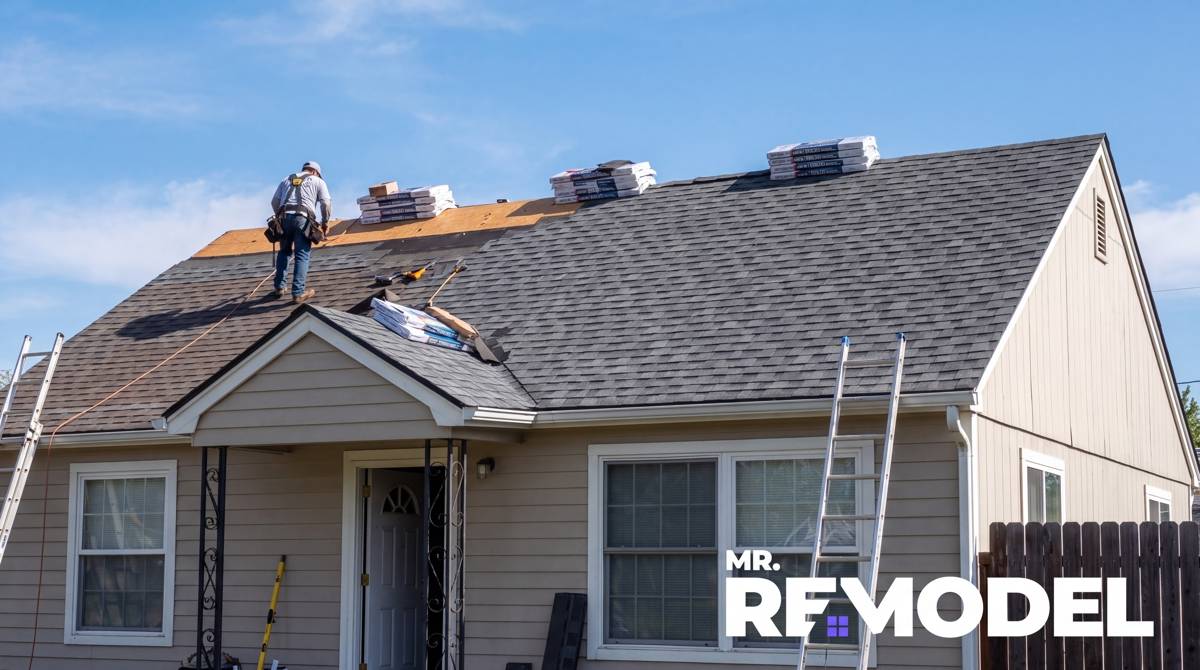
Modern architectural shingles now come in cool colors; at full tear-off scale, the national average installed cost is $31,871 for around 3,000 sq ft, or $10.6/sq ft, per the 2025 Cost vs. Value dataset.
Pairing high-SRI shingles with balanced soffit-to-ridge ventilation and sealed ceiling penetrations delivers the biggest HVAC benefit; DOE/LBNL notes that “cool” versions typically add little to no premium over conventional options on steep-slope roofs.
Standing Seam Metal with Reflective Finishes
Factory-coated standing-seam metal averages $51,865 for around 3,000 sq ft, or $17.3/sq ft for a full replacement (tear-off, underlayments, ridge/edge accessories). That aligns with independent estimator ranges showing low-to-mid-$ teens to low-$20s per sq ft depending on gauge, coating, and detailing.
Panels work on steep slopes and over low-slope transitions with the right underlayment. Expect strong wind ratings and easy integration with solar mounts.
Tile and Slate: Thermal Mass That Smooths Swings
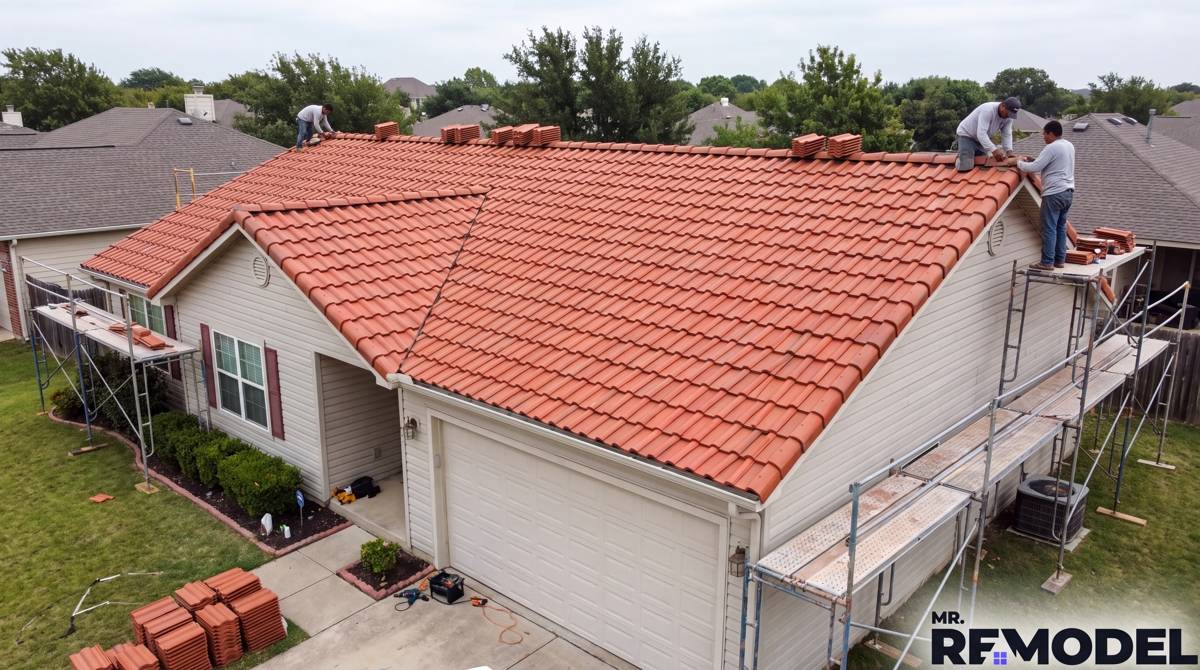
Heavy, high-mass roofs command premium installs: recent estimator snapshots place concrete/clay tile around $7 to $19/sq ft installed, while natural slate commonly runs around $18 to $40/sq ft, depending on thickness and slate grade.
Clay, concrete, and slate absorb daytime heat and release it slowly, which can steady indoor temperatures. Performance improves with vented assemblies, light colors, and balanced soffit-to-ridge airflow.
When Dark Roofs Still Make Sense
In colder or mixed climates like Minneapolis and Denver, where some owners prefer darker colors for winter solar gain, the color choice typically doesn’t move installed price much; federal guidance characterizes the “cool” premium as around $0.10 per sq ft (and sometimes zero) for many steep-slope products, while coatings on low-slope sections (where used) add roughly around $1/sq ft.
Insulation levels, air-sealing at the ceiling plane, and balanced ventilation remain the bigger levers for summer comfort and ice-dam control.
Cool Roofs and Reflective Coatings
On low-slope areas, rubber roofing and other seamless membranes pair well with elastomeric roof coatings and ENERGY STAR-certified solutions.
Liquid-applied coatings boost reflectivity, seal micro-cracks, and can extend service life while improving energy performance. Specify product SRI, dry mil thickness, and recoat intervals in your scope.
Solar-Ready Roofing
Plan racking, wiring paths, and roof-edge details during a residential new roof installation or major repair. On commercial buildings, coordinate solar readiness with commercial roof repair schedules to protect warranties.
Your drawings should note attachment methods for metal, shingle, or membrane roofs, plus conduit routes and penetrations with curb and flashing details.
Skylights, Daylighting, and Venting Options
Well-placed skylights and solar tubes add free light and reduce daytime lighting loads. Vented ridges and controlled intake keep attics cooler and drier, while infrared roof inspection helps spot leaks or wet insulation.
For whole-home efficiency, align roof work with gutter installations, siding installation, or siding repair so water management and wall transitions are addressed together.
Choosing a Pro Roofing Contractor
Pick a team that is credentialed, transparent, and energy-focused.
- License and insurance: Verify a state contractor license, coatings endorsements if required, and active general liability and workers’ comp.
- BBB and reviews: Check BBB Business Profiles for accreditation, star rating, number of ratings, and complaint patterns.
- Clear scope and documentation: Request written roof inspections with photos, infrared images when relevant, product data sheets, and a detailed work plan.
- Coatings expertise: Ask about elastomeric, silicone, or acrylic systems, mil thickness targets, and cure times.
- Payment and project support: Confirm accepted payment methods, whether they provide a project manager or site inspector, and if free estimates are available.
- Warranty clarity: Capture workmanship terms and manufacturer requirements for maintenance, recoats, and leak response timelines.
TIP: Compare contractors side by side using the same roofing materials, ventilation plan, coating specs, and warranty language. Consistent scopes make energy savings and costs easier to evaluate.
FAQs About Pro Roofing Solutions
Do coatings really lower bills?
Yes, reflective coatings and Cool Roof Solutions reduce surface temperatures on low-slope roofs and can extend service life.
Are metal roofs noisy?
With proper underlayment, the standing seam is quiet and highly reflective.
What about storm and hail damage repair?
Energy upgrades can be combined with Storm Damage work; your contractor should help with insurance claims and coordination with an insurance company inspector.
How fast is flat roof repair?
Many repairs finish in a day; full restorations depend on moisture remediation and dry time.
Save Money on Roofing With Mr. Remodel
Ready to cut cooling costs and boost comfort with pro roofing solutions?
Mr Remodel connects you with pro roofing solutions for roof repairs, roof replacements, flat roof repair, and energy upgrades. Review customer reviews, compare scopes, and schedule a no-obligation visit today to get a free roof installation estimate.