1-855-QUOTEMR

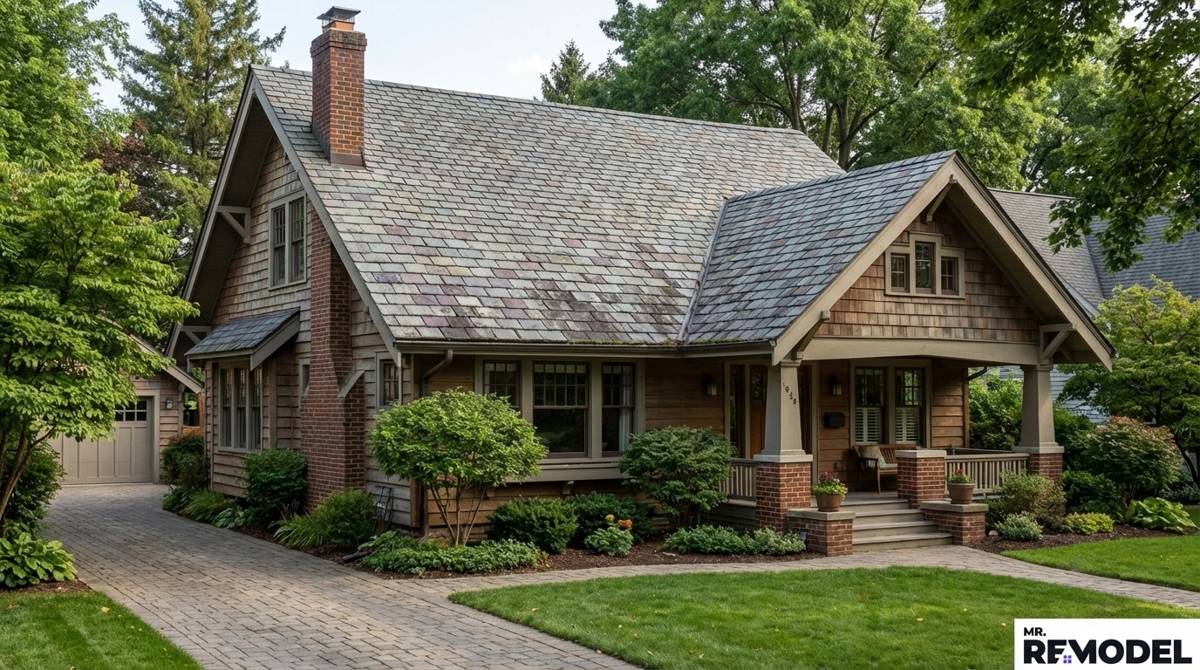
Table of Contents [hide]
Who This Is For
This guide is written for homeowners who view their property as a generational asset and are evaluating the long-term financial benefits of a permanent roofing system. It is specifically designed to help high-intent buyers distinguish between the artisan requirements of natural stone and the accessible luxury of modern synthetic alternatives.
Key Takeaways
- Investment Longevity: Natural slate is the only residential material that offers a 100-year service life, making it the ultimate generational investment.
- Market Demand: Our data indicates that while 8.17% of homeowners desire a slate roof, many are deterred by the initial structural requirements and artisan labor costs.
- Synthetic Pivot: For owners seeking the slate aesthetic without the $10,000 structural reinforcement fee, synthetic composite slate has become the primary 2026 alternative.
- Climate Resilience: Slate provides total immunity to UV degradation and freeze-thaw cycles, driving massive adoption in states like Utah, Arizona, and North Dakota.
- High Intent: According to our data, 88.1% of slate researchers are ready to begin their projects within 30 days, indicating a strong need for specialized fulfillment.
A roof that lasts for a century is more than a shelter; it is a legacy. While most modern materials are designed with a 20-year obsolescence cycle, slate roofing remains the apex of residential construction. However, moving into this ultra-premium tier requires a clear understanding of the engineering and financial realities involved.
Navigating the transition from standard materials to a permanent stone system requires an expert touch. Mr. Remodel serves as a supportive peer, connecting you with the few specialized contractors who can handle heavy-load masonry. We bridge the gap between your architectural vision and the structural reality of your home.
The Financial Realities of Natural vs. Synthetic Slate
When evaluating slate, you are presented with two distinct paths: traditional quarried stone or modern engineered composites. Both offer a significant aesthetic upgrade, but the cost and structural impact differ drastically. According to our data, the market is shifting toward synthetic options to bypass the logistical hurdles of natural stone.
The following price breakdown illustrates the investment required for a typical 1,500 square foot home in the 2026 market:
- Natural Soft/Hard Slate: This requires an investment of $30,000 to $45,000 or more. It involves quarried rock that can last over a century but carries a high labor premium.
- Synthetic Slate (Composite): Ranging from $13,500 to $21,000, this material uses rubber or plastic polymers to mimic stone without the extreme weight or cost.
- Structural Reinforcement: Natural slate often requires an additional $1,000 to $10,000 in truss fortification to ensure your home can support the massive dead weight.
See Related: Roof Replacement Cost (2026): Materials, Labor, Regional Pricing & ROI
The Hidden Cost of Structural Weight
Natural slate is incredibly heavy, often adding several tons of pressure to your home’s rafters. According to the FEMA Building Science Division, combining the weight of natural stone with live snow loads in northern states requires strict adherence to structural load guidelines. If your home was originally built for shingles, you must budget for a structural engineer and truss reinforcement before the first stone is laid.
Why Synthetic Slate is Winning the 2026 Market
Our data show a significant gap in the "closed-won" rate for natural slate inquiries, suggesting that the $45,000 price tag and structural requirements often cause sticker shock. Synthetic slate solves this by providing the same luxury profile at a price point similar to high-end architectural shingles. It is an ideal solution for those who want a lifetime roofing aesthetic without having to rebuild their home's internal frame.
See Related: Best Roofing Materials (2026): Cost, Durability & Climate Fit
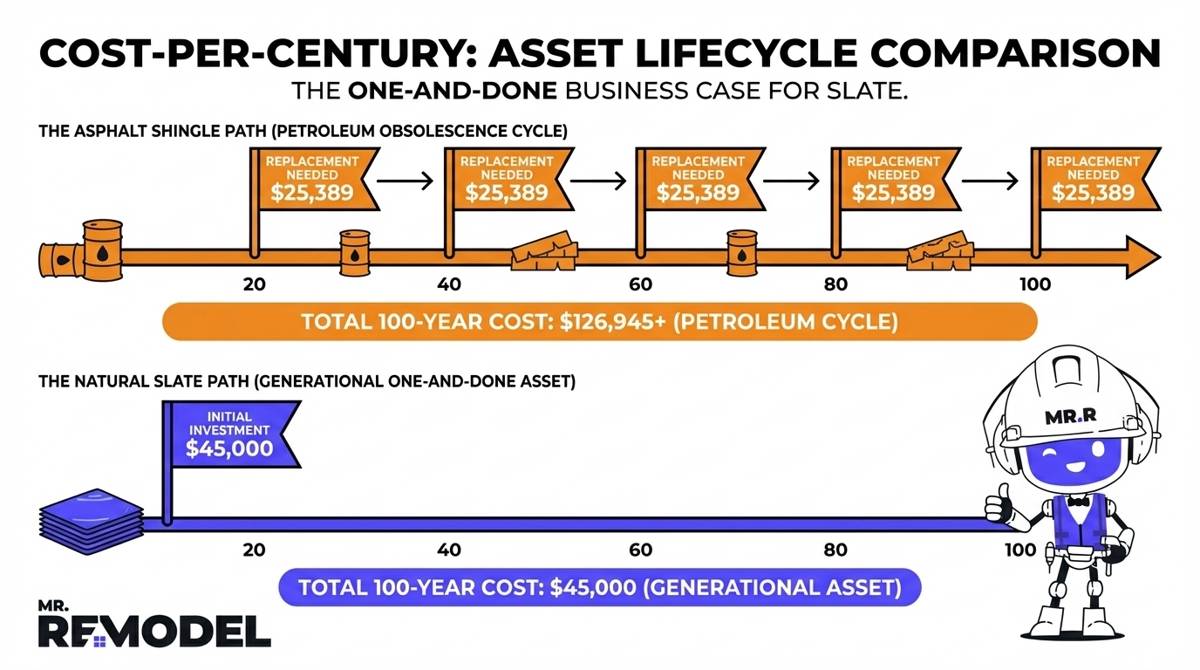
Generational ROI: Why a $45,000 Roof is the Smarter Investment
At first glance, a $45,000 roof seems expensive compared to the $25,389 national average for asphalt shingles. However, when you calculate the annual cost, slate becomes the most economical choice. This represents a shift toward a one-and-done philosophy among high-value homeowners.
Consider the cost-per-century comparison to understand the true return on investment:
- Asphalt Shingle Cycle: To cover 100 years, you would need to replace an asphalt roof five times. At current averages, that is over $125,000 in lifetime costs, not including future inflation.
- The Slate Solution: A natural slate roof involves a one-time $45,000 investment. According to the National Park Service, genuine quarried slate is geologically durable enough to last 80 to 100+ years.
See Related: Roof Replacement ROI by Material Type
Regional Climate Dominance: Where and Why Slate Wins
Slate is not a generalized product; it is a hyper-regional necessity. Our data indicates that demand is highest in states where the climate is most hostile to petroleum-based materials. In these zones, slate is viewed as a structural shield rather than just a luxury choice.
The Freeze/Thaw Defense in the North
In states like Utah (16.48% demand) and North Dakota (15.62%), slate is prized for its density. Unlike shingles, which can absorb moisture that later freezes and cracks the material, slate is virtually non-porous. This makes it impervious to the brutal freeze-thaw cycles found in mountain and plains regions.
UV Immunity in the Sunbelt
In Arizona (14.6%) and New Mexico (13.7%), UV degradation is the primary cause of roof failure. According to the U.S. Department of Energy, slate’s high thermal mass and total immunity to UV rays prevent it from becoming brittle in the desert sun. It also provides a non-combustible barrier that meets the strictest fireproof building codes in the West.
Lead Times and Securing Specialized Labor
One of the most critical insights from our data is the consumer's urgency. A massive 88% of slate inquiries want to break ground within 30 days. However, natural slate is a slow material; it must be quarried, shipped, and installed by artisan masons, a process that can take months.
To meet your timeline while maintaining a premium aesthetic, consider the following logistical factors:
- Quarry Delays: Natural slate depends on mining output and heavy-freight shipping, which can lead to unpredictable delays.
- Artisan Scarcity: Installing genuine stone is a masonry task. You must hire a premium roofing company with a specialized portfolio, as standard crews are not trained for this work.
- Synthetic Availability: Composite slate is a manufactured product that can be shipped and installed within weeks, making it the preferred choice for the 32% of inquiries that need to start within 7 days.
Frequently Asked Questions
Can natural slate be repaired?
Yes, individual slats can be replaced if they crack or slip. However, because slate lasts so long, the most common repair is actually replacing the copper flashing or nails that may wear out before the stone does.
Is synthetic slate as durable as natural stone?
Synthetic slate generally lasts 40 to 60 years. While this is less than the 100-year life of natural stone, it is still double the lifespan of traditional shingles and requires far less structural maintenance.
Why is slate so expensive to install?
The cost is driven by the weight of the material and the skill required to handle it. Every piece of stone must be hand-nailed and carefully overlapped to ensure a waterproof seal, requiring much more time than modern strip roofing.
Finalize Your Generational Investment
Choosing slate is a commitment to the permanent health of your property. Whether you opt for the 100-year legacy of natural stone or the high-tech efficiency of a synthetic composite, you are securing your home against the most extreme environmental threats of 2026.
Remember that specialized labor is the most important factor in a slate project's success. Standard roofing crews are often ill-equipped to handle the weight and masonry requirements of stone. Connecting with an artisan who understands these nuances is the only way to ensure your investment lasts for the next century.
Ready to secure a forever roof for your property? Get started today by requesting a free quote through the Mr. Remodel network to connect with a verified roofing company capable of executing this tier of craftsmanship.