1-855-QUOTEMR

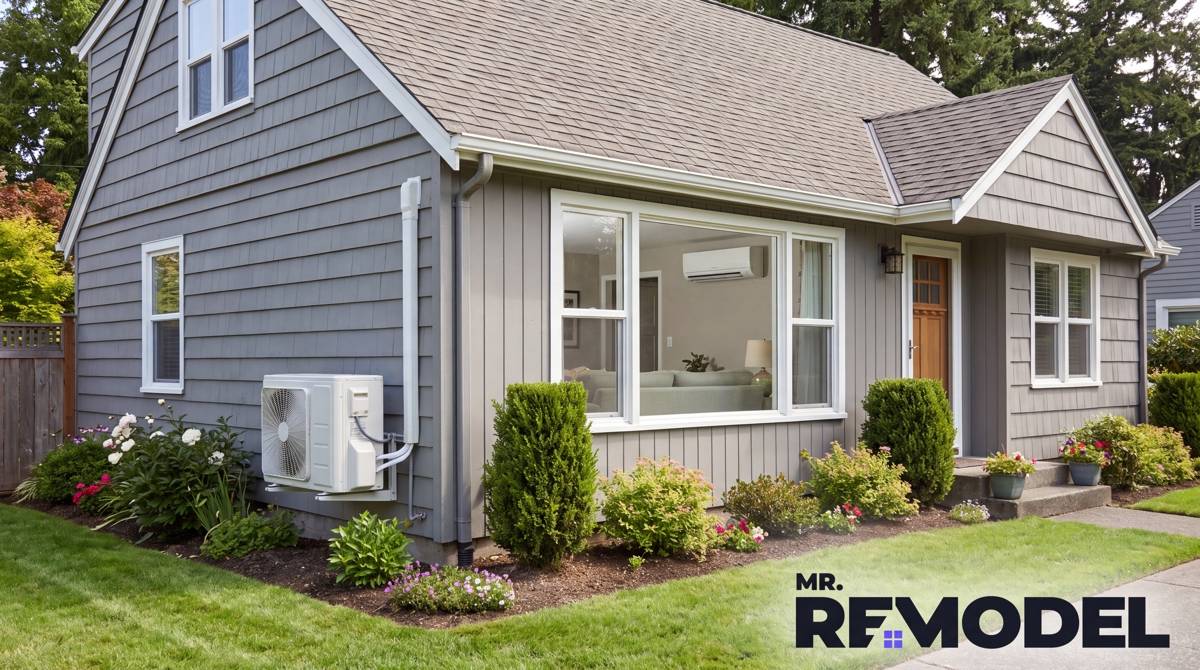
Table of Contents [hide]
Who This Is For
This investment analysis is built for homeowners weighing the benefits of ductless mini-splits against traditional central HVAC systems. If you are retrofitting an older home, converting a garage, or simply tired of uneven room temperatures, this data-backed guide will help you decide if the performance of ductless technology justifies the capital cost.
Key Takeaways
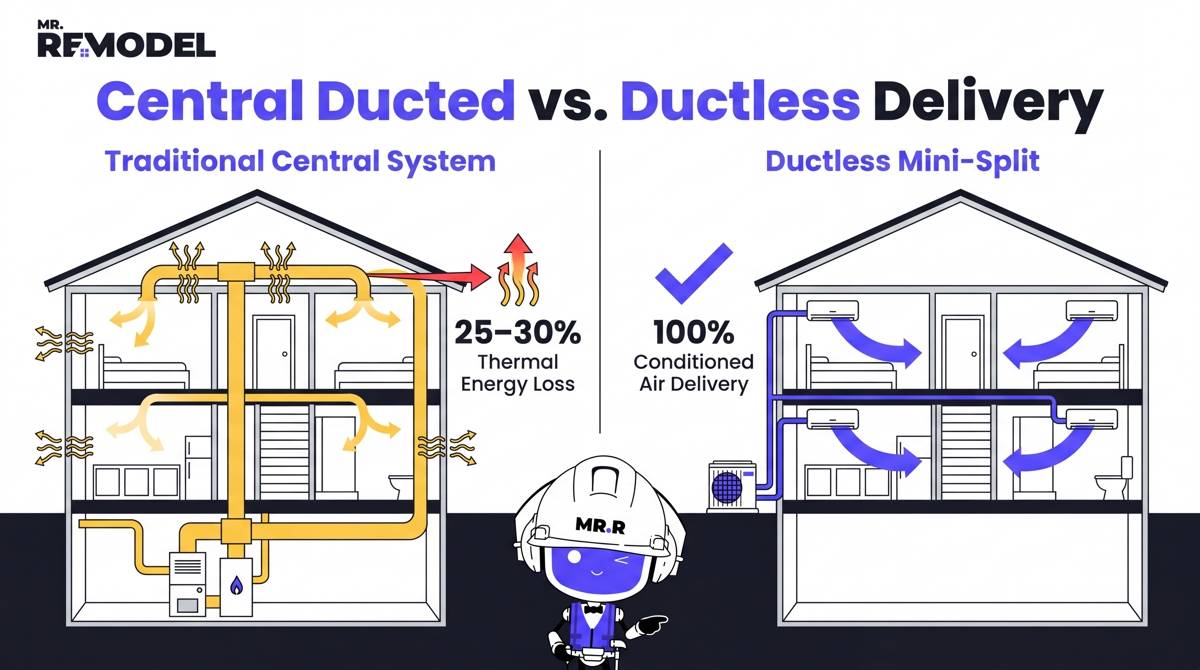
- Efficiency First: Traditional ducted systems lose 25%–30% of their energy to leaky, uninsulated ducts. Ductless systems deliver 100% of conditioned air directly into the room.
- Capital Cost: While a single-zone install averages $3,000–$5,000, whole-house multi-zone configurations range from $5,500 to over $13,000.
- Federal Rebates: Qualifying ductless heat pumps can offset upfront costs by up to $2,000 via federal Inflation Reduction Act (IRA) tax credits.
- Structural Compatibility: Mini-splits are the preferred 60% market choice for historic home retrofits where adding central ductwork is structurally impossible or prohibitively expensive.
- The Zoning Advantage: 68% of buyers identify independent, room-by-room temperature control as their primary reason for switching to mini-split technology.
For decades, if you wanted whole-home climate control, you had two options: suffer through window AC units or tear down your drywall to install central ductwork. Ductless mini-splits have changed the game by offering a third path. They provide the precision of high-end commercial climate control with a non-invasive installation process.
However, moving to a ductless setup is a significant change in how you think about your home's mechanical systems. According to the Department of Energy's Energy Saver Guide, ductless heat pumps are incredibly effective at reducing waste in homes that weren't built for modern HVAC infrastructure.
At Mr. Remodel, we help you see the "Con" of the upfront price tag through the lens of long-term efficiency ROI.
See Related: Types of HVAC Systems | 2026 Cost & Efficiency Comparison Guide
The "Pros": Why Ductless is Growing in Popularity
The rise in popularity for mini-splits isn't just marketing hype; it's rooted in fundamental mechanical advantages.
1. Eliminating Duct Loss
In homes older than 25 years, our inspections reveal that roughly 65% of ducts have significant structural deterioration. Ductless systems bypass this entire infrastructure. By delivering air directly into the space, you eliminate the massive thermal energy loss that plagues nearly all central forced-air systems.
2. Room-by-Room Zoning
Central systems treat your whole house as a single zone. If you are sleeping, why pay to cool your living room? Ductless mini-splits allow you to set specific temperatures for each room, significantly reducing your monthly energy usage.
3. Non-Invasive Installation
For those with historic homes, the idea of boxing in beams or tearing out plaster for ductwork is a non-starter. Mini-splits require only a small 3-inch hole in the wall to connect the indoor unit to the exterior condenser, preserving your home’s architectural integrity.
See Related: Signs You Need a New HVAC System
The "Cons": Challenges to Consider
Every system has its trade-offs. Before investing, it’s important to address the most common hesitations homeowners have.
1. Upfront Capital Investment
A multi-zone, whole-house ductless setup is a major mechanical project. While it is more efficient, the total cost for a full-home configuration often exceeds the price of a standard central AC and furnace swap. However, keep in mind that you may qualify for federal tax rebates that significantly lower the effective cost.
2. Aesthetic Impacts
Roughly 44% of homeowners initially worry that the wall-mounted air handlers will be eyesores. While they are significantly sleeker than they were a decade ago, if they don't fit your design goals, we recommend exploring recessed ceiling cassettes, which sit flush with your ceiling and disappear into your room's aesthetic.
See Related: HVAC Repair vs Replacement
The Economics of a 2026 Retrofit
When considering the financial metrics of this upgrade, look at how the system integrates with your long-term renovation plans.
- Single-Zone Solutions: At $3,000 to $5,000, these are the gold standard for sunroom additions, finished basements, and master suite conversions.
- Whole-House Multi-Zone: At $5,500 to $13,000, this is a wholesale replacement of your climate control strategy.
If you are planning other projects, like energy-efficient windows, you should coordinate your HVAC sizing simultaneously. A better-sealed home requires less HVAC capacity, which can actually lower your ductless installation cost.
When to Choose Ductless vs. Central
If your existing ductwork is in great shape and your home is already set up for a split system, you may find that a traditional high-efficiency heat pump is the most cost-effective path. But if your ductwork is failing, or if you live in a home built before 1950, ductless is usually the superior engineering choice.
Regardless of your home's age, you need a contractor who understands the difference. Mr. Remodel connects you with local experts who won't just guess at your capacity. They’ll perform a load calculation to ensure the system fits your home perfectly.
Frequently Asked Questions
Can I install a mini-split myself?
No. Because these systems use specialized refrigerant lines that must be vacuumed, sealed, and tested to code, they require a licensed professional. Improper installation is the most common reason for compressor failure.
Are they loud?
No. Modern ductless mini-splits are significantly quieter than traditional central air handlers. Most high-end units operate at roughly 20 decibels—the sound of a whisper.
How often do I need to clean the filters?
Unlike central systems where you swap a filter every 90 days, mini-split filters are washable. Simply remove them every 4 to 6 weeks and rinse them with warm water to maintain peak airflow.
Does a ductless system add value to my home?
Yes, especially in historic properties. Buyers are increasingly aware of the energy savings and independent zoning that mini-splits provide, often viewing them as a "premium" upgrade over old-fashioned window units or leaky ducts.
How does Mr. Remodel ensure I get a good installation?
Mr. Remodel only matches you with vetted contractors who have experience with ductless-specific load calculations. We prioritize installers who focus on clean aesthetic mounting and proper drainage management.
Take Control of Your Home Climate
Choosing a ductless mini-split is about choosing modern performance, energy efficiency, and precise control over your indoor environment. While the investment is significant, the ability to eliminate duct loss and heat your home room-by-room offers a level of comfort that traditional central systems struggle to match.
If you are ready to modernize your home, the first step is a professional structural assessment. Reach out to Mr. Remodel to get a free, no-obligation quote and expert advice on whether a ductless setup is the perfect fit for your home.