1-855-QUOTEMR

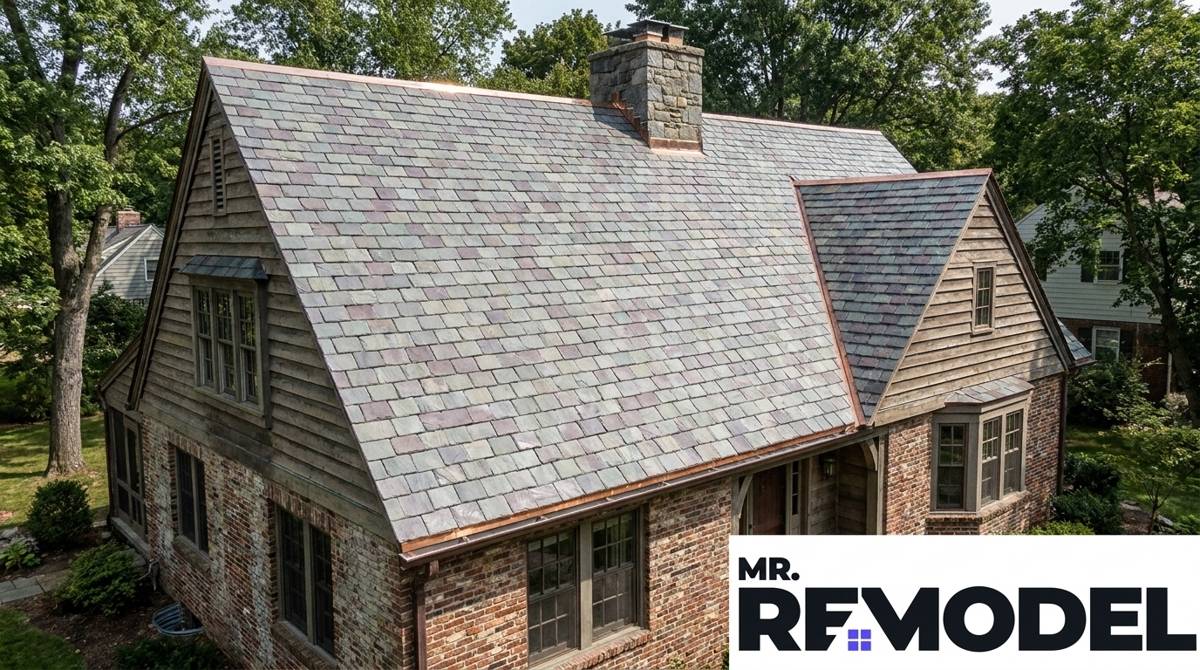
Table of Contents [hide]
Who This Is For:
Homeowners with an aging or damaged slate roof who need to decide whether replacement is appropriate and want a contractor with real natural-slate experience, not just general roofing experience.
Key Takeaways:
- Slate Roofing Is a Specialty Craft: Slate requires tools, installation methods, and material knowledge that many general roofers do not use every day.
- Replacement Is Not Always the First Answer: A qualified contractor should evaluate whether repair or salvage is still practical.
- The Details Matter: Slate type, decking, fasteners, layout, valleys, flashing, hips, and ridges all affect the finished roof.
- Historic Roofs Need Extra Care: Older slate roofs may require careful material matching and preservation-minded decisions.
- References Should Be Slate-Specific: Ask for natural-slate examples, written scope details, insurance, applicable licensing, and warranty terms.
Slate roof replacement contractors should bring more than standard roofing experience. Natural slate is heavy, long-lasting, and highly detailed, and it does not install like asphalt shingles.
That is why homeowners should treat slate roofing as a specialty craft. The right contractor should understand slate types, roof layout, fastening, flashing, salvage, decking, and historic details before recommending full replacement.
Mr. Remodel roofing data shows 1,325 slate inquiries in the supplied dataset, or about 7.7% of all roofing inquiries. Slate is a meaningful roofing category, but it is far less common than shingles, which makes it important to ask specifically about slate experience.
Why Slate Roofing Requires a Specialist
The National Slate Association says slate roofing requires specific tools, installation methods, and experience. Its homeowner guidance recommends hiring a specialist for slate installation or repair because slate is not handled the same way as many other roof materials.
A contractor who installs many asphalt-shingle roofs may still have limited slate experience. That does not automatically make them unqualified, but it means homeowners should ask direct questions before hiring.
Ask About Real Slate Experience
Ask:
- How many natural slate roofs have you installed or replaced?
- Can I see recent slate projects?
- Do you have slate-specific references?
- What slate tools does your crew use?
- Who supervises the slate work?
- Do you use subcontractors for slate installation?
A strong contractor should be able to discuss slate work clearly, not just say, “We do all types of roofs.”
Make Sure the Roof Really Needs Replacement
Slate roofs are sometimes replaced too quickly when repair may still be possible. That is especially important for older or historic homes.
The National Park Service (NPS) cautions in Preservation Brief 29 that historic slate roofs are sometimes replaced when repairs could have extended their service life. The brief explains that localized slate problems may often be repaired, while widespread deterioration may justify replacement.
Repair or Replacement Questions
Ask the contractor:
- How much slate is actually failing?
- Are failures widespread or concentrated in one area?
- Are the slates deteriorating, or are fasteners and flashings failing?
- Can good existing slate be retained?
- What evidence supports full replacement?
This does not mean every old slate roof should be preserved forever. It means the contractor should explain the condition of the roof before recommending a major replacement.
See Related: Find a Roofing Company: A Step-by-Step Guide
Ask What Happens to the Existing Slate
A slate replacement project should include a plan for the existing material. Some slate may be too damaged to reuse, but sound pieces may sometimes be salvaged.
The National Slate Association’s repair guidance recommends matching replacement slate to existing slate in type, color, weathering characteristics, size, shape, and texture.
Why Salvage and Matching Matter
Matching matters because slate roofs can have strong visual character. A poor match can stand out, especially on a visible roof slope or historic home.
Ask whether existing slate can be:
- Reused on the roof
- Salvaged for future repairs
- Sorted by size or condition
- Matched with compatible new slate
- Disposed of if structurally unsound
Do not encourage reuse of brittle, cracked, or failing slate. A qualified contractor should evaluate individual material condition.
The Roof Deck Matters
Slate depends on the surface beneath it. If the deck is uneven, weak, or deteriorated, the finished roof can suffer.
NPS Preservation Brief 29 explains that slate requires smooth, solid sheathing and warns that uneven or poorly secured sheathing can contribute to loose or cracked slate. The National Slate Association’s homeowner resource also identifies board sheathing or appropriate plywood among recommended decking approaches for natural slate installation.
What the Contractor Should Check
Ask:
- What type of decking is currently present?
- Is it appropriate for slate?
- Is any decking uneven or deteriorated?
- How will damaged decking be identified?
- How will replacement decking be priced?
- Will the finished deck stay even enough for slate installation?
Deck repairs should not be a surprise with no pricing method. The estimate should explain how discovered damage will be handled.
Slate roofing requires skills and installation methods that differ from ordinary asphalt roofing. Mr. Remodel helps homeowners connect with fully vetted local roofing contractors so they can compare qualified options for their project.
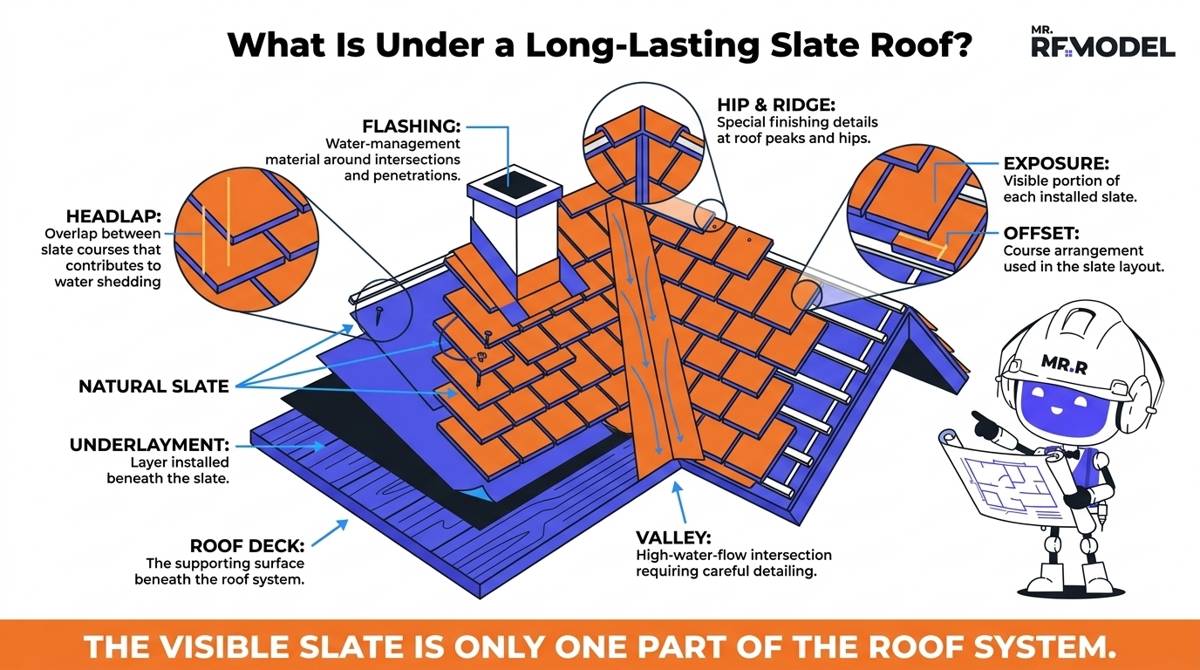
Ask About Slate Layout and Fastening
Slate roofing has its own layout and fastening requirements. Homeowners do not need a technical tutorial, but they should hear more than vague reassurance.
The National Slate Association publishes technical resources on slate cutting and punching, underlayment, layout, field installation, valleys, flashing, hips, and ridges.
Terms a Slate Roofer Should Understand
A slate specialist should be able to discuss:
- Slate size and thickness
- Headlap and exposure
- Offset
- Nail selection
- Nailing method
- Slate cutting and punching
- Field slate layout
- Hip and ridge details
The goal is not to tell the roofer how to do the job. The goal is to confirm they understand how slate roofing is planned and installed.
Flashing Is a Major Part of Slate Roof Longevity
Slate can last a long time, so the flashing needs to be appropriate for a long-lived roof system. Weak flashing can cause problems long before the slate itself reaches the end of its life.
NPS guidance emphasizes durable flashing materials and workmanship when repairing or replacing slate roofs. The National Slate Association’s slate specification also treats flashings, valleys, hips, ridges, underlayments, and layout as core parts of proper slate-roof work.
Flashing Areas to Discuss
Ask about:
- Valleys
- Chimneys
- Dormers
- Sidewalls
- Headwalls
- Vent penetrations
- Roof transitions
Also ask which existing flashing will be removed, what new flashing material will be used, how valleys will be detailed, and whether flashing is included in the written estimate.
Historic Homes Need Extra Care
Many slate roofs are found on older homes, and some are part of historic properties. That does not mean every slate roof is historically protected, but it does mean preservation concerns may matter.
NPS Preservation Brief 29 provides detailed guidance for repairing and replacing historic slate roofs. It emphasizes preserving original material and character when practical.
When to Ask About Preservation Rules
Ask about historic requirements if your home is:
- In a historic district
- Individually designated
- Subject to local design review
- Using original slate or decorative details
- Part of an older neighborhood with exterior restrictions
A preservation-minded contractor should understand material matching, visible roof slopes, original roof details, and local approval requirements where they apply.
What Should the Slate Roofing Estimate Include?
A slate roofing estimate should do more than list “new slate roof” and a total price. It should explain the material, deck, flashing, layout, salvage plan, and warranty terms.
The National Slate Association’s slate specification identifies material quality, nails, underlayments, installation, roof layout, valleys, ridges, and hips as important specification items.
See Related: A Homeowner's Guide to Roofing Costs and Services
Verify Contractor Basics Too
Slate specialization matters, but it does not replace basic contractor checks.
The Federal Trade Commission (FTC) recommends confirming applicable licensing, asking for proof of insurance, checking references and complaints, getting multiple written estimates, reviewing the contract carefully, and avoiding full upfront payment through its home improvement guidance.
The National Slate Association also advises homeowners to verify that slate roofing contractors are licensed and insured.
Basic Checks Still Matter
Before hiring, verify:
- Applicable license or registration
- Insurance documentation
- Slate-specific references
- Written scope
- Payment schedule
- Warranty terms
- Cleanup and disposal details
- Subcontractor responsibilities
See Related: How to Choose a Top-Rated Roofing Contractor
Do Not Let Schedule Pressure Decide
Slate roof problems can feel urgent, especially when water is getting in. Still, homeowners should not choose a roofer only because they promise the earliest start.
Mr. Remodel recorded 557 slate inquiries with a desired start within 7 days and 1,301 with a desired start within 30 days. These are desired start dates, not actual project schedules.
Slate sourcing, material matching, contractor availability, permits, weather, and roof complexity can all affect timing. A true specialist may need time to evaluate the roof properly.
Slate Contractor Red Flags
One issue does not automatically prove a contractor is unqualified, but several together should make you slow down.
Watch for These Warning Signs
Be cautious if a contractor:
- Has little or no natural-slate portfolio
- Treats slate exactly like asphalt shingles
- Cannot explain layout or headlap
- Plans to discard reusable slate without evaluation
- Gives no deck-inspection plan
- Provides vague flashing details
- Cannot identify replacement slate characteristics
- Has no slate-specific references
- Pushes full replacement without discussing repairability
- Offers unclear workmanship warranty terms
A good slate contractor should be able to explain the craft, not just the price.
Questions to Ask Before Hiring
Use these questions before signing:
- How many natural slate roofs have you replaced?
- Do you have recent slate-specific references?
- Can any existing slate be reused?
- How will replacement slate be matched?
- How will the roof deck be evaluated?
- What fastening and layout approach will you use?
- What flashing materials are included?
- How will valleys, hips, ridges, and dormers be handled?
- Are permits or historic approvals required?
- What workmanship warranty covers the slate installation?
Frequently Asked Questions
Do I need a specialist to replace a slate roof?
The National Slate Association recommends hiring a specialist because slate roofing uses specialized tools and installation methods and benefits from contractors with direct slate experience.
Should an old slate roof always be replaced?
No. The National Park Service cautions that some slate roofs are replaced when repair is still practical. The condition of the slate, fasteners, flashing, decking, and remaining service life should be evaluated before deciding.
Can existing slate be reused during replacement?
Potentially. Sound slate may sometimes be salvaged or reused, while replacement pieces should be selected to appropriately match the roof. A qualified slate contractor should assess individual material condition before reuse.
Why is flashing especially important on a slate roof?
Slate can have a very long service life, so flashing at valleys, chimneys, walls, dormers, and penetrations needs materials and workmanship appropriate for the roof system. NPS specifically emphasizes durable flashing when working with slate.
How do I compare slate roof replacement contractors?
Compare direct natural-slate experience, references, slate sourcing, salvage plans, decking evaluation, layout and fastening knowledge, flashing scope, applicable licensing and insurance, warranties, and the complete written project estimate.
Slate Roof Replacement Contractors: Final Takeaway
Slate roof replacement should be handled as a specialized roofing craft. The right contractor should understand not only slate itself but also decking, layout, fasteners, flashing, valleys, salvage, historic details, and long-term maintenance.
Before hiring, ask for slate-specific proof, not just general roofing experience. To compare qualified options, get a free quote, and connect with fully vetted local roofing contractors through Mr. Remodel.