1-855-QUOTEMR

Table of Contents [hide]
Who This Is For
This guide is designed for Denver homeowners who need to repair or replace a roof. Whether you are dealing with recent hail damage or planning a proactive upgrade, this article provides the financial and technical data needed to hire a reliable local contractor.
Key Takeaways
- Average Investment: Most Denver roofing projects range from $9,500 to $18,700, depending on the material and pitch.
- Climate Resilience: High UV exposure and heavy snow loads in the Mile High City make material selection and professional ventilation critical.
- Insurance Scams: Colorado remains a high-target area for post-storm fraud, making verified contractor vetting essential.
- Permit Necessity: Local municipalities require specific permits and inspections that typically cost between $115 and $250.
In Colorado, your roof is the primary defense against some of the most volatile weather in the United States. According to the National Insurance Crime Bureau, Colorado consistently ranks among the top states for hail damage claims, often seeing billions of dollars in insured losses annually.
This high frequency of storm activity creates a complex market for homeowners. You must balance the immediate need for protection with the long term costs of high-altitude maintenance. Navigating the sea of roofing companies in Denver requires an understanding of local building codes and market pricing.
Understanding the Denver Climate Impact on Your Roof
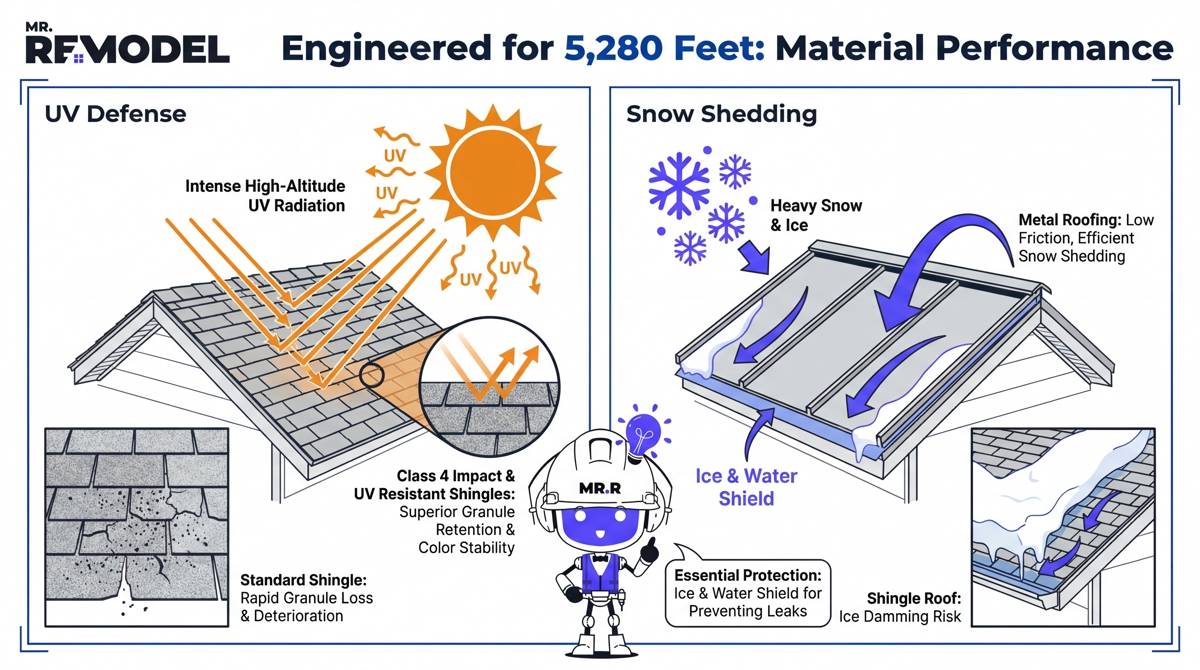
Denver’s geography presents unique challenges that standard roofing practices in other states may not address. The combination of intense ultraviolet (UV) radiation and rapid temperature fluctuations can cause materials to degrade faster than the national average.
High Altitude UV Exposure
At 5,280 feet, the sun’s rays are significantly more intense. This constant exposure can cause asphalt shingles to become brittle and lose their protective granules prematurely. This degradation reduces the roof's ability to shed water and resist impact.
Heavy Snow Loads and Ice Damming
Denver winters bring heavy, wet snow that puts immense structural pressure on residential buildings. If a roof is not properly insulated or ventilated, ice dams can form at the eaves. These dams trap water, which can then seep under shingles and cause internal rot.
The Hail Alley Factor
Located in the heart of Hail Alley, Denver homes face frequent bombardment from large ice stones. Many homeowners now opt for Class 4 impact-resistant shingles. These materials are specifically designed to withstand the kinetic energy of hail without cracking the underlying mat.
Denver Roofing Cost Breakdown
The cost of a new roof in Denver is influenced by material availability, labor rates, and specific local disposal fees. Based on recent market data from Mr. Remodel, homeowners should prepare for the following price ranges for a standard residential installation.
|
Roofing Material |
Estimated Cost Range (Installed) |
Best Use Case |
|
Asphalt Shingles |
$7,000 to $15,000 |
Most common and cost-effective residential choice. |
|
Metal Roofing |
$14,000 to $36,000+ |
Highly recommended for shedding snow and resisting hail. |
|
Tile or Slate |
$20,000 to $40,000+ |
Premium choice for extreme longevity and fire resistance. |
Note: These figures reflect the customer perspective and include standard labor and materials.
Detailed Material Analysis for Denver Homes
Choosing the right material involves more than just aesthetics. You must consider the pitch of your roof and the specific weather patterns in your neighborhood.
Asphalt Shingles: The Versatile Standard
Asphalt remains the most popular choice due to its balance of price and performance. Modern architectural shingles offer better wind resistance, which is vital for the gusty conditions often seen along the Front Range.
Metal Roofing: The Durable Alternative
Metal roofs are becoming increasingly popular in Denver. They are excellent at shedding snow quickly, which prevents weight buildup. Additionally, metal provides superior protection against the fire risks often associated with Colorado’s dry climate.
Tile and Slate: The Lifetime Investment
While the initial cost is higher, tile and slate roofs can last over 50 years. These materials are naturally fireproof and provide excellent insulation. However, they are heavy and may require additional structural reinforcement for your home.
|
Pro Tip: Before committing to a specific material, check with your insurance provider. Many companies offer premium discounts for installing impact-resistant materials that meet Colorado Roofing Association standards. |
Hidden Costs and Logistical Fees
When reviewing quotes from roofing companies in Denver, the base price for materials is only part of the story. Several secondary costs are necessary for a legal and high-quality installation.
- Tear-Off and Disposal: Removing your old roof and disposing of the debris typically costs between $600 and $1,500.
- Local Permits: Municipalities, such as the City of Centennial, require building permits for roof replacements. These usually cost between $115 and $250.
- Decking Repairs: If your contractor finds rotted wood after the tear-off, you may need to pay for new plywood sheathing.
- Flashing and Ventilation: Replacing chimney flashing and installing ridge vents are critical for preventing leaks and moisture buildup.
If you are feeling overwhelmed by these technical details, simplify the process with Mr. Remodel. Get connected with vetted professionals who understand these local requirements and provide transparent, itemized quotes.
How to Vet Roofing Companies in Denver
The influx of "storm chasers" after a hail event makes the vetting process vital. You need a contractor who is not just a good salesperson, but a licensed professional who follows strict safety and quality standards.
Verify Licensing and Insurance
Ensure the contractor holds a valid license for your specific municipality. They should also carry general liability insurance and workers' compensation. This protects you from being held liable if an accident occurs on your property.
Check Safety Compliance
A professional crew should follow all Occupational Safety and Health Administration guidelines. This includes the use of fall protection systems like harnesses and anchors. Companies that prioritize safety are generally more meticulous with their craftsmanship as well.
Look for Local Longevity
Prioritize companies with a physical office in the Denver metro area. Local businesses have a reputation to maintain and are more likely to honor their warranties years down the line. Avoid contractors who only have out-of-state phone numbers or temporary addresses.
Common Red Flags to Avoid
- High-Pressure Sales: Never sign a contract on the spot just to secure a "today only" discount.
- Lack of Written Estimates: Every detail, including material brands and estimated timelines, must be in writing.
- Large Upfront Deposits: It is standard to pay a deposit for materials, but you should never pay for the entire project before work begins.
See Related:7 Red Flags When Hiring Window Companies
Frequently Asked Questions
How long does a typical roof replacement take in Denver?
Most residential roof replacements in Denver take between one and three days. This timeline can be extended if there is significant structural damage to the decking or if the weather turns volatile.
Does homeowner's insurance cover hail damage?
In most cases, yes. However, your policy may have a specific deductible for wind and hail. It is important to have a professional inspection performed by a reputable company before filing a claim to confirm the damage is significant.
What is the best time of year to replace a roof in Colorado?
Late spring and early fall are generally the best times. These seasons offer mild temperatures that allow shingles to seal properly without the interference of extreme heat or freezing snow.
Are there specific building codes for Denver roofs?
Yes, Denver and the surrounding suburbs have strict codes regarding wind resistance and ice dam protection. Platforms like Mr. Remodel help by matching you with contractors who are intimately familiar with these local residential building requirements.
Can I install a new roof over my old one?
While "layovers" are sometimes allowed by code, they are generally discouraged in Denver. The high altitude and UV exposure make complete tear-offs necessary to inspect the decking for rot and ensure proper performance.
Secure Your Denver Home with a Professional Roof
Choosing between the various roofing companies in Denver is a significant decision for any homeowner. By understanding the local costs, material benefits, and climate challenges, you can make an informed choice that protects your investment for decades.
Remember that the cheapest quote is rarely the best value when it comes to the structural integrity of your home. Focus on quality materials, safety compliance, and local expertise to ensure your roof can handle everything the Colorado sky throws at it.
Ready to start your project? Mr. Remodel makes it easy to find the right professional for the job. Get free, no-obligation quotes and connect with the highest-rated local contractors in the Denver area.