1-855-QUOTEMR

Table of Contents [hide]
Who This Is For:
This guide is designed for homeowners who are facing the high cost of a roof replacement. It helps those looking to balance upfront investment with long-term resale value, energy savings, and regional cost factors.
Key Takeaways
- Replacement Cost: The national average for a closed roofing project currently stands at $25,307.08.
- Go-to Material: Asphalt shingles remain the most popular choice, representing 71.2% of homeowner requests.
- X-Factor: Metal roofing offers a unique ROI through energy efficiency and durability, despite different market pricing.
- State Variation: Localized costs vary wildly, with Florida and Utah seeing prices significantly higher than the national average.
- Start Soon: High urgency is the market standard, with over 40% of homeowners ready to start within seven days.
A new roof is one of the most significant investments a homeowner can make. Data from Mr. Remodel shows that the national average for a closed roofing project is $25,307.08. This figure highlights the need for a clear understanding of return on investment (ROI).
Homeowners often struggle to choose between different materials. They want to know which one provides the best financial protection. This guide breaks down the ROI by material type using 2026 market data. We will explore how your choice impacts your home’s value and utility costs.
Understanding the ROI of a Roof Replacement
The ROI of a roof is not just about the resale price. It also includes energy savings and reduced maintenance costs. Most national reports suggest a resale ROI of 50% to 68%. However, proprietary data suggests that urgency and local demand play even larger roles in perceived value.
When a roof is nearing the end of its life, its value is technically negative. A buyer will likely deduct the cost of a new roof from their offer. Replacing it before listing can prevent these heavy negotiations. It ensures the home remains competitive in a fast-moving real estate market.
Material Comparison: Asphalt Shingles vs. Metal
Choosing the right material is the first step in maximizing your ROI. Our data indicates that 71.2% of homeowners request shingles. Meanwhile, nearly 18.9% are moving toward metal. Each material has a distinct financial profile that affects your long-term wealth.
ROI by Material Type Breakdown
Standard shingle replacements average $25,389.92. This material is popular because of its lower barrier to entry. It provides a reliable look that most buyers recognize. Most homeowners find that shingles offer the most returns during a quick sale.
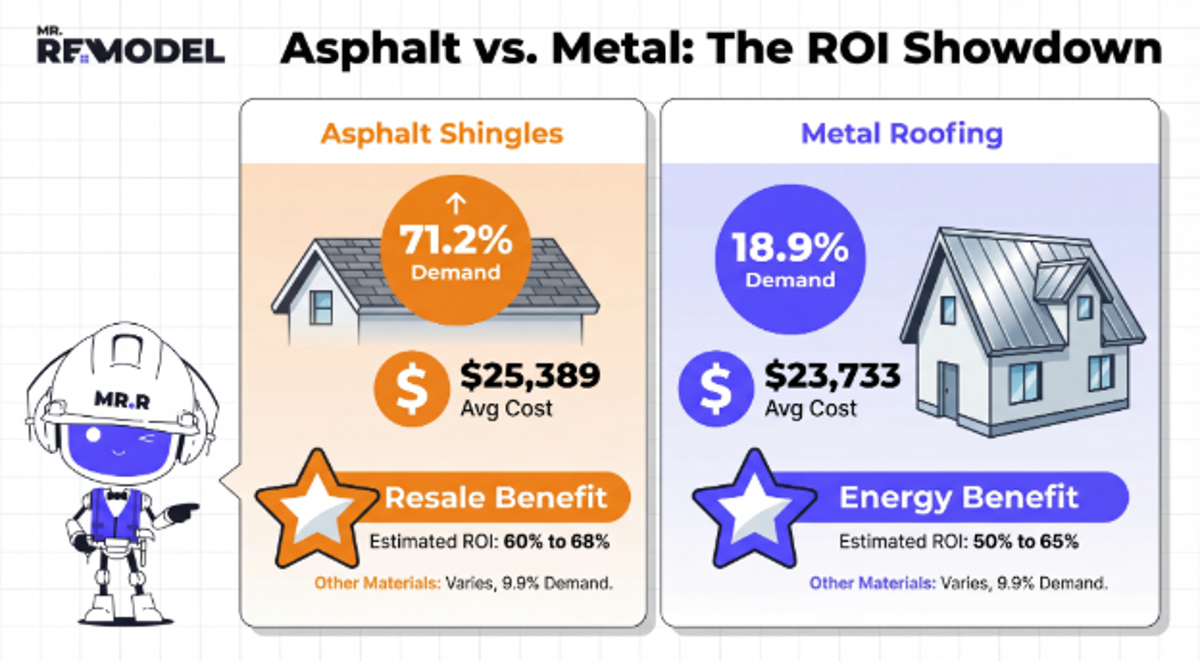
Metal projects in our proprietary dataset came in around $23,733.00. While metal can sometimes have a higher upfront cost for premium styles, its durability is unmatched. It often lasts twice as long as shingles. This longevity appeals to buyers looking for a "forever home" solution.
See Related: Does a New Roof Increase Home Value? (Data + % ROI)
Regional Cost Variances and Their Impact
ROI is not a single national number. It changes based on where you live. For example:
- Pennsylvania:
- The average cost is $24,790.
- This is very close to the national average. Homeowners there can expect a standard return on their investment.
- Florida:
- The state averages $31,882 per project.
- Utah:
- Here it is even higher at $38,374.
These higher costs are often due to local building codes and material requirements. In Florida, impact-resistant materials are often a necessity rather than a luxury.
Why Localized Data Matters
Higher costs in places like Utah mean homeowners must be more strategic. A $38,000 investment requires a clear plan for recovery. You should look at how a new roof reduces insurance premiums. In high-risk areas, a new roof can lead to significant annual savings on your policy.
See Related: Insurance Premium Changes After Roof Replacement
The Energy Savings Advantage
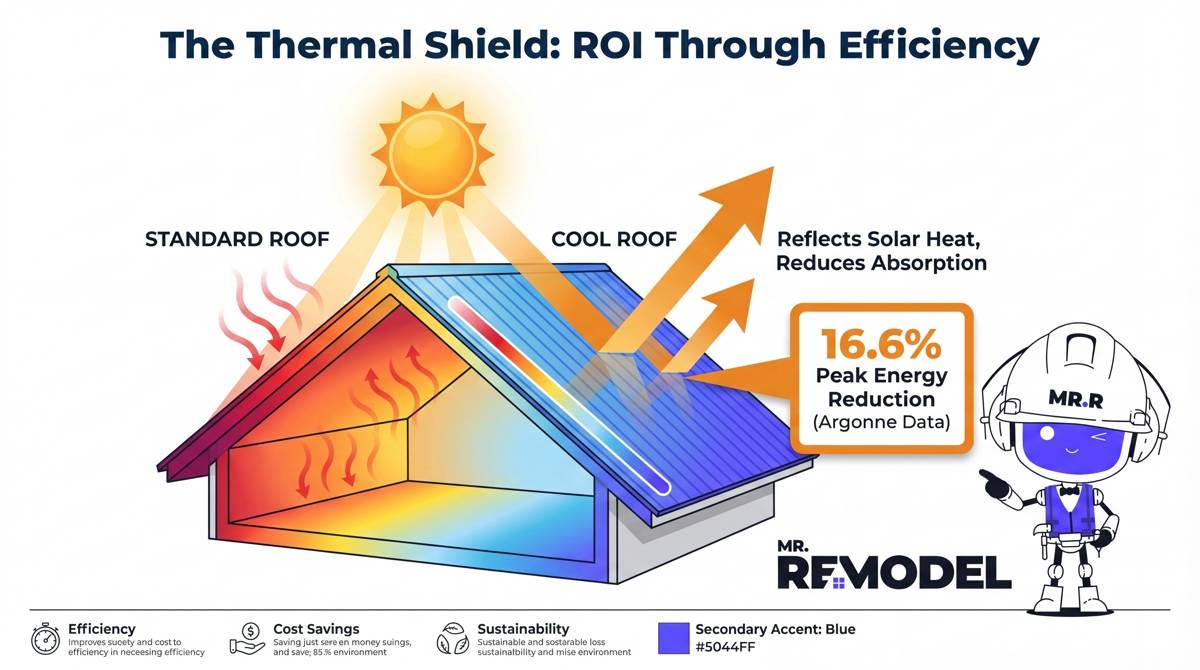
A new roof does more than keep the rain out. It acts as a thermal barrier for your home. Modern roofing materials are designed to reflect sunlight rather than absorb it. This is especially true for cool roofs that use reflective pigments or coatings.
Research from the Argonne National Laboratory shows that cool roofing materials can lower energy demand significantly. They help decrease air conditioning energy consumption by 16.6% during peak heat. This translates to lower monthly utility bills for the homeowner.
The Department of Energy confirms these findings. Reflective roofing can reduce annual air conditioning use by up to 15% in single-story buildings. Over a decade, these savings can offset a large portion of the initial installation cost.
See Related: Energy Savings by Roofing Material
Urgency and the Replacement Factor
In the roofing industry, urgency is a major driver of decision-making. Our data shows that 98.9% of homeowners are looking for a full installation. Only 1% are interested in a simple repair. This suggests that once a roof fails, a full upgrade is the only viable path.
Furthermore, 40.6% of consumers are ready to start their project within seven days. This high level of urgency often stems from active leaks or storm damage. When you need a roof this quickly, financing becomes a critical part of the ROI equation.
See Related: Roof Replacement Financing: Loans, Insurance & Payment Options
If you are one of the many homeowners needing an immediate solution, getting a free quote is the best first step. Fast action can prevent further interior damage. It also helps you secure current material pricing before market fluctuations occur.
Long-Term Durability and Maintenance ROI
Maintenance is a hidden cost of homeownership. Older roofs require frequent inspections and shingle replacements. A new roof eliminates these costs for several years. This "peace of mind" is a value-add that is hard to quantify but easy to sell.
According to the Lawrence Berkeley National Laboratory, raising roof reflectivity can reduce cooling energy use by over 20%. This is achieved by increasing reflectivity from 10% to 60%. These technical upgrades make your home more sustainable and attractive to modern buyers.
Reducing Repair Costs
Investing in a full replacement prevents the cycle of patchwork repairs. Constant repairs are often a sunk cost with zero ROI. A full system upgrade ensures all components, including decking and flashing, are in top condition. This holistic approach protects the entire structure.
See Related: Roof Leak Repair vs Full Replacement Cost
How to Maximize Your Specific ROI
To get the most out of your investment, you must choose the right contractor. Mr. Remodel connects homeowners with vetted professionals who understand local market trends. A local expert can tell you which materials are currently in high demand in your specific city.
- Choose popular colors: Neutral colors like gray or black tend to have the highest resale appeal.
- Upgrade your ventilation: Proper attic venting can extend the life of your shingles by years.
- Keep your receipts: Documentation of a new roof is a powerful tool during home inspections.
- Inquire about tax credits: Some energy-efficient materials may qualify for federal or state tax incentives.
Frequently Asked Questions
Does a new roof always increase home value?
Yes, a new roof typically increases a home’s resale value. It provides buyers with confidence that they will not face immediate capital expenses. While you may not recover 100% of the cost in the sale price, it significantly improves marketability.
Which roofing material has the highest ROI?
Asphalt shingles generally offer the highest direct resale ROI. This is because they are more affordable to install. However, metal roofs can offer a better total-cost-of-ownership ROI due to energy savings and long-term durability.
How much does the average roof replacement cost?
Based on our current data, the national average for a closed roofing project is $25,307.08. Standard shingle projects average $25,389.92. Prices can vary significantly based on regional labor rates and material choices.
How can Mr. Remodel help with my roofing project?
Services like Mr. Remodel help by matching you with vetted contractors in your local area. This ensures you receive competitive quotes and high-quality workmanship, which are essential for a high ROI.
Is it better to repair or replace a roof?
Our data shows that 98.9% of homeowners choose a full installation. While a repair might seem cheaper initially, it often fails to address underlying structural issues. A full replacement provides a comprehensive warranty and a fresh start for your home's protection.
Securing Your Home’s Future
A roof replacement is a vital investment in your home's longevity and value. With a national average cost of $25,307.08, understanding the ROI of different materials is essential. Whether you choose the popular asphalt shingle or the energy-efficient metal roof, your decision will impact your finances for years to come.
Regional differences in states like Florida and Utah highlight the importance of localized data. By focusing on energy efficiency and urgent structural needs, you can maximize your return. Don't wait for a leak to become a disaster.
Take the next step in protecting your investment today. Mr. Remodel provides homeowners with a fast and easy way to get a free, no-obligation quote from trusted local contractors.