1-855-QUOTEMR

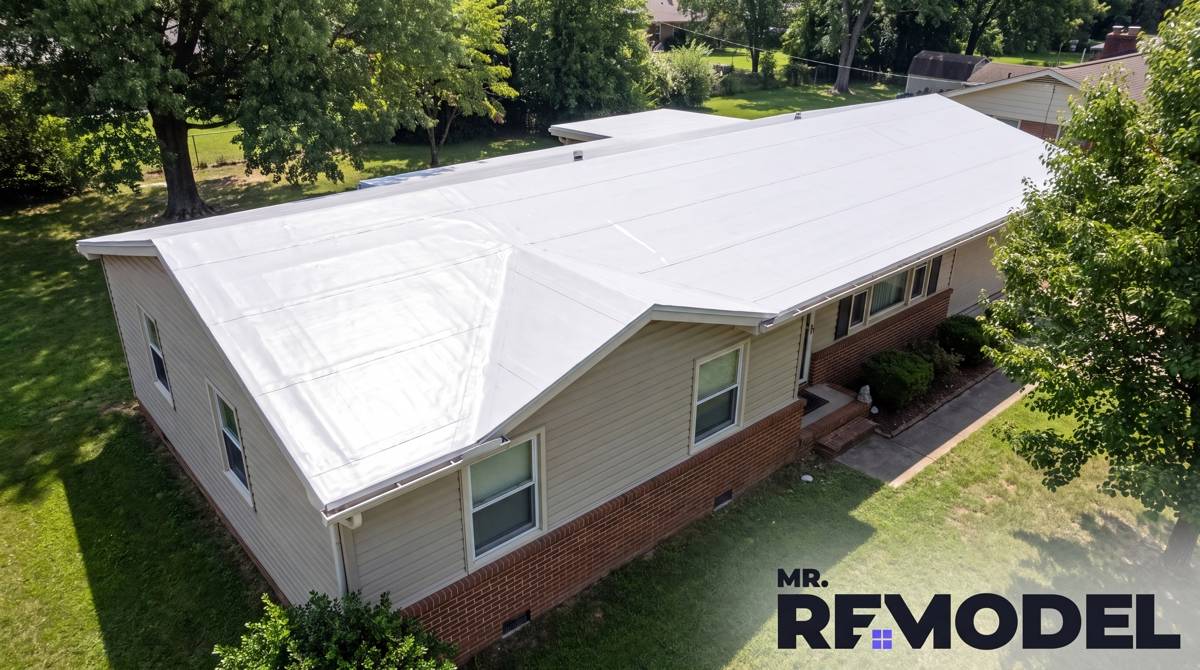
Table of Contents [hide]
Who This Is For
This comprehensive guide is written specifically for homeowners evaluating Thermoplastic Polyolefin (TPO) single-ply membrane roofing for residential flat roofs, low-slope home additions, modern architectural designs, or converted patio enclosures.
Key Takeaways
- High-Urgency Needs: Data from Mr. Remodel indicates that 35% of residential flat roof projects require an emergency start within 0 to 1 day, compared to just 13% for standard sloped roofs.
- Reflective Energy Savings: White TPO single-ply membranes reflect solar heat, reducing roof surface temperatures by up to 50°F and lowering annual air conditioning costs.
- Specialized Installation: Flat and low-slope roofing accounts for 1.66% of overall residential roofing volume, requiring specialized heat-welding techniques rather than standard shingle nailing.
- Significant Financial Investment: Across thousands of analyzed projects, the network average closed installation value for complete low-slope system replacements stands at $25,307.
Thermoplastic Polyolefin (TPO) is a single-ply flexible roofing membrane composed of synthetic rubber and reinforcing scrim. While historically used in commercial warehouses, TPO has grown popular for modern residential applications with flat or low-pitch roofs.
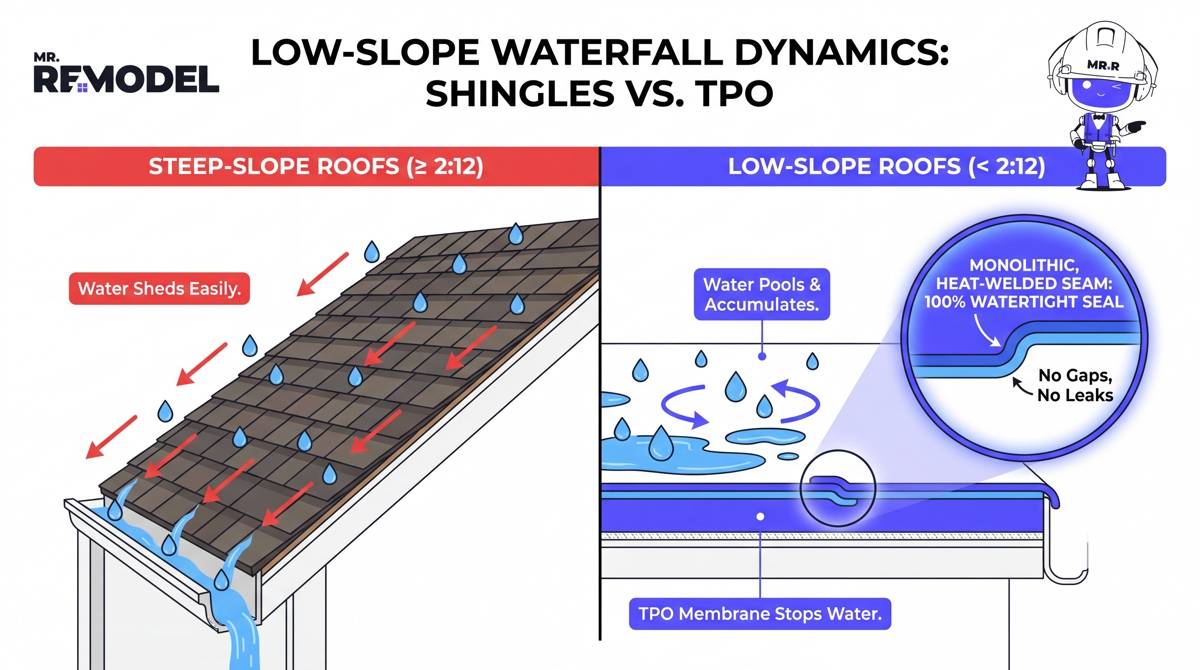
Standard asphalt shingles require a minimum slope of 2:12 to shed water via gravity. On roofs with a lower pitch, standing water can easily back up under shingle overlaps. TPO creates a completely sealed, continuous barrier that prevents water intrusion on low-slope home additions and modern flat designs.
Urgent Water Risk and Residential Market Volume
Low-slope and flat roof requests represent a specialized segment of the residential roofing sector. According to project tracking data from Mr. Remodel, low-slope systems account for 1.66% of total home roofing leads (269 out of 17,097 analyzed projects).
Because flat roofs lack natural drainage, a minor puncture can cause water to pool and seep into subflooring. This creates urgent repair timelines for homeowners.
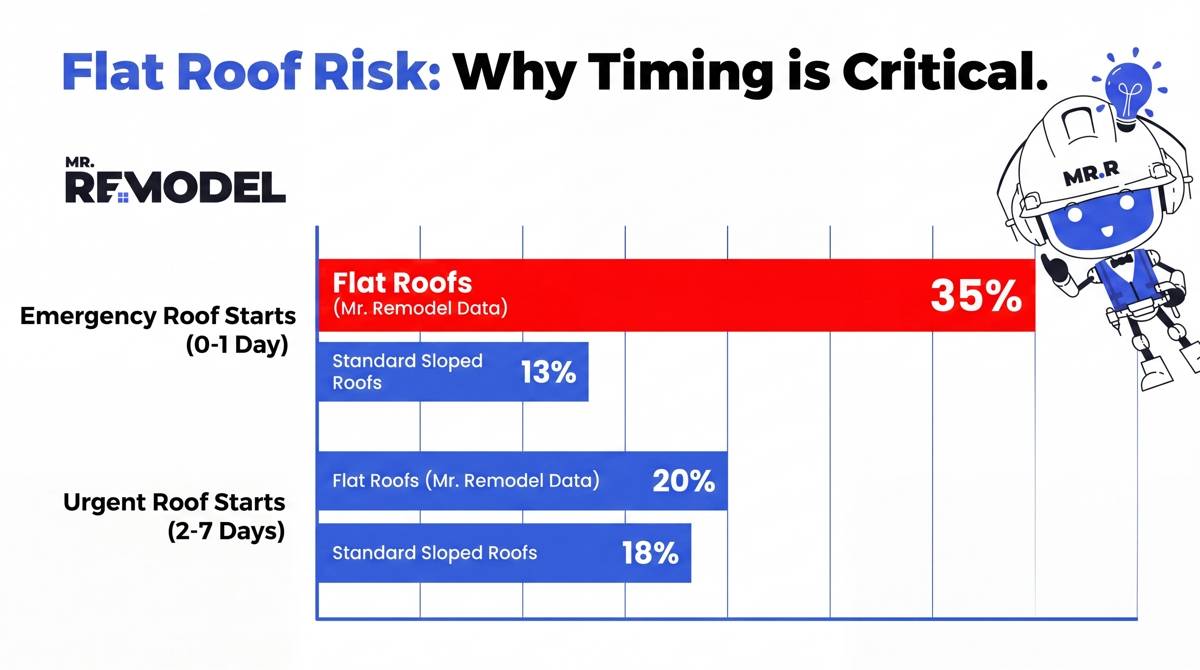
Our data reveals that 35% of flat roof inquiries demand an immediate project start within 24 hours. An additional 23.4% require action within 7 days. Over half of all flat roof projects stem from active water pooling or sudden ceiling leaks.
When water pools on an aging flat membrane, finding an immediate fix is critical. If your roof is actively leaking, scheduling an emergency low-slope flat roof repair helps protect your ceiling, drywall, and internal framing from costly rot.
Regional Durability Factors: Sunbelt Solar vs. Northeast Freeze-Thaw
TPO single-ply membranes perform well in diverse climates, but local weather conditions dictate specific installation strategies.
In Sunbelt states like Florida and California, high solar radiation accelerates thermal aging. Research from the U.S. Department of Energy (Energy Saver) shows that white reflective membranes reduce roof surface temperatures by up to 50°F during hot summer afternoons.
In Northeast states like Pennsylvania, winter freeze-thaw cycles create a different challenge. Water can freeze in clogged scuppers, expand, and put stress on weak seams. Proper installation requires precise insulation tapering and sturdy edge flashing to direct melting snow away from the building envelope.
TPO Installation Methods: Mechanically Fastened vs. Fully Adhered
Installing TPO on a residential structure requires specialized tools that differ from standard sloped roofing methods. TPO rolls are laid over rigid insulation boards and secured to the roof deck.
Cross-Section of a Residential TPO Assembly
- Smooth White TPO Membrane (45, 60, or 80-mil)
- Heat-Welded Continuous Seam (1.5" to 2" Width)
- Rigid Polyisocyanurate (Polyiso) Insulation Board
- Vapor Barrier / Cover Board Substrate
- Plywood or OSB Roof Decking
The most critical step in TPO installation is heat-welding the seams. Installation crews use hot-air welding equipment running at temperatures over 1,000°F to fuse overlapping membrane sheets together. This process creates a continuous, watertight seal that is physically stronger than the surrounding material.
Homeowners can choose between mechanically fastened or fully adhered installation systems:
- Mechanically Fastened: Fasteners and stress plates are driven through the insulation into the roof deck before the overlapping TPO sheet is heat-welded over them. This approach offers fast, cost-effective installation for larger surfaces.
- Fully Adhered: The membrane is glued down to the substrate using specialized bonding adhesive. This method provides a smooth appearance and prevents air movement underneath, making it the preferred choice for residential patios and visible additions.
To ensure long-term performance, work with a crew trained in hot-air seam welding. Partnering with a team that specializes in certified residential TPO roof installation helps guarantee your seams remain leak-free.
Financial Investments and Cost Benchmarks
The financial investment required for a residential TPO installation varies based on total square footage, membrane thickness (45-mil, 60-mil, or 80-mil), insulation layer depth, and removal of old materials.
According to closed project data from Mr. Remodel, the national average sale value for full low-slope and flat roof replacements stands at $25,307. Total project costs reflect regional labor rates, structural complexity, and necessary drainage upgrades.
Investing in high-grade polyisocyanurate (polyiso) insulation beneath the membrane helps offset initial costs. Technical studies by the Oak Ridge National Laboratory show that proper above-deck roof insulation prevents thermal bridging, reducing home heating and cooling loads year-round.
Before committing to a contractor, review your project details with a roofing cost replacement estimator to establish a clear budget for your low-slope installation.
Comparing Low-Slope Roofing Materials: TPO vs. EPDM vs. Mod-Bit
Homeowners evaluating low-slope options often compare TPO against Ethylene Propylene Diene Monomer (EPDM) rubber and Modified Bitumen.
TPO combines the heat-welded seam strength of PVC with the chemical stability of rubber. Unlike EPDM, which relies on adhesives that can degrade under standing water, TPO’s welded seams form a physical bond.
Additionally, technical data from the National Renewable Energy Laboratory (NREL) confirms that white single-ply membranes reduce urban heat island effects and lower ambient indoor temperatures.
Professional DIY Limits vs. Certified Contractor Requirements
While minor repairs on sloped asphalt shingles can occasionally be handled by experienced DIYers, installing a residential TPO roof requires specialized commercial-grade tools and training.
Professional Installation Steps
- Substrate Preparation: Installing polyiso insulation & cover board
- Edge Detailing: Securing perimeter metal drip edges & scuppers
- Hot-Air Seam Welding: Calibrating welder speed & temperature
- Probe Seam Testing: Verifying weld integrity across all overlaps
Improper hot-air welding temperatures can scorch the membrane or create cold welds that fail during heavy rain. Working with certified, insured contractors protects your investment and ensures your installation meets manufacturer warranty requirements.
Frequently Asked Questions
How long does a residential TPO roof last?
A professionally installed residential TPO roof typically lasts between 20 and 30 years. Lifespan depends on membrane thickness, quality of the hot-air welded seams, local climate conditions, and regular gutter clearance.
Can TPO roofing be installed directly over existing asphalt shingles?
No. TPO should not be installed directly over asphalt shingles. Standard installation guidelines require removing old roofing materials or installing a smooth cover board over existing insulation to create a flat substrate for the membrane.
Is TPO roofing suitable for residential patio covers and home additions?
Yes. TPO is an ideal solution for low-pitch patio covers, sunroom additions, converted garages, and flat roof decks. Its lightweight, clean appearance, and watertight welded seams make it a top choice for modern low-slope structures.
How do services like Mr. Remodel assist homeowners with low-slope roof projects?
Services like Mr. Remodel simplify home improvements by connecting homeowners with vetted, certified local roofing contractors. We help you obtain transparent, free project estimates from contractors who specialize in residential TPO installations.
Will installing a white TPO roof help reduce summer air conditioning costs?
Yes. White TPO membranes feature high solar reflectance, bouncing the majority of the sun's rays away from your home. This prevents heat from building up in your attic or ceiling cavity, lowering cooling loads and reducing summer utility bills.
Protect Your Home with Certified Low-Slope Installation
Choosing the right roofing system for a flat addition or low-pitch roof is essential to preventing leaks and protecting your property value. TPO single-ply membranes offer strong heat-welded seams, high solar energy efficiency, and reliable long-term leak protection.
Ready to upgrade your home's flat roof? Reach out to Mr. Remodel today to get a free, no-obligation quote and connect with trusted local contractors who specialize in residential TPO installation.